
Sign up to save your podcasts
Or



Send us Fan Mail
One decision on Everest can erase years of work, and Tyler Andrews knows that better than most. After six failed summit pushes and three straight Everest seasons, he finally threads the needle and sets a blistering speed record, then comes home to the weirdest part of any big win: the emotional comedown and the sudden question of “now what?” We talk about what it’s like to chase a far-out goal for years, hit it on the last possible day, and then step straight into a new level of attention that reaches far beyond the trail running world.
Tyler breaks down why Mount Everest isn’t a simple fitness contest. The jet stream shrinks the summit window, crowds turn the route into a bottleneck, and the Khumbu Icefall remains a moving hazard that never really feels routine. We get into the real logistics of a speed attempt: waiting for the right weather, positioning for the end-of-season window, and staying ready when so much is outside your control. Tyler also shares how mentors and time in Nepal helped him build the mountain skills he didn’t grow up with, and what he’s learned about the culture clash between traditional mountaineering and modern endurance-driven approaches.
We also tackle the oxygen vs no oxygen controversy head-on. Tyler explains his original plan, the exact moment safety and wind forced the pivot, and why he thinks both categories are valid but fundamentally different. From there, the conversation goes deep into the performance details that sound like ultrarunning at 29,000 feet: camps as aid stations, fast transitions, fueling around 400 calories per hour with gels and drink mix, and heart rate data that still doesn’t fully make sense. We wrap with his hypoxic training setup, blood testing, whether he’ll return via the north side, and a quick detour into the Mount Elbert FKT that never got submitted.
If you want more Everest speed record detail, altitude acclimatization tactics, and the mindset behind endurance mountain performance, hit subscribe, share this with a friend, and leave a rating and review. What part of Tyler’s approach surprised you most?
Create a Rendezvu Account @rendezvu
Use code SteepStuff for 20% your cart on Sidas.us
Follow James on IG - @jameslauriello
Follow the Steep Stuff Podcast on IG - @steepstuff_pod
Follow Sidas USA on IG - @sidas_usa
Send us Fan Mail
Use code "Steepstuff" for 20% off your cart at sidas.us
Create a Rendezvu Account @rendezvu
Use code SteepStuff for 20% your cart on Sidas.us
Follow James on IG - @jameslauriello
Follow the Steep Stuff Podcast on IG - @steepstuff_pod
Follow Sidas USA on IG - @sidas_usa
Send us Fan Mail
A “clean” MRI can still leave you limping, doubting yourself, and stuck in the worst kind of uncertainty: pain without answers. James sits down with Abby Bennett for a candid, detailed update on her long road to a hip labral repair and what she wishes she knew from day one.
Abby unpacks how her injury started as a weird, persistent fatigue in one leg, then escalated into deep hip pain that spread through her glute, adductors, and hamstring as her body tried to stabilize an unstable joint. We dig into why her first 1.5T MRI missed the problem, how a hip preservation specialist used better imaging and a full workup to identify labral instability plus pincer impingement, and what her surgery included: labral anchors, shaving the impingement to prevent re-tearing, and a psoas tendon lengthening that changes the rehab timeline for athletes who live in hip flexion.
We also go beyond anatomy and talk about the mental weight of chronic pain, identity loss when training disappears, and the small wins that bring you back: conservative PT, pool work, short Zwift spins, strict boundaries to avoid flare-ups, and recovery basics like hitting protein goals and using collagen with vitamin C before rehab. If you’re a runner, trail runner, cyclist, or skimo athlete dealing with stubborn hip pain, this is a practical guide to advocating for the right care.
Subscribe or follow, share this with a training partner who’s struggling, and leave a rating and review so we can keep telling more athlete stories like Abby’s.
Follow Abby on IG - @abby.j.bennett
Create a Rendezvu Account @rendezvu
Use code SteepStuff for 20% your cart on Sidas.us
Follow James on IG - @jameslauriello
Follow the Steep Stuff Podcast on IG - @steepstuff_pod
Follow Sidas USA on IG - @sidas_usa
Send us Fan Mail
Create a Rendezvu Account @rendezvu
Use code SteepStuff for 20% your cart on Sidas.us
Follow James on IG - @jameslauriello
Follow the Steep Stuff Podcast on IG - @steepstuff_pod
Follow Sidas USA on IG - @sidas_usa
Send us Fan Mail
They just landed in Seattle, they’ve barely had time to shake out their legs, and they’re already thinking about one thing: how a U.S. sky race will feel compared to the European skyrunning circuit. We sit down with Daniel Daniel Antonioli & Beñat Albisu for a quick, high-energy pre-race conversation as they get ready to race near Big Creek in the Olympic Mountains for the first time on American soil.
We talk travel realities and first impressions of the Pacific Northwest, plus where they’re hoping to sneak in a little exploring with only a week in town. Then we get into racing: what it’s like to line up against a strong international field, and why an out-and-back skyrace course can create a different kind of pressure and excitement when you’re literally watching competitors coming toward you on the climb. Daniel shares why he loves the simple rhythm of one big ascent and one committed descent, and Banat reflects on what it means to race abroad as a 20-year-old following the U23 skyrunning circuit.
We also zoom out to season planning, including how athletes choose between major mountain running events when schedules collide, and why ultra-technical courses like Matterhorn Ultraks Extreme can shape training priorities. If you’re into trail running, skyrunning, mountain racing tactics, and the culture that makes these races special from Italy to the Basque Country, you’ll leave with fresh motivation and a clearer sense of how pros think before the gun goes off.
Subscribe or follow, share this with a trail friend, and leave a rating and review if you want more athlete stories and race coverage.
Create a Rendezvu Account @rendezvu
Use code SteepStuff for 20% your cart on Sidas.us
Follow James on IG - @jameslauriello
Follow the Steep Stuff Podcast on IG - @steepstuff_pod
Follow Sidas USA on IG - @sidas_usa
Send us Fan Mail
A mountain race where the “trail” turns into a real cliff scramble, a town that treats race weekend like a holiday, and a new skyrace in Washington that might finally feel like Europe without the altitude excuse. We sit down with Jackson Cole fresh off Mount Marathon to unpack why Seward, Alaska draws thousands of fans, how the hype somehow matches reality, and what it feels like to go full gas to the summit in a truly competitive field.
We also get specific about what makes Mount Marathon technical, including the cliff section where route choice and local knowledge matter, and where a mistake could mean more than a lost minute. From there we pivot to Beast of Big Creek and the Olympic Peninsula, digging into why steep, rooty Washington trails are such a strong skyrunning venue, and why starting closer to sea level can make the racing fairer for international athletes. If you care about mountain running, trail racing, and skyrunning course design, there’s a lot here to sharpen how you think about terrain and competition.
Finally, we talk about the unglamorous side of a stacked season: travel fatigue, quick turnarounds, and the mindset it takes to recover well and keep racing with joy. Jackson shares why he chooses races that genuinely light the fire, how he avoids burnout, and what he has lined up next with a training block and upcoming starts like Whistler 50k and The Rut. If you like the show, subscribe, share it with a running friend, and leave a rating and review so we can keep telling these stories.
Follow Jackson on IG - @jayrcolee
Create a Rendezvu Account @rendezvu
Use code SteepStuff for 20% your cart on Sidas.us
Follow James on IG - @jameslauriello
Follow the Steep Stuff Podcast on IG - @steepstuff_pod
Follow Sidas USA on IG - @sidas_usa
Send us Fan Mail
A fast sky race can look simple on paper until you add singletrack bottlenecks, an out-and-back with traffic, and a technical finish that punishes sloppy footwork. We sit down with Canadian trail runner Josh Potvin for a quick, focused catch-up before Beast Of Big Creek, starting with what training has looked like from Vancouver and why this has been one of his most consistent years ever.
From there, Josh breaks down Quebec Mega Trail: the heat, the ruthless technical sections, and the mindset shift that lets you walk away proud when you execute well even if the placing wasn’t the headline goal. We also talk about the Canadian team selection process for short trail, what it takes to put yourself in the conversation, and how results plus timing can shape your season.
Then we shift to something new for Josh: joining the Merrell trail running team. He shares what surprised him about the team culture, how support matters when races go sideways, and which Merrell shoes he’s been using for long runs, technical trail days, and faster efforts. We close with his Beast Of Big Creek strategy, why steep Pacific Northwest terrain is the perfect prep, plus a real-world look at 100K recovery and turning the legs around for the next block as he eyes Whistler UTMB and an OCC ticket.
If you enjoy athlete stories, practical race prep, and honest talk about what actually works, subscribe, share this with a running friend, and leave a quick rating and review.
Follow Josh on IG - @jjpotvin
Create a Rendezvu Account @rendezvu
Use code SteepStuff for 20% your cart on Sidas.us
Follow James on IG - @jameslauriello
Follow the Steep Stuff Podcast on IG - @steepstuff_pod
Follow Sidas USA on IG - @sidas_usa
Send us Fan Mail
A technical FKT at home can be more than a big day out. For Kalie McCrystal, it’s a proving ground for the skills that matter when the terrain gets steep, exposed, and unforgiving, and a stepping stone toward bigger goals like the Matterhorn speed record.
We talk through her Tantalus Traverse FKT in the Tantalus Range across from Squamish, BC, a bucket-list alpine line that mixes runnable trail with moraines, snowfields, glaciers, route finding, and a crux that often includes multiple rappels. Kallie shares what “safe and fast” actually looks like on big mountain terrain: choosing the right weather window, deciding whether to rope up, and carrying just enough gear to manage risk while still moving efficiently. We also get honest about the unglamorous stuff that decides the day, like under-eating, bonking late, and planning water stops when there’s no resupply.
From there, we shift into racing and why a skyrunning course can feel simpler than an FKT: fewer moving parts, less navigation, and more room to truly test fitness. Kallie previews Beast of Big Creek, talks about the joy of racing with friends, and lays out what’s ahead in Europe, including Trofeo Kima and an ambitious push to bring women’s times closer to men’s on iconic technical records. If you care about alpine running, technical scrambling, mountain race strategy, and the next wave of women pushing the ceiling in the sport, this one’s for you.
Subscribe or follow the show, share this with a mountain friend, and leave a rating and review so we can keep telling these stories.
Follow Kalie on IG - @kalie_mcc
Create a Rendezvu Account @rendezvu
Use code SteepStuff for 20% your cart on Sidas.us
Follow James on IG - @jameslauriello
Follow the Steep Stuff Podcast on IG - @steepstuff_pod
Follow Sidas USA on IG - @sidas_usa
Send us Fan Mail
The fastest way to fall back in love with running might be to become a beginner again. Carmen Graves knows what it feels like to chase mastery: high school sprinter, college soccer and track standout, then a decade-long professional grind in the steeplechase that took her to US Trials. After years of the same build-ups and the same track-season patterns, she wanted something new, so she stepped onto the trails and embraced the discomfort of learning from scratch.
We talk through what really changes when you go from track to trail running and skyrunning: pacing that’s dictated by vertical gain, the mental focus of technical terrain, and the surprisingly hard skill of switching from hiking to running mid-climb. Carmen shares what she learned at the Broken Arrow Skyrace, why going out hot can wreck the final climbs, and how she’s adjusting her training for Beast of Big Creek. We also get into her strengths so far, including speed on flatter trail courses, confidence on downhills, and the areas she’s targeting most as she builds mountain-specific fitness.
Carmen opens up about nutrition and why fueling has felt like a smooth transition, plus how small systems like gel flasks can make race day cleaner and simpler. She lays out a smart long-term plan too: sharpen in sub-ultra distances first, chase races like the Cirque Series and USATF Trail Championships, then move toward ultras when the foundation is solid. We also dive into what it’s like joining the Merrell athlete team, her go-to shoes, and how mentorship from Andy Wacker helps guide a new chapter.
If you’re curious about transitioning from track and field to trail racing, training for vert, or rebuilding motivation after years of competing, this conversation is packed with honest lessons and practical takeaways. Subscribe, share this with a running friend, and leave a rating and review so we can keep telling these athlete stories.
Follow Carmen on IG - @carmenpelar
Create a Rendezvu Account @rendezvu
Use code SteepStuff for 20% your cart on Sidas.us
Follow James on IG - @jameslauriello
Follow the Steep Stuff Podcast on IG - @steepstuff_pod
Follow Sidas USA on IG - @sidas_usa
Send us Fan Mail
A course can look “runnable” and still scare you a little. That’s exactly why Beast of Big Creek is so intriguing, and why I brought back Mercedes Siegle-Gaither for a tight, honest pre-race chat. She’d just been on the route previewing and training, and her take is vivid: long stretches of shady forest on smooth trail, a relentless uphill grind, then a shift above treeline into steeper, rockier skyrunning terrain with wildflowers and big mountain energy on the Olympic Peninsula near Hoodsport.
We also get real about the not-so-glam side of endurance sports: coming back from injury. Mercedes talks through finishing an earlier 100-miler while likely dealing with a pulled hamstring, the months-long recovery, and the mental whiplash of seeing old running segments and choosing to let them go for now. Add altitude back into the picture and the body gets humbled fast, but the mindset stays steady: stay calm, keep stacking work, and trust the rebuild.
Gravel biking becomes the hero of the summer. We dig into why gravel cycling is such a smart cross-training tool for trail runners and ultrarunners, plus the practical fears that come with it, from cars to learning clipless pedals (including the classic slow-speed flop). We also touch on how fast Beast could be, what out-and-back passing might feel like on a narrow descent off Mount Ellinor, and what races she’s lining up next as fitness returns.
If you’re into trail running, skyrunning, race previews, injury recovery, altitude training, and the Pacific Northwest mountain scene, this one will light you up. Subscribe or follow, share it with a friend training for a comeback, and leave a rating and review so we can keep telling these athlete stories.
Follow Mercedes on IG - @theslimcede
Create a Rendezvu Account @rendezvu
Use code SteepStuff for 20% your cart on Sidas.us
Follow James on IG - @jameslauriello
Follow the Steep Stuff Podcast on IG - @steepstuff_pod
Follow Sidas USA on IG - @sidas_usa
From the publisher's feed
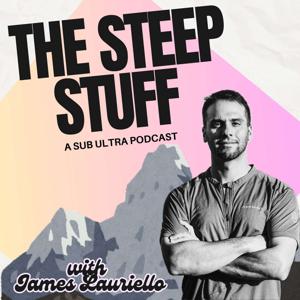
Professional trail runner James Lauriello sits down with some of the most interesting athletes, coaches, adventurers, and personalities in the mountain running world to take an inside look at…
With no script and no two conversations quite the same, The Steep Stuff Podcast dives deep into the people, stories, and ideas shaping trail, mountain, and skyrunning. From training and racing to adventure, gear, lifestyle, the highs and lows of competition, and everything in between, James brings an athlete’s perspective and genuine curiosity to every conversation.
Whether it’s sitting down with the world’s best mountain runners, emerging talents, legendary figures, or the people working behind the scenes, The Steep Stuff explores what makes these individuals tick, what they’ve learned along the way, and why they continue to push themselves into the mountains. It’s all things trail, mountain and skyrunning—and the people who make the sport what it is.
1,167 Listeners

11,739 Listeners

1,341 Listeners

777 Listeners

1,874 Listeners

179 Listeners
954 Listeners

291 Listeners

366 Listeners

1,420 Listeners

1,771 Listeners

165 Listeners

191 Listeners

174 Listeners

55 Listeners