
Sign up to save your podcasts
Or

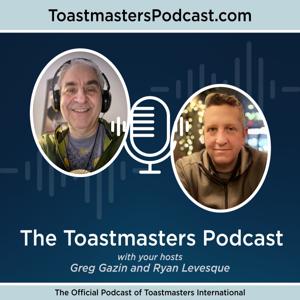


[18:39] The countdown is on for the 2026 Toastmasters International Convention taking place August 19 to 22, 2026, in Vancouver, British Columbia, Canada. In this annual convention preview episode, Greg Gazin speaks with Convention Host Co-Chairs Carole Murphy and Tom Jones for an early look at what attendees can expect and to learn more about the volunteers and leaders helping bring Toastmasters’ largest event to life.
You’ll get to know Carole and Tom as they share how they unexpectedly received the invitation to serve, what their role as co-chairs involves, and how their different personalities and leadership styles complement one another and what they’ve learned along the way. You'll also hear why Vancouver, often called Hollywood North, continues to be a favourite convention destination and the meaning behind this year’s convention theme: Wide Open Communication.
Highlights this year include keynote speaker Jody Carrington and 2026 Golden Gavel honouree Jennifer Moss presenting Why Are We Here? Creating a Work Culture Everyone Wants.
You’ll also hear about some of the convention activities, including:
• Traditional opening ceremonies and the Parade of Flags
• Semifinals and finals of the World Championship of Public Speaking
• Accredited Speaker presentation and business meeting
• First-timers activities and networking opportunities
• Smedley Harbour Cruise and Smedley Fun Bingo evening events
• Education sessions and Toastmasters Journey workshops including a new AI-focused session designed to help attract prospective members...and more!
About:
Carole Murphy, DTM, has been a Toastmaster for 31 years and serves as Convention Co-Chair for the 2026 Toastmasters International Convention.
Tom Jones, DTM, is a Past International Director, entrepreneur, management consultant, and Convention Co-Chair for the 2026 Toastmasters International Convention.
REGISTER NOW
Convention details, agenda, volunteer opportunities, and Dear Boss resources.
You can also read:
1. Five Questions with Carole Murphy DTM and Tom Jones DTM: Behind the Scenes with the 2026 Convention Co-Chairs
2. Wide-Open Communication: 2026 Convention: Head to Vancouver, Canada, for inspiration, education, and connection.
Both articles appear in the June 2026 issue of Toastmaster Magazine.
Related Episode:
Episode #299: Championing Workplace Well-Being — Meet the 2026 Golden Gavel Recipient Jennifer Moss
[47:36] What happens when 20 years and hundreds of conversations change the way you communicate, listen, and tell stories? In this special milestone episode, guest host Ryan Levesque turns the microphone around on Greg Gazin to reflect on the journey behind The Toastmasters Podcast, ToastCaster, and the lessons learned along the way.
From launching a podcast as a Toastmasters High Performance Leadership project in 2006 to becoming host and producer of The Toastmasters Podcast, Greg shares how podcasting transformed not only his communication skills, but also the way he approaches conversations, uncovers stories, and connects with people.
Along the way, the conversation revisits unforgettable moments, including interviews that created vivid “movies in the mind,” emotional discussions that revealed the human side of leadership, and the unexpected lessons that emerged from hundreds of conversations inside and outside Toastmasters.
Greg also reflects on how his interviewing style evolved over time. What began as a focus on asking the “right” questions gradually became something else: learning to listen more carefully, follow curiosity, and help stories unfold naturally. The episode also includes a few behind-the-scenes stories, podcasting flubs, and some unexpected moments listeners likely will not see coming.
Listeners will also hear…
• How podcasting and Toastmasters helped supercharge Greg’s communication skills
• How Greg evolved from question asker to “story builder”
• Why curiosity matters more than asking the “perfect” question
• The conversation that literally gave Greg shivers while recording
• A few memorable podcasting flubs and behind-the-scenes moments
• The origin of Greg’s “conversational runway” interviewing approach
• Why some of the best podcast moments happen completely off-script
• Lessons learned from guest and former co-host
Some of the most meaningful moments did not come from carefully planned questions. They came from unexpected turns, honest reflections, and the willingness to go a little deeper.
And after hundreds of conversations, one lesson stands out above all: when people feel heard, remarkable stories often emerge.
Greg’s article, Reflecting Back: How a Simple Podcasting Project Developed into an Incredible Journey, appears in the June 2026 issue of the Toastmaster magazine.
.
Some additional episodes and resources mentioned in this conversation include:
• #082 Introducing Greg Gazin - Newest Host of The Toastmasters Podcast
• #084 Meet the 2014 World Champion of Public Speaking, Dananjaya Hettiarachchi
• #100 Meet the 2015 World Champion of Public Speaking, Mohammed Qahtani
• #104 Surviving Everest & the Nepali Earthquake with Sara Safari
• #169 Vision Beyond Eyesight with Deborah McAlexander
• #172 Confessions of a Podcast Host
• #179 Finding Healing Through Service and Leadership with David Jones
• #208 Don't Let Fear Hold You Back with Robert A. Navarez
• #222 Enhance Your Presentation with Clown Presence - Don Colliver
• #225 This is Us: Greg Gazin & Ryan Levesque - The Toastmasters Podcast
• #250 500 Lunches with Strangers: Breaking Bread for Personal Growth
• #266 Meet Lauren Parsons, 2024 Newest Accredited Speaker (Snack on Exercise)
• #275 & #276 Better Conversations, 1 Question at a Time - Dr. Alison Wood Brooks (Part 1 & 2)
• #267 Meet Maureen Zappala, 2024 Newest Accredited Speaker (Impostor Syndrome and “My Dot”
• #294 Beyond 500 Lunches with Strangers: Lesson on Achieving Anything - Nick Bendel
• #297 What Happens When Toastmasters Give Youth Voices a TEDx Stage with CeCe Espeut
• #298 Spotting & Resolving Generative AI Pitfalls for Communicators with Joel Schwartzberg
• TC056 Spanish Train: A Journey in Vocal Variety (ToastCaster)
• TC150 The Hardest Speech You’ll Ever Have to Give (ToastCaster)
• YouTube: Spanish Train: A Journey in Vocal Variety (YouTube video)
About Greg Gazin
Greg Gazin, DTM, is host and producer of The Toastmasters Podcast and creator of ToastCaster: Communication & Leadership Learning Lab. A 24-year Toastmaster, writer, speaker, and technology columnist, Greg has spent nearly two decades exploring communication, leadership, storytelling, and personal growth through podcasting.
Greg is a Past District Governor and recipient of a Toastmasters International Presidential Citation. He is also a member of Spiritual Living Toastmasters in Edmonton, Alberta, Canada.
[37:05] The Toastmasters International Golden Gavel is the prestigious annual award presented to an individual distinguished in the fields of leadership and communication. In this insightful and thought-provoking episode, Greg Gazin speaks with Jennifer Moss, award-winning author, workplace culture strategist, and the 2026 Golden Gavel Honoree. Jennifer shares personal stories and practical insights as the conversation explores communication, resilience, gratitude, workplace culture, and the evolving relationship people have with work in a rapidly changing world.
Jennifer also reflects on the deeply personal experiences that shaped her work, including The Smile Epidemic, a gratitude project started by her husband during a serious health crisis that eventually spread to more than 100 countries. The experience reinforced Jennifer’s belief in the power of gratitude, connection, and small behavioral shifts to positively influence people and organizations.
Listeners will hear:
• How Jennifer overcame intense fear before her first TEDx talk
• Why preparation and subject mastery reduce speaking anxiety
• Why conversational speaking can work better than memorizing scripts
• How gratitude practices shaped Jennifer’s work and leadership philosophy
• What organizations often misunderstand about burnout and wellbeing
• Why trust, fairness, and purpose drive engagement more than perks
• Why communication and analytical thinking remain essential workplace skills
Jennifer Moss is featured in the May 2026 issue of the Toastmaster magazine in Stephanie Darling’s article, “Golden Gavel Recipient Jennifer Moss Champions Workplace Wellbeing.”
Jennifer will receive the Golden Gavel award during the Toastmasters International Convention in Vancouver, British Columbia, Canada, August 19–22, 2026. The award presentation will take place Saturday, August 22 at 10 a.m. Pacific Daylight Time (UTC -7).
Jennifer will also deliver a presentation based on her latest book, Why Are We Here? Creating a Work Culture Everyone Wants, exploring hope, purpose, belonging, and psychological fitness in today’s evolving workplace.
TEDx Talk: The Epidemic of Smiles and the Science of Gratitude.
About Jennifer Moss:
Jennifer Moss is an award-winning international speaker, journalist, author, and workplace culture strategist. She is the author of Why Are We Here?, The Burnout Epidemic, and Unlocking Happiness at Work. Jennifer’s research and insights have been featured in Harvard Business Review, Fast Company, and Fortune. She is also co-host of the podcast How to Change Culture in 20 Minutes or Less.
Jennifer Moss is from Kitchener, Ontario, Canada and can be reached at: Jennifer-Moss.com.
Register here: for the Toastmasters International Convention.
[31:42] Generative AI can help you work faster and sharpen your message, but only if you stay in control. In this episode, Greg Gazin speaks with Joel Schwartzberg about how to spot and resolve common AI pitfalls so your communication remains clear, credible, and authentic.
Joel approaches AI as a tool—useful, but not a replacement for decision-making. It can improve clarity and efficiency, but it doesn’t understand your priorities, your audience, or your voice. AI is a powerful assistant, but a poor decision-maker without human guidance.
For Toastmasters, that distinction matters. Whether you are preparing a speech or refining an idea, AI can produce something polished that still misses the point. The value comes when you use AI to improve your thinking and not replace it.
Joel’s article, 7 Generative AI Pitfalls for Communicators; How to spot and resolve these blind spots before they cost you clarity and trust, appears in the March 2026 issue of the Toastmasters Magazine.
Listeners will hear…
• Why using AI does not make you a fraud as a communicator
• How AI can improve your writing when used properly
• How to spot and resolve common AI “Achilles heels”
• Why authenticity flaws matter—and how to sound like yourself
• How AI misplaces priorities and what to do about it
• Why running your content through AI is like using a pasta maker
AI can help you communicate more clearly and efficiently.
But the message is still yours to shape. Your voice and experience are what make it connect.
Joel will also be presenting at the Toastmasters International Convention in Vancouver, Canada, on Friday, August 21 at 3:30 p.m. Pacific Daylight Time, sharing insights on clear, focused communication.
You may also enjoy his previous appearance:
Stop Talking, Start Connecting: The Cure for Overspeaking (Episode #268)
About Joel Schwartzberg
Joel Schwartzberg, a long-time communications coach, a speechwriter, and the author of Get to the Point! Simplify, Sharpen, and Sell Your Message. And The Language of Leadership: How to Engage and Inspire Your Team.\
He’s a former U.S. national and state champion in collegiate public speaking, and was inducted into the National Forensic Association Hall of Fame in 2002.
Joel’s insights on effective communication have been featured in many publications, including Harvard Business Review, Fast Company, CNBC, Newsweek, and Inc.com, as well as the Toastmaster magazine.
Joel Schwartzberg lives in New Jersey and can be reached at: www.joelschwartzberg.net.
If you’ve ever wondered how to handle stage fright before a speech, you’re in good company. Even experienced speakers feel the adrenaline spike before walking on stage, opening a Zoom room, or stepping up for table topics. The goal isn’t to eliminate nerves completely. It’s to keep them from taking over.
That matters because stage fright shows up in real ways: a dry mouth, shaky hands, a racing heart, a blank mind right when you need your first sentence. The good news is that these reactions are manageable. With the right preparation, you can turn that energy into focus instead of panic.
This guide is for speakers, Toastmasters members, workshop presenters, and anyone who wants a practical way to calm down and perform well. It’s not about pretending to be fearless. It’s about having a repeatable process you can use every time.
Stage fright is usually strongest in the minutes before speaking, not during the speech itself. That means your best tools are the ones you use before you begin: preparation, breathing, body language, and a clear starting routine.
Think of stage fright like a fire alarm. It’s loud, but not always accurate. Your body is telling you that something important is happening. That energy can help you if you know how to direct it.
A lot of speaking anxiety comes from trying to remember everything at once. A better approach is to make the beginning of your speech automatic.
Memorize the first 20 to 30 seconds. Know your opening line, your first transition, and the first point you want to make. If you can get through the start smoothly, your confidence usually rises quickly.
Here’s a simple prep checklist:
This is especially helpful in Toastmasters speech contests, meeting presentations, and client talks, where nerves tend to spike at the beginning.
When people ask how to handle stage fright before a speech, breathing is usually one of the first things mentioned, and for good reason. Your breathing tells your nervous system whether to stay on alert or settle down.
Try this before you speak:
The longer exhale is the key. It signals that you’re safe enough to relax. If you’re backstage or sitting in a meeting room, this can be done quietly and discreetly.
Another option is the “physiological sigh”: take one normal inhale, then a short second inhale on top of it, followed by a long exhale. Do that two or three times. It’s a quick reset when nerves are strong.
Stage fright often shows up physically before it becomes a thought problem. Your shoulders rise. Your jaw tightens. Your hands feel awkward. If you don’t notice those signals, they can feed the fear.
A quick body scan can help:
This matters because speakers often try to solve anxiety by thinking harder. Sometimes the faster path is to change the body first. A calmer posture often leads to calmer thoughts.
One of the most useful mindset shifts is this: nerves are not proof that you are unprepared. They are proof that you care.
Before your speech, try replacing “I’m nervous” with something more useful, such as:
That may sound simple, but language shapes attention. The words you use before a speech can either calm you or intensify the spiral.
If you want a reliable answer to how to handle stage fright before a speech, create a routine you can repeat. A routine removes guesswork. It gives your brain a familiar sequence to follow when your adrenaline is high.
Here’s a 10-minute routine you can adapt:
That last point is important. Nervous speakers often speed up. A deliberate pause at the start creates control and gives the audience a moment to settle in.
It’s one thing to rehearse alone at home. It’s another to practice while feeling observed. Stage fright improves when you train under conditions that resemble the real event.
That’s why speaking clubs, peer feedback, and low-stakes practice matters. Toastmasters members often build confidence because they get repeated exposure to the very situation that causes nerves: standing up and speaking while others watch.
If you want to reduce stage fright, don’t only rehearse the content. Rehearse the conditions:
For speakers who like to learn from real examples, Toastmasters Podcast often features interviews with people who have dealt with fear, performed on bigger stages, and built confidence through repetition. Hearing how others manage their nerves can make your own process feel more normal.
Some advice sounds helpful but makes the problem worse. If you’re trying to figure out how to handle stage fright before a speech, avoid these common traps:
Instead, focus on controllables: breath, opening, posture, pace, and message.
Not all speaking anxiety looks the same. The way you prepare may change depending on the setting.
Use the opportunity to practice recovery as well as delivery. If you lose a word or sentence, pause, breathe, and continue. Audiences are more forgiving than speakers think, especially in a learning environment.
Focus on structure. When content is organized clearly, your mind has fewer places to wander. A simple format such as problem, solution, next step often reduces stress.
Expect nerves to be stronger than usual. Contests add pressure because the stakes feel higher. In that case, over-practice the opening and closing, and keep your routine consistent.
Camera anxiety is real. Look at the lens occasionally, not just the screen. Keep notes nearby, but avoid reading from them continuously. A clean environment also helps you feel more composed.
People often think confidence comes before action. In speaking, it usually comes after action. You build confidence by doing the thing while nervous and discovering that you can survive it.
That’s why the most effective answer to how to handle stage fright before a speech is not a single trick. It’s a small system:
Do that consistently and the fear usually becomes more manageable. Not gone, just smaller and less in charge.
If you need a fast reminder before walking up to speak, use this:
If you can answer yes to most of those, you’re ready enough.
Learning how to handle stage fright before a speech is less about becoming fearless and more about becoming prepared. Nerves may still show up, but they don’t have to dominate the moment. With a practiced opening, slower breathing, and a steady routine, you can step into the room with more control and less self-doubt.
And if you want more perspective from people who speak for a living, learn through coaching, or have turned nervous energy into confidence, Toastmasters Podcast is a useful place to hear real stories from the speaking world.
Start small. Rehearse the first minute. Use your breathing. Speak once. Then do it again.
[26:51] What happens when students are given a real stage and someone willing to guide them there? In this episode, Greg Gazin speaks with CeCe Espeut about helping students step onto South Florida’s TEDx Miramar stage and what unfolded along the way.
CeCe Espeut, a two-time TEDx speaker, five-time Distinguished Toastmaster, and creator of TEDx Miramar, brought together Toastmasters to mentor students preparing for their first talks. What began as a simple idea quickly became something more for the students, the mentors, and for CeCe herself.
Using a one-to-one mentoring approach, each student was paired with a Toastmaster. But it didn’t take long to realize this wasn’t just about coaching speeches. It was about learning how to listen, adapt, and meet each person where they are.
Listeners will hear…
Some of the biggest shifts didn’t happen on stage. They happened in the way people communicated—with each other, and with themselves.
And in the end, it wasn’t just about the talks—it was about what it took to get there. Youth didn’t just find their voice. They helped others rediscover theirs.
CeCe is featured in the March 2026 Toastmaster Magazine article Youth Take the Stage: South Florida Toastmasters Help Young People Find Their Voice with TEDxMiramar Youth by Kate McClare.
About CeCe Espeut
CeCe Espeut is a two-time TEDx speaker, five-time Distinguished Toastmaster, and creator of TEDx Miramar. A former U.S. Marine, she is also an author and leadership mentor dedicated to helping others find and share their voice. She has been a Toastmaster since 2016, is a past Division Director, and a member of three clubs in District 47.
CeCe lives in Miramar, Florida and can be reached at: [email protected].
Additional Resources:
CeCe refers to Zone of Genius. You can also listen to Toastmasters Podcast Episode #285: Leading from Your Zone of Genius: Aligning Work with Passion, with Katie Stoddart.
[28:53] Across parts of Africa, Toastmasters has seen double- and even triple-digit growth over a 10-year period—at a time when global membership has slightly declined. So what changed—and why did it stick? Frank Tsuro shares his experience, what contributed to that growth, and what others can learn—while offering a closer look at Africa and Toastmasters across the continent.
Frank puts the growth into perspective, explaining that it was years in the making—built on long-term thinking, leadership continuity, and a willingness to expand beyond familiar territory.
He also points to a shift in how growth was approached—moving beyond simply adding clubs to thinking more strategically about how they support each other. That helped address one of the key challenges he describes: isolation, where single clubs struggled to sustain momentum on their own.
At the same time, Toastmasters met a real need. In many parts of Africa, people conduct business in English or French—even when those aren’t their first languages. It provided an accessible way to build communication skills, connect across cultures, and invest in personal growth—while opening the door for more people to step into leadership.
You can read Paul Sterman’s article, Africa’s Ascent: The continent has soared in Toastmasters growth, visibility, and performance, in the April 2026 issue of the Toastmaster magazine. You can also check out Family Ties and Toastmasters: Joining a Club Together Strengthens Bonds and Boosts Communication in the December 2025 issue.
Listeners will hear…
Frank’s perspective reminds us that meaningful growth comes from consistency, shared vision, and people willing to step forward.
Along the way, it also offers a deeper appreciation for the diversity and potential across Africa—and the role Toastmasters can play.
About Frank Tsuro
Frank Tsuro works with first-generation leaders—individuals who have risen through talent and determination but were never handed the traditional leadership playbook. He has been a Toastmaster since 2012, is a Past International Director, and is a dual member of the Entrepreneurs Club and L’Avenir Toastmasters in Johannesburg. He lives between Harare, Zimbabwe, and Johannesburg, South Africa.
Frank Tsuro lives between Harare, Zimbabwe, and Johannesburg, South Africa, and can be reached via Facebook and LinkedIn or email: [email protected]
[25:38] Imagine preparing for a presentation so intensely that you create life-size cutouts of your audience just to practice answering their toughest questions. That’s exactly what one entrepreneur and longtime Toastmaster did before pitching his business TV’s Shark Tank. In this episode host Greg Gazin speaks with Ari Siegel, founder of History By Mail, about how Toastmasters helped him prepare for one of the most high-pressure speaking moments imaginable—presenting his idea on national television in front of five investors and millions of viewers.
Ari explains that months of preparation allowed him to walk into the studio feeling excited rather than nervous. Ari studied past episodes, anticipated the kinds of questions investors might ask, and practiced his responses repeatedly. By the time he stepped into the tank, the pitch felt less like a risky moment and more like a well-rehearsed presentation.
One of Ari’s most interesting insights is how closely the format of the show resembles a Toastmasters meeting. Ari also shares how storytelling plays a central role in his business. His company, History By Mail, sends subscribers replicas of historical documents along with guides that explain the stories behind them. That same ability to bring history to life helped him communicate his idea clearly to the investors—and even led to an unexpected interaction with legendary magician David Copperfield.
Ari shares more about this experience in the Toastmasters Magazine article “Taking My Speaking Skills to TV: How Toastmasters Prepared Me for Shark Tank,” published in the March 2026 issue.
Listeners will hear…
• Why Ari says Shark Tank is surprisingly similar to a Toastmasters meeting—
• The unusual preparation method Ari used before appearing on the show:
• How Table Topics experience helped him respond to rapid-fire questions from multiple investors
• Why body language, posture, and eye contact play an important role in building credibility with an audience
• How storytelling helped Ari clearly explain the idea behind History By Mail
• What happened after the episode aired and the powerful “Shark Tank effect” that followed
• How Ari’s passion for historical storytelling eventually led to an unexpected interaction with magician David Copperfield
About Ari Siegel
Ari Siegel is the founder of History By Mail, a subscription service that delivers replicas of historical documents along with the stories behind them. A longtime Toastmaster, Ari credits the organization with helping him develop the communication skills that prepared him to pitch his business on national television on Shark Tank.
Ari Siegel lives in Chicago, Illinois and can be reached at: https://historybymail.com
You can also watch Ari's Shark Tank Pitch as well as his follow up appearance on YouTube.
[36:05] What would happen if you committed to having lunch with 500 strangers? In this episode, host Greg Gazin reconnects with Nick Bendel (Episode #250), who not only reached that goal, he surpassed it. What began as a business experiment to improve social skills became something much deeper, a lesson in confidence, curiosity and personal growth. This episode isn’t really about lunch. It’s about what happens when you choose discomfort long enough to grow.
Now, at 516 lunches and counting, Nick reflects on what changed, not just in his network, but in himself, and in the ordinary people with extraordinary stories he’s met along the way.
More importantly, he discovered something about human nature: we’re all riddled with insecurities. Once you understand that, it becomes easier to do the very things that scare you.
In this follow-up to our first interview, you will hear:
Why achieving 500 lunches was satisfying, but not the real win
How meeting strangers strengthened Nick’s social skills and mindset
How his conversations evolved from trying to impress to truly listening
How a quarterly coffee meetup sparked an unexpected matchmaking idea
Why confidence comes after action, not before
Nick also shares a practical framework he discovered through experience and his four keys to achieving anything. It’s simple, but grounded in lived experience.
Referenced in this episode:
500 More Lunches with Strangers: This Toastmaster Is Hungry to Continue — Toastmaster Magazine, January 2026,
500 Lunches with Strangers — Toastmaster Magazine, April 2024,
#250: 500 Lunches with Strangers: Breaking Bread for Personal Growth — The Toastmasters Podcast,
#275 & #276: Better Conversations, One Question at a Time – Dr. Alison Wood Brooks — The Toastmasters Podcast.
About Nick Bendel
Nick Bendel is from Sydney, Australia, and is the owner of Hunter & Scribe, a copywriting agency serving property and finance businesses. A Toastmaster since 2016, he is a member of Dynamic North Shore Toastmasters Club in Sydney, Australia.
Nick can be reached via LinkedIn.
With more than 30 years in Rotary, Stephanie was deeply engaged in community service long before Toastmasters entered the picture. When she later discovered Toastmasters through Rotary, she found a safe environment to practice speaking, calm presentation anxiety, and strengthen skills she could immediately apply back in Rotary meetings and projects.
That experience turned Stephanie into an advocate for Toastmasters—so much so that her letter to the editor was published in Rotary magazine. She also shares how communication training, mental preparation, and listening skills from Toastmasters strengthened her work in Rotary.
Listeners will hear:
The Rotary–Toastmasters alliance isn’t about replacing what either organization does well. As Stephanie explains, it’s about learning from each other—and bringing those strengths back to the people and communities both groups serve.
About Stephanie Steckel
Stephanie Steckel, DDS, MS, is an orthodontist, author, and community leader. She has been a Rotarian for more than 30 years and is a charter member and past president of the Dover Downtown Rotary Club in Delaware. A Toastmaster for three years, she is a member of Freespeakers Toastmasters in Dover, Delaware, and Northrop Grumman Toastmasters in Linthicum, Maryland, and is working toward her Distinguished Toastmaster designation.
Stephanie lives in Smyrna, Delaware, and can be reached through Freespeakers Toastmasters.
References mentioned in this episode
Rotary–Toastmasters Alliance overview — Toastmasters International
Toastmasters and Rotary: An Exciting Alliance — Toastmasters Magazine, February 2020
Toastmasters and Rotary Team Up — Toastmasters Magazine, May 2020
Reap the Rewards of the Rotary–Toastmasters Alliance — Toastmasters Magazine, November 2020
Toastmasters and Rotary: Stronger Together — Toastmasters Magazine, March 2022
The Alliance: What’s in It for Me? — Toastmasters Magazine (sidebar), December 2023
Podcast episodes
#201: Powerful Outcomes from the Toastmasters and Rotary Alliance — Kate McClare
Additional references
Rotary forms alliance with Toastmasters — Rotary Magazine, February 2020
Speak for Yourself, Stephanie's Letter to the Editor, Rotary Magazine, December 2025
World Map, Rotary/Toastmasters Collaboration: Examples
From the publisher's feed

10,897 Listeners

10,501 Listeners

14,268 Listeners

1,455 Listeners

13,472 Listeners

138 Listeners
34 Listeners

1,424 Listeners
97 Listeners

7,922 Listeners

802 Listeners

28,984 Listeners

18,831 Listeners

160 Listeners
2 Listeners