
Sign up to save your podcasts
Or

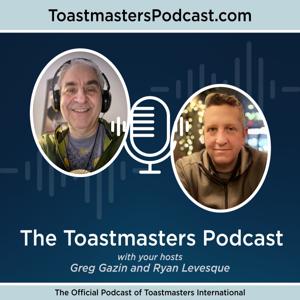


[32:03] Cross-cultural moments aren’t rare anymore—they’re woven into our daily conversations. In this episode, Greg speaks with leadership communication strategist Maria Garaitonandia about why well-meaning communication can miss the mark and how greater cultural awareness helps speakers, leaders, and teams avoid misunderstanding before it hardens into judgment.
Maria brings a practical, human lens to intercultural communication, reminding us that it’s often not intent but interpretation that shapes how our message lands. Drawing from real-world coaching experience, she explains how everyday interactions can quietly unravel trust—or strengthen it—depending on how we recognize and respond to cultural differences.
The conversation connects directly to how Toastmasters prepare and perform: awareness of audience, mindset under pressure, and the ability to pause before reacting. Maria’s insights show how communication habits shaped by culture, profession, or generation influence not just what we say, but how we’re perceived.
Maria’s article, Untangling Cultural Knots: How to Turn Misunderstandings into Bridges Between Cultures, appears in the February 2026 issue of Toastmasters Magazine.
Listeners will hear:
Misunderstandings don’t have to become fixed narratives. When speakers learn to slow down, assume positive intent, and stay curious, communication becomes more flexible—and more human.
By recognizing when culture, context, and expectation collide, we give ourselves room to respond with clarity rather than reflex, and connection rather than conflict.
About Maria Garaitonandia
Maria Garaitonandia is a leadership communication strategist, speaker, and author who helps leaders and teams untangle communication breakdowns so they can work more effectively together. Shaped by growing up across cultures, she brings more than two decades of global experience translating real-world communication challenges into practical insight.
Maria lives in Orlando, Florida and can be reached via her speaking site: https://www.mariagaraitonandia.com/ or training site http://www.globalbridgestraining.com/.
You can also find Maria on LinkedIn, Instagram, YouTube.
You can also download her free CLEAR assessment tool and don't forget to check out her new Book Untangling Communication on Amazon.
[25:52] When managing your time isn’t enough, it may be time to look at where your energy is actually going. In this episode, host Greg Gazin speaks with Ambeka Khadse, a talent development leader and Toastmasters contributor, about how a personal energy audit helps speakers and leaders move from feeling busy to working with greater focus, clarity, and intention — without adding more hours to the day.
Ambeka explains why many people struggle despite carefully managing their calendars. The issue often isn’t time, but energy — specifically, when demanding tasks are scheduled without regard for natural energy highs and lows. By identifying these patterns, speakers can align preparation, creative thinking, and important conversations with the moments they are most alert and effective.
The conversation also explores how unmanaged energy shows up in teams. When energy is misaligned, capable and motivated individuals may appear disengaged or underperforming. Small, intentional adjustments — rather than major overhauls — can help individuals build sustainable habits that support consistency, confidence, and follow-through over time.
Ambeka’s article, “Where Does Your Time Go? Use an Energy Audit to Pause, Evaluate, and Implement New Habits,”appears in the January 2026 issue of Toastmasters Magazine.
Why time management alone often fails without energy awareness
What a personal energy audit is — and what it is not
How energy misalignment can quietly affect credibility and performance
Practical ways to identify daily energy highs and slumps
Why small habit changes are more sustainable than major resets
How short movement breaks can restore focus and clarity
When and how often to revisit a personal energy audit
A personal energy audit is not about doing less. It is about doing what matters — at the right time — with intention.
Ambeka Khadse is a talent development leader, inclusion advocate, and founder of The Flourish Compass. With more than 15 years of experience in corporate learning and development, she helps individuals and organizations build clarity, leadership capability, and sustainable habits for growth. Ambeka is also a longtime yoga practitioner and serves as Vice President of Education for Toast of Queens Toastmasters.
Ambeka Khadse lives in New York City, New York, and can be reached at: www.theflourishcompass.com
She also offers a short personal energy audit worksheet, available through the Resources section of her website.
Other Resources:
Also mentioned in this episode: Snack on Exercise - Listen to our interview with Lauren Parson, AS #266: Meet Lauren Parsons, Toastmasters Newest Accredited Speaker.
[32:40] Many of us learn early on how to train our bodies, and later, how to prepare a speech through practice and repetition. But when it comes to training the mind—especially under the pressure of a live audience—most speakers are left to figure it out on their own. In this episode, Sarah Centrella joins Greg to discuss mental fitness and how speakers can prepare mentally with the same intention they bring to their speeches.
Sarah explains the difference between mental wellness and mental fitness, emphasizing that mindset is not something speakers either “have” or “don’t have.” Instead, it’s a skill that can be trained deliberately—much like vocal variety, timing, or body language. Mental fitness begins with awareness, Sarah notes, and having a practical way to redirect thoughts when they start working against you.
Drawing from her experience coaching athletes, executives, and Toastmasters, Sarah connects mental training directly to speech preparation. Even when speakers are well rehearsed, untrained thinking can work against confidence, focus, and presence at critical moments. Her approach helps speakers align their mental preparation with the work they’ve already done in practice.
Why mental fitness is a trainable skill, not a personality trait
How to manage negative self-talk before and during a speech
A practical way to redirect thoughts when nerves surface
Why preparation alone doesn’t guarantee confident delivery
How visualization supports stronger presence on stage
What to do when the mind goes blank mid-speech
How consistent mindset training accelerates speaking growth
One of the standout concepts in the episode is Sarah’s “mental tennis” analogy. Instead of absorbing negative thoughts, speakers learn to return them—replacing unhelpful internal dialogue with thoughts that support the outcome they want.
The episode reinforces a familiar Toastmasters principle: progress comes from intentional practice. Just as speeches improve through rehearsal and feedback, mental fitness develops when speakers actively train their thinking to support their goals—before, during, and after they speak.
You can read Sarah’s article “Mental Workout for Speakers: To Achieve Your Goals, Strengthen Your Mindset with a Fitness Routine” in the January 2026 issue of Toastmasters Magazine. --> ADD LINK
Sarah Centrella is a life coach, executive coach, keynote speaker, and author of four books, including Think It!. She has coached Fortune 500 companies, C-suite leaders, professional athletes, and high-performing teams, and has worked with organizations such as Nike, Pinterest, Verizon, and Sony. Sarah was an educational presenter at the 2025 Toastmasters International Convention in Philadelphia and hosts The Sarah Centrella Show podcast. Her work has been featured in The Wall Street Journal, Good Morning America, ABC News, Cosmopolitan, Prevention, Inc., and The New York Times.
Sarah lives in Portland, Oregon, and can be reached at: https://www.sarahcentrella.com, where you can also download a free copy of her Mental Fitness companion workbook. Just use the code READER at checkout.
[33:33] What if AI could help you think more clearly, simplify complex ideas, and sharpen your message—without replacing your voice or creativity? In this episode of the Toastmasters Podcast, Greg Gazin welcomes back Diane Windingland, DTM, for a practical conversation on using AI as a thinking partner to improve clarity, strengthen messages, and communicate with greater impact.
Diane offers insights on AI that remain highly relevant today, building on her 2023 Toastmaster magazine article, Using AI to Clarify, Simplify, and Test Your Message. She explains how discovering AI reshaped her workflow—from drafting content and evaluating slides to helping coaching clients prepare for interviews, presentations, and everyday communication challenges. Diane also discusses how AI can reduce overwhelm, spark new ideas, and help speakers overcome “blank page paralysis,” while still requiring human judgment, personal stories, and emotional connection.
Listeners will hear Diane discuss:
Diane also shares personal stories, from crafting a humorous Valentine’s poem for her husband to experimenting with AI while developing a humorous speech. She explains how she incorporates AI into her coaching practice and encourages clients to iterate for clarity rather than settle for first drafts. As the episode wraps up, Diane offers practical do’s and don’ts, reminding listeners to treat the first answer as a draft. Whether preparing a contest speech, designing a workshop, or writing a sensitive email, AI can help communicators think more clearly—one revision at a time.
About Diane Windingland
Diane Windingland, DTM, is a professional speaker, communication coach, and owner of Virtual Speech Coach. Originally trained as an engineer, she specializes in helping technical professionals and leaders communicate complex ideas with clarity and impact. A Toastmaster since 2003, Diane is a Past District Director, a member of 2 clubs and a regular contributor to the Toastmaster magazine. Her book, The Clarity Code: How to Communicate Complex Ideas with Simplicity and Power, explores practical strategies for simplifying complex messages and strengthening communication through thoughtful revision and clarity-focused tools.
Diane lives in Spring, Texas and can be reached via LinkedIn and via her website: VirtualSpeechCoach.com, where you can also find her blog post, Using AI to Build a “Knowledge Bridge” (and Why the Prompt Matters).
Listen to our chat with Diane on episode #230: Small Talk, Big Results – Diane Windingland.
Another great read on AI is:
How to Stand Out in an AI World: While artificial intelligence is here to stay, it’s an enhancement, not a replacement, by Victor David in the Dec 2024, Toastmaster Magazine.
Photo Credit: Diane Windingland - generated by AI.
[27:20] In this episode Greg Gazin welcomes back longtime contributor and speech delivery coach Bill Brown for a conversation that reflects back and shares lessons learned from more than a decade of writing for the Toastmaster magazine. A Toastmaster for nearly 20 years Bill has become a familiar name to readers through The Toastmasters Toolbox, The Answer Man, and dozens of feature articles written since 2014.
This episode coincides with Bill’s final Answer Man column and his reflective December 2025 article, “Lessons from the Toastmaster: Discover What I Have Learned as a Writer for the Magazine.” Bill describes how a simple hallway chat with former magazine editor Jennie Harris unexpectedly launched what would become a plethora of articles—including nine years of monthly columns.
Greg revisits Bill’s earlier podcast appearances as well, including Episode #206, “Receiving Feedback: A Valuable Skill You Can Improve On,” (June 2022) where Bill explored the under-discussed art of accepting and applying feedback. That theme re-emerges here as Bill talks about how editorial guidance helped him adapt his writing for a global audience—learning to “think like a listener” and write more universally.
Listeners will hear Bill discuss:
How writing strengthened his speaking, helping him craft tighter messages with clearer cadence.
Why rhythm and flow matter—including a brief, powerful recitation from Douglas MacArthur’s “Duty, Honor, Country.”
Challenges in early Pathways navigation, and how one article unexpectedly helped rural clubs get their footing.
His passion for speech delivery, especially vocal variety and cadence as core elements of listener engagement.
Surprising moments of feedback, including responses from Toastmasters in remote or underserved areas.
Why memorizing a speech frees you to deliver with authenticity and connection rather than anxiety.
The episode also revisits one of Bill’s popular humor pieces, “Make Your Speeches Something to Laugh At”(December 2020), as he and Greg unpack the “alternate meaning” technique, pun-based humor, and how to recover when the wrong meaning lands unintentionally.
As he transitions from column writing, Bill shares what’s ahead: new delivery-training programs, books in development, fresh articles, and continued contributions to Toastmasters International. As he says, Toastmasters HQ has already made it clear—“they’re not done with me yet.”
To read his December 2025 article and enjoy his final Answer Man column, visit the Toastmaster magazine.
Other articles mentioned: Memorize Your Speech to Avoid Interruptions, (Nov 2025) and Help! Our Club Needs Members: Discover where to find members in your community. (March 2024.)
Greg's humorous speech: Much Ado About Gadgets. Video, Audio- Podcast.
Bill Brown, DTM, is a speech delivery coach and long-time contributor to the Toastmaster magazine and is a member of Energy Capital Toastmasters in Gillette, Wyoming. Bill helps speakers elevate their delivery, strengthen their presence, and communicate with clarity and impact. You can reach him at BillBrownSpeechCoach.com.
[31:36] What does it take to build a thriving Corporate Toastmasters club within a business—and turn it into a catalyst for professional growth and company culture? In this episode, Greg Gazin chats with Lance Kotler, a Vice President at BNY Mellon and Vice President of Membership for the BNY Mellon Toastmasters Club in New York City.
Lance, one of five members featured in a recent Toastmaster magazine article, shares his experiences in how his club helped organize a global open house that drew more than 2,000 attendees—including the company’s CEO. He shares how his CEO embraces Toastmasters and how he spoke openly about his vulnerability on his public speaking journey.
Lance also discusses how gaining executive awareness and sponsorship can transform a club’s visibility and impact, and how Toastmasters continues to bring people together across all levels of an organization.
He further opens up about his own personal journey—how joining Toastmasters soon after starting at BNY Mellon helped him grow as a communicator, connect with leaders across the company, and develop skills that directly benefit his career.
Listen now and discover:
Read more in “Corporate Clubs Get Creative – Gaining Executive Support Is a Key to Success,” by Emily Sachs, DTM, in the October 2025 issue of Toastmaster magazine.
About Lance Kotler
Lance Kotler is a Vice President at BNY Mellon in the Treasury Services group, working with some of the company’s largest energy and utility clients in payments, cash management, and trade finance. He’s been with the organization for three and a half years and a Toastmaster since joining the bank, serving as Vice President of Membership for the past two and a half years.
A graduate of Johns Hopkins University, Lance earned majors in International Studies, Economics, and Political Science, with minors in Financial Economics, Spanish, and History.
He lives in New York City, NY and can be reached at lkot1004 at gmail.com.
Additional Resources:
You can also read in the same issue another article by Emily Sachs where she features corporate club expert PIP Pat Johnson where she offers a wealth of insights on corp clubs
Wait there’s more…
You can listen to Pat Johnson on The Toastmasters Podcast episode 148 in an extended interview where she deep dives into…the topic and shares about her book, Handbook for Building & Sustaining Vibrant Toastmaster Programs in Corporations.
Saby, a behavioral change expert based in Amsterdam, Netherlands, rose above seven other finalists after several elimination rounds that began earlier in the year with thousands of participants from more than 100 countries. A two-time TEDx speaker and host of the Method and Madness podcast, he helps organizations embrace the human side of change—with energy, humor, and heart.
In this inspiring episode, Sabyasachi shares the story behind his winning speech and the powerful symbolism behind kissing the stage—a gesture of respect and gratitude rooted in his Indian heritage. He reveals how “Just Nod” evolved from a 2014 humorous contest piece into a masterful reflection on creativity, resilience, and performing with authenticity. Saby also opens up about nearly missing this year’s contest due to travel and self-doubt, the lessons he learned from past setbacks, and how detaching from outcomes allowed him to rediscover the pure joy of performing.
We also discuss his semifinal speech, “Donkey,” his love for storytelling, and his belief that humor, when authentic, can inspire just as deeply as a serious message.
You can read more in “Meet the Winners of the 2025 World Championship of Public Speaking,” by Laura Amann, in the November 2025 issue of Toastmaster magazine (link to come).
Originally from India, Sabyasachi Sengupta is a behavioral change expert, consultant, and keynote speaker based in Amsterdam, Netherlands. He also helps organizations and individuals embrace change through communication and creativity. He's worked with global brands including Domino’s Pizza, LinkedIn, Uber, Shell, Nike, and Universal Studios. He’s also a two-time TEDx speaker, host of the Method in Madness podcast, and author of the book What’s Your Plan B?
He is a proud Toastmaster for 14 years and a member of Fusion Toastmasters Amsterdam.
Saby lives in Amsterdam, Netherlands. You can connect with him on LinkedIn, Instagram, or by email at [email protected].
Drawing from both personal experience and the concepts introduced in Gay Hendricks’ book The Big Leap, Katie explores the four zones of work—incompetence, competence, excellence, and genius—and explains why so many people get stuck in the “zone of excellence,” where they’re skilled but not truly fulfilled.
Katie shares practical strategies for finding your own zone of genius, and how doing so can transform not only your professional life but your leadership, relationships, and overall happiness. She also reveals how Toastmasters gave her the confidence and clarity to communicate her ideas more powerfully—and ultimately helped her make her own leap from engineering to entrepreneurship.
Listen now and discover:
The four zones of work: incompetence, competence, excellence, and genius
Why the zone of excellence can hold you back
How to recognize and spend more time in your zone of genius
Steps to align your work with your passions
How Toastmasters helped Katie unlock new dimensions of leadership and communication
Katie’s article, “Leading from Your Zone of Genius: Understanding Where You and Your Teammates Excel Makes Less Work of Work,” appears in the July 2025 issue of Toastmaster magazine.
For another engineer who found her voice on stage, listen to #267: Meet Maureen Zappala, Toastmasters’ 2024 Newest Accredited Speaker, the former NASA “rocket scientist” turned keynote speaker.
Katie Stoddart is the founder and CEO of The Focus Bee, a high-performance coaching organization dedicated to helping leaders and teams align with their purpose and perform at their best. She’s an award-winning transformative coach, leadership facilitator, and author of The Magic of Focus. Katie also hosts The Focus Bee Show, a top-ranked weekly podcast with over 300 episodes, where she interviews thought leaders and high performers from around the world.
Katie lives in Stockholm, Sweden, and works globally to help individuals and organizations lead with alignment, purpose, and joy.
Learn more at thefocusbee.com or connect with Katie by e-mail on LinkedIn.
[39:37] What do singing and public speaking have in common? According to Jillian Mitchell, more than you might think. In this fun and hands on episode, host Greg Gazin chats with Jill about why singing isn’t just for performers—it’s a secret weapon for confident communication. A professional singer, recording artist, and vocal coach with nearly 20 years of experience, Jill explains how singing strengthens your voice, sharpens articulation, improves pitch, and builds stamina. More than mechanics, she reveals how singing taps into the emotional side of the voice, helping speakers connect with authenticity and presence.
In this educational and entertaining episode, You’ll also learn how music affects the brain, how playlists can calm nerves or boost energy before a presentation, and why Jillian believes that anyone—not just trained singers—can improve his or her speaking, presentation, and delivery skills from practising and learning how to sing out loud.
Jill also offers 5 benefits of how singing can also improve our everyday converations.
Jill puts Greg in the hot seat as her student, guiding him (and listeners) through fun, hands-on vocal exercises you can try at home.
Listen now and discover:
Jill’s article Sing It Loud, Speak It Clear: Why singing is the secret weapon for confident communication, appears in the Oct 2025 issue of the Toastmaster Magazine.
Jillian Mitchell is a recording artist, vocal coach, and voice advocate. She has performed alongside music legends including Trooper and Rik Emmett of Triumph and is the founder of Voxsana, a vocal method now expanded to an online platform dedicated to voice empowerment. A regular contributor to Toastmasters Magazine and a speaker coach for TEDx Royal Roads University, she is currently working on her first book, The Singer’s Survival Guide.
Jill lives in Victoria, British Columbia, with her husband Sean—her partner in the pop-rock duo Echo Drop—and their two children. You can reach her at Voxsana.co.
Jill was previously featured on the Toastmasters Podcast in Episode 226: Tone Up Your Voice.
For yet another way to use your voice, check out Episode 283: Storytelling & Presentation Tips through Audio Book Narration – Karen Merritt.
Drawing on her background in theater and years of voice acting, Karen shares the secrets of audiobook narration—from mastering vocal variety to creating authentic character voices. She reveals how narrators use pitch, pace, tone, and even body language to transport listeners into a story.
You’ll also hear how Karen helps medical students build empathy as a standardized patient, teaches aspiring performers, and inspires others through her Toastmasters journey. Despite years on stage, she once feared public speaking—until Toastmasters gave her the confidence to bring her own authentic voice to audiences.
Whether you’re preparing a speech, recording a podcast, or just want to be a more engaging storyteller, this episode is filled with practical tips you can start using today.
Why audiobook narration is more than “reading out loud”
How to use vocal variety to make stories come alive
The role of body language—even when no one can see you
How Toastmasters helped Karen overcome stage fright
Practical tips for applying narration techniques to your next speech
Karen is one of the experts featured in Theater of the Ear: Uncover Storytelling Tips from Audio Narrators, Voice actors share their insights on how to tell an engaging story by Caren S. Neile. It can be found in the September 2025 issue of the Toastmaster Magazine.
Karen Merritt is a multifaceted performer—actor, voice-over artist, and producer. As an audiobook narrator, she brings emotional depth and clarity to every project, drawing on her theater background. Her performances span Shakespearean dramas, contemporary plays, commercials, corporate videos, animation, and educational video games.
Acting credits include her latest audiobook, Call to Embrace: Hope of His Calling by Maryann Landers, available on Audible and other major platforms. Karen also serves as a standardized patient, helping medical professionals build empathy through role-play, and as a teaching artist, she shares her craft with aspiring performers of all ages.
Karen is a member of the Elegant Speakers & Listeners (ESL) Toastmasters Club, where she currently serves as Vice President Membership.
Karen lives in Pittsburgh, PA USA and can be reached at https://www.karenmerritt.com/.
From the publisher's feed

10,890 Listeners

10,501 Listeners

14,267 Listeners

1,455 Listeners

13,473 Listeners

138 Listeners
34 Listeners

1,424 Listeners
97 Listeners

7,929 Listeners

803 Listeners

28,981 Listeners

18,838 Listeners

159 Listeners
2 Listeners