
Sign up to save your podcasts
Or

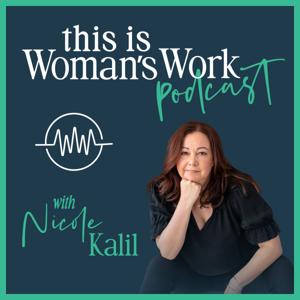


Somewhere along the way, women were sold a lie: competition is the price of ambition. Be faster. Be louder. Be better. And if someone else wins? You must lose.
In this episode of This Is Woman’s Work, Nicole Kalil sits down with Ruchika T. Malhotra—founder and CEO of Candour, a global inclusion strategy firm, and author of Uncompete: Rejecting Competition to Unlock Success—to dismantle the zero-sum mindset and replace it with something far more powerful: collaboration, abundance, and shared success.
Ruchika, a former business journalist and contributor to Harvard Business Review (including co-author of one of HBR’s most-read articles, Stop Telling Women They Have Impostor Syndrome), brings research, global perspective, and real-world strategy to challenge how we think about workplace competition, women in leadership, and ambition.
Together, they unpack:
Why competition in real life rewards conformity—not excellence
The difference between comparison (human) and competition (optional)
How social media fuels constant, low-grade competitive anxiety
What “uncompeting” looks like in promotions, leadership, and career growth
How to turn envy into data instead of self-destruction
Why competing with other women isn’t strategy—it’s conditioning
Bottom line: Uncompeting isn’t about lowering ambition. It’s about rejecting scarcity, defining success on your own terms, and building long-game leadership rooted in integrity—not insecurity.
Thank you to our sponsors!
Shopify has everything all in one place, making your life easier and your business operations smoother. Sign up for your one-dollar-per-month trial today at shopify.com/tiww
Connect with Ruchika:
Website: https://www.ruchika.co/
Book: www.uncompetebook.com
LI: https://www.linkedin.com/in/ruchikatm
IG: https://www.instagram.com/rtulshyan/
🔗 Subscribe & Review:Apple Podcasts | Spotify | Amazon Music | YouTube
Learn more about your ad choices. Visit megaphone.fm/adchoices
What if meditation isn’t about sitting still, clearing your mind, or becoming some perfectly calm, enlightened human?
What if it’s simply about presence?
In this episode of This Is Woman’s Work, Nicole Kalil sits down with entrepreneur, TEDx speaker, and founder of the globally consumed meditation podcast A Zen Mind, Jo Rose, to talk about meditation for real life, nervous system regulation, and how cultivating presence can transform the way we work, lead, and live.
In this conversation, we explore:
The biggest myths about meditation and why so many people think they “can’t meditate”
Why meditation isn’t about silencing your mind
How presence and mindfulness can happen during conversations, movement, or everyday tasks
The connection between nervous system regulation and feeling calm, open, and grounded
Why trying to control outcomes often blocks creativity and intuition
The difference between forcing results vs. allowing flow states
How to discover routines that support your mental health and well-being (and why copying someone else’s routine rarely works)
The power of devotion over discipline when building meditation and mindfulness practices
Because meditation isn’t about perfection. It’s about noticing when your mind wanders… and bringing it back. Over and over again.
Thank you to our sponsors!
Shopify has everything all in one place, making your life easier and your business operations smoother. Sign up for your one-dollar-per-month trial today at shopify.com/tiww
Listen to A Zen Mind Podcast & Connect With Jo Rose:
Spotify: https://open.spotify.com/show/69Jm0pfRlpnaBDaioynNaX?si=r9BQATHYRei2Hm0tBQ2O8w&nd=1&dlsi=dcf04fdb2d8b4ab6
Apple: https://podcasts.apple.com/us/podcast/a-zen-mind-guided-meditations/id1599159160
YouTube: https://www.youtube.com/@azenmind
IG: https://www.instagram.com/a.zen.mind
Website: https://azenmindglobal.com/
If you found this episode insightful, please share it with a friend, tag us on social media, and leave a review on your favorite podcast platform!
🔗 Subscribe & Review:Apple Podcasts | Spotify | Amazon Music | YouTube
Learn more about your ad choices. Visit megaphone.fm/adchoices
Some phrases women hear on repeat really need to be retired — permanently.
In this unfiltered & unhinged short episode of This Is Woman’s Work, Nicole Kalil revisits her earlier rant “Stop Saying That” (Episode 216) and adds another phrase to the list: “You look tired.”
Nicole explains why this comment — even when it’s meant with good intentions — isn’t helpful. If someone looks exhausted, chances are they already know. Between work, family, responsibilities, and the never-ending mental load women carry, it’s no surprise so many are running on fumes.
Instead of pointing it out, Nicole suggests a better approach: ask how someone is doing, offer support, or bring coffee.
Because there’s a big difference between making an observation and showing actual care. And yes, women are tired — but we keep showing up anyway.
Thank you to our sponsors!
Shopify has everything all in one place, making your life easier and your business operations smoother. Sign up for your one-dollar-per-month trial today at shopify.com/tiww
Connect with Nicole:
Subscribe to Nicole’s Substack: https://nicolekalil.substack.com/
Join the Inner Circle: https://nicolekalil.myflodesk.com/newsletter
If you found this episode insightful, please share it with a friend, tag us on social media, and leave a review on your favorite podcast platform!
🔗 Subscribe & Review:Apple Podcasts | Spotify | Amazon Music | YouTube
Learn more about your ad choices. Visit megaphone.fm/adchoices
For years, women have been told to just focus harder, get organized, use the planner, and stick to the system. But when those systems don’t work, the assumption is that we’re the problem.
In this episode of This Is Woman’s Work, Nicole Kalil sits down with ADHD counselor, author, and creator of the ADHD Regulation Method, Jenna Free, to challenge the idea that there’s a “right” way for our brains to function.
Jenna offers a different perspective: ADHD isn’t a defect — it’s a brain difference. And many of the struggles people associate with ADHD may actually come from something else entirely — chronic nervous system dysregulation and living in constant fight-or-flight mode.
In this conversation, Jenna breaks down why so many traditional productivity tools fail people with ADHD, how dysregulation fuels overwhelm and procrastination, and what it actually takes to create balance, focus, and sustainable productivity.
This conversation isn’t just for people with ADHD. It’s for anyone who has ever felt overwhelmed, stuck, behind, or convinced that they just need to try harder.
In this episode, we explore:
Why ADHD is considered a brain difference, not a disorder or failure
How chronic fight-or-flight dysregulation amplifies ADHD symptoms
Why rushing is one of the biggest signals of nervous system dysregulation
The difference between living in potential vs. reality (and why it matters)
The role of curiosity — instead of guilt and shame — in changing patterns
Why traditional productivity advice often backfires for ADHD brains
When medication can be helpful — and why it’s not a moral decision
If you’ve ever felt like your brain just doesn’t cooperate with the way the world expects you to work… this conversation might just change how you see yourself.
Thank you to our sponsors!
Shopify has everything all in one place, making your life easier and your business operations smoother. Sign up for your one-dollar-per-month trial today at shopify.com/tiww
Connect with Jenna:
Website: https://www.adhdwithjennafree.com/
Book: https://www.amazon.com/Simple-Guide-ADHD-Regulation-Enjoying/dp/1400254698
IG: www.instagram.com/adhdwithjennafree
TikTok: www.tiktok.com/@adhdwithjennafree
If you found this episode insightful, please share it with a friend, tag us on social media, and leave a review on your favorite podcast platform!
🔗 Subscribe & Review:Apple Podcasts | Spotify | Amazon Music | YouTube
Learn more about your ad choices. Visit megaphone.fm/adchoices
AI is officially in the workplace, on the group chat, and probably drafting someone’s “thought leadership” while they’re still in the shower. In this episode of This Is Woman’s Work, Nicole Kalil goes toe-to-toe with the thing that’s equal parts fascinating and mildly rage-inducing: AI and the future of work.
Enter Katie Fortunato, Co-Founder and EVP of Platform Innovation & Strategy at Hire Innovations, a global leader in human-centered AI talent technology. Together, they unpack how to use AI as a tool (not a personality), how to avoid “automation without accountability,” and why the future belongs to humans who can still think, judge, and lead—aka the “skills” no bot can fake convincingly for long.
In this episode, they get into:
Why AI feels like cheating… and when it actually is
The difference between using AI for productivity vs. outsourcing your identity
“Brand choices” (aka: how to lose audience trust in one easy AI avatar)
How to start using AI if it’s intimidating: repeat-task lists, tiny experiments, and momentum
Picking AI tools without spiraling: ChatGPT, Gemini, Claude—and why it’s like joining a gym
AI in hiring: what “responsible AI” actually looks like in talent tech
The uncomfortable truth: there is no 100% guarantee—so you need guardrails
Vendor trust, data privacy, compliance, and why downloading random tools at work is chaos behavior
Why protecting critical thinking is urgent—especially for kids (and honestly, adults too)
The core takeaway: let AI handle repetitive work so humans can double down on context, curiosity, judgment, and care
Wrap-up (because the point is the point): Nicole and Katie land on a clear line in the sand—AI can boost productivity, but it shouldn’t replace human thinking, discernment, or authenticity. The future of work won’t just be shaped by what AI can do; it’ll be shaped by what people choose to protect while using it.
Thank you to our sponsors!
Shopify has everything all in one place, making your life easier and your business operations smoother. Sign up for your one-dollar-per-month trial today at shopify.com/tiww
Connect with Katie:
LI: https://www.linkedin.com/in/katieclarkfortunato/
https://www.linkedin.com/company/talivitynetwork/
https://www.linkedin.com/company/recruitics/
Jobstream (INVITE CODE FOR CREATORS & COMMUNITIES: FOUNDER) : https://bit.ly/48fneLK
If you found this episode insightful, please share it with a friend, tag us on social media, and leave a review on your favorite podcast platform!
🔗 Subscribe & Review:Apple Podcasts | Spotify | Amazon Music | YouTube
Learn more about your ad choices. Visit megaphone.fm/adchoices
Let’s talk about the glow-up no one told you about: the one where you hit midlife and suddenly cannot be bothered with other people’s bullshit anymore.
Because somewhere between perimenopause, professional burnout, emotional labor overload, and decades of people-pleasing, something shifts. You stop cushioning your words. You stop managing everyone else’s feelings like it’s your unpaid side hustle. And when someone asks, “Are you okay?” the answer is, “Better than ever. I just ran out of estrogen—and tolerance.”
In this episode, Nicole sits down with licensed clinical therapist Ellen Scherr to unpack the neuroscience behind what she calls “aging out of f*cks.” Spoiler alert: this isn’t bitterness. It’s biology.
As estrogen declines in midlife, it impacts multiple neurochemical systems in the brain—systems tied to anxiety, people-pleasing, anger regulation, and emotional buffering. The “popular girl at the party” (aka estrogen) leaves… and suddenly the whole dynamic changes. What once felt like obligation starts to feel optional. What once felt terrifying starts to feel negotiable. And what once felt like “I should” becomes “Do I even want to?”
They dive into:
The neuroscience of perimenopause and menopause—and how hormonal changes impact confidence, risk-taking, and people-pleasing
Why women’s confidence actually increases with age (and can surpass men’s in their 60s)
The lifelong cost of emotional labor—and why it starts to break down in midlife
How negativity bias keeps women stuck in fear (and how to reframe it)
The difference between legitimate feedback and social punishment
Why so many women make bold career, relationship, and life changes in their 40s, 50s, and beyond
Whether it’s possible to “speed up” the process of caring less in your 20s and 30s
This isn’t about blowing up your life. It’s about understanding the neuroscience of midlife, reclaiming your authenticity, setting boundaries, and rewiring old people-pleasing patterns.
Aging out of f*cks isn’t decline—it’s development. It’s honesty over harmony. And if you’re suddenly “too much”? Good. You’re not here to be palatable. You’re here to be you.
Thank you to our sponsors!
Shopify has everything all in one place, making your life easier and your business operations smoother. Sign up for your one-dollar-per-month trial today at shopify.com/tiww
Connect with Ellen:
Website: www.lifebranches.com
Substack: https://substack.com/search/blog.lifebranches.com?utm_source=global-search
Oprah Daily: https://substack.com/search/blog.lifebranches.com?utm_source=global-search
If you found this episode insightful, please share it with a friend, tag us on social media, and leave a review on your favorite podcast platform!
🔗 Subscribe & Review:Apple Podcasts | Spotify | Amazon Music | YouTube
Learn more about your ad choices. Visit megaphone.fm/adchoices
We love a good “never quit” mantra. Hustle. Grind. Push through. Stay committed.
But what if the bravest move isn’t doubling down… it’s pivoting?
In this episode of This Is Woman’s Work, Nicole Kalil sits down with Melissa Gonzalez — principal at MG2, shareholder at Collier’s Engineering and Design, founder of The Lioness Group, and author of The Purpose of Pivot: How Dynamic Leaders Put Vulnerability and Intuition into Action — to unpack one of the hardest leadership and life questions: How do you know when it’s time to pivot?
Because staying the course can be grit… or it can be self-betrayal.And pivoting can be courage… or it can be avoidance.
The line? Blurry as hell.
Together, they explore how to tell the difference between fear and intuition, discomfort and misalignment, commitment and stuckness — and how to make intentional, purpose-driven decisions without blowing up your entire life (unless you actually need to).
They explore:
The physical and emotional signs it’s time to pivot
How to run an “energy audit” to see what fuels vs. drains you
The difference between purposeful change and running away
Why clarity about your purpose makes decisions easier
How to stop letting other people’s opinions drive your choices
Because pivoting doesn’t require certainty. It requires discernment. And staying isn’t noble if it’s shrinking you. The goal isn’t to get it perfect. It’s to stay in relationship with yourself while you decide.
Thank you to our sponsors!
Shopify has everything all in one place, making your life easier and your business operations smoother. Sign up for your one-dollar-per-month trial today at shopify.com/tiww
Connect with Melissa:
Website: https://www.melissagonzalez.com/
Book: https://www.amazon.com/Purpose-Pivot-Dynamic-Vulnerability-Intuition/dp/1394329474
IG: https://www.instagram.com/melsstyles/
LI: https://www.linkedin.com/in/melissagonzalezlionesque/
If you found this episode insightful, please share it with a friend, tag us on social media, and leave a review on your favorite podcast platform!
🔗 Subscribe & Review:Apple Podcasts | Spotify | Amazon Music | YouTube
Learn more about your ad choices. Visit megaphone.fm/adchoices
What happens when a woman refuses to follow the script she was handed?
In this episode of This Is Woman’s Work, Nicole Kalil sits down with award-winning journalist, bestselling author, and former Good Morning America co-host Joan Lunden to talk about reinvention, leadership, pay equity, aging, caregiving, and choosing yourself — again and again.
Joan was offered the co-host role at Good Morning America the same day she found out she was pregnant. In the 1970s. When working mothers were barely visible on television, and “breastfeeding” wasn’t even a word you could say on air. She brought her baby to work anyway.
Throughout her career, she negotiated creative compensation before pay equity was a mainstream conversation, pushed back on being labeled “second banana,” navigated public scrutiny, and later reinvented herself again — this time as a fierce advocate for women’s health, breast cancer awareness, dense breast legislation, and caregiver rights.
In this conversation, she shares:
How to reinvent yourself at every stage of life
What it takes to negotiate power in male-dominated spaces
The pressure of being the “perfect working mom”
How she handled media criticism and public expectations
Why sisterhood and strong women behind the scenes mattered most
Joan’s story is proof that reinvention isn’t a phase — it’s a practice. And ambition doesn’t expire just because culture says it should.
Choosing yourself isn’t one bold move. It’s a lifetime of them.
Thank you to our sponsors!
Shopify has everything all in one place, making your life easier and your business operations smoother. Sign up for your one-dollar-per-month trial today at shopify.com/tiww
Connect with Joan:
Website: https://joanlunden.com/
Book: https://www.amazon.com/JOAN-Beyond-Script-Joan-Lunden/dp/1637634927/
IG: https://www.instagram.com/therealjoanlunden/
FB: https://www.facebook.com/JoanLunden
If you found this episode insightful, please share it with a friend, tag us on social media, and leave a review on your favorite podcast platform!
🔗 Subscribe & Review:Apple Podcasts | Spotify | Amazon Music | YouTube
Learn more about your ad choices. Visit megaphone.fm/adchoices
This podcast often explores ambition, leadership, confidence, and impact.
But sometimes? Woman’s work looks a whole lot more like survival.
Not the inspirational quote version. Not the neat-and-tidy comeback story. Not the “and then she rose” highlight reel.
This episode of This Is Woman’s Work dives into the raw, relentless, day-by-day kind of survival — the kind that asks someone to keep showing up while life is actively coming apart.
Nicole Kalil is joined by Kathy Giusti — two-time cancer survivor, healthcare entrepreneur, founder of the Multiple Myeloma Research Foundation (MMRF), and author of Fatal to Fearless. After being diagnosed with multiple myeloma at 37 and given three years to live, Kathy turned her prognosis into a movement that helped transform cancer research and dramatically extend life expectancy for patients.
Yes. From terminal diagnosis to systemic change.
What survival really looks like after a terminal cancer diagnosis
Why resilience isn’t pretty — and rarely feels brave in the moment
The difference between “fighting” cancer and running a marathon with it
How to advocate for yourself inside a broken healthcare system
Why women must step into the role of CEO of their own healthcare
The power (and responsibility) of using social media wisely for medical information
The hard truth about boundaries, burnout, and forgetting to live while trying to stay alive
Kathy shares what it meant to raise a family while preparing for death. To build a global research foundation while undergoing chemotherapy. To carry hope, fear, responsibility, and grief — all at once.
And perhaps most powerfully, she shares the regret she didn’t anticipate: that in trying to save her life (and so many others), she sometimes forgot to fully live it.
Thank you to our sponsors!
Shopify has everything all in one place, making your life easier and your business operations smoother. Sign up for your one-dollar-per-month trial today at shopify.com/tiww
Connect with Kathy:
Website: https://www.kathygiusti.com/
Book: https://www.kathygiusti.com/book
LI: https://www.linkedin.com/in/kathygiusti/
IG: https://www.instagram.com/kathy.giusti/
FB: https://www.facebook.com/KathyGiustiMMRF
If you found this episode insightful, please share it with a friend, tag us on social media, and leave a review on your favorite podcast platform!
🔗 Subscribe & Review:Apple Podcasts | Spotify | Amazon Music | YouTube
Learn more about your ad choices. Visit megaphone.fm/adchoices
Let’s talk about the thing you replay over and over in your mind at 2 a.m.
The comment in the meeting. The story you shared. The truth that felt a little too honest.
Welcome to the oversharing hangover.
We’ve been taught that credibility requires polish and power lives in restraint. Keep it tight. Keep it tidy. Keep the messy parts to yourself.
But what if that’s wrong?
In this episode, Nicole sits down with Leslie John, Harvard Business School professor and author of Revealing: The Underrated Power of Oversharing, to unpack what the research actually says about vulnerability, trust, and credibility — and why saying less might be costing you more than you think.
Why oversharing can build trust
The difference between thoughtful revealing and emotional dumping
How admitting mistakes can increase credibility at work
The “Goldilocks rule” of vulnerability
How to weigh the cost of revealing vs. staying silent
The research is clear: we consistently trust people who reveal something real more than those who stay guarded.
And thoughtful vulnerability doesn’t weaken your credibility — it strengthens it
Thank you to our sponsors!
Sex is a skill. Beducated is where you learn it. Visit https://beducate.me/bg2602-womanswork and use code womanswork for 50% off the annual pass.
Shopify has everything all in one place, making your life easier and your business operations smoother. Sign up for your one-dollar-per-month trial today at shopify.com/tiww
Connect with Leslie:
Website: https://www.lesliekjohn.com/
Book: https://www.amazon.com/Revealing-Underrated-Oversharing-Leslie-John/dp/0593545389
LI: https://www.linkedin.com/in/leslie-john-75928721/
IG: https://www.instagram.com/proflesliejohn/
If you found this episode insightful, please share it with a friend, tag us on social media, and leave a review on your favorite podcast platform!
🔗 Subscribe & Review:Apple Podcasts | Spotify | Amazon Music | YouTube
Learn more about your ad choices. Visit megaphone.fm/adchoices
From the publisher's feed
13,488 Listeners

21,048 Listeners

1,486 Listeners

7,714 Listeners

31,730 Listeners

8,527 Listeners
9,070 Listeners

3,298 Listeners

27,762 Listeners

471 Listeners

41,388 Listeners

1,095 Listeners

19,254 Listeners

381 Listeners

8,463 Listeners