
Sign up to save your podcasts
Or


I am a public philosopher, it is my only job. I am enabled to do this job, in large part, thanks to support from my listeners and readers. You can support my work, keep it independent and online, at https://stoicismpod.com/members
Looking for more Stoic content? Consider my 3x/week newsletter "Stoic Brekkie": https://stoicbrekkie.com
In this episode, I respond to a listener question prompted by the loss of a long-lived orchid. The plant did not die from neglect, but from care that was given in ignorance. What was meant to nurture it slowly caused harm. From that story comes a serious Stoic question: when does patience become self-abandonment? When does non-reactivity turn into tolerating conditions that prevent growth?
I address a common misunderstanding of Stoicism that treats emotional detachment as a virtue in itself. Stoicism does not teach that we should endure all conditions indefinitely, nor that thriving means being comfortable, happy, or externally successful. To thrive, in the Stoic sense, is to pursue moral excellence. Health, wealth, and calm are not the measure. Character is.
I make a distinction between the Stoic sage and the rest of us. A sage could flourish in any environment, but most of us are not sages. Environments shape the range of choices available to us. While our surroundings cannot force us to act viciously, they can limit what just and reasonable options are open to us. Poor environments narrow choice. Better environments expand it.
From that, I argue that changing your environment can be a Stoic obligation, not a failure of resilience. If a situation consistently restricts your ability to live out your roles well, whether as a parent, partner, or moral agent, then leaving or changing that environment may be the just choice, provided it is done without abandoning responsibilities or harming others.
Stoic endurance is not passive tolerance of harm. It is rational engagement with reality, including the reality that sometimes the right move is to change the soil, not blame the plant.
Listening on Spotify? Leave a comment! Share your thoughts.
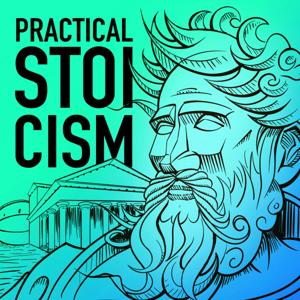
Podcast artwork by Original Randy: https://www.originalrandy.com
Learn more about your ad choices. Visit megaphone.fm/adchoices
Mentioned in this episode:
Fill out the survey
https://stoicismpod.com/survey
 View all episodes
 By Tanner Campbell

4.8
633633 ratings
I am a public philosopher, it is my only job. I am enabled to do this job, in large part, thanks to support from my listeners and readers. You can support my work, keep it independent and online, at https://stoicismpod.com/members
Looking for more Stoic content? Consider my 3x/week newsletter "Stoic Brekkie": https://stoicbrekkie.com
In this episode, I respond to a listener question prompted by the loss of a long-lived orchid. The plant did not die from neglect, but from care that was given in ignorance. What was meant to nurture it slowly caused harm. From that story comes a serious Stoic question: when does patience become self-abandonment? When does non-reactivity turn into tolerating conditions that prevent growth?
I address a common misunderstanding of Stoicism that treats emotional detachment as a virtue in itself. Stoicism does not teach that we should endure all conditions indefinitely, nor that thriving means being comfortable, happy, or externally successful. To thrive, in the Stoic sense, is to pursue moral excellence. Health, wealth, and calm are not the measure. Character is.
I make a distinction between the Stoic sage and the rest of us. A sage could flourish in any environment, but most of us are not sages. Environments shape the range of choices available to us. While our surroundings cannot force us to act viciously, they can limit what just and reasonable options are open to us. Poor environments narrow choice. Better environments expand it.
From that, I argue that changing your environment can be a Stoic obligation, not a failure of resilience. If a situation consistently restricts your ability to live out your roles well, whether as a parent, partner, or moral agent, then leaving or changing that environment may be the just choice, provided it is done without abandoning responsibilities or harming others.
Stoic endurance is not passive tolerance of harm. It is rational engagement with reality, including the reality that sometimes the right move is to change the soil, not blame the plant.
Listening on Spotify? Leave a comment! Share your thoughts.
Podcast artwork by Original Randy: https://www.originalrandy.com
Learn more about your ad choices. Visit megaphone.fm/adchoices
Mentioned in this episode:
Fill out the survey
https://stoicismpod.com/survey
15,251 Listeners
2,698 Listeners

14,277 Listeners

1,798 Listeners
12,754 Listeners

405 Listeners

4,945 Listeners

579 Listeners
55 Listeners

29,207 Listeners
102 Listeners
99 Listeners
37 Listeners
28 Listeners
68 Listeners