
Sign up to save your podcasts
Or

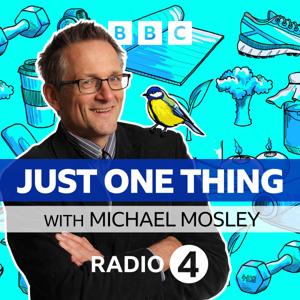

Tracking your exercise is a simple and surprisingly effective way to motivate you to move more. Most of us own an exercise tracker, whether it’s the fitness app on our phone or a special bit of kit on our wrist. But how do they make us more active? Professor Carol Maher, from the University of Southern Australia, has found wearing an activity tracker really can encourage more physical activity. She tells Michael how the instant feedback allows people to take control of their activity levels. Michael learns the extra movement a tracker encourages can really help improve your brain power and reduce your risk of certain cancers and type 2 diabetes. Volunteer Rumbi opens her fitness app and steps out to see if it really works.
Series Producer: Nija Dalal-Small
 View all episodes
 By BBC Radio 4

4.7
162162 ratings
Tracking your exercise is a simple and surprisingly effective way to motivate you to move more. Most of us own an exercise tracker, whether it’s the fitness app on our phone or a special bit of kit on our wrist. But how do they make us more active? Professor Carol Maher, from the University of Southern Australia, has found wearing an activity tracker really can encourage more physical activity. She tells Michael how the instant feedback allows people to take control of their activity levels. Michael learns the extra movement a tracker encourages can really help improve your brain power and reduce your risk of certain cancers and type 2 diabetes. Volunteer Rumbi opens her fitness app and steps out to see if it really works.
Series Producer: Nija Dalal-Small

7,720 Listeners

1,067 Listeners

392 Listeners

5,550 Listeners

1,793 Listeners

1,734 Listeners

1,020 Listeners

2,019 Listeners

266 Listeners

82 Listeners

78 Listeners

263 Listeners

595 Listeners

3,816 Listeners

141 Listeners
296 Listeners

3,166 Listeners

1,008 Listeners

124 Listeners

1,004 Listeners
238 Listeners

118 Listeners

2,068 Listeners
109 Listeners