
Sign up to save your podcasts
Or

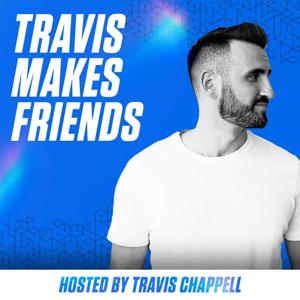


In this episode, Travis and producer Eric discuss Disney’s appointment of former Character.AI CEO Karandeep Anand as its first Chief Technology Officer and what the move could mean for the company’s approach to artificial intelligence. They explore the tension between using AI to increase efficiency and production while preserving the human creativity and craftsmanship that make entertainment meaningful. The conversation also examines the growing tendency for companies to add “AI” to products and services as a way to signal innovation, even when the underlying technology may not be particularly new.
On this episode we talk about:
Disney appointing former Character.AI CEO Karandeep Anand as its first Chief Technology Officer
How Disney plans to use AI, technology, data, and infrastructure across the company
The tension between AI-driven efficiency and human creativity in entertainment
Whether companies are using “AI” as a marketing label to appear innovative
The potential benefits and drawbacks of using AI to lower production costs and create more entertainment
Top 3 Takeaways
Technology should serve creativity, not replace it. AI can be useful for research, medicine, efficiency, and other applications, but there is a meaningful distinction between using technology as a tool and using it to replace human creative work.
“AI” can become a marketing buzzword. The conversation highlights how companies may add AI branding to existing technologies or processes because they don't want to appear behind the curve, potentially creating the perception of innovation without a major underlying change.
Lower costs could create new opportunities—but also disrupt creative careers. AI could potentially make it cheaper and faster to produce high-quality entertainment, but that efficiency may come at the expense of jobs for talented creative professionals.
Notable Quotes
"I love looking at something going like, How did a human make this?"
"I don't hate all things AI. I hate all the ways AI is getting utilized."
"The only like positive for me is like if it can decrease the cost to produce awesome shit, like and you can produce a higher volume of really good stuff."
Connect with Travis Chappell:
Instagram: @travischappell
Other: travischappell.com
A Word from Our Sponsors:
- The most successful business owners don't do it all themselves — they delegate. Upwork lets you build a team of highly skilled specialists for every function your business needs, so you can focus on what you do best and let experts handle the rest. Visit Upwork.com right now and post your job for free!
- Scribe captures workflows as work happens and automatically generates step-by-step guides with screenshots and instructions, so no one has to sit down and write documentation from scratch. Learn more at scribe.how/tmm and mention Travis Makes Money for your first month of Scribe Capture free on select plans.
- When you need a legal hand, visit LegalZoom. Go to LegalZoom.com to get started!
Learn more about your ad choices. Visit megaphone.fm/adchoices
Clayton Tomasino is the CEO of Scorpion Protective Coatings, a family-founded Indiana manufacturer that has grown into a five-time Inc. 5000 company with a dealer network of roughly 2,000 shops nationwide. Clayton has helped expand the company from protective coatings into window film, paint protection film, cutting software, and emerging smart film technologies. In this episode, he shares how he helped transform a small family business into a growing company, why low barriers to entry can create powerful entrepreneurial opportunities, and how entrepreneurs can find ways to pursue their passions while building profitable businesses.
On this episode we talk about:
Growing up working in his family's businesses and learning the value of hard work
How Clayton helped transform a small truck-bedliner business into a diversified manufacturing company
Finding passion and purpose within traditional or "unsexy" businesses
Using marketing, free channels, and outside experts to grow a business without becoming dependent on them
How window tinting can be a low-cost side hustle with the potential to become a full-time business
Top 3 Takeaways
Build a bridge between what you're good at and what you're passionate about. You don't necessarily need to turn your favorite hobby into a career. Finding something you enjoy within a business—like solving problems, creating products, or innovating—can make traditional businesses much more fulfilling.
Don't outsource your learning. Clayton recommends using experts to help get a new initiative off the ground, but then taking what you learn and bringing that knowledge back into the business. Think of outsourcing as education rather than permanent dependency.
Start small and prove the concept before taking on major risk. Whether it's window tinting or another service business, entrepreneurs can test an idea from a garage or as a side hustle before committing to an expensive location, equipment, or full-time business.
Notable Quotes
"If I could show them anything, it would be kind of how to do that in their own lives."
"The product isn't gonna promote itself."
"A dream is not going to come to you by wishing it's going to happen. The dream is that you're putting it in your head and you're taking the steps to get there."
Connect with Clayton Tomasino:
Website: Scorpion Protective Coatings
LinkedIN: https://www.linkedin.com/in/claytontomasino/
A Word from Our Sponsors:
- The most successful business owners don't do it all themselves — they delegate. Upwork lets you build a team of highly skilled specialists for every function your business needs, so you can focus on what you do best and let experts handle the rest. Visit Upwork.com right now and post your job for free!
- Scribe captures workflows as work happens and automatically generates step-by-step guides with screenshots and instructions, so no one has to sit down and write documentation from scratch. Learn more at scribe.how/tmm and mention Travis Makes Money for your first month of Scribe Capture free on select plans.
- When you need a legal hand, visit LegalZoom. Go to LegalZoom.com to get started!
Learn more about your ad choices. Visit megaphone.fm/adchoices
Travis and producer Eric continue their conversation about the allegations surrounding Life Surge and the broader questions raised by celebrity endorsements and high-ticket business opportunities. They discuss how much responsibility public figures should take when lending their names and credibility to products, companies, or events they may not fully understand. Travis also explains why he believes mixing religious authority with aggressive business sales can become especially problematic, while the conversation expands into the broader question of how much money it would take to promote something you don't believe in—and where personal values should draw the line.
On this episode we talk about:
How much responsibility celebrities and influencers have when endorsing businesses and products
Whether public figures can reasonably claim they didn't know how a company operated behind the scenes
The potential dangers of combining religious authority with high-pressure business sales
Why testimonials and success stories can make questionable business opportunities appear more credible
The ethical line between making money from an endorsement and promoting something that could genuinely harm people
Top 3 Takeaways
Your reputation is part of what you're selling. When public figures lend their name and credibility to a company, the audience may trust the offer partly because of who is promoting it. That makes understanding what you're endorsing increasingly important as your influence grows.
Keep religious authority and financial persuasion separate. Travis argues that using faith as leverage in a sales environment can create a particularly powerful form of pressure, especially when people are encouraged to make major financial decisions based on promises connected to their beliefs.
Decide what you're willing to promote before the paycheck arrives. The conversation highlights the importance of knowing your own ethical boundaries—because once the money is on the table, it can become much harder to determine whether an opportunity is worth taking.
Notable Quotes
“I just don't like the weaponization of any religious institution and then mixing that into a business context.”
“If you have a certain level of fame and influence, I don't think you can 100% just go, ‘I didn't know.’”
“I'd rather just not have as much money and be able to go, ‘I don't wanna do the things that person's doing.’”
Connect with Travis Chappell:
Instagram: @travischappell
Other: travischappell.com
A Word from Our Sponsors:
- The most successful business owners don't do it all themselves — they delegate. Upwork lets you build a team of highly skilled specialists for every function your business needs, so you can focus on what you do best and let experts handle the rest. Visit Upwork.com right now and post your job for free!
- Scribe captures workflows as work happens and automatically generates step-by-step guides with screenshots and instructions, so no one has to sit down and write documentation from scratch. Learn more at scribe.how/tmm and mention Travis Makes Money for your first month of Scribe Capture free on select plans.
- When you need a legal hand, visit LegalZoom. Go to LegalZoom.com to get started!
Learn more about your ad choices. Visit megaphone.fm/adchoices
Ben Meer is a writer, speaker, coach, and the “Systems Guy.” His weekly newsletter, System Sunday, reaches more than 250,000 subscribers, and his social media following has grown to more than two million people. He also coaches founders and CEOs on productivity, systems thinking, and intentional living. A former management consultant with an MBA from Cornell University, Ben is the author of How to Be Good at Life: Simple Systems to Achieve More and Stress Less, where he explores how simple, repeatable systems can help people make meaningful progress without relying on motivation alone.
On this episode we talk about:
How selling Pokémon stickers in first grade sparked Ben's entrepreneurial streak
Why Ben's first business failed and how systems thinking helped him transform his life
The difference between motivation and systems—and why motivation isn't reliable enough to build your life around
How to create a weekly planning system that prioritizes high-leverage work and income-producing activities
Why systems should create more freedom, connection, and joy rather than turning your life into an optimization project
Top 3 Takeaways
Don't rely on motivation when you can build a system. Motivation fades, but a well-designed system can turn good intentions into consistent action.
Protect your highest-leverage time. Use a weekly planning session to identify the activities that actually move your income, career, and life forward, then schedule and protect time for them.
Build systems for the life you actually want. Systems aren't the goal—they're the infrastructure. Whether it's saving money, getting healthier, doing focused work, or spending quality time with someone you love, the right system should make the desired behavior easier and more consistent.
Notable Quotes
"You don't need more inspiration. You really need better life infrastructure."
"When the game is rigged, you don't want to be relying on willpower or motivation. You need better design."
"It's not really about the system, it's about the life on the other side of it."
Connect with Ben Meer:
LinkedIn: https://linkedin.com/in/benmeer/
Instagram: https://www.instagram.com/benmeer/
Book: How to Be Good at Life
Other: BenMeer.com/SystemSunday — Ben's System Sunday newsletter
A Word from Our Sponsors:
- The most successful business owners don't do it all themselves — they delegate. Upwork lets you build a team of highly skilled specialists for every function your business needs, so you can focus on what you do best and let experts handle the rest. Visit Upwork.com right now and post your job for free!
- Scribe captures workflows as work happens and automatically generates step-by-step guides with screenshots and instructions, so no one has to sit down and write documentation from scratch. Learn more at scribe.how/tmm and mention Travis Makes Money for your first month of Scribe Capture free on select plans.
- When you need a legal hand, visit LegalZoom. Go to LegalZoom.com to get started!
Learn more about your ad choices. Visit megaphone.fm/adchoices
Travis and producer Eric take a closer look at allegations surrounding Life Surge, a Christian wealth-building seminar company that has faced scrutiny over its sales practices and high-ticket financial education programs. Using reporting and testimony discussed on the show, they break down how low-cost events can lead into increasingly expensive offers, including programs allegedly costing tens of thousands of dollars and financed through credit cards, loans, and home equity. Travis also shares his perspective on legitimate high-ticket business education, explaining why investing heavily in mentorship can make sense for experienced business owners—but becomes a very different proposition when inexperienced or financially vulnerable people are pressured into taking on debt.
On this episode we talk about:
The allegations and reporting surrounding Life Surge and its high-ticket wealth-building programs
How low-cost seminars and events can be used to introduce attendees to increasingly expensive offers
Credit card stacking, 0% promotional rates, and the risks of using debt to fund business education
The difference between investing in mentorship as an experienced business owner and selling expensive programs to financially vulnerable people
How religious messaging and appeals to faith can influence purchasing decisions in high-pressure sales environments
Top 3 Takeaways
The price of a program isn't the only thing that matters. A relatively inexpensive entry point can lead to much larger financial commitments, so it's important to understand the entire sales funnel and what you're ultimately being asked to purchase.
Debt changes the equation when investing in education. Travis distinguishes between using available business profits to invest in education and taking on credit-card debt, loans, or home-equity debt to purchase a program—particularly when the buyer doesn't have an established business or clear path to generating a return.
Evaluate the offer independently of the authority behind it. A recognizable speaker, religious affiliation, or inspirational message can create credibility, but buyers should still examine the actual business model, costs, financing terms, and expected outcomes before committing significant money.
Notable Quotes
“It turns predatory when you start pulling out credit cards and cashing in 401s for people who've never done a thing in business in their entire life.”
“You're not talking to a room of sophisticated business owners who, like, ‘Okay. Your business is doing $3 million. You wanna take it to $10 million. We'll invest $50K in this program.’”
“I'm not convincing a retiree, a 60-year-old woman, to give me money and put it on 0% credit cards in order to pay me.”
Connect with Travis Chappell:
Instagram: @travischappell
Other: travischappell.com
A Word from Our Sponsors:
- The most successful business owners don't do it all themselves — they delegate. Upwork lets you build a team of highly skilled specialists for every function your business needs, so you can focus on what you do best and let experts handle the rest. Visit Upwork.com right now and post your job for free!
- Scribe captures workflows as work happens and automatically generates step-by-step guides with screenshots and instructions, so no one has to sit down and write documentation from scratch. Learn more at scribe.how/tmm and mention Travis Makes Money for your first month of Scribe Capture free on select plans.
- When you need a legal hand, visit LegalZoom. Go to LegalZoom.com to get started!
Learn more about your ad choices. Visit megaphone.fm/adchoices
Bob Chapman is the CEO of Barry-Wehmiller, a $4 billion global capital equipment company and author of Everybody Matters: The Extraordinary Power of Caring for Your People Like Family. Over his 50-year leadership journey, Bob transformed a struggling $20 million family business into a multibillion-dollar enterprise using a blend of sound business design, creative acquisitions, and a culture of truly human leadership. His work proves that success and compassion aren’t opposites—they’re partners.
On this episode we talk about:
How Bob turned a near-bankrupt family company into a $4 billion global organization
The nine-month period of surviving day-to-day on cash and what it taught him about resilience
Why your business model—not metrics alone—is the true engine of wealth creation
The strategy behind 150+ acquisitions and how he found value others missed
The power of combining common sense, creativity, and positivity in leadership
Top 3 Takeaways
Cash is the oxygen of business—understanding its flow is fundamental to growth and survival.
True leadership requires calm under crisis; your team follows your attitude more than your words.
A great business model is your engine, but a caring culture is the premium fuel that makes it perform.
Notable Quotes
“Cash is the foundation of your ability to be a good steward of your business.”
“There’s no relationship between what something costs and what it’s worth.”
“Our business model is the engine, but our culture is the premium fuel.”
Connect with Bob Chapman:
Website: BarryWehmiller.com
A Word from Our Sponsors:
- The most successful business owners don't do it all themselves — they delegate. Upwork lets you build a team of highly skilled specialists for every function your business needs, so you can focus on what you do best and let experts handle the rest. Visit Upwork.com right now and post your job for free!
- Scribe captures workflows as work happens and automatically generates step-by-step guides with screenshots and instructions, so no one has to sit down and write documentation from scratch. Learn more at scribe.how/tmm and mention Travis Makes Money for your first month of Scribe Capture free on select plans.
- When you need a legal hand, visit LegalZoom. Go to LegalZoom.com to get started!
Learn more about your ad choices. Visit megaphone.fm/adchoices
Travis and producer Eric break down a powerful message from filmmaker Ava DuVernay about desperation, mentorship, networking, and the importance of focusing on your own work. They discuss why constantly asking people for coffee, mentorship, introductions, or favors can become a distraction from actually building something—and how consistent action and progress can naturally attract the right people into your life. Travis shares his own approach to pitching podcast guests and explains why continuing to move forward, regardless of who says yes or no, can create momentum and make people want to be part of what you're building.
On this episode we talk about:
Why constantly asking people to “pick their brain” or mentor you can come across as desperate
The difference between networking with purpose and expecting other people to do the work for you
How actually creating, building, and improving your work can attract mentors and opportunities
Why persistence matters when pitching podcast guests, clients, investors, or collaborators
How progress creates momentum and makes people want to become part of what you're building
Top 3 Takeaways
Do the work before asking others to help you do it. Whether you're writing a screenplay, building a business, launching a podcast, or developing a side hustle, taking action creates something tangible that others can respond to.
Don't let rejection stop your momentum. A “no” or “not right now” doesn't mean you should abandon the idea. Keep building, and when you come back later with meaningful progress, the conversation can look completely different.
Passion attracts people more effectively than desperation. Mentorship and relationships still matter, but they become more natural when you're already pursuing your goals and creating something worth being part of.
Notable Quotes
“You have to be doing something. Desperation, all that stuff is not active, it's not doing anything, it's not moving you forward.”
“The person that's just like, ‘Okay, great. Well, I'm gonna keep working in the meantime’... is going to attract the same type of productive energy that those people are putting out into the world.”
“It is good to have mentorship and it's good to learn from others. And it's good to seek outside counsel, but not at the expense of the work that you need to do and never with an attitude or a stink of desperation.”
Connect with Travis:
Instagram: @travischappell
Other: travischappell.com
A Word from Our Sponsors:
- The most successful business owners don't do it all themselves — they delegate. Upwork lets you build a team of highly skilled specialists for every function your business needs, so you can focus on what you do best and let experts handle the rest. Visit Upwork.com right now and post your job for free!
- Scribe captures workflows as work happens and automatically generates step-by-step guides with screenshots and instructions, so no one has to sit down and write documentation from scratch. Learn more at scribe.how/tmm and mention Travis Makes Money for your first month of Scribe Capture free on select plans.
- When you need a legal hand, visit LegalZoom. Go to LegalZoom.com to get started!
Learn more about your ad choices. Visit megaphone.fm/adchoices
Mark Matson is the bestselling author of Experiencing the American Dream: How to Invest Your Time, Energy, and Money to Create an Extraordinary Life, and founder of Matson Money, a firm managing over $12 billion in assets. Known for making Nobel Prize–winning investment science accessible to everyday families, Mark has spent decades teaching people how to invest prudently, avoid speculation, and build wealth that serves a greater purpose.
On this episode we talk about:
Why most financial advice is based on false promises of predicting the market
The dangers of stock picking, market timing, and chasing performance
How modern portfolio theory and academic research can guide smart investing
Practical asset allocation and the discipline of rebalancing
Why having a purpose for your money matters more than money itself
Top 3 Takeaways
The market can’t be reliably predicted—success comes from disciplined asset allocation and rebalancing, not gambling.
Emotional decisions in down markets often lock in losses; sticking to your plan yields far greater long-term returns.
Money alone won’t make you happy—invest with purpose, aligning your finances to your values and life goals.
Notable Quotes
“All the knowable information about the future is already in the stock price today.”
“Leave your money in the market and rebalance—don’t pull it out during downturns.”
“Money for money’s sake never works; it has to serve a purpose greater than itself.”
Connect with Mark Matson:
Website: MatsonMoney.com
Instagram: @MarkMatson1
A Word from Our Sponsors:
- The most successful business owners don't do it all themselves — they delegate. Upwork lets you build a team of highly skilled specialists for every function your business needs, so you can focus on what you do best and let experts handle the rest. Visit Upwork.com right now and post your job for free!
- Scribe captures workflows as work happens and automatically generates step-by-step guides with screenshots and instructions, so no one has to sit down and write documentation from scratch. Learn more at scribe.how/tmm and mention Travis Makes Money for your first month of Scribe Capture free on select plans.
- When you need a legal hand, visit LegalZoom. Go to LegalZoom.com to get started!
Learn more about your ad choices. Visit megaphone.fm/adchoices
In this episode of the Travis Makes Money Podcast, Travis and producer Eric jump from true crime and bizarre prison stories to the increasingly popular world of “looksmaxxing.” They break down a $5,000, seven-day “Camp LooksMax” program offering mentorship, grooming advice, social and dating coaching, and confidence-building exercises. Along the way, they debate whether appearance can really transform a person's dating life, question the value of paying thousands of dollars for this kind of program, and argue that confidence, social skills, and personality matter far more than obsessing over facial features and bone structure.
On this episode we talk about:
The $5,000 “Camp Looks Max” program and what participants actually receive
The growing online trend of “looksmaxxing” and its focus on appearance, grooming, and facial features
Whether spending thousands of dollars on self-improvement programs can actually create meaningful transformation
Why confidence, social skills, personality, and status can matter more than physical appearance
The dangers of becoming overly obsessed with appearance and trying to optimize every aspect of how you look
Top 3 Takeaways
Confidence and social skills can matter more than appearance. Travis and Eric question the idea that endlessly optimizing facial features is the key to better relationships or dating outcomes.
Be skeptical of expensive self-improvement programs. Before spending thousands of dollars, understand exactly what you're buying, what outcomes are realistic, and whether the program is actually addressing the problem you want to solve.
Don't let self-improvement become self-obsession. Improving your grooming, style, health, and confidence can be useful, but constantly analyzing your bone structure and physical flaws can become counterproductive.
Notable Quotes
"If you're a dude, it just doesn't matter. Girls will like you for your confidence and so many other things."
"Seem like a self obsessed weirdo is not the answer."
"You don't need to looking at men's bone structure and going, like, you could be better, bro."
Connect with Travis Chappell:
Instagram: @travischappell
Other: travischappell.com
A Word from Our Sponsors:
- The most successful business owners don't do it all themselves — they delegate. Upwork lets you build a team of highly skilled specialists for every function your business needs, so you can focus on what you do best and let experts handle the rest. Visit Upwork.com right now and post your job for free!
- Scribe captures workflows as work happens and automatically generates step-by-step guides with screenshots and instructions, so no one has to sit down and write documentation from scratch. Learn more at scribe.how/tmm and mention Travis Makes Money for your first month of Scribe Capture free on select plans.
- When you need a legal hand, visit LegalZoom. Go to LegalZoom.com to get started!
Learn more about your ad choices. Visit megaphone.fm/adchoices
Amanda Goetz is a two-time founder, four-time CMO, and single mom of three who’s helping ambitious people redefine what “having it all” actually looks like. She inspires over 150,000 readers each week through her Life’s a Game newsletter and her new book, Toxic Grit: How to Have It All and Actually Love What You Have. In this conversation, Amanda shares a grounded, intentional approach to ambition—one that makes space for work, relationships, and personal growth without burning out.
On this episode we talk about:
Why Amanda believes ambition isn’t toxic—it’s lack of intention that is
How to embrace “and” thinking instead of living life as an “either/or” equation
The hidden cost of letting one identity (career, parent, partner) take over your life
How to transition between roles, build hierarchy, and avoid constant guilt
The five pillars of Amanda’s “portfolio career” and how to start building one yourself
Top 3 Takeaways
The solution to overwork or burnout isn’t quitting ambition—it’s learning to balance all your “characters” with awareness and structure.
A thriving career doesn’t have to compete with family, purpose, or rest—it can coexist when you embrace the and.
Genuine success comes from self-awareness and human connection—two things that automation and hustle culture can’t replace.
Notable Quotes
“Life isn’t an or statement—it’s an and. You can chase goals and still build a life you love.”
“Toxic grit happens when one character takes over the whole storyline of your life.”
“You can’t automate your way out of human connection.”
A Word from Our Sponsors:
- The most successful business owners don't do it all themselves — they delegate. Upwork lets you build a team of highly skilled specialists for every function your business needs, so you can focus on what you do best and let experts handle the rest. Visit Upwork.com right now and post your job for free!
- Scribe captures workflows as work happens and automatically generates step-by-step guides with screenshots and instructions, so no one has to sit down and write documentation from scratch. Learn more at scribe.how/tmm and mention Travis Makes Money for your first month of Scribe Capture free on select plans.
- When you need a legal hand, visit LegalZoom. Go to LegalZoom.com to get started!
Learn more about your ad choices. Visit megaphone.fm/adchoices
From the publisher's feed
2,698 Listeners
581 Listeners

10,743 Listeners

16,622 Listeners

2,294 Listeners

10,880 Listeners
27,762 Listeners

2,647 Listeners

5,833 Listeners

19,254 Listeners