
Sign up to save your podcasts
Or

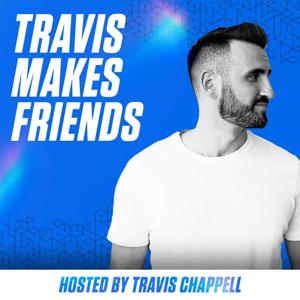


In this snippet from Travis Chappell’s appearance on the How’d They Do That? podcast, Travis breaks down how investing in himself, seeking mentorship, and starting a podcast transformed his network and business. He shares how he went from knowing virtually no high-level entrepreneurs to building relationships with people like John Maxwell, Tilman Fertitta, and Shaquille O’Neal. Travis also explains why podcasting can be a powerful networking tool, how he used cold outreach and persistence to land high-profile guests, and why rejection is simply part of the process of building something meaningful.
On this episode we talk about:
Why investing in coaching, masterminds, and mentorship can dramatically shorten your learning curve
How starting a podcast became Travis’s most powerful networking tool
Using a podcast as a way to create genuine relationships and get your foot in the door with high-level people
How cold DMs, persistence, and the law of averages can help you land opportunities
Building credibility by leveraging relationships with people your prospective guests already know and trust
Why rejection is an unavoidable part of entrepreneurship and networking
How consistency creates a snowball effect that makes future opportunities easier to create
Why Travis believes podcasting remains a relatively untapped opportunity despite perceptions that the space is oversaturated
The origin of Guestio and how it helps podcasters connect with guests and shows
How podcasting can serve as a forcing function for learning, communication, and personal growth
Top 3 Takeaways
Invest in yourself before you have assets to invest in. When you're starting from scratch, you are your primary asset. Coaching, mentorship, and proximity to people who have already accomplished what you want can help you avoid unnecessary mistakes and accelerate your learning curve.
Create a reason to reach out. Travis discovered that his podcast gave him a natural, mutually beneficial reason to contact people he wanted to know. Instead of simply asking for someone's time, he could invite them into a conversation where he could learn from them while also giving them a platform.
Keep asking and let your credibility compound. Rejection is part of the process. The more people you reach out to, the more opportunities you create, and every successful connection makes the next one easier. Over time, persistence, consistency, and social proof can turn cold outreach into a powerful network.
Notable Quotes
"When you don't have any assets, you are your only asset."
"The podcast became like this perfect next step and the perfect foot in the door because it's just an innocent ask."
"No is just a not yet."
Connect with Travis Chappell:
Instagram: @TravisChappell
Website: TravisChappell.com
A Word from Our Sponsors:
- The most successful business owners don't do it all themselves — they delegate. Upwork lets you build a team of highly skilled specialists for every function your business needs, so you can focus on what you do best and let experts handle the rest. Visit Upwork.com right now and post your job for free!
- Scribe captures workflows as work happens and automatically generates step-by-step guides with screenshots and instructions, so no one has to sit down and write documentation from scratch. Learn more at scribe.how/tmm and mention Travis Makes Money for your first month of Scribe Capture free on select plans.
Learn more about your ad choices. Visit megaphone.fm/adchoices
Beth Mazza and Victoria Sivrais are serial entrepreneurs, business partners, and the co-founders of Female Mavericks. Together, they have built and exited two successful professional services firms that advised S&P 500 leaders through high-stakes decisions. Now, as mothers of nine collectively, they're using everything they've learned to help more women build and scale seven-figure businesses. In this episode, they share how their partnership began, how they identified opportunities in underserved markets, why mentorship and proximity to smart people matter, and how they're now helping entrepreneurs build successful businesses without sacrificing the lives they want to live.
On this episode we talk about:
How Beth and Victoria went from corporate careers to building and exiting successful professional services firms
Why identifying gaps in an established market can create opportunities for new businesses
The importance of learning from mentors and spending time around people who have the results you want
How Beth and Victoria built a highly complementary business partnership based on different skill sets, shared values, and mutual trust
Why they're now focused on helping 10,000 women build seven-figure businesses while balancing entrepreneurship and family
Top 3 Takeaways
Prioritize learning over earning early in your career. Find the smartest person you can, get close to them, and absorb how they think, communicate, make decisions, and operate—not just what they know.
Look for opportunities where others aren't willing to compete. Beth identified an underserved market, offered a better-priced service, and challenged CEOs' thinking to win clients despite competing against much larger firms.
Choose business partners based on complementary strengths and shared values. Beth and Victoria's partnership worked because one naturally leaned toward strategy and vision while the other excelled at execution, while both shared the same ambition, purpose, and commitment to supporting each other.
Notable Quotes
"You get to decide if you're the person to build a business around the disruptive thing and if it's the right timing."
"I think my career would have been so different if I was at home fifty to seventy-five percent of the time."
"As long as you're not making a profit, you are not making money."
Connect with Beth Mazza & Victoria Sivrais:
Website: FemaleMavericks.com — female entrepreneurs can visit the site and connect with Beth and Victoria about their mentorship programs.
Book: Entrepreneur Like a Mother, releasing September 22 **use code Maverick25 code, so listeners can get the bundle.
A Word from Our Sponsors:
- The most successful business owners don't do it all themselves — they delegate. Upwork lets you build a team of highly skilled specialists for every function your business needs, so you can focus on what you do best and let experts handle the rest. Visit Upwork.com right now and post your job for free!
- Scribe captures workflows as work happens and automatically generates step-by-step guides with screenshots and instructions, so no one has to sit down and write documentation from scratch. Learn more at scribe.how/tmm and mention Travis Makes Money for your first month of Scribe Capture free on select plans.
Learn more about your ad choices. Visit megaphone.fm/adchoices
In this clip from Travis Chappell’s appearance on the Optimal Self Conversations podcast, Travis breaks down how entrepreneurs can become more productive by focusing their time on the things they do disproportionately well. He shares how his competitive nature shaped his approach to business, why he believes success comes from constantly improving rather than simply being “talented,” and how mentorship helped him accelerate his learning. Travis also explains how setting boundaries, delegating effectively, and prioritizing his family have allowed him to spend more time in his zone of genius while building a business and raising a family.
On this episode we talk about
Where Travis’s competitive drive comes from and how it has evolved over time
The difference between competing against others and competing against who you were yesterday
Why a little bit of competition can be a useful source of motivation
How Travis learned to prioritize the highest-leverage activities in his life
Why entrepreneurs need to learn when to say yes and when to say no
What a “zone of genius” is and how to identify yours
Why doing everything yourself can prevent a business from scaling
How hiring and delegating allowed Travis to focus on his highest-value work
Building clear boundaries around work, family, and personal time
Why productivity is about being productive, not simply being busy
The importance of identifying your “big three” priorities each day
Why your zone of genius isn't necessarily something you're born knowing
How taking on different jobs and responsibilities can help you discover what you're good at
The relationship between talent, hard work, and developing a skill
Why mentorship can dramatically shorten your learning curve
How books, podcasts, and relationships can serve as forms of mentorship
Why time is more valuable than money when it comes to learning
How discipline, habit stacking, and identity work together
Creating the identity you want through consistent action
Top 3 Takeaways
Find your zone of genius and spend more time there.
Your zone of genius is the work you're disproportionately good at and enjoy to some degree. Once you identify those activities, your goal should be to spend the majority of your time on them while finding other people who are better suited to handle the tasks outside your strengths.
You discover your strengths by doing the work.
Travis doesn't believe your zone of genius simply appears out of nowhere. You have to try things, work hard, develop skills, and pay attention to what you're naturally good at and enjoy. His experience in sales showed him that an initial advantage only becomes valuable when it's paired with continuous learning and effort.
Use discipline to build habits that become your identity.
Rather than relying on willpower every day, Travis recommends creating habits and systems that reduce the number of decisions you have to make. Over time, those habits become part of your identity, making the behaviors you once had to force yourself to do feel like a natural part of who you are.
Notable Quotes
“Happiness and fulfillment have little to do with your status compared to other people and a lot more to do with your status compared to who you were yesterday.”
“You should not be spending a ton of time outside of your zone of genius.”
“Figure out the thing that you are disproportionately good at and spend the majority of your time doing that thing.”
“You don't have to reinvent the wheel. I think too many people discount themselves mentally if they don't figure it out.”
“Time is the ultimate asset that we have in life. Money is by definition replenishable. Time is not.”
“Discipline is freedom.”
“Once your habits become your identity, then that's formed in you.”
“The life that you want to live is on the other side of discipline.”
Connect with Travis Chappell
Website: TravisChappell.com
Social Media: Available through TravisChappell.com
A Word from Our Sponsors:
- The most successful business owners don't do it all themselves — they delegate. Upwork lets you build a team of highly skilled specialists for every function your business needs, so you can focus on what you do best and let experts handle the rest. Visit Upwork.com right now and post your job for free!
Learn more about your ad choices. Visit megaphone.fm/adchoices
Kyle Vowinkel is a decorated former FBI senior executive, West Point graduate, keynote speaker, and author of the forthcoming book Shaping Chaos. During more than 24 years with the FBI, Kyle served on both the FBI Hostage Rescue Team and Crisis Negotiation Unit, making him one of only five agents to serve on both. He has negotiated with kidnappers, pirates, and terrorists and deployed alongside U.S. Special Operations Forces. Today, he helps leaders assess risk, make better decisions under uncertainty, influence others, and act decisively when the stakes are high.
On this episode we talk about:
Why Kyle decided to serve his country and ultimately pursue a career with the FBI
How earning money from a paper route at 11 taught him the value of saving and investing early
The financial lessons Kyle learned from his father and through government service
How Kyle built nearly 32 years of government service and incorporated his military time into his federal retirement
Launching his business, Inner Perimeter, after retiring from the FBI
How professional connections helped create opportunities for Kyle after leaving the FBI
Why nurturing relationships over the long term is one of the most valuable things you can do for your career
The radically different approaches Kyle learned from serving on both the Hostage Rescue Team and Crisis Negotiation Unit
How lessons from high-stakes FBI operations translate directly into sales, leadership, and entrepreneurship
The four-step “path to influence”: framing, empathy, rapport, and giving people choices
How Kyle used genuine connection and empathy during the Boston Marathon bombing manhunt
Why “control can extract compliance, but choice creates commitment”
How giving people agency can make them more committed to a decision
Why empathy doesn't require agreeing with someone
The importance of seeing a situation from another person's perspective before trying to influence them
What entrepreneurs and leaders can learn from crisis-response decision-making
Why leaders should establish decision-making triggers before a crisis happens
How businesses can prepare for uncertainty by planning for best-case, most likely, and worst-case scenarios
Kyle's forthcoming book, Shaping Chaos, and the lessons he drew from his FBI career
Top 3 Takeaways:
1. Make the hard decisions before the pressure hits.
Kyle explains that emotions tend to rise while rational thinking declines as a crisis intensifies. One way to counter that is to establish decision-making triggers in advance. Whether you're responding to a kidnapping or preparing a business for a major market event, knowing ahead of time what circumstances will trigger specific actions can help teams respond decisively rather than emotionally.
2. Influence starts with understanding, not coercion.
Kyle's experience as a crisis negotiator taught him that people are more receptive when they feel seen, valued, and heard. Framing the conversation from the other person's perspective, demonstrating empathy, building genuine rapport, and giving people choices can create a much stronger path to influence than simply trying to force compliance.
3. Relationships remain a competitive advantage.
Kyle emphasizes that professional relationships need to be nurtured over time rather than activated only when you need something. Checking in, helping others, and building genuine connections creates a network that can support you throughout different seasons of your career. As Kyle puts it, AI may change how we work, but it can't replace the one-on-one relationships that help people succeed.
Notable Quotes:
“I’ve been working since I’m eleven.”
“You can let chaos shape you, or you can try to shape the chaos.”
“Control can extract compliance, but choice creates commitment.”
“When people feel that they are seen, valued, and heard, that’s the kind of three trifecta.”
“Empathy is not judgment.”
“You don’t just want them to go along because they have to go along. You want them choosing to.”
“You make the hard decisions in advance.”
Connect with Kyle Vowinkel:
Website - Visit the site to download a free chapter of the book
Book: Shaping Chaos, available for pre-order ahead of its November release
A Word from Our Sponsors:
- The most successful business owners don't do it all themselves — they delegate. Upwork lets you build a team of highly skilled specialists for every function your business needs, so you can focus on what you do best and let experts handle the rest. Visit Upwork.com right now and post your job for free!
Learn more about your ad choices. Visit megaphone.fm/adchoices
In this clip from Travis Chappell’s appearance on the Truth About Addiction Podcast, Travis explores how changing your identity can create lasting changes in your habits, health, and life. He shares his own journey from identifying as someone who hated reading to becoming a consistent reader, and from thinking of himself as an athlete to adopting the broader identity of someone who prioritizes a healthy lifestyle. The conversation also dives into nutrition, sustainable weight loss, calorie tracking, discipline, and the importance of building habits that can actually last.
On this episode we talk about
Why lasting behavior change starts with changing the way you see yourself
How taking action can reinforce and strengthen a new identity
Travis’s journey from hating reading to becoming a consistent reader
Moving from an “athlete” identity to an identity centered around overall health and longevity
Why short-term fitness and diet challenges often lead to unsustainable results
Using calorie awareness and energy balance to understand weight management
How Travis approaches food, travel, indulgence, and nutrition without unnecessary restriction
The role of sleep, hydration, walking, nutrition, and other foundational health habits
Why community and positive influences can help reinforce lasting change
The difference between using structure as a helpful tool and becoming overly rigid
How grief, addiction, and emotional pain can affect someone’s relationship with food and their body
The importance of worthiness, faith, and taking a leap of faith when creating a new identity
Recognizing when healthy habits may become obsessive or counterproductive
Why sustainable health is ultimately a journey rather than a short-term challenge
Top 3 Takeaways
Your identity influences your actions.
Travis explains that once you begin identifying as the person you want to become, your actions can start reinforcing that identity. Taking action—even when it feels unnatural at first—creates a feedback loop that makes the new identity increasingly real.
Sustainable change requires a long-term mindset.
After years of losing and regaining weight through short-term challenges, Travis realized that another 30- or 60-day program wasn't the answer. Instead, he focused on understanding the fundamentals of nutrition and building habits he could maintain indefinitely.
Structure should serve your life, not control it.
Travis and the host discuss the tension between using tools like calorie tracking to create awareness and becoming overly rigid around food and body image. The goal isn't perfection—it's finding an approach that supports your health, relationships, and overall quality of life.
Notable Quotes
“Your identity will not completely—your new identity will not be completely adopted without any action.”
“It’s okay to adopt this new identity.”
“Because you identify as this thing, you want to engage in this activity more. And because you engage in that activity more, it further solidifies your identity.”
“It has to be something that I can do long term.”
“It’s just the recognition that it’s gonna be a journey. It’s not gonna happen overnight.”
“All things in moderation, including moderation.”
Connect with Travis Chappell
Website: TravisChappell.com
Social: @TravisChappell
A Word from Our Sponsors:
- The most successful business owners don't do it all themselves — they delegate. Upwork lets you build a team of highly skilled specialists for every function your business needs, so you can focus on what you do best and let experts handle the rest. Visit Upwork.com right now and post your job for free!
Learn more about your ad choices. Visit megaphone.fm/adchoices
David Frankel is an inventor, entrepreneur, business owner, networking host, and podcaster who has built a career around sales, innovation, and solving problems. From starting as a teenage dishwasher to becoming a top-performing sales leader, opening his own offices, and eventually inventing the Perky Collar, David has continually reinvented himself throughout his career. His Perky Collar product has sold more than 35,000 units, reached over 366 stores, and generated $1.8 million in lifetime sales. Today, David balances a full-time career in RV sales with his product business, custom clothing, networking groups, and podcasting.
On this episode we talk about:
How David's first jobs taught him the value of earning his own money and independence
Why he initially studied pharmacy and wanted to find cures for diseases
How his grandfather helped him recognize that his strengths were better suited to business, sales, and relationship-building
Turning a sales job into an entrepreneurial opportunity by opening and managing his own locations
How David took a struggling sales office and helped transform it into a top-performing location
Why businesses sometimes need to pivot when the market itself is shrinking
The everyday problem that inspired David to invent the Perky Collar
How he turned a simple idea into a prototype, patented product, and retail business
The importance of finding trustworthy professionals when bringing an invention to market
The lessons David learned from opening a photography studio, franchising his business, and eventually closing his retail store
Why entrepreneurship doesn't have to mean working for yourself full-time
Building a life around the season you're in rather than forcing yourself into one definition of success
The sacrifices entrepreneurship can create for marriage, family, and personal life
Why having the right support system can make a major difference for entrepreneurs
Top 3 Takeaways:
1. Look for problems you can solve.
The Perky Collar started with a simple problem David experienced himself: his dress-shirt collar wouldn't stay up. Instead of simply accepting the problem, he experimented with a solution, validated the concept, and eventually turned it into a product that generated millions in sales.
2. Your career doesn't have to follow a straight line.
David moved from pharmacy to photography sales, management, entrepreneurship, product development, retail, and eventually RV sales and custom clothing. Each experience gave him skills and knowledge that he was able to carry into the next chapter.
3. Build the life that fits your current season.
David ultimately chose stability and a steady paycheck over continuing to operate a retail store full-time, while keeping Perky as a supplemental income stream. As Travis points out, there isn't one correct way to make money or build a career. Sometimes entrepreneurship is the right move, and sometimes a job plus a side business creates the life you actually want.
Notable Quotes:
“I’ve always been motivated by money and having my own freedom and independence.”
“I’ve always had kind of had that innovative problem-solving mindset. I just had to figure out how to use it.”
“You can’t do it all yourself. You have to find someone to help you.”
“It’s a tough juggling act.”
“It’s all feathers for your hat. You learn things, you help other people.”
“It’s that constant reinvention and constant seeking of the vision that you have for your life.”
Connect with David Frankel:
Website: PerkyLLC.com
Social Media: @PerkyLLC on Facebook, Instagram, etc
A Word from Our Sponsors:
- The most successful business owners don't do it all themselves — they delegate. Upwork lets you build a team of highly skilled specialists for every function your business needs, so you can focus on what you do best and let experts handle the rest. Visit Upwork.com right now and post your job for free!
Learn more about your ad choices. Visit megaphone.fm/adchoices
In this episode of Travis Makes Money, we’re sharing a powerful clip from Travis Chappell’s appearance on the Modern Warrior podcast with Gavin Minin. Travis opens up about how facing a cancer diagnosis forced him to step back and reconsider his perspective on struggle, purpose, work, family, and relationships. He explains why a problem-free life isn’t necessarily the goal, how hardship can create a fresh perspective, and why finding meaning in your work can be just as important as finding meaning in your relationships. Travis also gets candid about the difficulty of allowing other people to support him through challenges and discusses the growing problem of loneliness, particularly among men.
On this episode we talk about:
How facing a major health scare can put everyday problems into perspective
Why a life without problems may not actually be the life we want
The idea that the goal isn’t to eliminate problems, but to keep moving forward in spite of them
How major challenges can force you to step back and look at your life differently
Why Travis came away from his experience with a renewed sense of purpose behind his work
Balancing family, business, podcasting, and the challenges of everyday life
How success can sometimes hide the personal struggles happening behind the scenes
Why Travis has struggled with allowing other people to support him
The importance of letting friends and family see you struggle instead of trying to maintain an impenetrable exterior
How expectations around masculinity can make it harder for men to be vulnerable
The difference between genuine connection and the appearance of connection on social media
Why loneliness among men is a problem that extends beyond social media
The importance of having healthy examples of friendship, vulnerability, and masculinity
Why being able to express who you really are is essential to building genuine relationships
Top 3 Takeaways
The goal isn’t a problem-free life.
Travis argues that problems are an inevitable—and even valuable—part of being human. Solving one problem simply creates another, and rather than pursuing a life without challenges, we should focus on developing the ability to move forward when those challenges inevitably arise.
Hardship can clarify what actually matters.
Travis describes his cancer diagnosis as a massive problem that temporarily overshadowed all the smaller problems in his life. Coming through that experience gave him a fresh perspective on the things he wanted to accomplish, particularly the importance of finding purpose and meaning in his work and setting an example for his children.
Let people be there for you.
One of Travis’s biggest reflections is that he has historically been much better at supporting other people than allowing others to support him. He realized that keeping struggles hidden out of fear of appearing weak or becoming a burden can actually prevent us from experiencing the relationships and connection we need most.
Notable Quotes
“The goal is to be able to move forward in the face of problems, not to just not have them.”
“Cancer is like somebody dropped a hippopotamus on the table.”
“It gave me a fresh perspective on the importance of finding purpose and meaning in your work.”
“I do struggle with allowing people to be there for me.”
“I think I’ve been a selfish friend—that I haven’t allowed people to see me struggle.”
“We don’t want to be a burden to those around us, so we keep our struggles inside. But that’s the worst place for them to be.”
“If you don’t feel the freedom to express who you truly are, you’ll always be lonely.”
A Word from Our Sponsors:
- The most successful business owners don't do it all themselves — they delegate. Upwork lets you build a team of highly skilled specialists for every function your business needs, so you can focus on what you do best and let experts handle the rest. Visit Upwork.com right now and post your job for free!
Learn more about your ad choices. Visit megaphone.fm/adchoices
Cornelia Choe is an international leadership expert, global keynote speaker, and Thinkers50 Radar honoree who has advised hundreds of CEOs and senior leaders across five continents. A Georgetown University and Harvard Kennedy School graduate, Cornelia has worked in private equity at Morgan Stanley and other institutions, supporting leadership teams across Asia, Europe, and North America. Fluent in three languages and having lived in 11 different places, she brings a uniquely global perspective to leadership, decision-making, relationships, and navigating complex, high-stakes environments. Her TEDx talk has been viewed more than two million times.
On this episode we talk about:
How moving from Minnesota to South Korea at age 10 taught Cornelia to question her assumptions and adapt to new environments
The importance of being willing to rewrite your mental “map” when entering a new culture, industry, or situation
How Cornelia’s early efforts to help women start businesses shaped her perspective on using your efforts to create meaningful change
Why embracing uncertainty and constant change can help you develop resilience and better decision-making skills
How talking to people with different perspectives can help leaders see a bigger picture and make better decisions
Cornelia’s approach to personal finance, including the importance of timing, flexibility, savings, and having “dry powder” for unpredictable opportunities
Why strong relationships and trust are essential infrastructure for building businesses, leading people, and accessing accurate information
Top 3 Takeaways
Question the map in your head. The assumptions and mental models that work in one environment may not work in another. When circumstances change, be willing to gather new information, challenge your assumptions, and build a new understanding of how to succeed.
Seek perspectives you don't already have. Leaders can easily surround themselves with people who think similarly or tell them what they want to hear. Talking with customers, suppliers, employees, and people who see situations differently can reveal angles you wouldn't see on your own.
Build relationships based on trust. Strong relationships aren't just valuable socially—they can become the infrastructure for better leadership, better information, and greater opportunities. Leaders need to create enough trust that people feel safe telling them difficult truths rather than simply telling them what they want to hear.
Notable Quotes
"We can't just expect to coast through life and do nothing, yet at the same time empowering people so that they can realize their dreams."
"Any person in a world of constant change is only able to see a certain part of the puzzle or the certain part of the landscape."
"Our relationship network and the relationships that we have in our lives are the infrastructure and the backbone of our ability to create money."
Connect with Cornelia Choe:
Website: Cornelia Choe
Instagram: @corneliachoe_author
A Word from Our Sponsors:
- The most successful business owners don't do it all themselves — they delegate. Upwork lets you build a team of highly skilled specialists for every function your business needs, so you can focus on what you do best and let experts handle the rest. Visit Upwork.com right now and post your job for free!
Learn more about your ad choices. Visit megaphone.fm/adchoices
In this episode of Travis Makes Money, we’re sharing a clip from Travis Chappell’s appearance on the Vegas Voices podcast, where he breaks down how he has landed interviews with high-profile guests like Shaquille O’Neal, John Maxwell, Michael Hyatt, Grant Cardone, and Rob Dyrdek—even before his podcast had a massive audience. Travis explains why consistent outreach, starting with attainable guests, and building credibility within a specific industry can open doors to people you never thought would say yes. He also shares how treating a small audience like a massive one helped him build a better podcast, and how listening to his audience ultimately led him from sponsorships to profitable products and services.
On this episode we talk about:
Why sending a high volume of outreach is one of the keys to landing podcast guests
How starting with more attainable guests can create momentum and credibility
Why staying within one industry when reaching out can make it easier to land increasingly influential guests
The real question high-profile guests are asking before agreeing to an interview
How Travis landed Shaquille O’Neal despite having a relatively small podcast audience
Why you should treat an audience of one, three, or 100 people with the same level of attention as an audience of 100,000
How podcasts compete for attention with everything from other shows to music and streaming services
Why Travis initially expected sponsorships to be the primary way he would monetize his podcast
How audience growth led him to develop products and services instead
The power of using audience conversations as market research
How Travis made his first $200 from a product he hadn’t even created yet
How a $1,000 mastermind became an early profitable offer
Why continually asking your audience what they want can lead to better products, services, and revenue
Top 3 Takeaways
You don’t need a massive audience to get influential people’s attention.
Travis explains that audience size is only one factor. The bigger question is whether the person believes spending their time with you will be worthwhile. Building credibility, creating a valuable experience, and demonstrating that you can make the conversation worthwhile can matter just as much.
Treat your smallest audience like your biggest audience.
Travis shares a mindset he adopted early on: one person listening is better than zero. If you create a great product for the people who are actually paying attention instead of obsessing over the people who aren’t, you give yourself a better foundation for growth.
Let your audience tell you what to sell.
Instead of starting with a product and trying to convince people to buy it, Travis built an audience around networking and relationships, talked directly with more than 100 listeners, identified their recurring problems, and created offers around those needs. His products and services evolved as he learned more about what his audience actually wanted.
Notable Quotes
A Word from Our Sponsors:
- The most successful business owners don't do it all themselves — they delegate. Upwork lets you build a team of highly skilled specialists for every function your business needs, so you can focus on what you do best and let experts handle the rest. Visit Upwork.com right now and post your job for free!
Learn more about your ad choices. Visit megaphone.fm/adchoices
Bradley Jacobs is the founder and CEO of Mylance, an AI-powered LinkedIn content platform helping B2B founders, fractional executives, and independent consultants win customers through authentic content. Before founding Mylance, Bradley spent four years as an early operator at Uber, working across Rides, Eats, and Freight and helping launch Uber Eats in Miami and Milan. After Uber, he built a $25K-per-month part-time fractional COO practice while experimenting with multiple business ideas. Along the way, he grew a 25,000+ person LinkedIn following by posting nearly every day for six years, eventually turning his experience into Mylance.
On this episode we talk about:
How Bradley landed his first consulting client after leaving Uber and negotiated a $250/hour consulting deal
Why finding the right client can dramatically increase the value of your expertise
Bradley’s process of experimenting with different businesses before discovering the opportunity that became Mylance
How consistently posting on LinkedIn helped Bradley build credibility, trust, and a steady stream of business opportunities
What types of LinkedIn content are working in 2026 and why authentic personal experiences outperform generic AI-generated content
How consultants and founders can use podcasts as a content engine for LinkedIn, newsletters, blogs, and short-form video
Why you don't need highly produced video or complicated content strategies to start building an audience
Top 3 Takeaways
Sell the solution to an expensive problem. Bradley’s first consulting client had a problem worth millions of dollars to solve, making his expertise significantly more valuable than it would have been in a generic consulting engagement. The right customer and context can dramatically change what your knowledge is worth.
Take action before you have perfect clarity. Bradley experimented with consulting, e-commerce, recruiting, a travel company, coaching, bookkeeping, and software before landing on Mylance. Instead of waiting for the perfect business idea, he learned by trying things and paying attention to what people actually needed.
Your experience is your best content. Rather than relying on generic advice, share your specific stories, wins, mistakes, and lessons. Authentic first-person content builds credibility and trust while naturally demonstrating your expertise without having to constantly sell yourself.
Notable Quotes
"In the absence of clarity, take action."
"If you find the right customers or the right clients, the value that you can offer to them will be significantly worth more."
"You are actually self-promoting by genuinely sharing your experience."
Connect with Bradley Jacobs:
LinkedIn: Bradley Jacobs
Other: Mylance
A Word from Our Sponsors:
- The most successful business owners don't do it all themselves — they delegate. Upwork lets you build a team of highly skilled specialists for every function your business needs, so you can focus on what you do best and let experts handle the rest. Visit Upwork.com right now and post your job for free!
Learn more about your ad choices. Visit megaphone.fm/adchoices
From the publisher's feed
2,698 Listeners

581 Listeners

10,743 Listeners

16,622 Listeners
2,294 Listeners

10,880 Listeners

27,762 Listeners

2,647 Listeners

5,833 Listeners

19,254 Listeners