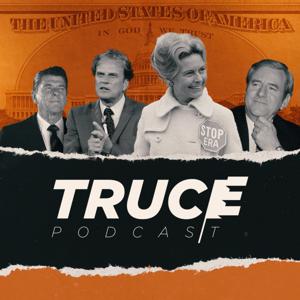
Truce - History of the Christian Church

Truce - History of the Christian Church

Download on the App Store
  • Favorites

    82

    Followers

  • Typical duration

    28 min

    per episode

Based on Podcast App listening data

Truce - History of the Christian Church episodes

  • World War One I Christian Fundamentalism Series

    Love Truce? Donate to help Chris make the show!

    Send checks to:

    Truce Media LLC

    PO Box 3434

    Jackson, WY 83001


    The modernish/ fundamentalist controversy was heating up in the early 1900s. Conservatives saw this coming a long way off but could not stop modernism from taking control of seminaries and popular pulpits. It was everywhere. It all came to a head with WWI.

    Theological conservatives saw WWI as evidence that the world was getting worse. To them, it was a chance to fight for patriotic reasons. Modernists were also pro-war because they thought this was the "war to end all wars". There would be no more war after this and democracy would take over the world. The liberals fired the first shots in this theological battle because they thought that premillennialism encouraged people to root for the end of the world.

    William Jennings Bryan was Secretary of State in the US during this time and did his best to keep us out of the war.

    This episode features the voices of George Marsden (author of "Fundamentalism and American Culture") and Michael Kazin, professor at Georgetown University and author of "What it Took to Win".


    Sources:

    • Fundamentalism and American Culture by George Marsden
    • The Evangelicals by Frances Fitzgerald
    • A Godly Hero by Michael Kazin
    • What it Took to Win by Michael Kazin
    • These Truths by Jill Lepore
    • To End All Wars by Adam Hochschild
    • Dead Wake by Erik Larson (about The Lusitania)
    • Woodrow Wilson's second inauguration
    • Short article about Billy Sunday

    • Discussion Questions:

      • What was the purpose of WWI? What caused it?
      • Would you have been for or against the war in the 1900s?
      • How can pre and post-millenniallism shape a person's view of the world? Does it have to?
      • How does social Darwinism tie into WWI and WWII?
      • Is WWI an outcome of changing morality?
      • How would you tell a large audience of Christians to adapt to changing morality?
      • Learn more about your ad choices. Visit podcastchoices.com/adchoices

        40 min
      • Exciting News About the Future!

        Want to help Truce?

        • Give via Venmo at: https://account.venmo.com/u/trucepodcast
        • Help via Paypal
        • Help via Patreon
        • Pledge to help Truce

        • Or support Truce via check by sending it to:

          Truce Media LLC

          PO Box 3434

          Jackson, WY 83001

          Learn more about your ad choices. Visit podcastchoices.com/adchoices

          5 min
        • Walter Rauschenbusch and the Great Reversal | Christian Fundamentalism Series

          Love Truce? Donate to help Chris make the show!


          Walter Rauscenbush published his classic book Christianity and the Social Crisis in 1907. It went on to become a defining work of the social gospel movement. We've spent a lot of time talking about the social gospel this season. That is because it has been identified by historians as the key movement that fundamentalists rebelled against. So we really should understand it, right?

          In this episode, Chris takes us through highlights of this classic book in order to understand how the social gospel differed from evangelical Christianity. While it lifted up the necessity of doing good works, the social gospel often omitted salvation altogether. Contrast that to evangelical preachers like D.L. Moody who lived their lives with the sole purpose of evangelism.

          This division between evangelicalism and liberal theologies led to the Great Reversal when theologically conservative Christians went from participating in public acts of goodwill to distancing themselves from it.

          Breakdown of points made from Christianity and the Social Crisis

          • Rauschenbush's thoughts on socialism (p152)
          • Theories on prophets of the Old Testament creating Judaism - p3 - 5
          • Amos and Jeremiah denied that God ever told them to sacrifice - p6
          • Morality is the only thing God cares about - p6
          • God is interested in the morality of the nation over the individual - p11, 29
          • The Bible has been altered when it comes to the stories of Jesus - p62-63
          • Wealth is associated with the wicked in the Bible - p13
          • Jewish people distributed land in communistic ways - p14
          • John the Baptist and Jesus both wanted to restore theocracy to Israel - p53
          • Rauschenbush's ideas about how industry chews people up - p370
          • Socialism is inevitable - outside link page 153

          • Discussion Questions:

            • What is Christianity?
            • How much of Christianity can you remove before it becomes something else?
            • Why are we so split between those of us who think of good works and those of us who think of salvation?
            • What is the role of Christians in society?
            • Now that you've decided on the role of Christians in society, how do you match up with your own expectations?

            • Select Sources:

              • Google Books version of Christianity and the Social Crisis
              • Fundamentalism and American Culture by George Marsden
              • More on the ship of Theseus
              • Learn more about your ad choices. Visit podcastchoices.com/adchoices

                27 min
              • The Fundamentals | Christian Fundamentalism Series

                Between 1910 and 1915 a collection of 90 essays was distributed by two wealthy oil magnates. These essays attempted to nail down the basics of the Christian faith and counteract the growing modernist movement. "The Fundamentals" is often mentioned in history books about Christian fundamentalism, but it is rare for anyone to discuss the essays themselves. So I thought we should break down at least 6 of them together!

                I'm joined this episode by some good friends to introduce you to "The Fundamentals". This influential time capsule document takes us inside the proto-fundamentalist movement, just before it really took off.

                Discussion Questions:

                • What would you include in your own list of fundamentals?
                • Is creationism fundamental? What is the role of evolution in our modern theology?
                • The fear of evolution wasn't just about people thinking we'd come from chimps. It also revolved around concerns of people applying evolution to other areas of life. How have you seen evolution applied to other studies?
                • Is the Bible inerrant? What does that mean?
                • Have you read the full Bible yourself? Why or why not?

                • Essays we read:

                  • “My Experience With the Higher Criticism” by JJ Reeve
                  • "The Deity of Christ" by BB Warfield
                  • “The Certainty and Importance of the Bodily Resurrection of Jesus Christ from the Dead” by Reuben Torrey
                  • “Science and Christian Faith” by James Orr
                  • “Evolutionism in the Pulpit” by “An Occupant of the Pew”
                  • Learn more about your ad choices. Visit podcastchoices.com/adchoices

                    45 min
                  • The Scofield Reference Bible | Christian Fundamentalism Series

                    What kind of Bible do you have?

                    Most of us would answer with the translation we carry. Maybe it's New Living, the King James, or the New International Version. I've heard plenty of conversations about translations in my life. But I've never heard a serious discussion about the notes in various Bibles.

                    Continuing our long exploration of the Christian fundamentalist movement, we explore the Bible version that nudged the United States toward a particular negative theology. One that encouraged people to question the trajectory of history itself. That was one of the purposes of the Scofield Reference Bible, named for its author C.I. Scofield.

                    The Scofield Reference Bible emphasizes the premillennial dispensationalist theology we've been talking about all season. It expects that world history is sliding into chaos. That was not the primary view in the late 1800s and early 1900s in the US. Most people thought that humanity could improve things until Jesus returned. This Bible is one of the things that changed that.

                    Special thanks to Nick, Melanie, Hannah, Marc, and Marian for their help with this episode!

                    Discussion Questions:

                    • What kind of Bible do you have? Why did you choose it?
                    • What agenda does your Bible have?
                    • What audience is it intended for?
                    • Who wrote your Bible notes?
                    • Flip to Genesis 1 and Revelation 1. What position does it take on creationism? The end of the world?
                    • Have you ever considered the origins of your study notes?
                    • How do you feel about us having so many different targeted Bibles?


                      Select Sources for this Episode:

                      • The History of the Scofield Reference Bible by Arno C. Gaebelein
                      • The Evangelicals by Frances Fitgerald
                      • Fundamentalism and American Culture by George Marsden
                      • Article on Lyman Stewart who financed this Bible
                      • A Godly Hero by Michael Kazin
                      • Isaiah 37
                      • A Christianity Today article about the changes made to the Scofield Bible (material not used for the episode, but still interesting)
                      • The Scofield Reference Bible (1945 edition)
                      • The MacArthur Study Bible
                      • The Founders Bible
                      • The Battlefield of the Mind Bible
                      • Learn more about your ad choices. Visit podcastchoices.com/adchoices

                        24 min
                      • The Treaties of William Jennings Bryan | Christian Fundamentalism Series

                        William Jennings Bryan.

                        If we know him at all it is from the Scopes Monkey Trial at the end of his life. Or maybe we know of his 3 failed campaigns for President of the United States on the Democratic ticket. But many of us are unaware of his efforts to establish world peace. William Jennings Bryan hated war. He wasn't a pacifist - he enlisted for the Spanish-American War after all. But he saw the meaningless carnage of war and vowed to do his best to reduce the amount of bloodshed.

                        So "The Commoner" used his position as Secretary of State under President Wilson to establish 30 peace treaties. In this mini-episode, we revisit his career and talk about the impact this man might have had if WWI hadn't slowed his progress.

                        God-willing I'll be back soon with a full episode! Thanks for your patience!

                        Helpful Sources:

                        • "A Godly Hero" book by Michael Kazin
                        • "A Righteous Cause" book by Robert Cherny
                        • "The Evangelicals" by Frances Fitgerald
                        • "Money: The True Story of a Made Up Thing" by Jacob Goldstein
                        • "What's Your Problem?" podcast from Pushkin Industries, hosted by Jacob Goldstein

                        • Discussion Questions:

                          • William Jennings Bryan was the head of the party of Jim Crow. Do his actions to stop imperialism or war shape how you feel about him?
                          • Would a conciliation treaty policy work today?
                          • Is world peace a worthy goal today? What role do weapons play in that?
                          • How might this tie into fundamentalism?
                          • Learn more about your ad choices. Visit podcastchoices.com/adchoices

                            16 min
                          • Looking Backward | Christian Fundamentalism Series

                            Now that we've read In His Steps together and discussed it, let's talk about another work of fiction. Looking Backward was written by Edward Bellamy. That name may sound familiar! We talked about his cousin Frances Bellamy in the episode about the Pledge of Allegiance. Frances was a Christian socialist. Edward wrote his famous book looking forward to the year 2000. He predicted that the United States would be a socialist paradise. People would work hard, retire early, and equality would reign.

                            None of that came true.

                            We're talking about it today in order to understand the zeitgeist in the late 1800s. This book sold over half a million copies in its first few years of publication. It is now over a million copies. That doesn't happen without stirring something in society. As we'll see, socialism was tied to the Social Gospel. The opposition to the Social Gospel is what would go on to create the Christian fundamentalist movement.

                            Helpful Links:

                            • What's the Difference Between Communism and Socialism? - Episode of Truce from season 3
                            • A helpful New York Times article about Looking Backward

                            • Discussion Questions:

                              • How have fictional books you've read impacted your worldview?
                              • What do you think about Bellamy's predictions?
                              • How does the fear of socialism and communism impact evangelicalism?
                              • What real threats were facing evangelicalism in the 1800s? How about now?
                              • Learn more about your ad choices. Visit podcastchoices.com/adchoices

                                13 min
                              • In His Steps Discussion

                                Support the Truce Podcast via Patreon or through the website you can do Paypal, check, or Venmo!


                                We've been reading the book "In His Steps" together for the last few weeks. It was written by Charles Sheldon, a man whose book is often associated with the social gospel movement. While some historians struggle over the significance of this work, it's pretty plain how it fits this movement.

                                I invited patrons of the show to listen early and then discuss their thoughts on this controversial book.

                                What did you think about the audiobook? Should I record other books this same way?


                                Discussion Questions:

                                • Did you enjoy "In His Steps"? Why or why not?
                                • How do you think women were portrayed in "In His Steps"?
                                • What do you think about the Home Economics movement?
                                • How did you see the social gospel in the book?
                                • Is the book evangelistic? At which points? If not, why not?
                                • Does Christian media need to be "heavy handed"?

                                • Recommended Resources:

                                  • In His Steps by Charles Sheldon
                                  • The Secret History of Home Economics
                                  • Learn more about your ad choices. Visit podcastchoices.com/adchoices

                                    46 min
                                  • In His Steps (part 3)

                                    This is part 3 of an audiobook presented on Truce. Please start at part 1!

                                    Become a patron of the show to keep more content like this coming your way!


                                    In His Steps by Charles Sheldon is a classic of Christian fiction. It is also one of the top-selling Christian books of all time. We've been running through the history of Christian fundamentalism this season. It's worth noting that fundamentalism was a reaction to liberal theology, especially modernism. Another form of liberal theology was the "Social Gospel". It was a movement led by people like Walter Rauschenbusch that emphasized the socially conscious aspects of Christianity, while simultaneously downplaying evangelism.

                                    Christian fundamentalists did not like the Social Gospel. For one thing, it had a positive view of human progress. It said that the world could get better and better and then Jesus would return. Christian fundamentalists generally think that world history trends downward.

                                    I'm presenting this original audio recording for many reasons. I think this book offers a great window into the era in which it was created (the late 1800s). It also represents the Social Gospel and a slice of the Holiness movement quite well. Finally, I think we need to hear this story in our modern context. Modern Christian churches are divided. What would happen if we dared to ask "What Would Jesus Do?"

                                    Things to track as you listen:

                                    • The role of women in this society
                                    • Wealthy attitudes toward the poor
                                    • The genesis of financial woes in this book is sometimes economic crisis (the late 1800s was full of panics and recessions) and sometimes sin based
                                    • The Holiness movement and those who object to it
                                    • Is this book evangelistic? If so, how is the gospel presented? If not, what does this book leave out?
                                    • The overall positive view of human progress
                                    • Social movements like the pure foods movement, temperance, suffrage, anti-gambling


                                    • In His Steps resides in the public domain, but this recording is copyrighted in 2022 by Truce Media LLC.

                                      Learn more about your ad choices. Visit podcastchoices.com/adchoices

                                      2 hr 41 min
                                    • In His Steps (part 2)

                                      This is the second part of the series. Please start with part 1.


                                      In His Steps by Charles Sheldon is a classic of Christian fiction. It is also one of the top-selling Christian books of all time. We've been running through the history of Christian fundamentalism this season. It's worth noting that fundamentalism was a reaction to liberal theology, especially modernism. Another form of liberal theology was the "Social Gospel". It was a movement led by people like Walter Rauschenbusch that emphasized the socially conscious aspects of Christianity, while simultaneously downplaying evangelism.

                                      Christian fundamentalists did not like the Social Gospel. For one thing, it had a positive view of human progress. It said that the world could get better and better and then Jesus would return. Christian fundamentalists generally think that world history trends downward.

                                      I'm presenting this original audio recording for many reasons. I think this book offers a great window into the era in which it was created (the late 1800s). It also represents the Social Gospel and a slice of the Holiness movement quite well. Finally, I think we need to hear this story in our modern context. Modern Christian churches are divided. What would happen if we dared to ask "What Would Jesus Do?"

                                      Things to track as you listen:

                                      • The role of women in this society
                                      • Wealthy attitudes toward the poor
                                      • The genesis of financial woes in this book is sometimes economic crisis (the late 1800s was full of panics and recessions) and sometimes sin based
                                      • The Holiness movement and those who object to it
                                      • Is this book evangelistic? If so, how is the gospel presented? If not, what does this book leave out?
                                      • The overall positive view of human progress
                                      • Social movements like the pure foods movement, temperance, suffrage, anti-gambling


                                      • In His Steps resides in the public domain, but this recording is copyrighted in 2022 by Truce Media LLC.

                                        Learn more about your ad choices. Visit podcastchoices.com/adchoices

                                        2 hr 21 min

                                      About Truce - History of the Christian Church

                                      From the publisher's feed

                                      Truce explores the history of the evangelical church in America, from fundamentalism to pyramid schemes to political campaigns. Host Chris Staron uses journalistic tools to investigate how the church got here and how it can do better.

                                      Best of Truce - History of the Christian Church

                                      Ranked by our users in the last 21 days
                                      More shows like Truce - History of the Christian Church

                                      The Russell Moore Show by Christianity Today, Russell Moore

                                      The Russell Moore Show

                                      1,125 Listeners

                                      Voxology by Voxology

                                      Voxology

                                      1,098 Listeners

                                      The Holy Post by Phil Vischer

                                      The Holy Post

                                      4,427 Listeners

                                      Theology in the Raw by Theology in the Raw

                                      Theology in the Raw

                                      1,476 Listeners

                                      Ask NT Wright Anything by Premier Unbelievable

                                      Ask NT Wright Anything

                                      2,056 Listeners

                                      Roys Report by Roys Report

                                      Roys Report

                                      813 Listeners

                                      Advisory Opinions by The Dispatch

                                      Advisory Opinions

                                      3,923 Listeners

                                      No Small Endeavor with Lee C. Camp by Tokens Media

                                      No Small Endeavor with Lee C. Camp

                                      576 Listeners

                                      Trinity Forum Conversations by The Trinity Forum

                                      Trinity Forum Conversations

                                      219 Listeners

                                      Good Faith by Good Faith

                                      Good Faith

                                      1,926 Listeners

                                      The Bulletin by Christianity Today

                                      The Bulletin

                                      560 Listeners

                                      Curiously Kaitlyn by Kaitlyn Schiess

                                      Curiously Kaitlyn

                                      853 Listeners

                                      The SkyePod by Skye Jethani

                                      The SkyePod

                                      128 Listeners

                                      The Esau McCaulley Podcast by Esau McCaulley

                                      The Esau McCaulley Podcast

                                      872 Listeners

                                      Devil and the Deep Blue Sea by Christianity Today

                                      Devil and the Deep Blue Sea

                                      914 Listeners