
Sign up to save your podcasts
Or



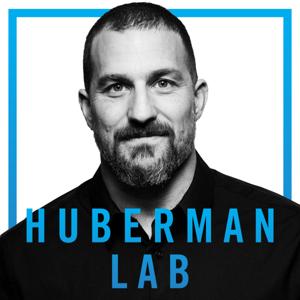
The topic of neuroscience can be intimidating due to its vastness and complexity. Today on the podcast, we welcome neuroscientist Dr. Andrew Huberman to guide us through the unchartered terrain of the mind, explaining in simple language the scientific processes behind sleep, relaxation, breathing, learning, unlearning, and more, and how each of these is related to mental and physical functioning. Dr. Huberman provides an overview of the history of neuroscience, explaining how the field has shifted the focus away from the regional activity in the brain to look at the importance of neural circuits. We discuss the Huberman Lab’s studies of stress and anxiety and the three protocols they employ to induce the regenerative benefits of sleep, including yoga nidra, hypnosis, and breathing practices. Contrary to popular belief, humans are wired for multitasking and Dr. Huberman shares a great deal about directing your attention both internally or externally, and the various purposes of both. One of the most important takeaways from our conversation is that, for humans to function optimally, they need to be able to deliberately disengage – to “rest” their attention. In addition to providing a ton of advice on this front, Dr. Huberman also shares insights on child and adult learning, how these processes might be enhanced, and the new work they are doing in trauma counseling and unlearning negative mental patterns. We shift to talking about circadian rhythms, the importance of correctly timed exposure to light, and why mental health – like physical fitness – is something to be earned.
Timestamps
 View all episodes
 By Ben Pakulski

4.3
33 ratings
The topic of neuroscience can be intimidating due to its vastness and complexity. Today on the podcast, we welcome neuroscientist Dr. Andrew Huberman to guide us through the unchartered terrain of the mind, explaining in simple language the scientific processes behind sleep, relaxation, breathing, learning, unlearning, and more, and how each of these is related to mental and physical functioning. Dr. Huberman provides an overview of the history of neuroscience, explaining how the field has shifted the focus away from the regional activity in the brain to look at the importance of neural circuits. We discuss the Huberman Lab’s studies of stress and anxiety and the three protocols they employ to induce the regenerative benefits of sleep, including yoga nidra, hypnosis, and breathing practices. Contrary to popular belief, humans are wired for multitasking and Dr. Huberman shares a great deal about directing your attention both internally or externally, and the various purposes of both. One of the most important takeaways from our conversation is that, for humans to function optimally, they need to be able to deliberately disengage – to “rest” their attention. In addition to providing a ton of advice on this front, Dr. Huberman also shares insights on child and adult learning, how these processes might be enhanced, and the new work they are doing in trauma counseling and unlearning negative mental patterns. We shift to talking about circadian rhythms, the importance of correctly timed exposure to light, and why mental health – like physical fitness – is something to be earned.
Timestamps

7,205 Listeners

5,405 Listeners

12,057 Listeners

9,215 Listeners
8,521 Listeners

765 Listeners

106 Listeners

1,273 Listeners
29,185 Listeners

231 Listeners

119 Listeners

1,200 Listeners

86 Listeners
3,155 Listeners

21 Listeners