
Sign up to save your podcasts
Or

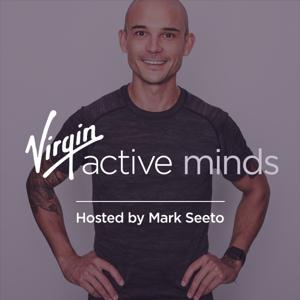


Let's bust the myth that lifting weights makes you too buff! In this insightful episode, host Mark Seeto chats with Sarah Glader, the National Head of Grid Training for Virgin Active Australia. The two discuss the common concern around lifting weights and becoming "too buff", the actual benefits of lifting weights, how the industry has shifted in motivations to train, and helpful tips on how to get started. You'll hear about how lifting weights can help build your confidence, improve your sleep and energy levels, and motivate you to make healthier food choices. They also discuss the importance of rest and recovery, the weights to use, and how to challenge yourself when lifting. Walk away from this conversation understanding how to focus on progress rather than perfection to make the most out of training.
Our favourite quotable moments:
"Lifting heavy makes you feel amazing." - Sarah Glader
"It doesn't matter if you're a beginner or if you're an advanced lifter, the weight doesn't change." - Sarah Glader
“If I really put my mind into something, if I make an effort, if I want something bad enough, I can make it happen." - Sarah Glader
“The building happens at the muscle fatigue." - Sarah Glader
"You need to learn the proper technique, [and] make sure you're keeping yourself safe." - Sarah Glader
Resources:
Instagram - Sarah Glader
About Sarah:
Sarah Glader is the Grid Training head coach at Virgin Active Australia. She grew up in Sweden but moved to Australia at the age of 21, living in Adelaide for 6 years before settling in Sydney. Glader has been lifting weights for 12 years and making it her career for the past 8 years. She specializes in HIIT training and strength training and enjoys it most when she’s training with others. In her spare time, she enjoys hiking, finding new breweries and has a keen interest in gaming and digital art.
Are you tired of giving up 95% of your life to weigh 5% less? In this insightful episode, host Mark Seeto speaks with nutritionist and dietitian Lyndi Cohen about the difficulties people often face when trying to maintain a healthy relationship with food. Cohen discusses how societal expectations and advertising contribute to unhealthy habits and negative body image, leading to a culture of demonizing certain foods and labelling them as "good" or "bad." She also discusses the dangers of deprivation and emotional eating and offers strategies for finding a more balanced and nourishing approach to nutrition. You'll walk away with valuable insights and practical advice to help you with your relationship with food.
Our favourite quotable moments:
"Nutrition is key to the nourishment of our bodies, hearts, minds and communities." Lyndi Cohen
“You can't hate yourself into a version of yourself that you like.” - Lyndi Cohen
"The key is to try and find a way of eating that's going to nourish your body, but also nourish your soul and allow you to feel good about yourself." - Lyndi Cohen
Resources:
Lyndi’s Website
About Lyndi:
Lyndi Cohen is one of Australia’s most well-known and trusted health experts. Lyndi is a dietitian, best-selling author, podcaster and resident nutritionist on Channel 9’s TODAY show. She never uses photoshop and uses her channels to advocate for real health without the wellness wankery. Lyndi has also developed her Back to Basics App which helps people be healthy without dieting and also provides support and coaching for people suffering from binge eating disorder through her Keep It Real program. Her 2nd book, Your Weight Is Not The Problem is due out January 2023.
Do you sometimes feel like you're not "keeping up" with everyone else? Or that the people around you have more than you? Things like having a spouse, a house, a car, or further along in their career than you? Host Mark Seeto and head yoga teacher Kate Pippos discuss societal expectations and societal pressures to conform in this deeply heartfelt episode. They discuss the "white picket fence" values and how society isn't designed for those who do not conform to these expectations. They also touch on the idea of seeking belonging and how insecurity about not fitting in can drive people to find belonging in other ways. Kate shares insights from the Bhagavad Gita, an ancient Hindu text that will help you understand a new way of thinking about societal pressure and how you can do things differently. Listen now and feel empowered to find self-acceptance and live authentically in your life experience.
Our favourite quotable moments:
"Ultimately, I'd like to think that everybody is just drawing their own picture as they go." - Kate Pippos
"We come here empty-handed. We leave empty-handed. What is yours today belonged to somebody else yesterday and will belong to someone else tomorrow." - Kate Pippos
"I think your way is the right way." - Kate Pippos
"I feel like we do have expectations that are very “white picket fence”. And I think they're largely heteronormative values. And if you don't hold those values close, it can feel like you are on the outside - or even on the other side of expectation." - Kate Pippos
"I think in terms of having a pathway laid out for us - I feel like if we don't follow that and we do have that experience of being a little bit different, out of the box… that the insecurity of not fitting in can drive us further in other ways and kind of spur this sense of seeking belonging however we can." - Kate Pippos
Resources:
Instagram @virginactiveaustralia
Are you tired of setting New Year's resolutions that you never seem to stick to? Do you want to find a better way to make progress and improve consistently? If so, you won't want to miss the latest episode of Virgin Active Minds. In this special New Year’s Day bonus episode, host Mark Seeto discusses the limitations of setting goals and the benefits of focusing on systems instead. He offers insights on how to approach the journey and the process of continuous improvement, rather than just the destination or achieving a single accomplishment. By shifting your focus to creating habits and systems, you can make real, lasting change in your life. Tune in to learn more about how to set yourself up for a beautiful year to come.
Our favourite quotable moments:
"Most of us aren't that good at keeping New Year's resolutions... 80% to 90% of us report that we've failed with our New Year's resolutions." - Mark Seeto
"When we spend too much time purely focused on goals, there's a few problems that come from that." - Mark Seeto
"Achieving the goal offers only momentary change." - Mark Seeto
"Goals can restrict happiness." - Mark Seeto
"Goals can hinder long term progress." - Mark Seeto
Resources:
Mark Seeto’s Instagram
Do you get enough rest? Beyond sleep, our bodies require times of rest throughout the day. Whether it's a nap, restorative yoga practice or taking 5 minutes in your car before heading into the house to be with your family, humans need rest to thrive. In this insightful episode, Mark speaks with clinical psychologist Dr Lauren Tober about the importance of rest. The two explore why western culture doesn’t prioritise rest and the detriment this can cause to our health and wellbeing. You’ll walk away with many practical tips to embrace rest and find better balance in your life.
Our favourite quotable moments:
“There is this real emphasis on how much can we do [and] how much can we get done in the day. And when we pause and take a break, it's like wasted time. When we're not being productive, we're procrastinating. - Dr Lauren Tober (3:45)
“For a lot of other people, it takes an illness or something quite drastic for us to really focus and change.” - Dr Lauren Tober (17:14)
“If your body is whispering, then listen to the whisper.” - Dr Lauren Tober (20:04)
Resources:
Dr Lauren Tober's Website
About Lauren:
Dr Lauren Tober is a Clinical Psychologist and Senior Yoga Teacher based in Mullumbimby, Australia. With a passion for health, healing, happiness and awakening, Lauren integrates the best of western psychology with ancient yogic wisdom, both on and off the mat.
Passionate about the life-changing benefits of yoga, Lauren is the founder of Mental Health Aware Yoga. This professional development training for Yoga Teachers is designed to educate teachers about mental health so they can support their yoga students experiencing mental health challenges with compassion, confidence and skill.
Lauren is also the founder of Awake Psychology, an Australia-wide online psychology practice, the Centre for Mind Body Wellness, an integrative health practice in Mullumbimby, Australia, and the highly acclaimed iRest meditation online course; Meditation, Pure and Simple.
Learn about what kind of athlete you are to get the most out of your workouts and to challenge yourself physically. In this episode, gene expert and yoga master trainer Hayley Alexander breaks down the three different body types for genetic composition. She shares how certain body types have advantages with varying kinds of physical activity. You’ll be able to reflect on what type of exercise you naturally gravitate towards. Get ready to be inspired to double down on your current physical activities or try something new and different!
Our favourite quotable moments:
“Having a genetic advantage is exactly that – it’s an advantage – it’s not a requirement for choosing a specific sport.” – Hayley Alexander (12:55)
“It’s more of an achievement sometimes when you don’t have those advantages, and you still are able to reach your goals through the hard work and the blood, sweat and tears.” – Hayley Alexander (14:35)
“Get out there, try something new. If it scares you a bit, then there’s even more reason to do it, and you never know what you might learn about yourself.” – Mark Seeto (16:40)
Resources:
Mind Body Evolve Website
About Hayley:
Hayley Alexander is a Health Coach and Yoga Ambassador focusing on Personal Empowerment. She includes DNA testing within her scope of practice, allowing her to guide clients toward attaining optimal wellbeing. She also offers mentoring and continuing education workshops for yoga teachers, presents self-defence seminars for women, and provides edutainment at corporate events.
Learn about the three sleep chronotypes and which one fits you best so you can function well and feel better. In this conversation, Australia’s leading sleep expert and author, Olivia Arezzolo, shares a wealth of knowledge and alarming statistics about the detrimental effects insufficient sleep can have on our health, immunity, productivity and wellbeing. You’ll learn about understanding your sleep chronotype and how this biological disposition can influence much more than your sleep. Then, discover how to use this information to change negative habits to improve your sleep, health and wellbeing.
Our favourite quotable moments:
“A lack of sleep has a detrimental impact on basically every system in your body.” – Olivia Arezzolo (3:01)
“On average, Australians sleep for 6.2 hours a night and only 42% of Australians sleep 7.5 to 8.5 hours which means that there’s a significant portion which aren’t sleeping enough.” – Olivia Arezzolo (5:36)
“By watching a screen before bed – be it a phone or TV or a laptop – what you’re doing is suppressing melatonin, [the] sleepiness hormone..” – Olivia Arezzolo (20:27)
Resources:
Chronotype Quiz
About Olivia:
Olivia Arezzolo is Australia’s leading Sleep Expert, Speaker and Author. After 9 years of study, Olivia’s qualifications include a Bachelor of Social Science (Psychology), Certificate of Sleep Psychology, Diploma of Health Science (Nutritional Medicine), and a Certificate 3+4 in Fitness.
To date, Olivia has been featured on Forbes, The Today Show and The Morning Show; partnered with global brands including Sealy Posturepedic and Ikea, has her own column in the leading health publication in Australia - Body and Soul - and has recently released her book, Bear, Lion or Wolf, now published in 11 countries.
Is there an age when it's just not a good idea to exercise anymore? And what healthy habits help you age better? Find out the answers to these questions and more in this inspirational conversation with psychologist and author Dr Gordon Spence. Learn brilliant strategies to tap into your unrealised physical capabilities during mid-life or later stages of life. You'll also learn about the significant benefits exercise can have on our physical and mental health, the challenges people might face, and how they can overcome them to live a more active and healthy lifestyle.
Our favourite quotable moments:
"We sit on this unrealised physical capacity that we have that we can continue to tap into at all stages of life." – Dr Gordon Spence (1:47)
"Your body is a remarkable thing; it will adapt, and if you start to challenge it a bit – appropriately, because we don't want to go hurting ourselves – our body will catch up." – Dr Gordon Spence (18:37)
"Let's not try and struggle through it on our own, let's try to also think about how we can connect and create ecosystems that support what we do." – Dr Gordon Spence (27:36)
Resources:
Healthy Ageing Books
Healthy Ageing Project
About Dr Gordon:
Dr Gordon Spence, author of ‘Get Moving. Keep Moving’ and ‘26 Ways to Keep Moving’, is a highly sought-after speaker, coach, educator and author who helps clients to live well and perform well. A psychologist and exercise scientist, Gordon’s areas of expertise are sustainable performance and healthy ageing, with a particular interest in people returning to exercise in mid-life.
Learn about your body's circadian rhythms to improve your sleep, health, wellbeing and performance. In this insightful conversation, sleep researcher Dr Gemma Paech shares that many circadian rhythms govern the body's different functions. Mark and Dr Gemma discuss how these circadian rhythms can negatively impact us if they're out of sync and how to begin to shift our circadian rhythms to function at an optimal level.
Our favourite quotable moments:
"Having a mismatch between your own internal body clock and what you're doing in society can be problematic for a lot of people." – Dr Gemma Paech (6:19)
"The timing of when you're going to be most productive and when you can get your most opportune sleep might be different to someone else." – Dr Gemma Paech (12:51)
"A key indicator [that your circadian rhythm is off] is probably how you feel when you're awake." – Dr Gemma Paech (14:23)
Resources:
Are you an Owl or a Lark? (sleepsurge.com)
About Gemma:
Dr Gemma Paech received her PhD in 2014, looking at how mistimed and restricted sleep impacts sleep quantity and quality. She has 25 peer-reviewed publications, and has given over 45 conferences, guest and invited presentations and seminars. She is currently working in Newcastle, NSW, at the John Hunter Hospital, is conjoint of the University of Newcastle and is a board member of the Sleep Health Foundation. Her research interests focus on the impact of sleep loss, sleep disturbances and our 24-h body clock on sleep, health, wellbeing and performance in a range of populations.
From the publisher's feed
1,808 Listeners

11,737 Listeners
7,172 Listeners

758 Listeners

12,661 Listeners
53 Listeners

8,391 Listeners

3,573 Listeners
1,319 Listeners

4,961 Listeners
56 Listeners

2,186 Listeners

28,920 Listeners
1,994 Listeners

2,040 Listeners