
Sign up to save your podcasts
Or

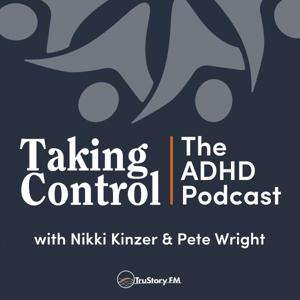

We've all been there: someone offers a perfectly reasonable suggestion, and instead of taking it in, you bristle. You're tired. You're cranky. The last thing you want is advice. This week, Pete and Nikki tackle what happens when ADHD meets fatigue — and why the strategies that usually work suddenly don't.
This isn't laziness. It isn't a character flaw. It's what happens when executive functions are already running on a deficit and you pile fatigue on top. Pete brings the research, including a study showing 62% of adults with ADHD meet the criteria for chronic fatigue syndrome — a reminder that "everybody gets tired" is true, but ADHD brains get tired in a different and vastly more significant way.
The conversation moves from the science to the lived experience: the guilt loop that keeps you from resting, the way fatigue distorts reality until small tasks feel like moral referendums, and the rewiring required to treat recovery as part of the work — not a reward you have to earn.
Plus: why "I don't wanna" might be a capacity check in disguise, the four categories of recovery that actually work (hint: sleep is only one of them), and Nikki's insight that the recovery muscle is built through trial and error, not advance planning.
LINKS & RESOURCES
 View all episodes
 By TruStory FM

4.6
436436 ratings
We've all been there: someone offers a perfectly reasonable suggestion, and instead of taking it in, you bristle. You're tired. You're cranky. The last thing you want is advice. This week, Pete and Nikki tackle what happens when ADHD meets fatigue — and why the strategies that usually work suddenly don't.
This isn't laziness. It isn't a character flaw. It's what happens when executive functions are already running on a deficit and you pile fatigue on top. Pete brings the research, including a study showing 62% of adults with ADHD meet the criteria for chronic fatigue syndrome — a reminder that "everybody gets tired" is true, but ADHD brains get tired in a different and vastly more significant way.
The conversation moves from the science to the lived experience: the guilt loop that keeps you from resting, the way fatigue distorts reality until small tasks feel like moral referendums, and the rewiring required to treat recovery as part of the work — not a reward you have to earn.
Plus: why "I don't wanna" might be a capacity check in disguise, the four categories of recovery that actually work (hint: sleep is only one of them), and Nikki's insight that the recovery muscle is built through trial and error, not advance planning.
LINKS & RESOURCES

1,337 Listeners
914 Listeners

8 Listeners
117 Listeners
21 Listeners
47 Listeners
2,870 Listeners

37 Listeners
715 Listeners
38 Listeners
29 Listeners
12 Listeners
166 Listeners
101 Listeners
178 Listeners

19,524 Listeners
290 Listeners
97 Listeners
51 Listeners
381 Listeners

4 Listeners
2 Listeners
8 Listeners

283 Listeners
0 Listeners

69 Listeners

6 Listeners

0 Listeners
5 Listeners
8 Listeners

0 Listeners
0 Listeners
2 Listeners