
Sign up to save your podcasts
Or

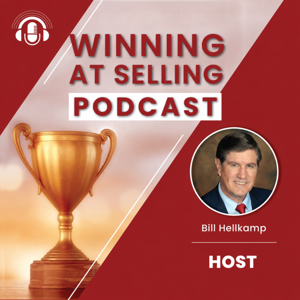


Salespeople spend their careers convincing prospects to buy, but many struggle when it comes time to sell themselves in an interview. Drawing from years of interviewing sales candidates, we'll look at the red flags sales leaders notice, the mistakes even experienced salespeople make, and how to prepare for your next interview with the same discipline you would bring to an important sales call.
Sales Interview Preparation Strategies
Brian shared five key things salespeople should focus on before interviews to demonstrate their skills effectively. He emphasized the importance of knowing and explaining their sales numbers and success stories, preparing thoroughly about the company and role, taking appropriate control during interviews by asking relevant questions, bringing evidence to support claims rather than just making statements, and closing interviews by seeking commitments and next steps. Bill agreed with these points, particularly highlighting the value of preparation and respect shown through proper research and questioning. They discussed how these principles apply not just to job interviews but also to sales conversations with clients.
Golden Nugget:
"Success occurs when opportunity meets preparation." — Zig Ziglar
Resources:
Show Website: www.winningatselling.net
Brian Maas LinkedIn: linkedin.com/in/brianmaas
Brian Maas Contact: [email protected]
Bill Hellkamp LinkedIn: linkedin.com/in/billhellkamp
Bill Hellkamp Website: www.reachdev.com
Did you choose sales or did sales choose you? Stefani ran a LinkedIn poll. Nearly half of 496 people said they fell in. If that's you, this episode is going to hit differently. Because falling in is fine. Staying lost? That's a choice.".
Structured Sales Process Implementation
Stefani and Bill discussed the importance of having a structured sales process rather than relying on untrained "accidental salespeople" who wing it without a clear methodology. Stefani emphasized that a sales structure doesn't make you less human but actually frees you up to be more present and confident in conversations, while Bill shared insights about how poor processes can lead to lost sales opportunities when salespeople lose control of the conversation. They agreed that structure doesn't require throwing out existing successful patterns but rather adding a framework that allows for flexibility and adaptation when things don't go as planned.
Golden Nugget:
"Plans are useless, but planning is indispensable." — Dwight D. Eisenhower
Resources:
Bill Hellkamp LinkedIn: linkedin.com/in/billhellkamp
Bill Hellkamp Website: www.reachdev.com
Stefani Havel LinkedIn: linkedin.com/in/stefanihavel
Stefani Havel Website: www.stefanihavel.com
People don't like to be sold; they like to buy. Lasting relationships come from being a valued partner to your clients. Unfortunately, not all sales professionals see it this way. Many of them are transactional and just looking to close the next deal. But if you are a valued partner the deal doesn't close, the relationship opens.
Assistant Buyer Success StrategiesJimmy discussed his approach to becoming an assistant buyer, inspired by Frank Boettcher's book "How I Raised Myself from Failure to Success in Selling." He explained that the assistant buyer posture involves coming alongside clients to help them make decisions rather than pushing products, focusing on building trust and partnership rather than just being a "trusted advisor." Bill shared examples from Carnegie's work and Boettcher's book to illustrate the effectiveness of this approach, including the concept of getting physically or verbally aligned with prospects to build better connections.
Client Partnership Building StrategiesJimmy and Bill discussed strategies for building partnerships with clients rather than treating sales as a transactional process. They emphasized the importance of using language that positions the client as having already made a purchase decision, sitting alongside rather than above clients during discussions, and asking questions to help clients reach conclusions on their own. The conversation included practical advice about physical positioning during client meetings and the importance of focusing on solving client problems rather than using sales techniques that feel manipulative.
Golden Nugget:
"A salesperson cannot know too much, but he or she can talk too much."
Frank Bettger – Author of How I Raised Myself from Failure to Success in Selling
Resources:
Bill Hellkamp LinkedIn: linkedin.com/in/billhellkamp
Bill Hellkamp Website: reachdev.com
Jimmy Z LinkedIn: linkedin.com/in/jimmyzugschwert
Jimmy Z Website: JimmyZSpeaks.com
Sales wants marketing to create demand, open doors, and make conversations easier. Marketing wants sales to take that momentum and turn it into revenue. But when the two teams operate in silos, sales ends up asking for things marketing never planned to create, while marketing creates things sales never uses. So how do we get sales and marketing working together in a way that actually helps both teams win?
Sales-Marketing Team Alignment Challenges
Bill, Beau and John discussed the challenges in the relationship between sales and marketing teams, highlighting how poor communication and silos can lead to misaligned strategies and missed opportunities. They emphasized the importance of regular, open communication between sales and marketing teams, using an example of a successful salesperson named Marty who actively engaged with the marketing team to achieve better results. John stressed the need for alignment from the beginning and the value of sales feedback in shaping consistent brand messaging, while Bill noted the disconnect that can occur between director-level decisions and actual sales experiences on the ground.
Sales and Marketing Alignment Discussion
Bill, John and Beau discussed the challenges of alignment between sales and marketing teams, particularly how different perspectives can emerge between management and front-line staff. They explored how marketing can effectively support sales by creating familiarity and pre-qualifying prospects before sales conversations, with Beau emphasizing the importance of understanding customer experiences and needs. The discussion concluded with insights about how modern marketing must adapt to the "zero click era" by creating valuable content that can be discovered through AI and large language models, with Bill recommending OrangeBall Creative as a resource for companies in the Midwest area.
Golden Nugget:
"If sales and marketing are telling different stories, the customer gets to decide which one to believe."
Resources:
OrangeBall.ai – Self-directed, AI enhanced marketing and branding services
Bill Hellkamp LinkedIn: linkedin.com/in/billhellkamp
Bill Hellkamp Website: reachdev.com
Bill Hellkamp email: [email protected]
You've made a great connection with your prospect, helped them identify their need and motivation, and guided them to a solution that makes sense for them only to run into hesitation. Today we get to unpack what your prospect's stall or objections are telling you and how to respond in a way that makes it easy for them to buy TODAY.
Handling Sales Objections PositivelyErik discussed how a pause or objection from a prospect during a sales process should be viewed as a positive sign indicating the customer has moved into the reasoning stage of the buying cycle. He emphasized that salespeople should resist the urge to immediately go into sales mode and instead allow the prospect time to think and consider the information presented. Bill agreed with this approach, referencing a previous episode with Erik Thurwanger about The Ponder Principle and emphasizing the importance of letting prospects think without filling silence with unnecessary talk.
Customer Pause Sales StrategiesErik and Bill discussed strategies for handling customer pauses during the sales process, focusing on the four-step buying cycle and how to address customer hesitation in the reasoning stage. They explored techniques for uncovering objections, including asking questions about concerns and presenting customers with two clear options: either the solution hasn't been fully developed or the price point isn't where the customer hoped it would be. Bill emphasized the importance of not automatically dropping prices and suggested that salespeople should better address the "why, now, and why you" questions that customers naturally ask.
Golden Nugget: "If you want to go fast go alone, if you want to go far go together." African Proverb
Resources:
Bill Hellkamp LinkedIn: linkedin.com/in/billhellkamp
Bill Hellkamp Website: reachdev.com
Bill Hellkamp email: [email protected]
Erik Haugen LinkedIn: linkedin.com/in/erikrhaugen
Erik Haugen Contact: [email protected]
PROP Coaching and Consulting website: www.propcoachingandconsulting.com
A prospect tells you the meeting was great, asks for a proposal, and seems genuinely interested. Then, they suddenly disappear! Ghosting isn't always a follow-up problem. Often, something was missed earlier in the sales process. We'll look at the difference between interest and real commitment, and the warning signs around trust, value, qualification, decision process, and next steps that salespeople may be overlooking.
Sales Prospect Ghosting Solutions
Bill and Brian discussed the common sales challenge of prospects "ghosting" after showing initial interest. They identified several key reasons for this phenomenon, including lack of trust built during the sales conversation, failure to understand the prospect's true needs, and insufficient qualification of opportunities. The discussion emphasized the importance of asking the right questions to uncover decision-making processes and gain genuine commitments rather than sending proposals without proper follow-up or meeting arrangements. They concluded by encouraging salespeople to reflect on four key questions before leaving prospect meetings: whether trust was established, if there's a real reason for change, understanding the decision process, and securing actual commitments for next steps.
Golden Nugget:
"The quality of your life is a direct reflection of the quality of the questions you are asking yourself." — Tony Robbins
Resources:
Brian Maas LinkedIn: linkedin.com/in/brianmaas
Brian Maas Contact: [email protected]
Bill Hellkamp LinkedIn: linkedin.com/in/billhellkamp
Bill Hellkamp Website: www.reachdev.com
It's not skill. It's not knowledge. It's identity. When someone doesn't see themselves as a "salesperson," they unconsciously self-sabotage—underpricing, over-delivering before the sale, and avoiding the ask. Changing behavior without changing identity never sticks.
Sales Failure Analysis Discussion
Bill and Stefani discussed examining and learning from sales failures to identify mental blocks, with Bill emphasizing the importance of reviewing their processes. Bill shared his experience teaching public speaking, noting that fear often stems from past negative experiences, and described how he helped students overcome these fears by reviewing their videos positively to create new, more positive mental associations.
Sales Course Visualization Techniques
Stefani discussed her eight-week sales course that focuses on mindset and identity before covering the sales process, emphasizing the importance of addressing mental barriers first. She explained her teaching on visualization techniques where salespeople close their eyes before sales calls to envision positive outcomes, which she described as rewiring the brain through neuroplasticity. Stefani used the analogy of water flowing around rocks to illustrate how consistent visualization can create new neural pathways.
Overcoming Sales Mental Blocks
Bill and Stefani discussed three steps for overcoming sales mental blocks: removing emotion from failures, identifying smallest changes that could have made a difference, and inserting positive energy into negative situations. Stefani then presented on identity as a key factor in sales performance, explaining how talented salespeople underperform due to incorrect beliefs about themselves and their role as guides rather than pushy salespeople.
Golden Nugget: "Whether you think you can or you think you can't—you're right."-- Henry Ford
Resources:
Bill Hellkamp LinkedIn: linkedin.com/in/billhellkamp
Bill Hellkamp Website: www.reachdev.com
Stefani Havel LinkedIn: linkedin.com/in/stefanihavel
Stefani Havel Website: www.stefanihavel.com
Convert Guide: SalesStrategyNetwork.com/Convert
In sales, there can be a wide variety of pressure points. You may have a customer that claims they just want the lowest price. Your company may be demanding you sell more of one product over another. How do these factors influence the decisions you make in selling? Are you more concerned about your needs or the needs of your customer? On today's episode, we will consider the following question: When the pressure to produce and the responsibility to serve the customer collide, what guides your decision?
Decision Collision in Sales
Jimmy discussed the concept of decision collision in sales, explaining how pressures from companies to meet goals can conflict with serving customer needs. He described how sales professionals often face multiple directives that can distract from focusing on what customers truly need. Bill agreed with this perspective, sharing his experience with problematic commission and incentive programs that can lead salespeople to make unethical decisions to meet short-term goals rather than generate genuine new business.
Sales Ethical Decision Framework Discussion
Jimmy and Bill discussed the challenges sales professionals face when managing conflicting pressures between company goals and customer needs. They identified three key collision points: recommending solutions that benefit the company more than the customer, not fully representing product features and benefits, and omitting important information that could affect customer decisions. Jimmy presented a decision framework using the four Ws (who benefits, what is being chosen, why the recommendation is being made, and when it would be defensible) to help salespeople maintain ethical standards while meeting production goals.
Golden Nugget: "In your daily interactions with others, you might think the question in everyone's mind is, Do I like you? but the more important question, and the question everyone is actually asking is, Can I trust you?" David Horsager, from his book, Trust Matters More Than Ever.
Resources:
Bill Hellkamp LinkedIn: linkedin.com/in/billhellkamp
Bill Hellkamp Website: reachdev.com
Jimmy Z LinkedIn: linkedin.com/in/jimmyzugschwert
Jimmy Z Website: JimmyZSpeaks.com
Although studies show that buying is an emotional decision, most salespeople tend to stay in the realm of logic. To move a prospect into emotional territory the seller needs to induce them to "think", to "ponder". And getting the prospect to ponder, can revolutionize your selling process.
Causing Prospects to Ponder
Erik and Bill discussed the importance of causing prospects to "ponder" rather than just hear or listen during sales presentations. Erik explained that when sales professionals make people think deeply about their message, it leads to better decision-making, contrasting with the common practice of presenting generic information. They noted that buyers have become more sophisticated and perceive 70% of salespeople as sounding the same, creating an opportunity for sales professionals to differentiate themselves through more thoughtful and personalized approaches.
Thought-Provoking Sales Questions Strategy
Erik and Bill discussed the importance of asking thought-provoking questions in sales conversations rather than relying on outdated or intrusive techniques. Erik emphasized the need for sales professionals to prepare creative questions that elicit emotional responses from prospects, suggesting the use of "0 to 10" ranking questions to understand what matters most to clients. Bill agreed on the importance of preparation and developing a guided question set, while Erik highlighted the goal of helping clients make decisions based on emotional impact and value rather than just features and benefits.
Sales Questioning and Conversion Strategies
Erik shared his sales approach of using emotional and logical questions to identify gaps between clients' expectations and current reality, particularly using a 1-10 scale to determine what's most important to prospects. He emphasized the importance of causing clients to ponder through strategic questioning and noted that effective sales professionals should be multidimensional, offering multiple services beyond their primary offering. The discussion highlighted how salespeople can increase conversion rates by understanding client needs better and addressing specific gaps rather than presenting generic solutions.
Golden Nugget: "In the middle of every difficulty lies opportunity." – Albert Eistein
Resources:
Erik Therwanger LinkedIn: linkedin.com/in/erik-therwanger-5624b35
Erik Therwanger Contact: [email protected]
Erik Therwanger Website: www.thinkgreat90.com
Bill Hellkamp LinkedIn: linkedin.com/in/billhellkamp
Bill Hellkamp Website: reachdev.com
Bill Hellkamp email: [email protected]
Are you letting sales be done to you or are you planning and accounting for them so there are less surprises? With proper planning you can effectively have each quarter WON by the time it starts instead of waiting to see what happens at the end!
Golden Nugget: "By failing to prepare you're preparing to fail." Benjamin Franklin
Bill Hellkamp LinkedIn: linkedin.com/in/billhellkamp
Bill Hellkamp Website: reachdev.com
Bill Hellkamp email: [email protected]
Erik Haugen LinkedIn: linkedin.com/in/erikrhaugen
Erik Haugen Contact: [email protected]
PROP Coaching and Consulting website: www.propcoachingandconsulting.com
From the publisher's feed

78,309 Listeners

3,448 Listeners
10,743 Listeners

580 Listeners

4,453 Listeners

1,961 Listeners
256 Listeners

681 Listeners

52 Listeners

8,477 Listeners