
Sign up to save your podcasts
Or

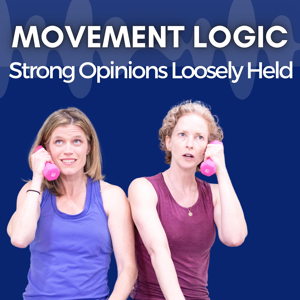

In this episode, Laurel and Sarah sit down with muscle physiology researcher and science communicator Lauren Colenso-Semple to take a hard look at some of the most popular and problematic claims circulating in women’s health and fitness. Together, they unpack the slogan “women are not small men,” and the idea that women need completely different training and nutrition approaches than men. Lauren explains where the evidence actually stands on topics like muscle loss at 30, lifting to failure, cardio recommendations for women, bone density changes at menopause, training fasted versus fed, cycle syncing, cortisol “hacks,” and more.
This conversation is a deep dive into separating women's physiology from marketing ploys. Learn why overcomplicating women’s training does more harm than good. You'll gain clear, evidence-based guidance for women in perimenopause, post-menopause, and beyond.
Sign up for the Bone Density Course Interest list
Follow us @MovementLogicTutorials on Instagram
04:30 Why Naming Sources Matters
08:15 “Women Are Not Small Men”: What’s True and What’s Branding
16:00 How Much Research on Women Actually Exists
29:30 Training to Failure, Heavy vs. Light Loads, and Age-Specific Claims
31:00 The Case for Keeping Moderate-Intensity Cardio
36:15 Bone Loss Myths and What Exercise Really Helps
46:30 What “Challenging Sets” Mean in Research
49:00 Cortisol, Fasted Training, and Breakfast Timing
52:30 Low Energy Availability vs. Simply Skipping Breakfast
01:08:00 Cycle Syncing and Monthly Program Overhauls
01:15:00 Rapid-Fire Q&A: Creatine, Weighted Vests, Collagen, Protein Targets, Electrolytes
01:23:30 How Overcomplicated Rules Keep Women Out of Exercise
01:24:00 Has Stacy Sims Done More Good or More Harm?
01:26:30 Why Simple, Progressive Training Works for Everyone
Dr Lauren Colenso-Semple on Instagram
Front Page Fitness Podcast
Study Menstrual cycle phase does not influence muscle protein synthesis or whole-body myofibrillar proteolysis in response to resistance
Mel Robbins Podcast interview with Dr. Stacey Sims
Huberman Lab Podcast interview with Dr. Stacey Sims
 View all episodes
 By Dr. Sarah Court, PT, DPT and Laurel Beversdorf

4.7
9090 ratings
In this episode, Laurel and Sarah sit down with muscle physiology researcher and science communicator Lauren Colenso-Semple to take a hard look at some of the most popular and problematic claims circulating in women’s health and fitness. Together, they unpack the slogan “women are not small men,” and the idea that women need completely different training and nutrition approaches than men. Lauren explains where the evidence actually stands on topics like muscle loss at 30, lifting to failure, cardio recommendations for women, bone density changes at menopause, training fasted versus fed, cycle syncing, cortisol “hacks,” and more.
This conversation is a deep dive into separating women's physiology from marketing ploys. Learn why overcomplicating women’s training does more harm than good. You'll gain clear, evidence-based guidance for women in perimenopause, post-menopause, and beyond.
Sign up for the Bone Density Course Interest list
Follow us @MovementLogicTutorials on Instagram
04:30 Why Naming Sources Matters
08:15 “Women Are Not Small Men”: What’s True and What’s Branding
16:00 How Much Research on Women Actually Exists
29:30 Training to Failure, Heavy vs. Light Loads, and Age-Specific Claims
31:00 The Case for Keeping Moderate-Intensity Cardio
36:15 Bone Loss Myths and What Exercise Really Helps
46:30 What “Challenging Sets” Mean in Research
49:00 Cortisol, Fasted Training, and Breakfast Timing
52:30 Low Energy Availability vs. Simply Skipping Breakfast
01:08:00 Cycle Syncing and Monthly Program Overhauls
01:15:00 Rapid-Fire Q&A: Creatine, Weighted Vests, Collagen, Protein Targets, Electrolytes
01:23:30 How Overcomplicated Rules Keep Women Out of Exercise
01:24:00 Has Stacy Sims Done More Good or More Harm?
01:26:30 Why Simple, Progressive Training Works for Everyone
Dr Lauren Colenso-Semple on Instagram
Front Page Fitness Podcast
Study Menstrual cycle phase does not influence muscle protein synthesis or whole-body myofibrillar proteolysis in response to resistance
Mel Robbins Podcast interview with Dr. Stacey Sims
Huberman Lab Podcast interview with Dr. Stacey Sims
613 Listeners
569 Listeners

887 Listeners

1,247 Listeners
12,712 Listeners

3,863 Listeners

8,751 Listeners

615 Listeners

90 Listeners
1,113 Listeners

722 Listeners

29,176 Listeners
384 Listeners
95 Listeners

115 Listeners