
Sign up to save your podcasts
Or

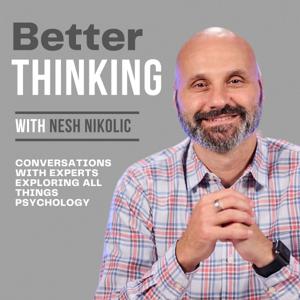

In this episode of Better Thinking, Nesh Nikolic speaks with Dr. Jerry Rosenbaum anxiety disorders, depression, and how psychedelics change the brain — and what this could mean for the future of psychiatry.
Dr. Jerry Rosenbaum is the Stanley Cobb Professor of Psychiatry at Harvard Medical School and former Chair of the Massachusetts General Hospital Psychiatry Department, where he led one of the nation’s largest and most influential psychiatric programs for two decades.
Dr. Rosenbaum has authored more than 400 scientific papers, edited 20 books, and has been recognized with numerous awards—including the C. Charles Burlingame Award for lifetime achievement in psychiatric research and the Ellis Island Medal of Honor. His career spans pioneering longitudinal studies on anxiety and depression, major leadership roles across national mental health organisations, and groundbreaking work in neuroscience and psychopharmacology.
He now directs the Center for Neuroscience of Psychedelics, where his research focuses on how psychedelics change the brain and what this could mean for future treatments of psychiatric disorders.
 View all episodes
 By Nesh Nikolic

4.9
77 ratings
In this episode of Better Thinking, Nesh Nikolic speaks with Dr. Jerry Rosenbaum anxiety disorders, depression, and how psychedelics change the brain — and what this could mean for the future of psychiatry.
Dr. Jerry Rosenbaum is the Stanley Cobb Professor of Psychiatry at Harvard Medical School and former Chair of the Massachusetts General Hospital Psychiatry Department, where he led one of the nation’s largest and most influential psychiatric programs for two decades.
Dr. Rosenbaum has authored more than 400 scientific papers, edited 20 books, and has been recognized with numerous awards—including the C. Charles Burlingame Award for lifetime achievement in psychiatric research and the Ellis Island Medal of Honor. His career spans pioneering longitudinal studies on anxiety and depression, major leadership roles across national mental health organisations, and groundbreaking work in neuroscience and psychopharmacology.
He now directs the Center for Neuroscience of Psychedelics, where his research focuses on how psychedelics change the brain and what this could mean for future treatments of psychiatric disorders.

2,529 Listeners
1,389 Listeners

133 Listeners

570 Listeners
323 Listeners

8,748 Listeners
1,345 Listeners

11,994 Listeners

4,045 Listeners

27,775 Listeners

335 Listeners

29,207 Listeners
11 Listeners

805 Listeners
118 Listeners