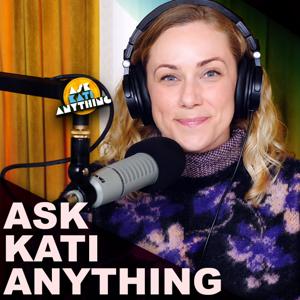
Ask Kati Anything
Download on the App Store
  • Favorites

    103

    Followers

  • Typical duration

    65 min

    per episode

Based on Podcast App listening data

Ask Kati Anything episodes

  • How Narcissism Actually Works: Love Bombing, Gaslighting, Flying Monkeys

    Narcissism, narcissistic abuse, and NPD get thrown around constantly online, and most of what circulates is wrong. In this episode, licensed marriage and family therapist Kati Morton walks through what narcissistic personality disorder actually is (all nine DSM criteria, and why five or more are required for a diagnosis), the difference between covert and overt narcissism, and the specific behavior patterns that make a relationship abusive: love bombing, gaslighting, trauma bonding, DARVO, flying monkeys, isolation, and intermittent reinforcement. She also covers the gray rock method, the signs you're walking on eggshells in your own home, and how healing from narcissistic abuse actually works.

    If you've been wondering whether what you experienced counts, or whether the person in your life is a narcissist or simply selfish and hurtful, this one is for you.
    Timestamps
    0:00 Everyone thinks everyone's a narcissist
    1:07 What narcissistic personality disorder actually is: five of nine criteria
    3:20 Covert vs. overt narcissism
    9:22 What narcissistic abuse means
    9:48 Love bombing, and how it differs from someone just being kind
    13:49 Gaslighting
    19:11 No accountability, no apology, no repair
    22:19 Monitoring, isolation, and turning you against the people who love you
    24:22 Trauma bonding and the abuse cycle
    27:25 DARVO
    30:45 The gray rock method
    34:30 Flying monkeys
    36:57 Why they aren't nasty all the time
    40:02 Intermittent reinforcement
    40:47 Signs you're living in this dynamic
    43:50 How healing actually happens
    46:27 Reconnecting with the people you lost touch with
    49:16 A better question than "what's wrong with me"
    53:33 Afraid you'll end up with another narcissist
    This episode is brought to you by Rebound, offering specialized virtual trauma therapy in all 50 states, founded by survivors and psychologists. Head to https://hellorebound.com/askkatianything to learn more and check your insurance.
    Using that link is a direct way to support the podcast, so even if you're only curious, take a minute to look.
    Ask Kati Anything ep. 327 | Your mental health podcast, with Kati Morton, LMFT
    MY BOOKS
    Why Do I Keep Doing This? https://geni.us/XoyLSQ
    Traumatized https://geni.us/Bfak0j
    Are u ok? https://geni.us/sva4iUY
    ONLINE THERAPY
    If you're looking for a therapist, BetterHelp can connect you with a licensed online professional: https://betterhelp.com/kati (enjoy 10% off your first month)
    This is an affiliate link, which means a portion of your signup helps support the podcast at no extra cost to you.
    PARTNERSHIPS
    Nick Freeman | [email protected]
    Disclaimer
    The information provided in this video is for educational and informational purposes only and is not intended as medical or mental health advice. It should not be used to diagnose or treat any health problem or disease. Always consult with a qualified healthcare professional for diagnosis and treatment. Viewing this content does not establish a therapist-client relationship.

    Learn more about your ad choices. Visit megaphone.fm/adchoices

    58 min
  • “I ruin every relationship I care about.” - BPD

    Borderline Personality Disorder (BPD) is deeply misunderstood, heavily stigmatized, and far more complex than just "being emotional". In this episode of Ask Kati Anything, licensed marriage and family therapist Kati Morton breaks down the official BPD diagnostic criteria from the DSM, explaining how BPD symptoms actually present in real life, therapy offices, and everyday relationships. She explores the underlying fear of abandonment, idealization and devaluation (splitting), identity disturbances, and why BPD so frequently overlaps with PTSD, trauma, and ADHD. Plus, discover actionable evidence-based BPD treatment options like Dialectical Behavior Therapy (DBT), Schema Therapy, and Mentalization-Based Therapy (MBT) to help manage emotional dysregulation, navigate relationship boundaries, and work toward long-term remission.

    Timestamps
    00:00 - Introduction to Borderline Personality Disorder (BPD)
    01:00 - Why "Personality Disorder" is a Misleading Term
    01:55 - How BPD is Diagnosed: DSM Criteria Overview
    02:55 - BPD Symptom 1: Fear of Abandonment & Attachment Styles
    04:45 - BPD Symptom 2: Splitting, Idealization & Devaluation
    07:25 - BPD Symptom 3: Identity Disturbance & Chronic Emptiness
    08:31 - BPD Symptom 4: Impulsivity in Daily Life
    12:05 - BPD Symptom 5: Recurrent Suicidal Behavior & Self-Harm
    16:05 - BPD Symptom 6: Affective Instability (BPD vs Bipolar Disorder)
    18:18 - BPD Symptom 7: Chronic Feelings of Emptiness
    19:22 - BPD Symptom 8: Inappropriate, Intense Anger
    21:53 - BPD Symptom 9: Stress-Related Paranoia & Dissociation
    25:14 - Is it BPD or Just Being Emotional?
    26:46 - What Does Having "BPD Traits" Mean?
    28:49 - BPD vs. Anxiety, ADHD, and PTSD Overlaps
    33:25 - The Deep Link Between Childhood Trauma and BPD
    40:21 - Why People with BPD Push Loved Ones Away
    41:35 - What is Quiet BPD?
    43:33 - Can You Have a Healthy Relationship with BPD?
    47:53 - Setting Healthy Boundaries Without Triggering Abandonment
    53:05 - Can BPD be Cured? Understanding BPD Remission
    56:23 - BPD Treatment: Dialectical Behavior Therapy (DBT) Explained
    01:04:33 - Alternative Therapies: MBT, Schema Therapy, & TFP
    01:08:30 - The Role of Medication in BPD Treatment
    YouTube channel: https://www.youtube.com/c/katimorton?sub_confirmation=1
    MY BOOKS
    Why Do I Keep Doing This? https://geni.us/XoyLSQ
    Traumatized https://geni.us/Bfak0j
    Are u ok? https://geni.us/sva4iUY
    ONLINE THERAPY - Enjoy 10% OFF your first month
    If you're looking for a therapist, BetterHelp can connect you with a licensed online professional: https://betterhelp.com/kati This is an affiliate link, which means a portion of your signup helps support the podcast at no extra cost to you.
    PARTNERSHIPS
    Nick Freeman | [email protected]
    DISCLAIMER
    The information provided in this podcast is for educational and informational purposes only and is not intended as medical or mental health advice. It should not be used to diagnose or treat any health problem or disease. Always consult with a qualified healthcare professional for diagnosis and treatment. Viewing this content does not establish a therapist-client relationship.
    #mentalhealth #therapist #borderline
    Ask Kati Anything ep.326 | Your mental health podcast, with Kati Morton, LMFT

    Learn more about your ad choices. Visit megaphone.fm/adchoices

    1 hr 12 min
  • Taboo Topics & Attachment in Therapy

    Navigating attachment dynamics and discussing sensitive, taboo topics in therapy can feel daunting, but understanding how your attachment style influences your mental health is a major step toward healing. In this episode, licensed therapist Kati Morton dives deep into attachment theory, explaining the four primary attachment styles—secure, anxious, avoidant, and disorganized—and how they shape your adult relationships and sessions with your therapist. Kati also addresses how to bring up political differences or uncomfortable topics without fear of judgment, and answers your most pressing community questions.

    Timestamps
    00:00 - Episode Overview
    00:46 - Discussing Uncomfortable & Taboo Topics in Therapy
    01:59 - Political Polarization, Media Rage-Bait, and Safe Spaces
    07:57 - Why Therapists Keep Personal Opinions Private
    15:02 - Examples of Kinks, Religion, and Money in Therapy
    18:42 - What is Attachment Theory?
    20:35 - "What If You Never Tried to Attach to Your Parents?"
    Thank you to this week's sponsors!
    REBOUND: visit www.hellorebound.com/askkatianything & check your insurance or get matched with a therapist
    ONESKIN: Get 15% off OneSkin with the code KATI at www.oneskin.co/KATI
    25:48 - The 4 Attachment Styles in Relationships
    28:22 - How Attachment Styles Show Up Under Stress
    35:35 - Getting Too Attached to Your Therapist
    42:11 - Feeling Lost When Your Therapist Goes on Vacation
    46:27 - Red Flag: When a Therapist Shares Their Own Personal Drama
    53:38 - Rebuttal: Is the Therapeutic Relationship Transactional or Dangerous?
    01:00:23 - Healing Your Attachment Blueprint and Final Thoughts
    Instagram: https://www.instagram.com/katimorton
    My main YouTube channel: https://www.youtube.com/c/katimorton?sub_confirmation=1
    Ask Kati Anything ep. 325 | Your mental health podcast, with Kati Morton, LMFT
    PUBLISHED BOOKS
    Why Do I Keep Doing This? https://geni.us/XoyLSQ
    Traumatized https://geni.us/Bfak0j
    Are u ok? https://geni.us/sva4iUY
    ONLINE THERAPY
    If you're looking for a therapist, BetterHelp can connect you with a licensed online professional: https://betterhelp.com/kati - Enjoy 10% off your first month!
    (this is an affiliate link, which means a portion of your signup helps support the podcast at no extra cost to you)
    SOCIAL
    X https://twitter.com/KatiMorton
    TikTok https://www.tiktok.com/@katimorton
    Facebook https://www.facebook.com/katimorton1/
    Instagram https://www.instagram.com/katimorton
    Pinterest https://www.pinterest.com/katimorton1/
    Patreon https://www.katimorton.com/kati-morton-patreon/

    https://www.youtube.com/@askkatianything

    https://www.youtube.com/@katimorton

    PARTNERSHIPS
    Nick Freeman | [email protected]
    Disclaimer:
    The information provided in this video is for educational and informational purposes only and is not intended as medical or mental health advice. It should not be used to diagnose or treat any health problem or disease. Always consult with a qualified healthcare professional for diagnosis and treatment. Viewing this content does not establish a therapist-client relationship.

    Learn more about your ad choices. Visit megaphone.fm/adchoices

    1 hr 6 min
  • Why Your Eating Disorder Is Never Actually About Food

    In this episode of Ask Kati Anything, licensed therapist Kati Morton breaks down why eating disorders are rarely actually about the food or your body. We look at what’s really happening behind the strict rules, rituals, and need for control, and how these behaviors often show up as survival mechanisms to protect us from deeper stress, trauma, and overwhelm. Whether you’re struggling with restrictive eating, binging, purging, orthorexia, or just feel completely exhausted by your relationship with food, this conversation is here to give you clarity, reduce the shame, and help you understand what your brain is actually trying to tell you.


    REBOUND: visit www.hellorebound.com/askkatianything & check your insurance or get matched with a therapistONESKIN: Get 15% off OneSkin with the code KATI at www.oneskin.co/KATI

    00:00 - Why eating disorders aren't actually about food
    00:40 - Pica: Eating non-food items & nutrient deficiencies
    05:41 - ARFID: Sensory food avoidance without body dysmorphia
    11:13 - Rumination Disorder: Regurgitation & unspoken shame
    14:13 - Anorexia Nervosa: Energy restriction & body checking
    17:16 - Bulimia Nervosa: Binging, purging & compensatory rules
    20:59 - Binge Eating Disorder: Rapid eating, guilt & secrecy
    23:56 - Orthorexia: When clean eating & rules run your life
    30:43 - Why eating disorders are actually survival mechanisms
    49:35 - How loved ones can offer support without triggering shame
    MY BOOKS
    Why Do I Keep Doing This? https://geni.us/XoyLSQ
    Traumatized https://geni.us/Bfak0j
    Are u ok? https://geni.us/sva4iUY
    ONLINE THERAPY
    If you're looking for a therapist, BetterHelp can connect you with a licensed online professional: https://betterhelp.com/kati (enjoy 10% off your first month)
    This is an affiliate link, which means a portion of your signup helps support the podcast at no extra cost to you.
    PARTNERSHIPS
    Nick Freeman | [email protected]
    Disclaimer:
    The information provided in this video is for educational and informational purposes only and is not intended as medical or mental health advice. It should not be used to diagnose or treat any health problem or disease. Always consult with a qualified healthcare professional for diagnosis and treatment. Viewing this content does not establish a therapist-client relationship.

    Learn more about your ad choices. Visit megaphone.fm/adchoices

    1 hr 12 min
  • Are You Too Attached to Your Therapist?

    Do you think about your therapist between sessions? Check their social media? Spiral when they cancel? A licensed therapist explains why attachment to your therapist happens, why it's actually part of the process, and the exact signs that tell you when it's crossed into unhealthy territory.

    In this episode of Ask Kati Anything, licensed marriage and family therapist Kati Morton breaks down the therapeutic relationship: the single strongest predictor of whether therapy actually works. She answers listener questions about feeling "creepy" for looking up their therapist, why therapy can feel transactional and fake, and what therapists are really noticing about you in session. Then she walks through the attachment ladder, the four stages that explain why your therapist starts to feel like the only person who truly gets you, and closes with a complete checklist of healthy vs. unhealthy therapeutic relationship signs.
    TIMESTAMPS
    0:00 What is the therapeutic relationship?
    1:21 The #1 predictor of successful therapy
    2:26 Q1: "I'm attached to my therapist and feel like a creep"
    5:52 Attachment wounds: why your therapist fills the void
    11:54 What your therapist is actually noticing in session
    15:20 Q2: "I feel closer to my therapist than anyone in my life"
    16:56 The attachment ladder: 4 stages of attaching to your therapist
    23:13 Q3: "Therapy feels transactional and the care feels bought"
    28:21 Why you need to put the phone down and just think
    31:17 Q4: "My therapist rescheduled and I spiraled for days"
    32:47 What a therapist's role actually is (and isn't)
    35:25 Signs of a HEALTHY therapeutic relationship
    42:17 Signs of an UNHEALTHY therapeutic relationship
    49:08 Why boundaries in therapy matter so much
    53:06 How to make sure therapy works for you
    THIS EPISODE IS SPONSORED BY ⁠REBOUND⁠

    Rebound offers virtual, evidence-based treatment for PTSD with trauma-specialist therapists, in-network with most major insurance plans in all 50 states. Check your insurance or get matched: Head to https://hellorebound.com/askkatianything to check your insurance or get matched with a therapist.

    RESEARCH & RESOURCES

    Psychotherapy and Therapeutic Relationship https://www.ncbi.nlm.nih.gov/books/NBK608012/

    Perceived therapist genuineness predicts therapeutic alliance in cognitive behavioural therapy for psychosis
    https://bpspsychub.onlinelibrary.wiley.com/doi/10.1111/bjc.12059
    The Relationship Between Attachment Needs, Earned Secure
    https://psycnet.apa.org/fulltext/2025-18086-004.html
    Client and Therapist Attachment Styles and Working Alliance
    https://onlinelibrary.wiley.com/doi/10.1002/cpp.1944
    The experience of closeness and distance in the therapeutic relationship of patients with different attachment classifications https://www.frontiersin.org/journals/psychiatry/articles/10.3389/fpsyt.2023.1029783/full


    ⁠⁠⁠ASK KATI YOUR QUESTION

    Leave your question in the comments below and it may be answered on an upcoming episode.
    MY BOOKS & WORKSHOPS https://katimorton.com
    THERAPY
    If you're looking for a therapist, BetterHelp can connect you with a licensed online professional: https://betterhelp.com/kati - Enjoy 10% off your first month!
    (this is an affiliate link, which means a portion of your signup helps support the podcast at no extra cost to you)SOCIALS

    X https://twitter.com/KatiMorton

    TikTok https://www.tiktok.com/@katimorton
    Facebook https://www.facebook.com/katimorton1/
    Instagram https://www.instagram.com/katimorton
    Pinterest https://www.pinterest.com/katimorton1/
    Patreon https://www.katimorton.com/kati-morton-patreon/
    Main YouTube https://www.youtube.com/c/katimorton?sub_confirmation=1
    Apple https://podcasts.apple.com/us/podcast/ask-kati-anything/id1502476673
    Spotify https://open.spotify.com/show/7itqbvflj0Q9IUDqOF5NST
    Instagram https://www.instagram.com/katimorton
    PARTNERSHIPS
    Nick Freeman | [email protected]
    DISCLAIMER
    The information provided in this video is for educational and informational purposes only and is not intended as medical or mental health advice. It should not be used to diagnose or treat any health problem or disease. Always consult with a qualified healthcare professional for diagnosis and treatment. Viewing this content does not establish a therapist-client relationship.
    #therapy #mentalhealth #katimorton
    Ask Kati Anything ep. 323 | Your mental health podcast, with Kati Morton, LMFT

    Learn more about your ad choices. Visit megaphone.fm/adchoices

    57 min
  • Why You’re Exhausted Even When "Nothing" is Wrong

    Do you sleep enough and live a balanced life on paper, yet still feel completely wiped out by Tuesday? You aren't "bad at adulting"—your nervous system is likely dealing with an invisible, compounded burden.

    In this episode, we break down the three overlapping systems that drive modern exhaustion: cognitive load from constant decision fatigue, emotional labor from managing the people around us, and threat system exhaustion caused by chronic hyper-vigilance. We also discuss why physical sleep cannot fix cognitive or emotional burnout, how perimenopause/menopause can stack onto these existing stressors, and why our modern "always-on" remote culture is making it harder to disconnect. Learn how to reclaim your energy by setting better boundaries, creating end-of-day rituals, and giving your brain the "boredom" it desperately needs to recover.


    Mentioned in this episode:

    • The impact of cognitive load and "context switching"

    • Why "people pleasing" is a form of exhausting emotional labor

    • Understanding threat system exhaustion and hyper-vigilance

    • The role of hormone changes (estrogen, progesterone, and testosterone) in energy levels 


    • Tips for creating effective end-of-day work/life boundaries


    3 Key Topics/Chapters:

    • 04:15: The Reality of Cognitive Load & Decision Fatigue

    • 10:30: Why Emotional Labor and People Pleasing Drains You

    • 19:14: Threat System Exhaustion: When Your Body Braces for Danger


    Support Our Sponsors

    • BiOptimizers - Heat and summer travel can deplete your body's magnesium, making it harder to recover and relax 👉 Get 15% off your entire order + a FREE travel-size bottle of Digestive Enzymes: ⁠https://bioptimizers.com/kati use code: KATI

    • Rebound - Trauma doesn’t just fade on its own. If you’ve been hitting a wall in your life or relationships, Rebound offers virtual, evidence-based treatment from trauma specialists who are in-network with most major insurance plans. 👉 Check your insurance or get matched with a specialist: ⁠http://hellorebound.com/askkatianything


    PARTNERSHIPS

    Nick Freeman | [email protected]


    Disclaimer: This podcast is for educational purposes and is not a substitute for professional therapy or medical advice.

    Learn more about your ad choices. Visit megaphone.fm/adchoices

    53 min
  • Why Your Attempts to Fix Your Relationships Are Making It Worse

    Have you ever felt like you’re trying so hard to communicate, but the harder you try, the more things seem to fall apart? Whether it’s that heavy feeling of being misunderstood, the exhausting cycle of the silent treatment, or the fear that you’re accidentally pushing the people you love away—I want you to know: you aren't broken.

    Most of us are just running on a communication "blueprint" we didn't choose. In today’s episode, we’re peeling back the layers of why we fall into these traps. We’re talking about:

    • Why "stonewalling" and passive aggression are actually defense mechanisms (not just "bad behavior").

    • The difference between being "anxious" versus "avoidant" in a conflict.

    • How to use the DEAR MAN technique to finally ask for what you need.

    • Why "repairing" after a fight is actually more important than being perfect.

      You don't have to be perfect to have a healthy relationship. You just need to be willing to learn a different way.


      Episode Sponsor:

      Reddit - Interested in finding a community that you really love and can trust? Download the Reddit app today!


      Mentioned in this episode:

      • Why Do I Keep Doing This?
      • My Substack
      • Gottman Institute Research on The Four Horsemen
      • Learn more about your ad choices. Visit megaphone.fm/adchoices

        1 hr 13 min
      • The New Science of Depression: Brain Wiring, Inflammation, and Rewiring Your System

        Why does your brain feel like it's working against you when you're depressed? In this episode, licensed marriage and family therapist Kati Morton answers deep viewer questions to unpack what is actively happening in the body and brain during depressive episodes and periods of suicidal ideation.

        We challenge the traditional "chemical imbalance" framework to look at the modern science of mental health: how different regions of the brain communicate, why your HPA axis can get stuck in a chronic stress response, and the clinical data pointing to systemic inflammation as a primary driver of depressive symptoms. Plus, Kati breaks down the absolute differences between clinical depression, situational sadness, grief, and passive vs. active suicidal thoughts.

        What We Cover:

        • The DSM-5 Checklist: The 9 diagnostic criteria for Major Depressive Disorder.

        • The Serotonin Myth: Why modern psychiatric research is moving away from looking at single chemical levels.

        • The Inflammation Connection: Active clinical trials utilizing anti-inflammatory pathways to treat mental health.

        • Your Audio Action Plan: How to implement behavioral activation, circadian light exposure protocols, and cognitive tools to stop internal negative loops.

          Special Thanks to Our Sponsor: Go to hellorebound.com/AskKatiAnything to check your insurance or get matched with a virtual trauma specialist today. Real, evidence-based trauma treatment is within reach.


          If you are in immediate danger or experiencing a mental health crisis, please call or text 988 (US) or contact the Crisis Text Line by texting HOME to 741741. In the UK, you can reach the Samaritans at 116 123. You do not have to fight this alone.

          Learn more about your ad choices. Visit megaphone.fm/adchoices

          51 min
        • Panic Attacks? Why Your Body Thinks You’re Dying

          Do you feel like you're spiraling when your heart starts racing? Kati Morton breaks down why your body is misinterpreting normal sensations as a threat and how you can break the loop.


          In this episode of Ask Katie Anything, licensed marriage and family therapist Kati Morton explores the reality of panic disorder and why it feels so physically life-threatening. We discuss the seven stages of the panic loop, the "suffocation alarm" theory developed by Donald Klein, and why typical advice like "just breathe" can sometimes make anxiety worse. You'll learn specific, science-backed grounding techniques—including the temperature shock method, vagus nerve stimulation, and the "labeling" technique—to help you navigate moments of high intensity.


          Episode Sponsors

          • BiOptimizers - If you're ready to finally sleep great and feel like yourself again, head to https://bioptimizers.com/kati and use my exclusive code KATI to get 15% off any order.

          • Reddit - Interested in finding a community that you really love and can trust? Download the Reddit app today!

          • Rebound - Offering virtual treatment for PTSD. Rebound is not a general therapy app where trauma is just one checkbox. Their therapists are trauma specialists. Head to https://hellorebound.com/askkatianything to check your insurance or get matched with a therapist

            Chapters:

            00:00 - Introduction: Why Panic Feels Like Dying
            00:36 - Defining Panic Disorder: DSM Criteria
            04:59 - The Difference Between Panic & Anxiety Attacks
            08:05 - Is Your Heart Fluttering Normal?
            14:21 - The 7 Stages of the Panic Loop
            19:16 - Why Fighting Panic Often Backfires
            25:23 - The "Suffocation Alarm" Research
            34:12 - Homework: Labeling Your Sensations
            38:29 - Grounding Tools: Cold Water & Vagus Nerve
            42:17 - Community Success Stories & Tips


            Learn more about your ad choices. Visit megaphone.fm/adchoices

            48 min

          About Ask Kati Anything

          From the publisher's feed

          Ask Kati Anything is a weekly mental health podcast where licensed marriage and family therapist Kati Morton, LMFT, takes deep dives into the complexities of human psychology, relationships, and emotional well-being.

          Best of Ask Kati Anything

          Ranked by our users in the last 21 days
          More shows like Ask Kati Anything

          Therapy Chat by Laura Reagan, LCSW-C

          Therapy Chat

          684 Listeners

          Good Life Project by Jonathan Fields / Acast

          Good Life Project

          3,328 Listeners

          Dana K White: A Slob Comes Clean by Dana K. White: A Slob Comes Clean

          Dana K White: A Slob Comes Clean

          2,480 Listeners

          Your Anxiety Toolkit - Practical Skills for Anxiety, Panic & Depression by Kimberley Quinlan, LMFT | Anxiety & OCD Specialist

          Your Anxiety Toolkit - Practical Skills for Anxiety, Panic & Depression

          834 Listeners

          Being Well with Forrest Hanson and Dr. Rick Hanson by Rick Hanson, Ph.D., Forrest Hanson

          Being Well with Forrest Hanson and Dr. Rick Hanson

          2,518 Listeners

          Counselor Toolbox Podcast with DocSnipes by Dr. Dawn-Elise Snipes

          Counselor Toolbox Podcast with DocSnipes

          602 Listeners

          Where Should We Begin? with Esther Perel by Esther Perel Global Media

          Where Should We Begin? with Esther Perel

          14,903 Listeners

          The Healing Trauma Podcast by Monique Koven

          The Healing Trauma Podcast

          433 Listeners

          Therapy in a Nutshell by Therapy in a Nutshell -Emma McAdam

          Therapy in a Nutshell

          591 Listeners

          Dear Therapists with Lori Gottlieb and Guy Winch by iHeartPodcasts

          Dear Therapists with Lori Gottlieb and Guy Winch

          2,346 Listeners

          Trauma Rewired by Elisabeth Kristof & Jennifer Wallace

          Trauma Rewired

          363 Listeners

          Adult Child by Andrea Ashley

          Adult Child

          1,849 Listeners

          We Can Do Hard Things by Treat Media and Glennon Doyle

          We Can Do Hard Things

          41,321 Listeners

          Reimagining Love with Dr. Alexandra Solomon by Dr. Alexandra Solomon

          Reimagining Love with Dr. Alexandra Solomon

          280 Listeners

          Jillian on Love by Jillian Turecki | Daylight Media

          Jillian on Love

          1,386 Listeners