
Sign up to save your podcasts
Or

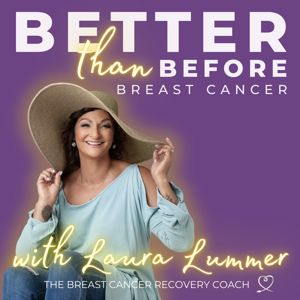


Based on Podcast App listening data
What do I even eat? If that question has ever stopped you in your tracks, this episode is for you.
So many of us cycle through the same handful of foods week after week, then feel guilty for not eating more variety. And when we try to fix that, it often turns into more recipes, more shopping, and more pressure to find the perfect anti-cancer diet.
In this episode, I want to take that pressure off.
The easiest way to add more plants to your plate is probably already in your kitchen. Your spice rack. Herbs and spices are not just flavor; they are plants and parts of plants, and they bring a whole range of beneficial compounds to your meals in just a couple of teaspoons.
We talk about:
This is not a new diet or a new set of rules. It is one simple, enjoyable way to nourish your body using what you already have.
Resources Mentioned:
Work with Laura:
https://www.thebreastcancerrecoverycoach.com/health
Download for iPhone:
https://apps.apple.com/us/app/kajabi/id1485646310
Download for Android:
https://play.google.com/store/apps/details?id=kajabi.kajabiapp&hl=en_US
Grab the free guide:
https://www.thebreastcancerrecoverycoach.com/spices
Let's Connect! If this episode helped you breathe a little easier, please share it with a friend or leave a review. Every share helps spread this message of hope, healing, and whole-person wellness.
💌 Join my email list for weekly wellness tips & podcast updates → The Breast Cancer Recovery Coach
💌 Join the Better Than Before Breast Cancer Life Coaching Membership → Life Coaching
💌 Join the Living Well After Breast Cancer Community → The Living Well After Breast Cancer Community
👩💻 Follow me on Instagram for daily inspiration → @thebreastcancerrecoverycoach
👩💻 Follow me on Facebook → The Breast Cancer Recovery Coach
🎙 Subscribe & leave a review on Apple Podcasts → Better Than Before Breast Cancer with The Breast Cancer Recovery Coach
🎥 Watch on YouTube → @BetterThanBeforeBreastCancer
Last week there was no podcast episode.
For the first time in a long time, I simply didn't have the physical or emotional energy to show up behind the microphone.
After navigating one of the most challenging health seasons I've experienced since my stage 4 diagnosis, I realized I couldn't just move on without talking about what this experience taught me.
The lesson was acceptance.
Not giving up. Not settling. Not pretending difficult things aren't difficult.
Acceptance means acknowledging reality instead of exhausting yourself fighting against it.
In this episode, I share what I've been going through, how self-imposed timelines create unnecessary suffering, and why so many of us judge ourselves for not being where we think we should be by now.
We discuss:
• Acceptance versus resistance • Healing after breast cancer • Letting go of unrealistic timelines • Self-compassion during difficult seasons • The psychology of "should" thinking • Living with uncertainty • Finding peace during setbacks • Why healing is rarely linear
If you've been frustrated with where you are in your healing, your health, your relationships, your career, or your life, this conversation is for you.
Resources Mentioned:
Work with Laura: https://www.thebreastcancerrecoverycoach.com/health
Download for iPhone:
https://apps.apple.com/us/app/kajabi/id1485646310
Download for Android:
https://play.google.com/store/apps/details?id=kajabi.kajabiapp&hl=en_US
Let's Connect! If this episode helped you breathe a little easier, please share it with a friend or leave a review. Every share helps spread this message of hope, healing, and whole-person wellness.
💌 Join my email list for weekly wellness tips & podcast updates → The Breast Cancer Recovery Coach
💌 Join the Better Than Before Breast Cancer Life Coaching Membership → Life Coaching
💌 Join the Living Well After Breast Cancer Community → The Living Well After Breast Cancer Community
👩💻 Follow me on Instagram for daily inspiration → @thebreastcancerrecoverycoach
👩💻 Follow me on Facebook → The Breast Cancer Recovery Coach
🎙 Subscribe & leave a review on Apple Podcasts → Better Than Before Breast Cancer with The Breast Cancer Recovery Coach
🎥 Watch on YouTube → @BetterThanBeforeBreastCancer
What is the most important thing I've done to support healing after breast cancer?
Mindset work.
Not positive thinking. Not pretending things are fine when they're not. Not forcing affirmations I didn't believe.
I'm talking about the work of examining what I believed was possible for my body and my future and learning how to update those beliefs.
In this episode, I share why mindset work became the foundation of my healing journey after a stage 4 breast cancer diagnosis and how neuroscience shows that our brains constantly predict what's possible based on past experiences, conditioning, fear, and environment.
We talk about:
• Why belief systems impact behavior and healing • The brain as a predictive machine • How fear and conditioning shape health decisions • The connection between self-compassion and consistency • Why changing habits starts with changing beliefs • How small actions help create new evidence for the brain
This conversation is about learning to believe that healing, peace, health, and change may actually be available to you.
References
Resources Mentioned:
Work with Laura: https://www.thebreastcancerrecoverycoach.com/health
Download for iPhone:
https://apps.apple.com/us/app/kajabi/id1485646310
Download for Android:
https://play.google.com/store/apps/details?id=kajabi.kajabiapp&hl=en_US
Let's Connect! If this episode helped you breathe a little easier, please share it with a friend or leave a review. Every share helps spread this message of hope, healing, and whole-person wellness.
💌 Join my email list for weekly wellness tips & podcast updates → The Breast Cancer Recovery Coach
💌 Join the Better Than Before Breast Cancer Life Coaching Membership → Life Coaching
💌 Join the Living Well After Breast Cancer Community → The Living Well After Breast Cancer Community
👩💻 Follow me on Instagram for daily inspiration → @thebreastcancerrecoverycoach
👩💻 Follow me on Facebook → The Breast Cancer Recovery Coach
🎙 Subscribe & leave a review on Apple Podcasts → Better Than Before Breast Cancer with The Breast Cancer Recovery Coach
🎥 Watch on YouTube → @BetterThanBeforeBreastCancer
In this week's episode, I want to invite you to think about your body differently.
What if your cravings, fatigue, bloating, brain fog, and energy shifts are not signs that your body is failing you… but signs that it's trying to communicate with you?
After years of working with metabolic health, blood work, and nutrition genomics, I've realized something important. The problem is not the information itself. The problem is the lens we hear it through.
So many women hear lab results and genetic information as proof that something is wrong with them.
But your body is not broken.
Your genetics are your body's blueprint. Your labs are your body's feedback. Your symptoms may be your body asking for support.
In this episode, I share a powerful mindset shift that came from a coaching conversation with a client and I read a personal "love letter" written from my own body to me based on my labs, genetics, and healing journey.
This episode is about learning to listen instead of judge.
Because your body has been talking to you all along.
Resources Mentioned:
Work with Laura: https://www.thebreastcancerrecoverycoach.com/health
Download for iPhone:
https://apps.apple.com/us/app/kajabi/id1485646310
Download for Android:
https://play.google.com/store/apps/details?id=kajabi.kajabiapp&hl=en_US
Let's Connect! If this episode helped you breathe a little easier, please share it with a friend or leave a review. Every share helps spread this message of hope, healing, and whole-person wellness.
💌 Join my email list for weekly wellness tips & podcast updates → The Breast Cancer Recovery Coach
💌 Join the Better Than Before Breast Cancer Life Coaching Membership → Life Coaching
💌 Join the Living Well After Breast Cancer Community → The Living Well After Breast Cancer Community
👩💻 Follow me on Instagram for daily inspiration → @thebreastcancerrecoverycoach
👩💻 Follow me on Facebook → The Breast Cancer Recovery Coach
🎙 Subscribe & leave a review on Apple Podcasts → Better Than Before Breast Cancer with The Breast Cancer Recovery Coach
🎥 Watch on YouTube → @BetterThanBeforeBreastCancer
What if you didn't have to wait for something to go wrong to grow?
In this episode, I'm sharing why so many women stop reaching for support once life starts to feel stable and how that pattern quietly keeps you stuck. We talk about the difference between the discomfort of crisis and the discomfort of growth, and why choosing growth creates a completely different life experience.
I also walk through the connection between your emotional state and your physical health, including how stress, joy, and connection influence inflammation and immune function.
This is about continuing to show up for yourself, not because something is broken, but because you want more out of your life.
Resources Mentioned:
Work with Laura: https://www.thebreastcancerrecoverycoach.com/health
Download for iPhone:
https://apps.apple.com/us/app/kajabi/id1485646310
Download for Android:
https://play.google.com/store/apps/details?id=kajabi.kajabiapp&hl=en_US
Let's Connect! If this episode helped you breathe a little easier, please share it with a friend or leave a review. Every share helps spread this message of hope, healing, and whole-person wellness.
💌 Join my email list for weekly wellness tips & podcast updates → The Breast Cancer Recovery Coach
💌 Join the Better Than Before Breast Cancer Life Coaching Membership → Life Coaching
💌 Join the Living Well After Breast Cancer Community → The Living Well After Breast Cancer Community
👩💻 Follow me on Instagram for daily inspiration → @thebreastcancerrecoverycoach
👩💻 Follow me on Facebook → The Breast Cancer Recovery Coach
🎙 Subscribe & leave a review on Apple Podcasts → Better Than Before Breast Cancer with The Breast Cancer Recovery Coach
🎥 Watch on YouTube → @BetterThanBeforeBreastCancer
Emotional pain is not just in your head. It is happening in your body.
In this episode of the Nutrition After Breast Cancer: Just the Facts series, we look at the connection between emotional and physical pain through both lived experience and research.
When you feel exhausted, overwhelmed, or stuck in a loop of thoughts, there is a biological reason for it. Your nervous system is responding exactly the way it was designed to.
But understanding that changes everything.
You will walk away with a clearer picture of:
This is a grounded, honest conversation about what it means to live in a body that has been through something hard and how to care for it moving forward.
Resources Mentioned:
Work with Laura: https://www.thebreastcancerrecoverycoach.com/health
Download the app: https://apps.apple.com/us/app/breast-cancer-recovery-coach/id6720763813 REFERENCESOn memory, the amygdala, and emotional pain reactivation:
On naming emotion and nervous system regulation:
On self-compassion and physiological regulation:
On psychological and emotional stress as inflammatory drivers:
Let's Connect! If this episode helped you breathe a little easier, please share it with a friend or leave a review. Every share helps spread this message of hope, healing, and whole-person wellness.
💌 Join my email list for weekly wellness tips & podcast updates → The Breast Cancer Recovery Coach
💌 Join the Better Than Before Breast Cancer Life Coaching Membership → Life Coaching
💌 Join the Living Well After Breast Cancer Community → The Living Well After Breast Cancer Community
👩💻 Follow me on Instagram for daily inspiration → @thebreastcancerrecoverycoach
👩💻 Follow me on Facebook → The Breast Cancer Recovery Coach
🎙 Subscribe & leave a review on Apple Podcasts → Better Than Before Breast Cancer with The Breast Cancer Recovery Coach
🎥 Watch on YouTube → @BetterThanBeforeBreastCancer
Cheri lives in Duluth, Minnesota with her adventure partner, Brent, along the stunning shores of Lake Superior. A two-time breast cancer thriver—first diagnosed with Invasive Ductal Carcinoma Stage IIIA in 2019 at 39 years old, and again with Metastatic Breast Cancer in 2021 at 41—Cheri continues to live life with strength, joy, and purpose.
She leads an active, outdoor-centered lifestyle and seeks inspiration in nature, camping, fishing, hiking, and traveling. Cheri finds peace in collecting rocks, capturing her surroundings through photography, and nurturing deep connections with her family and friends.
With over seventeen years of experience in the outdoor and fashion industries in leadership roles, Cheri blends her professional expertise with a B.A. in English and an M.A. in Communicating Arts to share her story through the power of writing. Cheri is a published author whose work has appeared in Wildfire Journal, the only literary magazine created for and by those "too young" for breast cancer and the Boundary Waters Journal, a nationwide wilderness canoe country magazine. Cheri is also trained as a 2026 Hear My Voice Breast Cancer Advocate with Living Beyond Breast Cancer, a national nonprofit organization providing trusted information and a community of support to those newly diagnosed, in treatment, post-treatment, and living with metastatic disease. Cheri looks to alchemize her experience into advocacy and chooses to live intentionally every day to honor her health and healing.
Resources Mentioned:
Work with Laura: https://www.thebreastcancerrecoverycoach.com/health
Get The Breast Cancer Recovery Coach app: https://apps.apple.com/us/app/breast-cancer-recovery-coach/id6720763813
Learn about the Becoming You 2.0 coaching program https://www.thebreastcancerrecoverycoach.com/you
Follow Cheri: https://www.instagram.com/chender1/
Episode #420 https://www.thebreastcancerrecoverycoach.com/420
Wildfire Magazine https://www.wildfirecommunity.org/
Boundary Waters journal https://www.boundarywatersjournal.com/
Let's Connect! If this episode helped you breathe a little easier, please share it with a friend or leave a review. Every share helps spread this message of hope, healing, and whole-person wellness.
💌 Join my email list for weekly wellness tips & podcast updates → The Breast Cancer Recovery Coach
💌 Join the Better Than Before Breast Cancer Life Coaching Membership → Life Coaching
💌 Join the Living Well After Breast Cancer Community → The Living Well After Breast Cancer Community
👩💻 Follow me on Instagram for daily inspiration → @thebreastcancerrecoverycoach
👩💻 Follow me on Facebook → The Breast Cancer Recovery Coach
🎙 Subscribe & leave a review on Apple Podcasts → Better Than Before Breast Cancer with The Breast Cancer Recovery Coach
🎥 Watch on YouTube → @BetterThanBeforeBreastCancer
What if your thoughts were creating physical changes in your body?
In this episode, we are looking at the science behind mindset and how your brain, your expectations, and your thought patterns influence your health in very real ways.
From negativity bias to the nocebo and placebo effects, I break down the research that shows how your mind impacts stress, symptoms, and healing.
You will learn why fear-based thinking feels automatic, how it affects your body, and how to start shifting your thoughts in a way that actually works.
This is not about positive thinking. It is about understanding how your brain works and learning how to guide it.
Resources Mentioned:
Work with Laura: https://www.thebreastcancerrecoverycoach.com/health
Download the app: https://apps.apple.com/us/app/breast-cancer-recovery-coach/id6720763813 REFERENCESBaumeister, R.F., Bratslavsky, E., Finkenauer, C., & Vohs, K.D. (2001). Bad is stronger than good. Review of General Psychology, 5(4), 323-370. https://journals.sagepub.com/doi/abs/10.1037/1089-2680.5.4.323
Rozin, P., & Royzman, E.B. (2001). Negativity bias, negativity dominance, and contagion. Personality and Social Psychology Review, 5(4), 296-320. https://journals.sagepub.com/doi/10.1207/S15327957PSPR0504_2
Beecher, H.K. (1955). The powerful placebo. Journal of the American Medical Association, 159(17), 1602-1606. https://jamanetwork.com/journals/jama/fullarticle/303530
de la Fuente-Fernández, R., Ruth, T.J., Sossi, V., Schulzer, M., Calne, D.B., & Stoessl, A.J. (2001). Expectation and dopamine release: Mechanism of the placebo effect in Parkinson's disease. Science, 293(5532), 1164-1166. https://www.science.org/doi/10.1126/science.1060937
Kaptchuk, T.J., Friedlander, E., Kelley, J.M., et al. (2010). Placebos without deception: A randomized controlled trial in irritable bowel syndrome. PLOS ONE, 5(12), e15591. https://journals.plos.org/plosone/article?id=10.1371/journal.pone.0015591
Benedetti, F., Amanzio, M., Vighetti, S., & Asteggiano, G. (2006). The biochemical and neuroendocrine bases of the hyperalgesic nocebo effect. Journal of Neuroscience, 26(46), 12014-12022. https://www.jneurosci.org/content/26/46/12014
Haas, J.W., Bender, F.L., Ballou, S., Kelley, J.M., Wilhelm, M., Miller, F.G., Rief, W., & Kaptchuk, T.J. (2022). Frequency of adverse events in the placebo arms of COVID-19 vaccine trials: A systematic review and meta-analysis. JAMA Network Open, 5(1), e2143955. https://jamanetwork.com/journals/jamanetworkopen/fullarticle/2788172
Let's Connect! If this episode helped you breathe a little easier, please share it with a friend or leave a review. Every share helps spread this message of hope, healing, and whole-person wellness.
💌 Join my email list for weekly wellness tips & podcast updates → The Breast Cancer Recovery Coach
💌 Join the Better Than Before Breast Cancer Life Coaching Membership → Life Coaching
💌 Join the Living Well After Breast Cancer Community → The Living Well After Breast Cancer Community
👩💻 Follow me on Instagram for daily inspiration → @thebreastcancerrecoverycoach
👩💻 Follow me on Facebook → The Breast Cancer Recovery Coach
🎙 Subscribe & leave a review on Apple Podcasts → Better Than Before Breast Cancer with The Breast Cancer Recovery Coach
🎥 Watch on YouTube → @BetterThanBeforeBreastCancer
In this episode, I'm joined by Kristy Griggs, founder of Training Through Treatment, to talk about the role exercise played in her experience with stage four breast cancer.
Kristy was told to rest during treatment. But what she discovered was that movement helped her physically, mentally, and emotionally in ways she did not expect.
She shares how she navigated the difference between needing rest and choosing to show up anyway, how exercise supported her through treatment, and how it ultimately led her to create a nonprofit that helps others access movement during cancer care.
Listen to learn:
• The difference between "I need rest" and "I feel uncomfortable but can still move" • How exercise supported treatment and recovery in real time • Why community matters during and after a diagnosis • What "vigorous exercise" actually means and why it matters • How to start moving even when energy is low
This conversation is a reminder that movement does not have to be perfect to be meaningful.
Resources Mentioned:
Work with Laura: https://www.thebreastcancerrecoverycoach.com/health
Training Through Treatment Website: https://www.trainingthroughtreatment.org/ Follow Training Through Treatment on Instagram: https://www.instagram.com/training_through_treatment?utm_source=ig_web_button_share_sheet&igsh=ZDNlZDc0MzIxNw== Follow Kristy: https://www.instagram.com/kristygriggs?utm_source=ig_web_button_share_sheet&igsh=ZDNlZDc0MzIxNw==Let's Connect! If this episode helped you breathe a little easier, please share it with a friend or leave a review. Every share helps spread this message of hope, healing, and whole-person wellness.
💌 Join my email list for weekly wellness tips & podcast updates → The Breast Cancer Recovery Coach
💌 Join the Better Than Before Breast Cancer Life Coaching Membership → Life Coaching
💌 Join the Living Well After Breast Cancer Community → The Living Well After Breast Cancer Community
👩💻 Follow me on Instagram for daily inspiration → @thebreastcancerrecoverycoach
👩💻 Follow me on Facebook → The Breast Cancer Recovery Coach
🎙 Subscribe & leave a review on Apple Podcasts → Better Than Before Breast Cancer with The Breast Cancer Recovery Coach
🎥 Watch on YouTube → @BetterThanBeforeBreastCancer
This week's episode is a personal one.
It came from a hard week, a lot of physical discomfort, and a moment of asking a simple question.
Why don't we talk about this more?
Not just the physical challenges after breast cancer, but the internal rules we carry about how we should handle them.
In this episode, we talk about "manuals."
The invisible rulebooks we all have that shape how we think, feel, and react.
These manuals tell us: How we should act How others should act What is acceptable What is not
And most of the time, we don't even realize they're there.
When life doesn't match those rules, we feel frustration, anger, or sadness.
But what if the problem isn't what's happening?
What if it's the rule we're holding onto?
Listen to learn: How hidden expectations create emotional suffering Why most of our rules were written without our awareness How to recognize when a "manual" is running your reactions What it looks like to question and rewrite those rules How letting go of expectations can change your relationships
This episode invites you to pause, get curious, and start noticing the rules you've been living by.
Because you get to decide if they still belong in your life.
Resources Mentioned:
Work with Laura: https://www.thebreastcancerrecoverycoach.com/health
Let's Connect! If this episode helped you breathe a little easier, please share it with a friend or leave a review. Every share helps spread this message of hope, healing, and whole-person wellness.
💌 Join my email list for weekly wellness tips & podcast updates → The Breast Cancer Recovery Coach
💌 Join the Better Than Before Breast Cancer Life Coaching Membership → Life Coaching
💌 Join the Living Well After Breast Cancer Community → The Living Well After Breast Cancer Community
👩💻 Follow me on Instagram for daily inspiration → @thebreastcancerrecoverycoach
👩💻 Follow me on Facebook → The Breast Cancer Recovery Coach
🎙 Subscribe & leave a review on Apple Podcasts → Better Than Before Breast Cancer with The Breast Cancer Recovery Coach
🎥 Watch on YouTube → @BetterThanBeforeBreastCancer
From the publisher's feed
Ranked by our users in the last 21 days
46 Listeners

6,686 Listeners

111,831 Listeners

9,156 Listeners
2,011 Listeners

46,851 Listeners
96 Listeners

154 Listeners

18,895 Listeners

1,401 Listeners

110 Listeners

32 Listeners

2,098 Listeners
42 Listeners