
Sign up to save your podcasts
Or

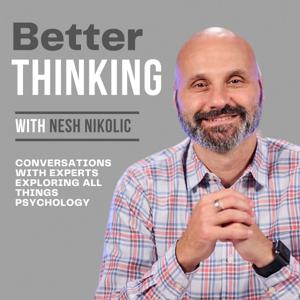


In this episode of Better Thinking, Nesh Nikolic speaks with Kristy Martire about how evidence is evaluated in criminal trials and ways to enhance communication between experts and lay decision-makers in forensic settings.
Dr. Kristy Martire is a Professor in the School of Psychology at the University of New South Wales, Sydney Australia. Her research aims to better understand the development of expertise, processes of evidence evaluation in criminal trials, and to improve the communication between experts and lay decision-makers in forensic settings.
She works closely with Dr. Neal and the CLJ Lab through the PLuS Alliance and also hosted Dr. Neal at UNSW during her Fulbright scholarship in Spring 2022. Drs. Neal and Martire were retained by the Mass Casualty Commission to summarize best practices in forensic psychological assessment and apply that framework to a particular psychological autopsy in a major Canadian case.
Episode link at https://neshnikolic.com/podcast/kristy-martire
See omnystudio.com/listener for privacy information.
In this episode of Better Thinking, Nesh Nikolic speaks with Dr Stevan Nikolin about understanding how depression affects brain activity and how this knowledge is being used to develop new treatments and improve existing ones.
Dr Stevan Nikolin is a Neuroscience Fellow at the Black Dog Institute, specializing in the intersection of brain activity and depression. As both a neuroscientist and clinical researcher, his work focuses on developing and optimizing treatments for depression, including non-invasive brain stimulation, ketamine, and psilocybin. His research also explores the enhancement of cognitive functions through brain stimulation and cognitive electrophysiology (EEG).
Additionally, Stevan applies EEG techniques to uncover deeper insights into the pathophysiology of clinical disorders like depression, aiming to drive innovation in mental health treatment.
Episode link at https://neshnikolic.com/podcast/stevan-nikolin
See omnystudio.com/listener for privacy information.
In this episode of Better Thinking, Nesh Nikolic speaks with Professor Margaret Morris about the connection between poor diet and behavior, and how dietary changes can help mitigate the behavioral effects of early life stress.
Margaret Morris is a Professor of Pharmacology, School of Biomedical Sciences, University of NSW. She uses neuropharmacological approaches to explore underlying brain mechanisms in epilepsy, obesity, diabetes, and the link between obesity and high blood pressure.
She has developed models of voluntary high fat feeding in rat and mice. The impact of parental obesity and early childhood events has been a key focus of research. Her lab has worked extensively on the impact of maternal obesity on offspring metabolic and cardiovascular risk, and is currently exploring options for intervention. Recent work investigating the role of paternal obesity on the health of offspring demonstrated that when rat fathers were fed a high fat diet to induce obesity and glucose intolerance, the resulting female offspring exhibited impaired glucose tolerance and insulin secretion as young adults (Nature, 2010).
Other major research questions Professor Morris explores is how does provision of a varied, energy rich diet override the regulatory control mechanisms that should maintain body weight? The Morris lab showed that palatable high fat diet can ameliorate the behavioral effects of early life stress; notably voluntary exercise had similar benefits (Psychoneuroendocrinology 2010). More recently they are exploring the link between a poor diet and behaviour, and the role of the gut microbiome.
Episode link at https://neshnikolic.com/podcast/margaret-morris
See omnystudio.com/listener for privacy information.
In this episode of Better Thinking, Nesh Nikolic speaks with Dr David Bakker on the use of technology such as smartphone apps for mental health purposes.
David Bakker is a clinical psychologist in private practice at Archer Street Health in Hobart. He is also a lecturer and research supervisor at the Institute for Social Neuroscience, which trains postgraduate psychology students in Melbourne.
He is passionate about engaging the broader public in evidence-based psychological strategies and therapies, and is the founding director of MoodMission - a free CBT-based mobile app for low moods and anxiety.
He has previously worked in disability support, rural mental health outreach, youth health, hospitals, and Melbourne private practices. He has taught psychology and counselling at Monash University, where he has also researched and developed mental health mobile apps as part of his Doctor of Clinical Psychology.
Episode link at https://neshnikolic.com/podcast/david-bakker
See omnystudio.com/listener for privacy information.
In this episode of Better Thinking, Nesh Nikolic speaks with Dr Kamilah Majied about her insightful book entitled “Joyfully Just: Black Wisdom and Buddhist Insights for Liberated Living”.
Dr. Majied is Professor of Social Work at California State University, Monterey Bay. She teaches clinical practice to graduate students employing psychodynamic, cognitive-behavioral, mindfulness-based, and artistic approaches to well-being. She also teaches research methods, social and organizational policy analysis, and community organizing through a social justice lens.
Before her California State University role, she taught for 15 years at Howard University. She serves as the Diversity and Inclusivity Consultant for the Contemplative Coping During COVID-19 Research Project at the University of California Davis Center for Mind and Brain. Dr Majied gave opening remarks at the first White House Conference of Buddhist Leaders on Climate Change and Racial Justice, where she facilitated a dialogue on ending racism amongst the internationally represented Buddhist leadership.
Episode link at https://neshnikolic.com/podcast/kamilah-majied
See omnystudio.com/listener for privacy information.
In this episode of Better Thinking, Nesh Nikolic speaks with Professor Sally Gainsbury about the differences between problematic and recreational gambling while exploring the development of responsible gambling strategies.
Professor Sally Gainsbury, PhD, Doctor.ClinPsych, BPsych(Hons) is a leader in gambling psychology research, focussing on using science to inform the development of responsible gambling strategies. Sally Gainsbury is a Professor in the School of Psychology and Director of Australia's only university-affiliated gambling treatment centre, the Gambling Treatment and Research Clinic which is the lead Gamble Aware Provider for gambling treatment for individuals and significant others across Sydney Central, Sydney West and Sydney South-West regions.
The GTRC brings together the nexus of clinical and research excellence and aims to conduct applied research that translates to policies and practices to reduce gambling harms in the broad community. In her role as Director, she oversees clinical treatment practices as well as engagement and outreach across relevant community, government, and industry stakeholders to prevent and reduce gambling.
Professor Gainsbury leads the Brain and Mind Centre multidisciplinary Technology Addiction Team which aims to investigate the role of technology in addictive behaviours and mental health.
Episode link at https://neshnikolic.com/podcast/sally-gainsbury
See omnystudio.com/listener for privacy information.
In this episode of Better Thinking, Nesh Nikolic speaks with Dr. Christoph Klebl about the psychology of climate change and biodiversity, and his work on aesthetics and morality that relates to that (e.g., why people are most concerned about protecting beautiful animal species).
Dr. Christoph Klebl is a postdoctoral research fellow at the School of Psychology, University of Queensland. His research lies at the intersection of social, environmental, and moral psychology, focusing on factors that influence public support for systemic climate change policies, attitudes towards biodiversity, and the role of aesthetic judgments in morality.
Dr. Klebl primarily collaborates with Prof. Jolanda Jetten and Prof. Brock Bastian and is also affiliated with Prof. Winnifred Louis’ Social Change Lab and Prof. Kelly Fielding’s Green Research Group.
Episode link at https://neshnikolic.com/podcast/christoph-klebl
See omnystudio.com/listener for privacy information.
In this episode of Better Thinking, Nesh Nikolic speaks with Dr Kinga Szymaniak about the impacts of anger on the way we think and act, and how it shapes our decisions and judgments.
Kinga Szymaniak is a Research Associate in the School of Psychology at UNSW. She was awarded her PhD in 2022 from the Faculty of Psychology at the University of Warsaw, Poland. Kinga’s research interests revolve around emotions (with a focus on anger), cognition, and behaviour. Kinga’s goal is to better understand the mechanisms underling associations with anger and their implications for psychological health and well-being.
Currently, Kinga is a Postdoctoral Researcher in a lab directed by Prof. Eddie Harmon-Jones, where she has the opportunity to investigate the associations between humility, anger, and aggression using methods from experimental psychology, psychophysiology, and affective and cognitive neuroscience.
Episode link at https://neshnikolic.com/podcast/kinga-szymaniak
See omnystudio.com/listener for privacy information.
In this episode of Better Thinking, Nesh Nikolic speaks with John Sweller about The Cognitive Load Theory which suggests that learning happens best under conditions that are aligned with human cognitive architecture.
John Sweller is an educational psychologist and Emeritus Professor at the University of New South Wales. He received a Ph.D. from the University of Adelaide’s Department of Psychology in 1972. He is best known for formulating cognitive load theory, which uses our knowledge of evolutionary psychology and human cognitive architecture as a base for instructional design.
The theory is one of the most highly-cited educational psychology theories. It is a contributor to both research and debate on issues associated with human cognition, its links to evolution by natural selection, and the instructional consequences that follow. Based on hundreds of randomized controlled studies carried out by many investigators from around the globe, cognitive load theory has generated a large range of novel instructional procedures. John has authored over 200 academic publications and is a Fellow of the Academy of Social Sciences in Australia.
Episode link at https://neshnikolic.com/podcast/john-sweller
See omnystudio.com/listener for privacy information.
In this episode of Better Thinking, Nesh Nikolic speaks with Professor David Blustein about the complexities surrounding the psychology of working and its profound impact on mental health, while shedding light on the challenges posed by work poverty.
Dr Blustein is a Professor and Golden Eagle Faculty Fellow in the Department of Counseling, Developmental, and Educational Psychology at Boston College. Dr. Blustein is the author of The Psychology of Working: A New Perspective for Career Development, Counseling, and Public Policy and The Importance of Work in an Age of Uncertainty: The Eroding Experience of Work in America.
He has been instrumental in developing psychology of working theory, which represents an inclusive and social justice-informed perspective on the role of work in people's lives and in their communities. Dr. Blustein has contributed numerous articles and book chapters on psychology of working theory, unemployment, career development/counseling, psychotherapy, decent work, dignity at work, precarious work, relationships and work, social class, race, and other aspects of contemporary working. He also has consulted with national and international organizations, such as the International Labor Organization, OECD, and the United Nations Development Program.
Episode link at https://neshnikolic.com/podcast/david-blustein
See omnystudio.com/listener for privacy information.
From the publisher's feed

2,512 Listeners

1,381 Listeners

124 Listeners

558 Listeners

325 Listeners

8,307 Listeners

1,347 Listeners

11,949 Listeners

4,064 Listeners

27,962 Listeners

386 Listeners

29,171 Listeners

11 Listeners

859 Listeners
117 Listeners