
Sign up to save your podcasts
Or

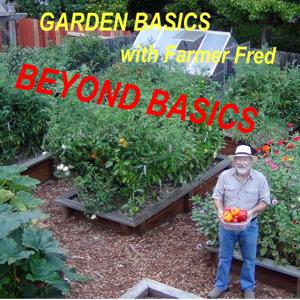


In today’s “Beyond Basics” podcast segment of the newsletter, “Sustainable Food Gardens” author Robert Kourik discusses tips for attracting beneficial insects to your yard. Hear the entire interview in Episode 191 of the Garden Basics with Farmer Fred podcast.
In last week’s newsletter, we discussed three of the best beneficial insects to have in your garden: lacewings, ladybugs, and hoverflies. Today, we cover several more garden good guys worth putting to work in your yard to subdue the pests, and the “Welcome Mat” plants they need for extra food and shelter.
Soldier Beetles (leather-winged beetles)
Like many of the beneficials, it is the larval stage of soldier beetles that do most of the munching on the bad bugs. Whereas the adult soldier beetles feed mostly on the pollen and nectar of flowers - as well as the occasional aphid, insect eggs and larvae - young soldier beetles can be found under the bark of the plant or in soil or litter. There, they feed primarily on the eggs and larvae of beetles, butterflies, moths and other insects.
Plants That Attract Soldier Beetles
* Celosia Cockscomb
* Coreopsis
* Daucus carota Queen Anne’s Lace
* Echinacea purpurea Purple Coneflower
* Pycnanthemum Mountain Mint
* Rosa Roses
* Solidago Goldenrod
PARASITIC MINI-WASPS Mini-wasps are parasites of a variety of insects. They do not sting! The stingers have been adapted to allow the females to lay their eggs in the bodies of insect pests. The eggs then hatch, and the young feed on the pests from the inside, killing them. After they have killed the pests, they leave hollow “mummies.”
Braconid Wasps
Braconid wasps feed on moth, beetle and fly larvae, moth eggs, various insect pupae and adults. If you see lots of white capsules on the backs of a caterpillar, these are the braconid cocoons. Leave the dying caterpillar alone!
Ichneumonid wasps control moth, butterfly, beetle and fly larvae and pupae.
Trichogramma wasps lay their own eggs in moth eggs (hungry caterpillars-to-be), killing them and turning them black.
Plants that attract parasitic mini-wasps: •Achillea filipendulina Fern-leaf yarrow •Achillea millefolium Common yarrow •Allium tanguticum Lavender globe lily •Anethum graveolens Dill •Anthemis tinctoria Golden marguerite •Astrantia major Masterwort •Callirhoe involucrata Purple poppy mallow •Carum carvi Caraway •Coriandrum sativum Coriander •Cosmos bipinnatus Cosmos white sensation •Daucus carota Queen Anne’s lace •Foeniculum vulgare Fennel •Limonium latifolium Statice •Linaria vulgaris Butter and eggs •Lobelia erinus Edging lobelia •Lobularia maritima Sweet alyssum - white •Melissa officinalis Lemon balm •Mentha pulegium Pennyroyal •Petroselinum crispum Parsley •Potentilla recta ‘warrenii’ Sulfur cinquefoil •Potentilla villosa Alpine cinquefoil •Sedum kamtschaticum Orange stonecrop •Sweet alyssum - white•Tagetes tenuifolia Marigold ‘lemon gem’ •Tanacetum vulgare Tansy •Thymus serpylum coccineus Crimson thyme •Zinnia elegans Zinnia - 'liliput'
TACHINID FLIES
Parasites of caterpillars (corn earworm, imported cabbage worm, cabbage loopers, cutworms, armyworms), stink bugs, squash bug nymphs, beetle and fly larvae, some true bugs, and beetles. Adults are 1/3 to 1/2 inch long. White eggs are deposited on foliage or on the body of the host. Larvae are internal parasites, feeding within the body of the host, sucking its body fluids to the point that the pest dies. Plants that attract tachinid flies: •Anthemis tinctoria Golden marguerite •Eriogonum fasciculatum California Buckwheat •Melissa officinalis Lemon balm •Mentha pulegium Pennyroyal •Petroselinum crispum Parsley •Phacelia tanacetifolia Phacelia •Tanacetum vulgare Tansy •Thymus serpyllum coccineus Crimson thyme
MINUTE PIRATE BUGS (Orius spp.)
True to their name, minute pirate bugs are tiny (1/20 inch long) bugs that feed on almost any small insect or mite, including thrips, aphids, mites, scales, whiteflies and soft-bodied arthropods, but are particularly attracted to thrips in spring.
DAMSEL BUGS (Nabis spp.)
Damsel bugs feed on aphids, leafhoppers, plant bugs, and small caterpillars. They are usually dull brown and resemble other plant bugs that are pests. Their heads are usually longer and narrower then most plant feeding species (the better to eat with!).
BIG EYED BUGS (Geocoris spp.)
Big eyed bugs are small (1/4 inch long), grayish-beige, oval shaped) bugs with large eyes that feed on many small insects (e.g., leaf hoppers, spider mites), insect eggs, and mites, as both nymphs and adults. Eggs are football shaped, whitish-gray with red spots. Plants that attract minute pirate bugs, damsel bugs and big eyed bugs: •Carum carvi Caraway •Cosmos bipinnatus Cosmos “white sensation” •Foeniculum vulgare Fennel •Medicago sativa Alfalfa •Mentha spicata Spearmint •Solidago virgaurea Peter Pan goldenrod •Tagetes tenuifolia Marigold “lemon gem”
Thank you also for listening to the Garden Basics with Farmer Fred podcast. It’s available wherever you get your podcasts. Please share it with your gardening friends.
Fred Hoffman is also a University of California Cooperative Extension Master Gardener in Sacramento County, California.
In today’s Beyond the Basics podcast (above), we talk with Ralph Morini, Virginia Cooperative Extension Master Gardener and researcher about his compost tea article for the Piedmont Master Gardener’s newsletter, The Garden Shed. The March 2019 article is entitled, “The Truth About Compost Tea: Making It, Using It, and What To Expect From It”. Read it for yourself for even more information about the Compost Tea-making process.
In that article, Morini delved into the online compost tea rabbit hole, which is comprised of the deep warrens of compost tea opinion, experience, sales attempts, and a smattering of actual well-researched studies. As you can surmise from our conversation in today’s newsletter podcast, Morini came away from his deep dive with more questions than answers. Which harkens back to Farmer Fred Garden Rule #8: “If It Works for You, Fine. But Keep an Open Mind.” Morini concludes his article with nine sources of reputable information, source material you may want to check out for yourself.
The genesis for our thorough discussion regarding the “truth vs. myth” aspects of compost tea use sprung from a comment Steve Zien, an organic gardening professional, made about using compost tea back in Episode 188. He loves it. Especially using worm castings as the basis of your compost tea.
I’ve know Steve for 40 years. I know that he is usually ahead of the curve when it comes to implementing his earth-friendly garden practices. I also know that the rest of us usually catch up with him and buy into his train of thought about a decade later. It turns out, he’s usually right.
Here are the Cliff Notes version of our discussion with Ralph Morini. Points about compost tea that you should consider before you apply it around or on top of your plants:
How the Compost Tea is Made
Ralph Morini:
“Compost tea is a solution made from compost and clean water* combined in a bucket or some sort of a container. We recommend that the solution be aerated. As Steve mentioned, the best way to do that is with an aquarium pump. Let it run for one to two days. The typical aquarium aeration system includes a pump that sits outside the aquarium and then basically a couple of diffusers, the air from the pump will go into an inlet on what's called a stone and it becomes diffused at the output side of the stone and blows bubbles into the water.”
*Ah yes, the water quality. Garbage in, garbage out. That might have been the problem for some of the studies of compost tea. Your water may kill the beneficial bacteria and fungi that you are attempting to add to the soil. More on that below.
What is the Active Ingredient in Compost Tea?
Ralph Morini:
“What it does is it allows the microbes in the compost to multiply many, many times over so that you have an extremely microbe rich solution, a solution that advocates claim can be used for anything from fertilization - which I'm not buying - to enriching the microbe content in the soil, which is what Steve referred to. And if you have enough organic matter in the soil to feed them, it can release a lot of the nutrients that matter is holding in the soil. Some people use it as a foliar spray, which, if you have the right type of microbes in the solution, can help to prevent disease by out competing; or, the good guys somehow overtake the bad guys and reduce disease damage on your plants. Or you can use it to stoke up your compost pile. If you want to get some more microbial activity going in your compost pile, for instance. It can be sprayed on the lawn or on the ground directly. My own view of it is that the amount of compost is typically about one or one and a half cups of compost per gallon of water. So I think people who claim a lot of nutrients in it are overstating the case. There can't be that much nutrients. On the other hand, microbial content is where it could conceivably have some benefit both on releasing nutrients and soil. If the soil has enough organic material for them to feast on for a while*, or potentially doesn't have the right microbes in it. It might help disease prevention on plants.”
*Pouring compost tea on poor soil, bereft of microbial activity, may be a waste of compost tea. The soil needs to have certain healthy qualities to assimilate the addition of more microbes.
It’s All About the Water Quality
Ralph Morini:
“You want to make sure your water is potable starting off. You can't have any chlorine or chloramine in it. The reason they're in the water supply is to kill bacteria, and fungi. If you put chlorinated water in your bucket before you put your compost in and you bubble it for a day or so, you get rid of the chlorine; it should be okay. Chloramine is longer lasting and you can't just get rid of it by aerating or boiling. You really have to extract that from the water by using a charcoal filter. There are some materials that are used in aquariums that will help you if you mix it with the water. It changes the chemical composition of chloramine and it will leave the water by aeration. You can get that at a pet supply store or online. So you need to find out if your water is treated, what it's treated with* and take appropriate measures to get that stuff out of the water.”
*Good luck with that. You may want to spring for a water quality test from an independent source, ideally someone who isn’t also in the business of selling water treatment equipment.
Use It Quickly! And, Make It Yourself.
Ralph Morini:
“It's recommended to be used within about four hours. You're generating all this microbial activity and they're really moving along. If you leave them in the bucket for too long, that large population of highly active microbes is going to consume the oxygen. They'll go anaerobic, and that destroys the point of your whole process. And, for that same reason, I'm very skeptical of store-bought compost teas. Some of them even claimed to be made of aerobically, but when they're sitting on the shelf for however long they're there, it's pretty hard to believe they remain that way.* I've tried to find some sort of research-based data about that and haven't been able to, but I wouldn't recommend them. I think if you want to do this, you're much better off making your tea yourself.”
*I don’t know about you, but I often wonder about the health of the critters in bagged soils, soil amendments and fertilizers sitting on Garden Center asphalt, outdoors in the sun, that claim to have beneficial microbes (mycorrhizae) included.
Compost Tea as a Foliar Spray?
Farmer Fred:
“There are advocates like Steve Zien who say it's a great foliar spray, reducing the chances of disease. Have you seen any research based on its effectiveness as a foliar spray?”
Ralph Morini:
“No research. Unfortunately, I've seen mostly organic gardeners and YouTube types talking that they've had success with it, but nothing at all from any of the extension services or research-based groups* that I trust.”
*When doing Internet searches for garden answers, especially in regards to pest control, include the suffix “.edu” in your search terms. Or “.org”, if you’re feeling lucky.
Quality Compost? What’s Quality Compost?
Ralph Morini:
“So how do you measure good quality compost? The main thing in my view is it needs to be hot compost, I suppose manure based compost products are likely to have a little bit of a higher nitrogen content, which is great for flowers and vegetables. Compost that's made from arborist waste and that kind of thing - leaves, yard waste - are likely to be higher fungal content, which are great for shrubs and trees. It's more typical of what you'd find in the forest. So that makes some sense to me. You know, unless you get an analysis of the compost that you buy, which isn't very common, I think focusing on hot compost and trying to understand what the main ingredients are is the best approach.”
Tomatoes and Peppers Like Bacteria; Your Fruit Trees Like Fungi. Match Your Compost and Mulch Choices with the Needs of Your Particular Plants
Farmer Fred:
“Interesting, you brought up forest products. We're learning more and more about mulches and their use and the same is true with compost: the critters in the soil, all that microbial activity, really depend on what's in the soil already and the type of plants that are growing around there. And you have two types of mulch, compost, and compost tea: a fungally dominated tea (or mulch or compost) or a bacterially dominated tea (or mulch or compost). One is better for woody plants. One is better for your annual plants.”
Ralph Morini:
“Herbaceous plants tend to be high nitrogen consumers. We plant them, harvest them, replant them every year. They tend to be high nitrogen consumers. And so for that kind of a use, the higher nitrogen tea can be helpful. The problem with creating them is beyond the basic content of the compost. It’s that the additives that are typically recommended are sugar-based, like unsulfured molasses or something that the sugars tend to enable more reproduction on the part of the pathogenic microbes that we don't want in our tea. For instance, if that stuff is added to a compost tea, the National Organic Program requires the growers have the tea analyzed to make sure that there is no coliform or salmonella, before it's allowed to be used on their crops or soil or their plants. On the other hand, forests tend to be permanent perennials. The stuff on the forest floor is decomposed leaves and wood, basically, it's a much higher carbon content, it's harder to break down. The stuff is broken down by fungi, mainly. 90% of our plants are mycorrhizal fungi partners. And so for that reason, those kinds of teas, which tend to have the fungal content tend to be appropriate for woody plants.”
Farmer Fred:
“So, a bacterially-dominated product that you're making (from green waste products) would be perfect for your annual vegetables, for example. And the wood-dominated compost is better for the permanent crops like perennials (as well as shrubs and trees)*.”
*Those kitchen scraps and outdoor flower and vegetable matter? Save that compost for your annual beds. The stuff that goes through your chipper-shredder, including tree limbs, is great for your woody plants as a top-dressing mulch.
Farmer Fred Garden Rule #7:
EVERYTHING YOU KNOW IS WRONG.
In the 1940's & 50's, DDT was available to home gardeners as a pesticide. Turns out, it caused cancer and killed birds. In the 1960's-70's, the Modesto Ash was considered the "perfect shade tree" for the Central Valley of California. Turns out, it is susceptible to anthracnose, mistletoe and is no longer recommended. In the first decade of the 21st century, the pesticides Diazinon and Dursban were taken off store shelves. Also proven ineffective, despite beliefs and claims to the contrary: Vitamin B-1 for transplant shock, calcium sprays to stop blossom end rot on tomatoes, store-bought ladybugs (the majority of them fly home. sorry.).
And, apologies to the Firesign Theater.
As an Amazon Associate, I earn from qualifying purchases from some of the underlined links in the newsletter. This is how I am trying to keep this a free newsletter. And as long as you buy whatever you want from Amazon using any of those links to get into the Amazon site, I get a few pennies. Thank you.
Thanks for Subscribing and Spreading the Word About the Garden Basics with Farmer Fred newsletter, I appreciate your support.
And thank you for listening to the Garden Basics with Farmer Fred podcast! It’s available wherever you get your podcasts. Please share it with your garden friends.
Fred Hoffman is also a University of California Cooperative Extension Master Gardener in Sacramento County.
In this past week’s two episodes of the “Garden Basics with Farmer Fred” podcast, we covered several timely topics in Episodes 188 and 189 including:
Episode 188:
• Tips for Controlling Bermudagrass (Note: the word is “control”, not “eradicate”). Bermudagrass is forever.
• How plants communicate to get nutrition and ward off pests. (Steve Zien of Living Resources Co. spends a lot of time with his ear to the ground. Maybe he’s fallen and can’t get back up? Anyway, he says plant roots sweat a lot.)
• The (Alleged) Benefits of Compost Tea. Not that I doubt the enthusiasm of Steve Zien - also known as Sacramento’s Organic Advocate - for advocating the use of compost tea for improving soil biology, but next week in this space we will talk with a researcher from the University of Virginia Cooperative Extension who has studied the pros and cons of compost tea. It may come down to the quality of the water that you use to brew the compost tea.
• Thin your vegetable seedlings! Thin your flower seedlings! THIN THE FRUIT ON YOUR DECIDUOUS FRUIT TREES! (lessons learned the hard way)
Episode 189:
• Stop Tomato Blossom End Rot Before It Starts (Tips to reduce the incidence of this disorder in your tomato and pepper plants. Yes, peppers get blossom end rot, too.)
• Grow Your Soil via the “Clip and Flip” and “Chop and Drop” mulching methods. The author of the book, Grow Your Soil, Diane Miessler, also refers in our chat to bermudagrass, calling it “the spawn of Satan”, so she’s OK in my book.
So why, then, is the above podcast about pepper flowers? Because in many parts of the country this time of year, nurseries and garden centers have tomato and pepper plants, side by side. They wouldn’t be stocking peppers on their shelves unless it was the right time to plant them, right? right? Let’s put it this way: those pepper flowers are more susceptible to dropping off during typical late April-early May nighttime low temperatures. Don’t worry, you’ll get peppers. Eventually.
We had to cut short last week’s display of Master Rosarian Charlotte Owendyk’s list of the Ten Most Fragrant Roses to grow (the Internet was running low on zeroes and ones). Here, then, is the balance of those shows for the nose, excerpted from the June 2021 Rose Reflections Newsletter of the Sacramento Rose Society and Sierra Foothills Rose Society.
By the way, those two societies are having their spring rose show and sale, Saturday, April 30, 1-4:30 pm, at the Shepherd Garden and Art Center, 3330 McKinley Blvd. in Sacramento’s McKinley Park. Free admission, free parking. If you’re in the area, drop in and smell the roses. Sacramento Rose Society President Debbie Arrington wants to remind you, “after seeing the show, check out the McKinley Park Memorial Rose Garden, too.”
DOUBLE DELIGHT & MR LINCOLN ARE FRAGRANCE WINNERS
Two roses stand out as the most loved fragrant rose. Query rose growers and you will find Mister Lincoln and Double Delight mentioned most often. Also, these roses are frequent winners of the “most fragrant rose” award at rose shows. However, both roses are problematic in relation to disease resistance.
Hybridized in 1965, Mister Lincoln, a dark red hybrid tea, has an old fashioned, damask scent. Mr. Lincoln's blossoms are held on stiff, upright stems and will turn bluish as they age. The bushes can be expected to grow 4-5 feet tall and about 2 feet across. The lower couple of feet of the canes are usually leafless. It is susceptible to blackspot.
Double Delight, hybridized in 1977, has flowers that are a rich, creamy white to pale pink center with deep, ruby edging. They have a bushy habit, growing to about 4-5 feet with a 2-3 foot spread. It has a sweet, spicy scent. It is also susceptible to mildew.
Beverly – Perfectly formed high centered blooms with an intense fruity fragrance that has notes of citrus, peach, pear, and plum that mingle with base notes of patchouli and fresh myrtle that makes want to keep you nose in those beautiful blooms. Foliage is dark green with excellent disease resistance. The blooms open flat. This rose was the winner of the “Best Hybrid Tea” and “Most Fragrant Rose” awards at the 2013 Biltmore International Rose Trials.
Falling in Love – lovely warm pink with white accents and reverse exhibition blooms with strong rose and fruit fragrance. This rose is a good bloomer and fairly quick repeat. The rose produces big, beautiful and nicely fragrant blooms that are long lasting cut flowers. Falling in Love is upright, has big stiff canes and is fairly angular with great looking foliage. However, watch out for those thorns -- Falling in Love is one of the thorniest roses currently on the market. It's a beautiful rose and great looking bush with outstanding foliage.
Golden Celebration One of the largest-flowered English Roses, bears rich yellow blooms in the form of giant cups. They have a strong Tea fragrance, developing wonderfully combined notes of Sauternes wine and strawberry. It forms a large rounded shrub, with ample foliage – the flowers held beautifully poised on long, arching branches. A few blooms will fill a room with fragrance. Very few thorns. One of my top favs.
As an Amazon Associate, I earn from qualifying purchases from some of the underlined links in the newsletter. This is how I am trying to keep this a free newsletter. And as long as you buy whatever you want from Amazon using any of those links to get into the Amazon site, I get a few pennies. Thank you.
Thanks for Subscribing and Spreading the Word About the Garden Basics with Farmer Fred newsletter, I appreciate your support.
And thank you for listening to the Garden Basics with Farmer Fred podcast! It’s available wherever you get your podcasts. Please share it with your garden friends.
Fred Hoffman is also a University of California Cooperative Extension Master Gardener in Sacramento County.
As we learned in Episode 186 in the Garden Basics with Farmer Fred podcast, the most fragrant roses make the best meal. Really. Well, maybe not a meal, more like an appetizer. Master Rosarian Debbie Arrington of the Sacramento Rose Society explained that rose petals are actually quite delicious, either served raw in a salad, used as a garnish, or steeped into a tea. Listen to her tips for choosing the right blooms for your rose tasting experience in Episode 186 of the Garden Basics podcast. One of her tips: fragrant roses tend to be the most tasty. Her most important tip: “Don’t eat rose flowers that have been sprayed with pesticides.” Listen to her suggestions for fast food floribundas in the current podcast (186).
So, what are the most fragrant roses to choose for your dining experience? In this newsletter podcast, above, another Master Rosarian, Charlotte Owendyk of the Sierra Foothills Rose Society, offered her Top 10 roses that are a show for noses. And below, is part of Charlotte’s article for the Sacramento/Sierra Foothills Rose Society’s newsletter about fragrant roses. Clear your nose, let’s go!
Fragrant Roses…A Few That I Grow
by Charlotte Owendyk (excerpted from the June 2021 Rose Reflections Newsletter)
Watch someone walk by roses displayed at a rose show. First, there'll be an exclamation over color or beauty, but, inevitably, the head will lean in towards the rose in order to sniff its scent and rise with either a smile or expression of disappointment.
Yep, we all want fragrance in our roses. This usually is especially important if you only have space for a few roses in your garden.
The aroma of roses is due to more than 300+ volatile chemical compounds. In addition, there are times when roses are more fragrant than other times. The best time to smell your roses is in the morning when the tem- perature is about 65 - 70 degrees (F). As the day gets warmer, the fragrance oils evaporate. Another factor in fragrance perception is the fact that no two noses are the same!
When the hybrid tea rose became the rage earlier last century, breed- ers aimed for large, high-centered hybrid tea blooms as well as new and different colors. Cut-flower rose cultivars for florists were selected for long vase life,flower shape, and color. In both cases, fragrance was incidental.
However, the old garden roses (OGRs) continued to sell because they were great garden plants and many of them have outstanding fragrance. In many cases, it was the fragrance that sold the rose. And many of these OGRs, unlike hybrid teas which bloom all season long, only bloom once a season.
In 1985 a paradigm shift occurred; David Austin, a farmer in England, succeeded in breeding fragrant OGRs with repeat blooming roses to produce a whole new generation of fragrant repeat bloomers. Currently, David Austin Roses is a major hybridizer of repeat blooming roses that have fragrance and luscious bloom form. A typical example is Golden Celebration. Many members have a soft spot for these roses.
Hybridizers in the last 10-20 years have been working to incorporate disease resistance into roses. (It takes a minimum of 10 years for a rose to come to market.) Many of recent roses introduced are disease resistant to most fungal diseases.
Fragrance took a backseat to disease resistance. Now, breeders are more focused on including fragrance in roses.
MORE RECENT FRAGRANT ROSES
Firefighter – a dusky red velvet hybrid tea that is disease-resistant, with intense old rose fragrance. It is named in honor of the firefighters who lost their lives on 9/11/01. It is very productive, generating long straight stems which are almost thornless, and fragrant until it falls apart. Is an excellent cut flower. This rose grows tall.
Francis Meilland This rose has amazing sweet strong fruit and citrus rose perfumed blooms on long stems. Also winner of many awards in America and internationally. It is also tested and proven highly resistant to blackspot in a variety of climates. The bush is covered with dark green glossy foliage. Francis Meilland stood out to me because it’s a heat lover, grows long cut-worthy stems, has massive blush to white blooms, some of the most fragrant blooms. Its form is actually more of an old fashioned type rose and not your average hybrid tea.
Julia Child ‐ Just before our wonderful American icon left us, she selected this exceptional rose to bear her name. Julia loved the even butter gold color & the licorice candy fragrance. To top it off it has a perfectly rounded habit, super glossy leaves & great disease resistance. Consistent, hardy & floriferous in all climates. Very disease resistant. The blooms do fade a bit.
Memorial Day Lovely orchid pink hybrid tea rose with enormous old-fashioned full 5-6" flowers (petals 50+) saturated with super-strong classic old rose fragrance. Long, almost thornless stems are lushly adorned with clean green leaves on a continual blooming plant. Just one flower perfumes an entire room. All-American Award winner. This is my #2 favorite rose.
Pope John Paul II–Beautiful clear white blooms with approximately 45 petals de-light the nose with a strong citrus fragrance. Dark green glossy foliage is diseaseresistant. The bushy plants tops at 4 feet. DO NOT prune hard. Just de-twig and kind of shape the bush. Next season you will be surprised at the results. This is my #3 favorite rose.
Secret – My favorite rose! Produces lots of lovely creamy blooms with pink on the edges of the blooms when the petals reflex shows a touch of gold which provide aglow to the fragrant strong spicy scented blooms. Secret repeats blooms quickly and has glossy bright green foliage that is very disease resistant. Great cut flower.
Princess Alexandra of Kent - The unusually large, bright pink flowers are full-petaled and deeply cupped. In spite of their size, they are never clumsy, being held nicely poised on a well-rounded shrub. There is a strong and delicious fresh Tea fragrance, which changes to lemon, eventually taking on hints of blackcurrants. The blooms handle our heat well.
We will highlight more of Charlotte’s favorite fragrant roses in next week’s newsletter.
Thank you for listening to the Garden Basics with Farmer Fred podcast! It’s available at gardenbasics.net or wherever you get your podcasts. Please share it with your garden friends.
Fred Hoffman is also a University of California Cooperative Extension Master Gardener in Sacramento County.
Some of the highlights of this week’s two podcasts on Garden Basics with Farmer Fred, Episodes 184 and 185, are featured in today’s “Beyond Basics” newsletter podcast. One of the highlights of Episode 184 was Raffaele DiLallo, author of “Houseplant Warrior”, venturing into his other horticultural passion in his yard in Cleveland, Ohio: getting tropical plants to survive and thrive…outdoors…in an area of the country where snow blowers are more in demand than a chipper/shredder.
From Episode 185, Emily Murphy, author of “Grow Now”, talks about how to customize your garden mulching to match the needs of your particular plants. And to give you a hint about the thrust of her book, she casually tossed out the German word, “hegelkultur” in our podcast conversation…which is a raised bed building technique long utilized by those who practice permaculture. Not that there’s anything wrong with that.
And, Master Gardener Pam Bone gives us lots of good reasons to NOT plant a fruit tree in the middle of the lawn. But she offers some tips on the precautions to take to do it successfully.
Finding accurate, reputable information (and that’s the key) online is difficult on how to grow trees, especially fruit trees, in a lawn situation. However, the University of Wisconsin-Madison offers tips for commercial orchardists in the Midwest on the benefits and drawbacks of growing grass in the vicinity of fruit trees, in their publication: “Orchard-Floor Management For Fruit Trees”:
That publication is also bullish on establishing “grass alleys”: strips of turf, 5-6 feet wide, between the rows of trees, as long as the turf strips are set back about three feet from the trees: “The grass alley provides a solid place for equipment travel, helps prevent soil erosion, and helps increase water infiltration. Sod also helps to maintain soil structure. …weed invasion can be minimized and sod establishment can be fairly quick.”
Happy 10th Anniversary to Me! (How Gardening Has Helped Keep Me Alive, Courtesy of The Heart-Healthy Garden
The Heart Healthy Garden is a topic that is close to my heart, literally. After being diagnosed with four cholesterol-jammed heart arteries in March 2012, I underwent quadruple coronary artery bypass graft surgery on April 17, 2012. At the same time, I was told I had full-blown Type 2 Diabetes (A1C of 10.4). My general practitioner doctor (at the time) told me after the surgery, “You’re good for three to five years, tops.” I took that as a personal challenge.The surgery went well and the long road to healing from heart disease and diabetes began...including doctors' orders that a gardener does not want to hear: no lifting anything heavier than a gallon of milk for 3 months! Even more problematic for me: no bike riding for three months. After all, when surgeons slice open your sternum to work on your heart, it takes a long while for that bone to heal, despite being held together with wires.Thanks to regular exercise and a healthier diet, with a kickstart from low dosages of diabetes and heart medications, I lost over 60 pounds by February 2013, the replacement arteries (taken from the chest) that still service my heart were cholesterol-free, the blood sugar levels were back to near normal (A1C = 5.9), and I no longer needed to take any prescription medications for either of these ailments. With the doctors' blessings, of course. Today, I weigh the same as in 2013. And still ride my bike, over 100 miles a week.
A big part of my success was due to the encouragement and diet tips I got from the nurses who ran the cardiac rehabilitation program at the hospital. They believed - as I did - that there was enough clinical evidence out there that eating right and regular exercise can reverse heart disease and diabetes.
The “exercise” part of the recovery was not an issue. As an avid cyclist, I usually averaged 50 to 100 miles a week on the bike. Living at the time on 10 acres, I got a lot of weight-bearing exercise shoveling 10 cubic yard piles of mulch, and lugging it around in 8 cubic foot wheelbarrows throughout the property to keep my fruit and nut tree orchard fat and happy.
The “Diet” part of the secret? Eat less sugar. Eat more fiber. That included growing, and eating, heart-healthy fruits and vegetables, loaded with fiber.
Most people are familiar with fiber. Fiber is a component of all plant-based foods which cannot be absorbed or digested. It travels relatively intact through your body and out. This is the role of insoluble fiber, the roughage found in many fruits, vegetables and grains that passes through your digestive system and helps promote regularity. Fiber is also composed of soluble fiber, a type of fiber that dissolves in water to form a gel-like material. Studies at the Mayo Clinic and other institutions have shown that soluble fiber may help lower blood cholesterol levels by reducing low-density lipoprotein, or "bad," cholesterol levels. Soluble fiber may have other heart-health benefits, such as lowering blood pressure, blood glucose levels (important for Type 2 diabetes patients) and inflammation.Consuming foods rich in soluble fiber became one of my nutritional keystones for recovery. And it worked! If battling high cholesterol levels and diabetes are part of your life, ask your doctor if a high fiber diet (30 or more grams a day of fiber) is right for you. Better yet, ask a registered dietician. Doctors know pills. Dieticians know food. Which do you want to consume for the rest of your life?If you cast your vote for "food", you, as a gardener, may be wondering, “What are the top five fruits and vegetables with the most soluble fiber that should be part of a heart-healthy backyard garden?” Thanks for asking:
Artichokes
(3.2 grams soluble fiber per 100 grams).
According to the UC Davis Vegetable Research and Information Center website, the globe artichoke is a perennial, cool-season vegetable that yields and produces best when grown near or along the California coast where cool to mild climates prevail. In milder areas of the East Coast, some success has been reported growing from seed varieties, or from transplants such as “Imperial Star”. A mature artichoke plant produces ten or more stems during a season; each stem can provide four to five buds.Unfortunately, perennial plantings of artichokes are not recommended in areas where warm to hot temperatures are common. However, it is possible to grow high-quality artichokes in inland valleys and low desert regions of southern California by handling the crop as a direct-seeded or transplanted annual crop. Until recently, it was believed that artichoke buds produced from seed-propagated plants were of inferior quality to those produced by vegetative propagation. Recent research at the University of California has shown that seed-initiated artichokes looked and tasted great. Moreover, annual cropping makes growing artichokes feasible in gardens with limited space because the crop does not require long-term space allocation. Quicker rotation with other vegetables is also possible.To grow artichokes in warm climates, plant seeds or transplants of 'Imperial Star’ in July for inland valley locations or in September for the low deserts.Blueberries
(3.0 grams soluble fiber per 100 grams).
Up until about 25 years ago, commercial highbush blueberry production was relegated to the cooler, more humid climates, especially in the northern tier of states. The development of southern highbush blueberry varieties meant we could start growing this tasty fruit here in USDA Zone 9 and other in warm climates. According to the UC Cooperative Extension, rabbiteye blueberries grow in the southeastern part of the country and thrive in hot, humid weather but are not cold hardy. Lowbush blueberries grow in the northeastern states and Canada. Northern highbush blueberries grow from Florida to Maine and the northern tier states and have a high chilling requirement that limits their adaptability. Southern highbush blueberry varieties have a low-chill requirement and are heat tolerant. Although they are self-pollinating, blueberry fruit set will increase and berries will be larger if two varieties are planted together. Most varieties grow 4 to 6 feet tall here. A few, such as Sunshine Blue (3'), are more compact.Shell Beans
(1.6-2.2 grams soluble fiber per 100 grams).
This easy-to-grow summertime garden staple should be included in every yard. The horticultural bean (shell bean), is widely grown in many parts of the country. The colorful pods and beans of the horticultural bean make it an attractive addition to the garden and kitchen. The seeds of pinto beans look similar to those of the horticultural beans, but are smaller. They are used widely as brown beans and as refried beans in Mexican dishes. Black beans or black turtle beans make an unusual, delicious black-colored soup. They are easy to grow if given plenty of air movement to prevent the disease problems to which they are susceptible. Kidney beans are the popular chili and baking bean, available in deep red or white types. Navy pea and Great Northern beans are used in soups and as baked beans. Plantings of beans should be made after danger of frost is past in the spring and soil is warmed, since seeds planted in cold soils germinate slowly and are susceptible to rotting. One old nurseryman offers this tip to avoid rotting bean seeds: water the day you plant the seeds; don't water the soil again until you see the bean emerge from the ground.
Apricots
(1.8 grams soluble fiber per 100 grams).
Apricots - as well as other deciduous fruit and nut trees - are available inexpensively as bare root trees in late winter and early spring. According to the annual taste test surveys conducted by Dave Wilson Nursery, the top-rated apricot varieties include the Blenheim, Canadian White Blenheim, Tomcot, Early Autumn, Autumn Glow, and a couple of Apricot-Plum crosses: the Flavor Delight Aprium and the Cot-n-Candy Aprium.
Green Peas
(1.7 grams soluble fiber per 100 grams).
According to the UC Davis Vegetable Research and Information Center website, peas do best when grown during cool weather; warm weather shortens the harvest season. In the Central Valley, low foothills and East Bay, plant peas from September through March. Peas can be grown throughout the country, timed with coolness and humidity.Bush types grow in most areas of California; vine types do best when planted along the coast. It is essential to provide support for the climbing vine types. Do not use overhead irrigation; it increases the incidence of mildew. Harvest peas when the seeds and pods are well-developed, but tender enough so they may be crushed between the fingers without separating into halves. Harvest edible pod types at the first sign of seed development. The sugar content of peas readily transfers into starch. Peas overmature quickly and starch conversion continues after picking. Therefore, cook or process (can or freeze) peas soon after shelling.Bush peas have a shorter, earlier production period than the pole types. However, the pole types require extra work, but yield more and produce for a longer time.
Recommended varieties include: China, snow, or sugar Dwarf Grey; Sugar Mammoth; Melting Sugar; Cowpeas (Southern peas, blackeye peas); Snap (thick, edible pods); Sugar Ann (dwarf); Sweet Snap (semi-dwarf); Sugar Rae (dwarf); Sugar Daddy (stringless, dwarf); Sugar Snap.
And finally, listed from greatest to least, the soluble fiber content (grams of soluble fiber per 100 grams of food) of the most commonly grown garden fruits and vegetables:(From: Handbook of Dietary Fiber by Sungsoo Cho & Mark L. Dreher)
* artichokes 3.2
* blueberries 3.0
* pinto beans 2.2
* apricots 1.8
* green peas 1.7
* kidney beans/white beans 1.6
* raisins 1.3
* avocado 1.3
* carrots 1.3
* eggplant 1.3
* oranges 1.1
* pears 1.1
* peaches 0.9
* strawberries 0.9
* leeks 0.9
* green beans 0.7
* cabbage 0.7
* cauliflower 0.7
* peppers 0.7
* potatoes 0.6
* peanuts 0.5
* asparagus 0.5
* celery 0.5
* spinach 0.5
* sweet potatoes 0.5
* turnips 0.5
* tomatoes 0.4
* apple 0.3
* melons 0.3
* broccoli 0.3
* corn 0.2
* lettuce 0.2
* walnuts 0.1
* olives 0.1
* cucumbers 0.1
* onions 0.1
* radish 0.1
* zucchini 0.1
As an Amazon Associate, I earn from qualifying purchases from some of the underlined links in the newsletter. This is how I am trying to keep this a free newsletter. And as long as you buy whatever you want from Amazon using any of those links to get into the Amazon site, I get a few pennies. Thank you.
Thanks for Subscribing and Spreading the Word About the Garden Basics with Farmer Fred newsletter, I appreciate your support.
And thank you for listening to the Garden Basics with Farmer Fred podcast! It’s available wherever you get your podcasts. Please share it with your garden friends.
Fred Hoffman is also a University of California Cooperative Extension Master Gardener in Sacramento County.
Above is an interview about the Luther Burbank Home and Gardens in Santa Rosa, California. Luther Burbank, of course, is probably America’s most famous botanist, horticulturist and pioneer in agricultural science.
He is responsible for the development of over 800 varieties of plants in his 55 year career of plant hybridization, his most famous, possibly is the Burbank Russet potato, which is still available in supermarkets and restaurants every day. His biggest flower achievement? Probably the Shasta daisy. And his fruit tree introductions included the July Elberta peach, the Santa Rosa plum, the plum-apricot cross, the plum-cot, and the freestone peach, many of which are still in commerce. One of his most lucrative developments that you will hear about in this interview is the spineless cactus, which is valuable as cattle feed in drought-stricken areas.
Yes, you’re going to learn a lot about Luther Burbank here.
But also, listen carefully to the docent describing all of this during our visit to the Luther Burbank Home and Garden: Jack Hadley. I conducted this interview years ago, back in 2006.
My method of operation for conducting many of these “on the road” garden interviews is fairly haphazard: driving to a destination, I’ll see something interesting along the way. I’ll pull over, get out my microphone and recorder, and grab the first person who knows something about wherever I am - and is willing to talk - and I then turn on the recorder. It was just my good fortune to be talking to Jack Hadley that day in 2006. Jack passed away in 2013. Jack, although very informative, didn’t talk about himself in our conversation. I wish he had. It was only after reading his obituary that I came to the realization that here was a person I wish I had known better. If you are in the habit of reading obituaries, you may occasionally have the same reaction: “Wow, what an interesting person who lead a vibrant life. I wish I knew them.”
Give a listen to the interview, and then read this edition of the Garden Basics newsletter, or do both at the same time. We will tell Jack’s story in the newsletter, along with his invention of an item that may be in your garage or garden shed right now: the hand-held, Whirlybird-style fertilizer and seed spreader, which he developed as an employee of Ortho, the long-time garden chemical division of the Chevron corporation.
I have a feeling that Luther Burbank and Jack Hadley would have been good friends.
Here are some of Jack Hadley’s life achievements, as written about in his obituary from Legacy.com, published in the January 8, 2014 Santa Rosa Press Democrat:
“Jack Hadley, a longtime Santa Rosa resident, beloved husband, father, U.S. Navy veteran and inventor of the "Whirlybird" hand-held fertilizer-spreader, passed away on Dec. 29, 2013. He was 88. The oldest of four boys, Jack was born in Martinez, CA on Dec. 15, 1925. He attended Nichols Elementary school and Mt. Diablo High School in Concord, where he excelled in football. He graduated in June 1944 and was drafted into the U.S. Navy. He was assigned to the USS Colorado BB45 battleship in Leyte Gulf, Philippines and was anchored in Okinawa when the atomic bombs were dropped on the Japanese cities of Hiroshima and Nagasaki in August 1945. They were assembling to invade Japan when World War II ended. He was discharged in June 1946 and attended Marin Junior College where he excelled in football as a half back and fullback. His hopes were fulfilled when he received a full football scholarship to Oregon State College (now OSU) where he studied agriculture. He hoped to run a cattle ranch. After redshirting in 1947, Jack suffered a severe dislocation of his shoulder in 1948 while playing linebacker, an injury that ended his football career. But he didn't slow down, riding bareback in the College Rodeo and winning first place in 1949. After graduation, Jack joined Chevron Chemical in 1951 as a livestock specialist. In 1952 he met and fell in love with Aneta Nygren, and three months later they were married. They had their daughter, Shellie, in 1953. Later Jack was in product development working his way up to Western Regional Manager. He worked for 36 years for Chevron Ortho Division where he invented the "Whirlybird," a hand-held fertilizer spreader. More than 100 million Whirlybird spreaders have been sold to date. Jack was known for his enthusiasm, can-do attitude and his positive and sincere outlook on life. He loved people, and they flourished when around him. While working for Ortho, Jack designed and built five homes on weekends. He was a powerhouse of creativity and energy. Jack retired in December 1986. After years of living in San Rafael, he and Aneta moved to Santa Rosa in 1987. Jack designed and built a beautiful dream home for them overlooking Sonoma Valley. Jack volunteered with "Ideas to Market" an inventors group, and later was recognized by the city for his work at Luther Burbank Home and Garden.”
Some of the comments left by Jack’s friends and family on that obituary page reinforce and expand on much of what you just read:
“Jack was a kind and generous soul, always cheerful and always with a good idea. It was my pleasure to know and work with him as a fellow volunteer at Luther Burbank Home & Gardens.”
“All who knew him loved him! Hope you are spreading your wonderful good cheer wherever you are now, Jack.”
“He has a special place in our hearts, as he stood tall during the goood and not so good times.”
“Jack was a beloved boss and mentor of ours when we worked for him at Ortho. What a wonderful man, this world won't be the same but heaven is rejoicing in his coming home!”
“Always a kind word, how you doing, with a laugh. Happy memories . Laughing, smiling. Always so sweet.”
“He will always be remembered as the spark plug that ignited Chevron and made it the envy of the industry. Jack was the best at everything..the best.”
“Jack was an overwhelming personality who could not accept a "NO, Jack" on a regulatory or label issue. The Ortho family will miss him. He was a treasure.”
“Never a happier man than Jack. I am a better person for having worked for and known Jack Hadley.”
“I remember Jack when they were very involved and great volunteers at the Burbank Home & Gardens. He had such a positive and helpful attitude about everything.”
“A great man and a great life. He left an indelible mark on so many. I was blessed to have the opportunity to witness his leadership skills for 10 years.”
“Mr. Hadley was one of the best I've ever met. He was always so kind and had the nicest smile and could light up a room with those eyes. He will definitely be a shining star up above.”
“Jack was a mentor for many of us. For me he was both a professional and personal friend who taught me much about work and life.”
“Jack was a wonderful man one of the best I ever worked for. He was always in high gear and full of life. he will be missed!”
“I loved working for Jack at Ortho. He was my hero and role model.”
“Even in his 80s Uncle Jack was a delight and bubbling with life. His LOVE of family and the world around him was intoxicating...a "Hadley trait" I hope transcends generations to come. Love always Uncle Jack.”
“Jack was a wonderful man and such a fine human being. Always positive and seeing the good in life, unfailingly kind and ever a gentleman. I always felt happy when I was around him, because he was so cheerful.”
As I am compiling this, it’s getting a bit misty in here. I bet you wish you knew Jack Hadley better, too. My interaction with Jack was brief; but I’m glad to be able to share with you my few minutes chatting with him, all those years ago. You’ll never be able to think about your Whirlybird fertilizer spreader in the same way.
As an Amazon Associate, I earn from qualifying purchases from some of the underlined links in the newsletter. This is how I am trying to keep this a free newsletter. And as long as you buy whatever you want from Amazon using any of those links to get into the Amazon site, I get a few pennies. Thank you.
Thanks for Subscribing and Spreading the Word About the Garden Basics with Farmer Fred newsletter, I appreciate your support.
And thank you for listening to the Garden Basics with Farmer Fred podcast! It’s available wherever you get your podcasts. Please share it with your garden friends.
Fred Hoffman is also a University of California Cooperative Extension Master Gardener in Sacramento County.
That audio snippet (above) is from Episode 178 of the Garden Basics with Farmer Fred podcast, featuring author Emily Murphy, talking about her new book, “Grow Now-How We Can Save Our Health, Communities, and Planet, One Garden at a Time”. Go to Episode 178 to listen to the entire conversation. The audio sampler above touches on one section of her book, where she discusses the importance of knowing your “Nature Quotient.” As she puts it in her book:
“Your nature quotient (NQ) is a measure of your understanding of the natural world, the dynamics at work within it, and your personal connectivity to nature. It involves skills such as observation, curiosity, mindfulness, and empathy and compassion.”
But the podcast interview gave short attention to how to increase your NQ, in order to become a better gardener. Nor did it offer up the quiz that Emily presents in “Grow Now” on how to measure your NQ.
Since the name of this digital typing allegedly contains the words, “Beyond Basics”, it seems appropriate that we present the quiz here, along with tips for increasing your NQ, which you can also find in the book, “Grow Now”:
Measure Your “NQ” (Nature Quotient)
(In the book, you can circle all the answers that apply to you. If you try that here, you’ll have permanent black circles on your phone or tablet. Just get the book.)
• How much time, on average, do you spend outside each week? Two or more hours; one hour; less than one hour.
• What are your touchpoints with nature? Houseplants; nearby park or open space; plants and trees in your yard or garden.
• Which of the following have you done recently? Take a nature walk; stop when you hear the sound of a bird; notice a change in wind direction; look to the sun to figure out the time of day; notice a shift in the seasons; pick up litter; photograph flowers and plants.
• How often do you feel burnt out and exhausted? Often; sometimes; never.
• How comfortable are you without wifi, or going without your phone for periods of time? Love it; hate it; it doesn’t matter; a mix of all three.
• Can you determine when the moon is full? Yes; no.
• What do you think of bugs? Fascinating; frightening.
• What are your feelings on dirt? Love it; hate it; neutral; not sure.
• What do you do when you find spiderwebs outside? Leave them where you find them; Swipe them away.
• How do you see yourself? As someone who can grow anything with a little bit of effort; as someone who is challenged by gardening and everything you try to grow withers.
Unfortunately, for those of us who are results-oriented, this is a quiz without a score. As frequent guest (and retired college horticulture professor) Debbie Flower likes to remind us, “This information will not be on the Final.” So, just be honest with yourself, and perhaps take up some of Emily’s suggestions in her book for 15 easy ways to increase your NQ, with my additional thoughts in italics:
15 Easy Ways to Increase Your NQ
* Keep a Bird book and binoculars by the window. (be sure to tell the neighbors you’re looking for birds, not hot tub parties)
* Grow three new herbs in your kitchen or on your patio (gentle reminder: marijuana is not an herb. Besides, the teenagers next door have binoculars, too, and might covet your “herb garden”.)
* Compost your kitchen scraps and yard waste. (And start a worm compost bin. They’re quiet and undemanding. They’re happy with your leftover, chopped up vegetables.)
* Try growing - from a cutting - a plant that you pass on walks in your neighborhood. (Pro tip: for the sake of your health, ask before you snip. A good book on the topic is “Plant Propagation” by Alan Toogood)
* Try propagating a favorite houseplant. (Again, the book “Plant Propagation” is a handy reference)
* Try growing mushrooms in your cupboard or in a shady spot outside. (for advice on which mushrooms you find outdoors that are safe to eat, consult someone with extensive mud stains on their shirt and pants. They are probably members of a local mycological society, who spend their weekends crawling through forests, looking for mushrooms. And let them taste it first.)
* Commit to using only organic fertilizers. (Pro Tip #2: building a healthy soil with consistent practices of mulching, composting, no-till, and cover cropping may reduce your fertilizer needs to near zero, especially on permanent plantings.)
* Follow the sun by creating outdoor spaces to be either sun or shade, depending on the season. (Pro Tip #3: just moved to a new home? Plan before planting. And that could take a year. Track the moving shade in your yard with pictures for the first year in your new home. Once each month, on a sunny day, take a series of pictures at 9am, noon, 3pm and 6pm of the areas where you want to put a garden. Gauge from those pictures whether the area, on average, is full sun (6-8 hours or more per day), part sun (4-6 hours) or mostly shade (less than 4 hours). Plant accordingly. Fear not, you can still plant in year 1. Just use containers that you can move around easily to follow the sun.)
* Add a new, pollinator-friendly planting bed to your existing garden. (In USDA Zone 9, don’t forget to add winter-blooming shrubs that are attractive to bees and other beneficials, such as rosemary and euryops.)
* Begin a nature project. What can you make with leaves, driftwood, or other found items? (I like to put fallen oak leaves in a metal trash can and whip them into small pieces with a string trimmer, and then top my raised beds with those shredded leaves. A mulching mower can accomplish that task, as well)
* Do a simple test of the soil near your home. (Inexpensive pH and macronutrient test kits are widely available. A couple of universities also do inexpensive, but complete soil testing: University of Massachusetts/Amherst and Colorado State University.)
* Plan a small cutting garden for homegrown bouquets. (Zinnias are easy to grow and long lasting as cut flowers!)
* If there are trees in your yard or nearby landscape, create a comfortable spot to sit and enjoy them for some at-home forest bathing. (A long time ago, an old edition of the Sunset Western Garden book offered instructions for creating a redwood haven. I did it, and the result was fabulous! Truly a “greenhouse” and a cool, contemplative area in the summer that attracted nesting owls. Pro tip #4: use tall, evergreen trees that are native to your area. And you’ll need a big yard to do this! Instructions at the end of this newsletter.)
* Replace a section of your lawn with a riot of regionally appropriate plants and wildflowers. (YES!)
* Fill window boxes and planters with flowers and leafy greens you’ve never planted before. (“Bright Lights” Swiss Chard is a personal favorite for the eyes and mouth.)
Pick up Emily Murphy’s book, “Grow Now”, wherever you pick up books. Lots of great advice and great pictures!
============================================================================
How to Make an Evergreen “Greenhouse”.
These instructions from the 1988 edition of the Sunset Western Garden Book applied to coast redwood trees. Many different varieties of conifers could be used instead: pines, cedars, and firs, for example. Choose species that are native to your area for the best chance of longterm success.
From the 1988 Sunset Western Garden book description of Sequoia sempervirens (coast redwood tree):
“Plant several in a grove or in a 40-foot diameter circle. Inside it’s cool, fragrant, and a fine spot for fuchsias, begonias, and people on hot summer days. For grove or circle planting, space trees 7 feet apart. Trees can be planted 3-4 feet apart and topped at least once a year to make a beautiful hedge.”
If you have the room, do the circle. The hedge is too much work and, in my opinion, destroys the majesty of the trees.
As an Amazon Associate, I earn from qualifying purchases from some of the underlined links in the newsletter. This is how I am trying to keep this a free newsletter. And as long as you buy whatever you want from Amazon using any of those links to get into the Amazon site, I get a few pennies. Thank you.
Thanks for Subscribing and Spreading the Word About the Garden Basics with Farmer Fred newsletter, I appreciate your support.
And thank you for listening to the Garden Basics with Farmer Fred podcast! It’s available wherever you get your podcasts. Please share it with your garden friends.
Fred Hoffman is also a University of California Cooperative Extension Master Gardener in Sacramento County.
Professional chef and Sacramento County Master Gardener Andi Macdonald shares her California-style gumbo recipe in the brief chat at the top of this edition of the Garden Basics’ “Beyond Basics” newsletter.
Mardi Gras season is also gumbo season in Lousiana. And we know a good thing when we taste it. Gumbo dishes have spread, and can be found served on a regular basis everywhere, including the dining rooms of Congress. What makes Andi’s gumbo recipe unique: it’s vegan.
“Sacrilegious!”, you say, about a dish that goes back hundreds of years in Louisiana, a staple of an early American diet that features meat as the main attraction. To quote Wikipedia:
“Gumbo is a heavily seasoned stew that combines several varieties of meat or seafood with a sauce or gravy. Any combination of meat or seafood can be used. Meat-based gumbo may consist of chicken, duck, squirrel, or rabbit, with oysters occasionally added. Seafood-based gumbo generally has shrimp, crab meat, and sometimes oysters. Andouille sausage is often added to both meat and seafood gumbos to provide "piquancy, substance, and an additional layer of flavor" to the dish. The key is to use a tender andouille so it does not become too chewy. Most varieties of gumbo are seasoned with onions, parsley, bell pepper, and celery. Tomatoes are sometimes used in seafood gumbo, but traditionally few other vegetables are included.”
“I have been a vegan for the past 2-1/2 years,” explains Macdonald, who trained at Michelin-starred restaurant Chez Panisse in Berkeley, CA, where founder Alice Waters developed the concept of California Cuisine and promoted the farm-to-table movement. Macdonald goes on to say: “I work at creating upscale vegan cuisine. I believe that all food should be wonderful, and there's no reason vegan cuisine can't meet a high bar. I also don't believe that following a vegan diet should be a political statement. Humans have evolved to like certain tastes and textures and that can be achieved in vegan cooking.”
Here’s the recipe:
Vegan Gumbo Yaya
By Andi MacDonald, Sacramento County Master Gardener / Professional Chef
Serves 8
What makes gumbo so special is the roux, a cooked mixture of flour and fat that both thickens and flavors the stew. Depending on what it will be used for, roux can be white, blond, brown, or black. For this gumbo, the aim is a very dark red-brown roux, which takes patience and a good eye. One way to tell that you’ve reached perfection is that the roux will smell like popcorn.
You can buy Creole seasoning from just about any grocery store or make your own. Making your own is pretty cheap and not difficult. There’s a recipe for a spice mix following the gumbo recipe.
Textured vegetable protein (tvp) is a gluten-free soy product available in many grocery stores. It can also be ordered online.
½ cup neutral oil, such as canola oil
½ cup AP flour
1 red bell pepper, diced
1 green bell pepper, diced
1 celery stalks, diced
1 yellow onion, diced
½ lb vegan Italian sausage, in ¼” slices
1 tablespoon Cajun/Creole seasoning (or to taste)
2 teaspoons Kosher salt (or to taste)
½ teaspoon black pepper (or to taste)
1 bay leaf
1 teaspoon chili powder
½ teaspoon dried oregano
2 teaspoons minced garlic
1 ½ cups textured vegetable protein, large chunks
7 cups vegetable stock
1 tablespoon filé powder mixed with water (optional, see comments in #7 below
* Combine the peppers, celery, and onions into a bowl and set aside.
* In a separate bowl combine textured vegetable protein with 1½ cups of warm water (or vegetable stock for more robust flavor). Cover and set aside.
* Pay close attention – this next step is crucial! Heat the canola oil in a heavy saucepan. When it gets hot, add the flour gradually, while vigorously stirring with a wire whisk. Boil the mixture and whisk as it continues to boil. Keep stirring until the roux becomes a dark reddish brown color and smells like popcorn. Be careful not to splash yourself or touch the side of the pan with your arm. Be both attentive and brave – this procedure could take anywhere from 20 to 45 minutes. Do not ever, ever, ever walk off and leave it.
* Pull the pan off the flame. Add half of the vegetable mixture, and with a long handled wooden spoon, stir for 1 minute. It will splatter and steam – so be careful!
* Return to the flame. Add the remaining vegetable mixture and stir for an additional minute.
* Gradually stir in the vegetable stock. Add the sausage, spices, herbs, garlic, and soaked textured vegetable protein. Bring to a boil, reduce heat, and simmer for 45 minutes, stirring occasionally.
* Fifteen minutes before serving, check the gumbo. If it seems too thick, add more stock. If it seems thin, thicken with a filé slurry (filé powder mixed with enough water to form a pourable paste). Taste and add salt if desired.
* Serve over rice and top with fried okra pieces. Some cooks add okra to the stew with the other vegetables. Personally, I find boiled okra too slimy. It’s best if it’s fried and sprinkled on top. Win-win for both camps!
Creole Seasoning
2 tablespoons paprika
1 tablespoon smoked paprika
2 tablespoons garlic powder
1 tablespoon ground black pepper
1 teaspoons ground white pepper
1 tablespoon onion powder
1 teaspoon chipotle powder
1 teaspoon ground cumin
1 teaspoon ground coriander
1 teaspoon salt
1 teaspoon msg (optional)
Combine ingredients in a small jar and stir or shake to blend.
=====================================
Although I am very familiar with the smell of freshly-made, stovetop or air-popped popcorn (which, by the way, has a much more pleasant aroma than overly zapped, artificially flavored, microwave popcorn), I had questions about some of her ingredients: neutral oil? AP flour? Filé powder?
“Neutral oil is an oil that doesn't have a strong flavor, such as canola, corn, grape seed, and mild olive oils,” explains Macdonald. “AP flour is white all-purpose flour, the kind used for just about everything. Filé powder, also called gumbo powder, is dried sassafras root. It is traditionally used to thicken gumbo. It's mixed with water to form a glutinous slurry (fancy chef talk for paste), which is then stirred into the gumbo, usually not long before serving. It's probably available at stores, but I order it from Amazon because I don't have the time nor inclination to drive all over the county trying to find it. In place of filé, a cornstarch slurry would work, as would potato flakes; neither exactly traditional, but it thickens the stew. Gumbo is served over rice.”
And as you heard in our chat, “Yaya” is the Greek endearment for “grandma”.
You’ve probably grown many of the ingredients of this gumbo recipe. But celery? Okra? And what about growing your own seasonings, including cumin, coriander, paprika, and chipotle?
Celery
As odd as it sounds, the primary commercial growing areas for celery in the United States are California and Michigan. Two very different climates. However, the majority of commercial farms in California growing celery are nestled in the fertile valleys near the Pacific Ocean, areas that seldom get above 90 degrees or below 40 degrees. Celery prefers climates without the extreme temperatures (which is Michigan in the summertime). In hot climates, success depends on your timing. Celery plantings in March and April or August through November in hot summer areas helps this sensitive crop dodge the heat in its developmental stages. For most of the country, March is the ideal month to start celery from seed, indoors. Set out transplants (which are much easier than from seed) in hot summer areas in March or April; in mild areas of the country set them out in late May or early June. Read more here from Johnny’s Selected Seeds about growing celery.
Okra
“Valued as a key ingredient in authentic Southern gumbo and other soups and stews, okra can also be roasted, pickled, dipped, or grilled. Despite being slow to evolve from seeding to fruiting, pods form repeatedly and quickly in late summer.” Here’s more from the Sonoma County (CA) Master Gardeners on how to grow okra.
Chipotle
Not the restaurant chain. It’s a dried, smoked jalapeño pepper. The website, chilipeppermadness.com says it takes 10 pounds of jalapeños to make one pound of chipotles. Here’s how to do it, from that same website.
Cumin and Coriander: Two Different Plants
The cumin plant: Cuminum cyminum. Here’s how to grow this herb and harvest its seeds, from West Coast Seeds.
The Coriander plant, Coriandrum sativum. But you may know is by its other common name, cilantro. A cool season crop in hot areas; a summer crop in milder areas. However, if all you want are the cilantro leaves, hot climate gardeners can grow it as a micro green in a shady area. Fill a tray with a light, seed-starting soil, scatter the cilantro seeds throughout. When they get a few inches tall, give it a haircut of about an inch or so from the top, and harvest just the upper leaves. The book, The Sunset Western Garden Book of Edibles says this about harvesting the coriander seeds: “To collect seeds, pull up whole plants when fruits (which look like seeds) begin to turn gray-brown; then put the plants headfirst into bags and shake them; or, hang them over paper and let seeds drop.”
Paprika
Grow it like you would a pepper. Because, it’s a pepper! Renee Shepherd of Renee’s Garden seed company is fond of the “Hungarian Magyar” paprika pepper, and explains how to grow it here.
As an Amazon Associate, I earn from qualifying purchases from some of the underlined links in the newsletter. This is how I am trying to keep this a free newsletter. And as long as you buy whatever you want from Amazon using any of those links to get into the Amazon site, I get a few pennies. Thank you.
Thanks for Subscribing and Spreading the Word About the Garden Basics with Farmer Fred newsletter, I appreciate your support.
And thank you for listening to the Garden Basics with Farmer Fred podcast! It’s available wherever you get your podcasts. Please share it with your garden friends.
Fred Hoffman is also a University of California Cooperative Extension Master Gardener in Sacramento County.
Looking for tried and true pepper varieties to grow this year? How about proven varieties of tomatoes, greens, squash, okra, melons, as well as pollinator-friendly flowering plants such as begonias and petunias? Give a listen to Episodes 168 and 169 of the Garden Basics with Farmer Fred podcast.
In Episode 168, we chatted with Sacramento County Master Gardener and vegetable expert Gail Pothour. She and the other Master Gardeners there have been growing an array of All-America Selections winners for several years at the Fair Oaks Horticulture Center’s AAS Display Garden…along with some staff favorites. Not only are the vegetable varieties she mentions winners here in USDA Zone 9, but the majority of them are All-America Selections national winners, having proven their mettle in trial gardens from coast to coast.
In Episode 169, Diane Blazek, the Executive Director of the All-America Selections organization, lengthens this “you oughta grow this!” list considerably. In all, between the two episodes, we chatted about 45 different varieties of vegetables worth trying…and, my condolences to you if you were trying to jot them all down while driving.
Here, then, are the pepper varieties we mentioned, along with the usual effusive catalog descriptions, as well as personal thoughts on those varieties we mentioned that were not AAS Winners. All of the AAS winners mentioned can be found at all-americaselections.org . Due to space limitations in this newsletter, we’ll list the tomato varieties in next Friday’s Garden Basics “Beyond the Basics” newsletter. The following Friday (March 4) we’ll have the varieties of chard, lettuce, squash, eggplant, okra, melons and flowering plants that we talked about in those two podcasts.
You will also see the notation, “F1”, after many of these hybrid varieties. No, they are not part of the international Formula One auto racing circuit (although “Pepper Quickfire” would be a good name for an accident-prone driver).
According to the smarty pants experts who occupy the F1 Wikipedia entry, “…the term F1 hybrid (also known as filial 1 hybrid) is usually reserved for agricultural cultivars derived from two parent cultivars. These F1 hybrids are usually created by means of controlled pollination, sometimes by hand pollination.”
PEPPERS TO TRY IN 2022
Pepper Carmen F1 2006 AAS Edible Vegetable Winner
Carmen is an improved sweet pepper with an unusual shape. Most gardeners think of a bell shape when “sweet” peppers are mentioned. Not so anymore. Carmen is an Italian bull’s horn type which refers to its elongated shape, about 6 inches long. The medium thick flesh is the sweetest when it is ripe red, but Carmen peppers are sweet even when immature or green. One of the improved traits is the earliness to ripe red. Gardeners can look for red peppers about 75 days after transplanting into warm garden soil. The other improved traits are sweet flavor and high yield. Carmen proved to be widely adaptable, flowering and setting fruit over a wide temperature range. Like all peppers, Carmen will produce the highest number of peppers when grown in full sun and given proper nutrients and water. Carmen plants are productive with an upright, medium height of 28 to 30 inches. This plant size is perfectly adaptable to larger patio containers.
https://all-americaselections.org/product/pepper-carmen/
Cornito Giallo F1 2016 AAS Edible – Vegetable Winner
“DOUBLE YUM” was one judge’s response to the AAS Winner Cornito Giallo F1 pepper, “The flavor on this one is totally a winner!” Starting as small green fruits, this AAS Winner develops into bright yellow jewels with a delicious sweet and fruity flavor. The peppers themselves are plentiful and durable, yet easy to eat fresh. Being an early bloomer, you will be able to enjoy these peppers throughout the growing season and well into the fall. Plant Cornito Giallo F1 in your garden this year and you can join our judges in exclaiming “YUM!”
https://all-americaselections.org/product/pepper-cornito-giallo/
Dragonfly F1 Sweet Pepper 2022 AAS Edible-Vegetable Winner
Dragonfly pepper plants produce beautiful purple peppers that have thick, sweet walls, unlike the thin papery walls of other purples on the market. Similar to the beloved dragonfly that flits around your garden, this pepper transforms itself from a green pepper into a purple fruit that is as delicious at the green stage of maturity as it is when fully purple and mature. Overall, it’s a much better purple color than comparison varieties, with above average, robust pepper flavor. Fruits are held high on the plant, keeping them from the soil. The 4-lobed fruits do not fade, and if left on the vine, turn a beautiful, bright red color.
https://all-americaselections.org/product/pepper-dragonfly/
Escamillo F1 Pepper 2016 AAS Edible – Vegetable Winner
A wonderful sweet taste on a golden yellow pepper, the Escamillo F1 pepper is an early bearing pepper plant with a compact habit makes it an ideal choice for any home garden. Gardeners will be captivated with the high yield of peppers per plant and how the fruit itself is held off the ground for easy picking and less rotting. This plant is a winner with its all-around qualities of excellent taste either raw, cooked or fire roasted, compact size and high yield.
https://all-americaselections.org/product/pepper-escamillo/
Gypsy hybrid Sweet Pepper 1981 AAS Edible – Vegetable Winner
The early and heavy production of the yellow sweet pepper Gypsy provides color and flavor variety to your salads and dips. The 3-4 inch wedge-shaped fruits are very tender, crunchy and sweet. The plants average 18-20 inches in height with a 14-18 inch spread and are resistant to tobacco mosaic virus disease. (One of my personal favorites. Gypsy has been part of my pepper bed for over 30 years)
https://all-americaselections.org/product/pepper-gypsy-hybrid/
Just Sweet F1 pepper 2019 AAS Edible – Vegetable Winner
A unique snacking pepper with four lobes like a larger bell pepper, only smaller. Not only are the 3 inch fruits deliciously sweet with nice thick walls but the plants are vigorous growers (up to 36 inches tall and 15 inches wide) that don’t need to be staked because they’ve been bred to have a strong bushy habit. Many judges conduct consumer taste tests and reported back that this pepper won those tests, hands down. The Just Sweet peppers are exceptionally bright, shiny and a vivid yellow color with a flavor described as sweet with aromatic accents. Great lunchbox item for kids!
https://all-americaselections.org/product/pepper-just-sweet/
Nadapeno pepper (from Baker Creek, Not an AAS Winner)
Love the flavor and crunch of jalapeño, but can’t take the heat? This truly heatless jalapeño is perfect for those with sensitivity or aversion to the heat of traditional jalapeño peppers. Great for pickling, stuffing, poppers and salsa. This variety is very early and prolific! (Not only will it fool your heat-sensitive taste buds, it will also fool Mother Nature. Nadapeno produced sweet peppers for us through mid-December)
https://www.rareseeds.com
Orange Blaze F1 Sweet Pepper 2011 AAS Edible – Vegetable Winner
Although colored peppers can be difficult to grow, this 2011 AAS Winner, Orange Blaze F1, solves that problem. This variety proved itself a winner in AAS Trialing Grounds across North America due to early maturity, sweet flavor, and disease resistance. It matured to a beautiful orange color earlier than the comparisons. Expect a very sweet flavor at full orange color about 65-70 days from transplant. Orange Blaze F1 produces 3 to 4-inch long fruits about 1 1/2 inches wide with 2-3 lobes. High resistance to diseases.
https://all-americaselections.org/product/pepper-orange-blaze/
Pot-a-Peno Pepper F1 2021 AAS Edible – Vegetable Winner
Pot-a-Peno is a fun new jalapeno pepper with a compact habit perfect for growing in containers and hanging baskets. Plentiful small, green jalapeño fruits have a traditional spicy zip that is great in any dish where you want a little punch of spice. Simply leave the fruit on the vine a few extra weeks and they will ripen to red for a sweet, spicy flavor. This variety is earlier to mature than other jalapenos giving you a head start on your garden’s harvest. A unique trait of Pot-a-Peno is how the fruit hangs down beneath the plant making it very easy to harvest without damaging the appearance or productivity of the plant. A dense foliage canopy makes for an attractive addition to your patio or balcony garden.
Not a sweet pepper, but not too hot, either. In the podcast that starts off this newsletter, Diane Blazek, Executive Director of the All-America Selections organization, has a recipe for stuffed poppers using the Pot-A-Peno pepper, cream cheese and mild sausage.
https://all-americaselections.org/product/pepper-pot-a-peno/
Pepper Quickfire F1 2022 AAS Edible – Vegetable Winner
Mighty, strong, hot, and quick! What more might one want in a hot Thai-type pepper? Quickfire peppers produce plenty of hot delicious fruits on a compact, sturdy plant that is perfect for container gardening. No staking is required. This pepper has tremendous ornamental value but was bred for its taste and yield. Culinary gardeners will definitely want to give this gem a try in their Thai and other Southeast Asian dishes where a little heat and kick give the meal some quickfire!
https://all-americaselections.org/product/pepper-quickfire/
Roulette F1 Habanero 2018 AAS Edible – Vegetable Winner
Roulette F1 resembles a traditional habanero pepper in every way (fruit shape, size and color, and plant type) with one exception – No Heat! This AAS National Winner’s one-ounce fruits are red with thick walls when it matures and a nice citrusy (no heat) habanero flavor! Gardeners will be delighted with the earlier production of large, uniform fruit and a very high yield. One judge noted that each plant easily produces 10-11 fruits at one time and up to 100 per season so there are plenty to eat fresh, cook with, and enjoy! For an early fruit production of a habanero pepper that will charm even those that don’t like it hot, take your chances…Roulette is the perfect choice.
https://all-americaselections.org/product/pepper-habanero-roulette/
Tequila sweet pepper (Fred’s choice) A true purple sweet bell pepper, deep in color with early maturity. Its 3 to 4-lobed fruits mature to a medium red. Matures in 75 days. Cut it open and savor the delightful aroma! Attractive fruits make excellent stuffed peppers and stir-fries. Resists Tobacco Mosaic Virus.
https://www.totallytomato.com/product/T03229/66
Tricked You Hybrid Pepper (Gail’s Pick)
This completely heat-free jalapeno is an improved version of the popular Fooled You Hybrid. Get jalapeno flavor without the heat or mix with hot jalapeno varieties to create the exact heat level you want in hot sauces and salsas. Improvements include disease resistance to Bacterial Spot, races 0-3, 7, and 8. Expect large harvests of these peppers that are 4½ inches long and 1½ inches wide. 90 days. https://tomatogrowers.com/products/tricked-you-hybrid
As an Amazon Associate, I earn from qualifying purchases from some of the underlined links in the newsletter. This is how I am trying to keep this a free newsletter. And as long as you buy whatever you want from Amazon using any of those links to get into the Amazon site, I get a few pennies. Thank you.
Thanks for Subscribing and Spreading the Word About the Garden Basics with Farmer Fred newsletter, I appreciate your support.
And thank you for listening to the Garden Basics with Farmer Fred podcast! It’s available wherever you get your podcasts. Please share it with your garden friends.
Fred Hoffman is also a University of California Cooperative Extension Master Gardener in Sacramento County.
As you can hear in the podcast above, adding bagged soil products to your garden might cause problems with your plants, due to impeded water movement. What to do? Debbie Flower, our favorite retired college horticultural professor, says to stick to the native soil. But, she does offer tips on how you can use bagged soil in your garden. Give a listen. And if you want to hear the whole conversation, head to Episode 166 of the Garden Basics podcast, released Tuesday, February 8. Also in that episode: thwarting weeds around rosebushes, without resorting to chemical weed killers. But if you do choose to use them, how to do it safely.
Also in this edition of the Garden Basics “Beyond Basics” Newsletter:
• Do you need to fertilize cool season flowers and vegetables?
• What Your Yellowing Citrus Leaves Are Trying to Tell You
• When is a rock mulch on top of your soil most appropriate?
• A Deep Dive into How Water Flows Through Soil
• Soil Testing: Do It Yourself, or Send It Out
Do You Need to Fertilize Your Cool Season Annual Vegetables and Flowers?
Maybe. Maybe not. It depends. Listen to the entire conversation in Episode 167 of the Garden Basics with Farmer Fred podcast. Here’s a transcription of the salient points from the podcast to that question:
Fred: Do you need to fertilize cool season annuals?
Debbie: "Need" is a strong word. And it would apply to fertilizing anything, really. Plants make their own food and they use nutrients that they get through the environment and absorbed through their roots to make that food. The time to fertilize is when they show you that they don't have enough of those nutrients. And that is when they have very small new leaves and they're losing all of their older leaves down at the bottom or closer to the trunk or they're all turning yellow, that would be a nitrogen deficiency. Or when you're seeing different streaks of yellow, let's say, in the leaves. That could be a micronutrient deficiency, the plants should be flowering, producing flower buds and opening them and it's not or the plant should be producing fruit and the fruit should be expanding. And it's not. Those are deficiency symptoms. And that's when you apply nutrition, which is in the form of fertilizer in the cool season. All those processes are very slow in the plant. And if you have soil that has been mulched with organic matter for a long time, long enough that the organic matter has started to break down and release nutrients to the soil, you typically will not need to fertilize the winter annuals.
Fred: That makes a lot of sense too. Because mulch is a slow release fertilizer as it breaks down. It's feeding the soil and if you've had that mulch for a long time, like you say, then your plants are slow. Slowly, slowly being fed. And I think we all prefer to be fed, slowly slowly.
Debbie: It's painful to eat too much at one sitting. Yeah, exactly. And a plant can show that symptom as well. They can burn when you give them too much fertilizer. Yes, cool season annuals need nutrition, because they're alive and they're flowering or fruiting or whatever it is you you have them for, even just growing them for their showy green parts. But do we need to add fertilizer only if we see deficiency symptoms.
Fred: And it can't hurt to do a soil test.
Debbie: Absolutely. Find out exactly what it needs.
Fred: And you can buy soil tests that do more than just measure pH, which the less expensive soil test kits do. A step up are the test kits that also measure nitrogen, phosphorus and potassium. But you can go beyond that and buy more expensive soil test kits to check for micronutrient deficiencies.
More info about soil test kits included at the end of this newsletter.
=============================
Online Soil Test Services
If you don’t want to play kitchen counter chemist with the soil, you may be fortunate enough to live in an area where your county or state ag departments may help you out in that regard. Check with your local Cooperative Extension office to see if soil testing for homeowners is still part of their services. Unfortunately, in many states, including California, that service is no longer offered by Cooperative Extension. There are private companies that do offer soil testing, but they can be pricey and they may be more geared to agricultural soil testing. However, at least two universities do offer soil testing for home gardeners throughout the U.S. at reasonable prices:
University of Massachusetts/Amherst
Colorado State University
Click on those links for more information.
This soil test was conducted by UMass/Amherst. The test results also include in additional pages information about how to correct any soil abnormalities.
What are Your Yellowing Citrus Leaves Trying to Tell You?
Why do citrus tree leaves (the leaves of oranges, limes, lemons, mandarins, avocados, pummelos, grapefruit and others) turn yellow? There are many possible reasons, especially as winter transitions into spring. Generally speaking, each problem has some tell-tale differences in the yellow leaves to help you diagnose the cause. A few of the possible problems are illustrated below, from the UCANR citrus page, “Diseases and Disorders of Leaves and Twigs”, which has a more extensive list.(http://ipm.ucanr.edu/PMG/C107/m107bpleaftwigdis.html )
Iron Chlorosis
Interveinal chlorosis from iron deficiency appears as yellowing between the small, darker green veins. This net-vein pattern occurs primarily in young leaves of the fall growth flush as soils cool, reducing root activity.
=================================
Nitrogen Deficiency
Foliage is pale overall when nitrogen is deficient. The causes include a true deficiency of nitrogen, adverse soil conditions (cold, wet soil) or unhealthy roots.
======================================
Magnesium Deficiency
Leaves turn yellowish overall but larger veins remain slightly green where manganese is deficient. Zinc deficiency symptoms are somewhat similar to those of manganese deficiency. Both are more prevalent on young leaves of the fall growth flush as soils cool and root activity diminishes.
======================================
Boron Toxicity
Leaf mottling or yellowing, spotting on the underside of leaves, and premature leaf drop can occur from excess boron; severe symptoms can include twig dieback.
===================================
Citrus greening disease (Huanglongbing)
Leaf mottling and yellowing that crosses leaf veins helps to distinguish citrusgreening; yellowing in just one section of a tree is characteristic of citrus greening. The cause is a bacterium spread by aphidlike psyllids (the Asian Citrus Psyllid, in particular, here in California). Symptoms include stunted trees, leaf and fruit drop, twig dieback, and fruit that are lopsided, small and bitter-tasting. When zinc deficiency is the cause discoloring occurs between distinctly greener veins. Report suspected citrus greening to agricultural officials if found in California.
=======================================
Zinc Deficiency
Extensive chlorosis develops between veins when zinc is severely deficient; leaves may be smaller in size on shoots that have shortened internodes.
=======================================
Potassium Deficiency
Yellowish leaves with edges bent downward, especially at tip are symptomatic of insufficient potassium.
=====================================
When is a rock mulch appropriate? When it’s next to a house in a wildfire zone.
Here’s a link with more tips on creating defensible space around your home from the Marin County (CA) Master Gardeners. As they point out, for the area that extends from 0 to 5 feet from any building’s foundation, use non-combustible mulches only (stone, rock, gravel, pavers, etc.).
====================================
Watching the River (not) Flow
As you heard in the podcast at the top of this page, mixing different types of soil or bagged soil products into your native garden soil can slow the percolation of water, threatening those plants that are trying to survive in a root zone that may be saturated for too long with standing water. Here’s another deep dive into why that is, from UCANR’s Ventura County Cooperative Extension.
For a more gardener-friendly explanation on this same topic, pursuing it from the angle of why you don’t want to put gravel in the bottom of your containerized plants, is the Garden Professor’s Linda-Chalker Scott.
==================================
My Two Favorite Soil Test Kits (and one to get after winning the Lottery)
Basic: (pH, Nitrogen, Phosphorus, Potassium)
==============================
More Fun: (same as above, but with nine micronutrients added. Convenient.)
==========================
Move aside, Mama, I’m taking over the entire kitchen counter!:
(The Lamotte Soil Test Kit/Professional) $$$$
As an Amazon Associate, I earn from qualifying purchases from some of the underlined links in the newsletter. This is how I am trying to keep this a free newsletter. And as long as you buy whatever you want from Amazon using any of those links to get into the Amazon site, I get a few pennies. Thank you.
Thanks for Subscribing and Spreading the Word About the Garden Basics with Farmer Fred newsletter, I appreciate your support.
And thank you for listening to the Garden Basics with Farmer Fred podcast! It’s available wherever you get your podcasts. Please share it with your garden friends.
Fred Hoffman is also a University of California Cooperative Extension Master Gardener in Sacramento County.
From the publisher's feed

43,385 Listeners

1,256 Listeners

107 Listeners
972 Listeners
250 Listeners
680 Listeners

3,009 Listeners
803 Listeners
1,576 Listeners
1,839 Listeners

396 Listeners
260 Listeners

301 Listeners

203 Listeners
625 Listeners