
Sign up to save your podcasts
Or

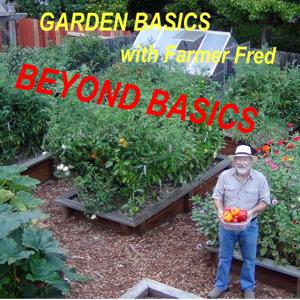


Above: In today’s Garden Basics “Beyond Basics” Newsletter podcast: Brad Gay of JB’s Power Equipment in Davis, CA explains what to look for when choosing garden pruners. And, Debbie Flower has a garden tool storage tip you may not be aware of: your garage floor could rust your shovels! Here’s a hint on what to do:
We are back to two Garden Basics with Farmer Fred podcasts a week as we start Season 3 (plus Friday’s newsletter podcast). On Tuesday’s Episode 164, we talked with Matthew Ampersand of Find Out Farms and Community Fruit in Sacramento about the best tools to own to pick fruit. Debbie Flower and I chat about the importance of winter cleanup in your garden, to help stave off the pests this spring and summer.
In Friday’s Episode 165, Debbie and I do a deep dive into garden tool care and selection, including the must-have tools that should be part of every gardener’s arsenal of backyard fun.
In Episode 164, Matthew Ampersand mentioned his favorite snips for removing citrus and apples from trees, while retaining a bit of the stem on the fruit (we talk about why that’s important). He said his go-to small pruners resemble dog toenail clippers. They fit easily into the front pocket of overalls, tend to stay sharp, and yes, professional orchardists and farm workers do use them.
It’s Citrus Harvest Season in USDA Zone 9. But Who’s Going to Pick all That Fruit?
Matthew also told us about his volunteer group, Community Fruit, that gathers unused backyard fruit around Sacramento and distributes the fruit to the needy. Considering that nearly one-third of all the food grown in the U.S. is never eaten, with most of it ending up in a landfill, this is a project that should be emulated throughout the United States.
One way you can help reduce the amount of wasted food in this country is to store it properly when you bring it inside, so it lasts longer in your kitchen. The UC Davis Post Harvest Technology Department has produced a handy sheet for hanging on the inside of one of your kitchen cabinet doors: “Storing Fresh Fruits and Vegetables for Better Taste.”
Also in Episode 164, Debbie Flower told us about the importance of winter cleanup in the garden, how removing fallen fruit, leaves, branches and any fruit hanging dead in the trees could stave off many insects, diseases and weed seeds that could survive the winter in that debris, and spring to life…in spring. If you have backyard apple or pear trees, this is especially effective at controlling codling moth, and its wormy larvae that will be burrowing in and out of your apples and pears when the weather warms. So, if you have areas of your garden that look like this:
Take action now before the codling moth comes out of hibernation in late winter and early spring.
Anvil versus Bypass? It’s No Contest When Choosing Hand Pruners
Episode 165, “Garden Tool Care and Selection”, presented a wide-ranging lesson from our favorite schoolmarm, Debbie Flower, on choosing the right tools and caring for them properly. We discussed the importance of caring for wooden handled tools, which involves sandpaper, boiled linseed oil and some old rags or towels. But we both drew a blank when talking about care tips for fiberglass handles on shovels and other large garden tools. One website did offer this, however:
“Fortunately, fiberglass handles require very little in the way of maintenance. All you really need to do is give them a good wash down to remove any dirt or grime. However, now is a good time to give each handle a thorough examination. Fiberglass can be damaged by the sun and if you apply to much stress it will crack. Catching any signs of damage early can save someone from getting seriously hurt if a handle should happen to break under a load. Remember to store your tools with fiberglass handles out of the sun.”
However, if you want the real lowdown on fiberglass handles, eavesdrop on some fire fighters. You might hear comments like this:
“We have some very old fiberglass handles here, once or twice a year they get TLC in the form of a wipe down with fine grit sandpaper to remove those pesky little splinters, some steel wool on the heads, and a little Rustoleum paint, good as new! Newer stuff comes with a plastic overlay which protects both you and the fiberglass. And be sure to wear gloves, always always always, even when cleaning up. You think fiberglass splinters are a pain? While cleaning up after a fire I found out the hard way that window glass splinters are much worse.”
And it’s kind of hard to be discussing garden tools without it devolving into the pros and cons of anvil versus bypass pruners. Basically, it’s this:
If you listened to this newsletter’s podcast at the top of the page, you also got the opinion of Brad Gay of JB’s Power Equipment in Davis, CA. Just say Yes! to bypass pruners.
Meanwhile, back at Episode 165, I gave my secret for cleaning my shovels and cutting equipment of hard to remove mud: a barbecue grill brush, that lives in the garden tool shed. Besides the cleaning action of the bristles, that thin metal plate at the top of the brush head is great for getting into the rolled foot rest of the shovel to clean out the mud:
Controlling rust on garden tools was also a hot topic of conversation in Episode 165. Here’s more information on rust control from Home Depot.
Debbie also mentioned, and I concurred, that one of our favorite utility garden tools is the Hori-Hori knife. It’s a trowel! It’s a root saw! It’s digs! It excavates weeds! And you’ll probably lose it, unless you paint the handle a bright yellow or wrap the handle with brightly colored electrical tape.
We spent a good portion of our tool care chat talking about sharpening tools. Go back and listen to that. And then watch this video.
Links to Products Talked About on the Podcasts:
Felco Bypass Pruners Felco’s How To Clean and Sharpen Pruners VideoFelco Sharpening ToolHori-Hori KnifeFiberglass Handled Shovels3-in-1 Oil
Orchard fruit pruning shears/snipsOrchard LaddersHarvest Bags
As an Amazon Associate, I earn from qualifying purchases from some of the underlined links in the newsletter. This is how I am trying to keep this a free newsletter. And as long as you buy whatever you want from Amazon using any of those links to get into the Amazon site, I get a few pennies. Thank you.
Thanks for Subscribing and Spreading the Word About the Garden Basics with Farmer Fred newsletter, I appreciate your support.
And thank you for listening to the Garden Basics with Farmer Fred podcast! It’s available wherever you get your podcasts. Please share it with your garden friends.
Fred Hoffman is also a University of California Cooperative Extension Master Gardener in Sacramento County.
In this special podcast for the Garden Basics Newsletter, Beyond the Basics, I wanted to highlight five great garden hints offered by Debbie Flower from the original podcast, Episode 163 of the Garden Basics with Farmer Fred:
• Soaking pepper seeds in hydrogen peroxide can speed up germination; and, how seeds germinate.
• Why seeds don’t need fertilizer.
• How to know when to transplant those seedlings into larger containers.
• Why seedlings need a light period and a dark period each day.
• The importance of air movement and the development of reaction wood for the young seedlings.*
On Episode 163 of the Garden Basics with Farmer Fred podcast, we delved into seed starting tips, especially for those slow-to-germinate pepper seeds, which can take up to three weeks to show their first set of leaves. Our favorite retired college horticultural professor, Debbie Flower, offered several speedy seed germinating tips, which could be applied to just about any seed you’re trying to coax to life.
What you’ll need for successful seed germination and growth, according to Debbie:
• Small, clean seed trays or containers with drain holes.
• A soilless seed starting mix. (We offer up several homemade recipes, too)
• The benefit of soaking pepper seeds for a few minutes in hydrogen peroxide.
• Bottom heat via a propagation mat.
• Consistent moisture.
• Lights, once the seedlings appear.
• Air movement.
• Transplanting those seedlings into bigger containers once roots pop out of the bottom.
Listen to all of Episode 163 for more details about all those tips. Or read the transcript.
Debbie Flower is a horticultural treasure. One listen to what she has to say isn’t enough. She is offering up so many great tips for gardeners in our “scenic bypasses”, that it really pays to either listen a couple of times or read the entire transcript. I am amazed at all I am learning from her; and, I’m listening to what she has to say at least four times (the original interview, two editing sessions, proofing the final) and polishing the transcript. And reading and editing that transcript, although last on the list, reveals more great gardening information that I had missed before.
(A word of warning for future podcasters who will deal with transcripts: digital robots that provide the original transcript are notoriously inaccurate. Be prepared to spend at least an hour per 30 minutes of interviews to do the corrections. Translating from a transcription of the spoken word to a transcription intended for readers takes work. I am convinced that World War 3 could start due to someone reading a raw, robot-generated transcript; there’s that much misinformation included in the original file.)
In Episode 163, we also discussed the importance of gentle watering of seedling trays, so as not to dislodge the seeds. We have different ideas about the best sort of gentle watering equipment to use. A list and links of all the seed starting implements that we discussed, including watering equipment, is here:
Grow lightsDramm Water Breaker nozzlePump Pressure Water Sprayer
Multi Head hose-end sprayer with Mist settingSeed Starting trays, kitsIndoor GreenhousesOutdoor GreenhousesSeed Starting Mix
* The phrase, “reaction wood”, awakens the thirteen year-old boy in me. I wonder how many giggling scientists it took to come up with the explanation of the importance of air movement in the development of reaction wood among young plants. According to this scholarly presentation, the answer would be: 10.
As an Amazon Associate, I earn from qualifying purchases from some of the underlined links in the newsletter. This is how I am trying to keep this a free newsletter. And as long as you buy whatever you want from Amazon using any of those links to get into the Amazon site, I get a few pennies. Thank you.
Thanks for Subscribing and Spreading the Word About the Garden Basics with Farmer Fred newsletter, I appreciate your support.
And thank you for listening to the Garden Basics with Farmer Fred podcast! It’s available wherever you get your podcasts. Please share it with your garden friends.
Fred Hoffman is also a University of California Cooperative Extension Master Gardener in Sacramento County.
Podcast Bonus: High Scoring Roses for Most of the United States
We like to check in with Master Rosarian Charlotte Owendyk of the Sierra Foothills Rose Society, to find out which roses have captured her fancy in the last year or two. And beyond that, which roses she recommends because they can be easy to grow in a variety of climates. The Sierra Foothill Rose Society, after all, has California members from near sea level in Sacramento and Roseville all the way up to Lake Tahoe, more than a mile up in the Sierra Nevada mountains. Is there a rose that can be grown in such varied climates? Sure enough, Owendyk has a list that she likes to call, “Bulletproof Roses”.
Owendyk didn’t hesitate to respond about her favorite, widely adaptable rose. “One rose that can really take the heat and the cold is ‘Distant Drums’, which has a very distinct coloration,” she says. “The petals are apricot-colored in the center, surrounded by lavender on the outer petals. It’s hardy down to USDA Zone 4, and has a wonderful strong scent with great disease resistance.”
We here are considered to be in USDA Zone 9, where winter lows seldom drop below the upper 20’s. USDA Zone 4, on the other hand, has seen lows dip down to 31 below zero in the winter. Yet, ‘Distant Drums’ can do well for your aunt and uncle in North Dakota. Lake Tahoe (USDA Zone 6) is relatively balmy in comparison, where January overnight lows average about 26 degrees above zero.
Another top performing rose for most of the United States, according to Owendyk is the floribunda rose, ‘Iceberg”, and its close relative ‘Burgundy Iceberg’. Floribunda roses are noted for their massive, long-lasting, colorful displays of large clusters of white flowers.
However, when it comes to a quick turnaround for getting new blossoms, nothing beats “Secret”, says Owendyk. “Normally, hybrid tea roses take five or six weeks to rebloom after deadheading,” says Owendyk. “For ‘Secret’, it’s only four to five weeks. That’s why it’s one of my favorite roses. Plus, it’s very fragrant.”
Other rose varieties that Owendyk is fond of in 2022, the ones she recommends for rose growers across the country, include:
• “Belinda’s Dream”, a shrub rose (“A tough, soft pink rose, with great disease and heat resistance” says Owendyk.)
• “Cinco De Mayo” (“Wonderful ruffled, smoky lavender flowers”).
• “Lyda Rose” (“The flowers look like apple blossoms, absolutely stunning”).
• ”Gemini” (“This All-America hybrid tea rose winner is very vigorous, with coral-and-cream colored petals”).
• “Memorial Day” (“Extremely fragrant rose that blooms all summer, plus the canes don’t have many prickles or thorns”).
• “Sally Holmes” (“A shrub rose that can get seven feet tall and is tolerant of some shade”).
Other honorable mentions in Owendyk’s list of roses for everyone include “Betty Boop”, “Dick Clark”, Cherry Parfait“, “Julia Child”, “Marilyn Monroe”, “Playgirl”, “Rock N Roll”, and “Quietness”.
“Floribunda? What’s That?” A Modern Rose Glossary
Master Rosarian Charlotte Owendyk and I talked rose pruning in Episode 162 of the “Garden Basics with Farmer Fred” podcast. The episode may have had you wishing for The American Rose Society’s “Handbook for Selecting Roses” , a great, pocket-sized encyclopedia of roses, and rose information, perfect for anyone shopping for good rose varieties. Plus, it has a lot of handy definitions when trying to decipher head-scratching questions such as, “What’s the difference between a floribunda and a grandiflora rose?” Here then, is a brief glossary of rose varieties, courtesy of the ARS:
GRANDIFLORA ROSE
In 1954, the introduction of a rose crossing between the ‘Charlotte Armstrong’ (a hybrid tea rose) and the floribunda rose, ‘Floradora’, resulted in a flower with carmine rose and dawn pink coloration. The cross had the characteristics of a hybrid tea rose, but also the ability to bear clusters or trusses and grow to a commanding height of six to eight feet or more. Thus, the class of Grandiflora was born. The first Grandiflora was named “Queen Elizabeth” in honor of the (at the time) very young queen of England.
FLORIBUNDA ROSE
The floribunda class of roses is characterized by its profuse ability to bear flowers in large clusters or trusses with more than one bloom in flower at any one time. Floribundas provide massive, colorful, long-lasting garden displays. Floribundas have the edge on hybrid tea roses. Hybrid teas bloom in cycles every six or seven weeks. Floribundas, on the other hand, can bloom continuously. One standout floribunda, with an ARS rating of 8.6, is ‘Lavaglut’.
HYBRID TEA ROSES
Probably the most recognizable class of roses, due to the large, shapely blooms, with each flower containing 30 to 50 petals. Flowers are borne on long stems either singly or with several sidebuds. One highly rated hybrid tea rose that is widely available at nurseries is ‘Mr. Lincoln’.
MINIATURE ROSES
The height of the average miniature rose is about 15 to 30 inches, making them ideal for edging beds and containers. Miniatures have been developed from many hybrid tea and floribunda roses. My favorite? ‘Joy’.
CLIMBING ROSES
Their long, arching canes have the ability to climb up fences, over walls and through trellises, arbors and pergolas. They offer a wide range of flower forms, shapes and colors. Among the highly rated climbing roses: ‘Don Juan’.
SHRUB ROSES
If you’re looking for easy care roses, consider the shrub roses. They can grow five to fifteen feet in every direction, depending on the climate. Shrub roses are noted for their hardiness, vigor, and large quantities of clusters of flowers. The ‘Knock Out’ varieties of shrub roses are especially hardy and highly rated. And you have to be hardy to thrive next to the drive-thru lane at Jack in the Box.
How to Prune a Climbing Rose
If you listened to Episode 162 of the '“Garden Basics with Farmer Fred” podcast, “‘PRUNE’-ciples: Tips for Pruning Roses”, you know Charlotte and I came to a grinding halt when it came time to talk about pruning climbing roses. It’s not a subject that lends itself very well to an audio format.
You need to see it in action to better understand the nuances of training climbers. We mutually decided on one very good Youtube video on pruning climbers you might want to watch. Enjoy.
If you listened to the podcast episode, you know Charlotte and I did a deep dive into the proper tools and clothing required to take on the somewhat dangerous task of pruning roses.
Here, then, is the part of the newsletter where I try to get you to buy something from Amazon, so I can earn enough funny money to keep my cat and dogs supplied in hard-to-find, canned varieties of pet food.
Pruning gloves, arm protectors for working around roses
Bypass-style Hand Pruners
Bypass-Style Loppers
Rechargeable Reciprocating Saw
P.S. Those sharp things on rose canes? They’re not thorns. They’re prickles. Really. Debbie Flower, retired college horticulture professor, explains.
As an Amazon Associate, I earn from qualifying purchases from some of the underlined links in the newsletter. This is how I am trying to keep this a free newsletter. And as long as you buy whatever you want from Amazon using any of those links to get into the Amazon site, I get a few pennies. Thank you.
Thanks for Subscribing and Spreading the Word About the Garden Basics with Farmer Fred newsletter, I appreciate your support.
And thank you for listening to the Garden Basics with Farmer Fred podcast! It’s available wherever you get your podcasts. Please share it with your garden friends.
Fred Hoffman is also a University of California Cooperative Extension Master Gardener in Sacramento County.
ABOVE: Tips for Germinating Pepper Seeds in Less Than Two or Three Weeks
Episode 161 of the Garden Basics with Farmer Fred podcast delved into two popular issues: tips for choosing the easiest to grow succulents; and, the best plants and themes for a school/home school garden. In this newsletter, we expand on those two topics, plus a bonus podcast (above) with information on getting pepper seeds to germinate quicker. More tips are included at the bottom of this “Beyond the Garden Basics” newsletter. There’s no need to wait two or three weeks to see those pepper seeds begin to sprout! (Usually. Your results may vary. All gardening is local.)
Succulents That Can Take a Bit More Cold Weather
For gardeners just starting off their succulent garden, either indoors or outdoors, our interview with Robin Stockwell in Episode 161 has a lot of good advice on choosing and planting these unthirsty, beautiful blooming plants, which thrive in warmer climates. And what’s true for all plants is true for succulents: choose the right plant for the right place. The beauty of succulents: they do well, indoors, too. In the right sized pot, with the correct soil mix, of course. Robin gets into those details in Episode 161.
But what about for gardeners in colder climates? Are there any succulents that can take a freeze better than others? Robin Stockwell notes those in his beautiful, excellent book, “Succulents: The Ultimate Guide to Choosing, Designing, and Growing 200 Easy-Care Plants”. Unfortunately, it may be difficult finding this book, even though it is only five years old. Check with your favorite used book sources for a possible copy, or Amazon.
Stockwell highlights those succulents that can tolerate outdoor temperatures at or below freezing:
Delosperma (many). Hardy to 20 degrees.
Sedum hispanicum. Hardy to 20 degrees.
Sedum rupestre ‘Angelina’. Hardy to 20 degrees.
Sedum rupestre ‘Blue Spruce’. Hardy to 20 degrees.
Sempervivum (many). Hardy to 25 degrees.
Another strategy for growing tender succulents that may be a bit chilly in the outdoors in the winter where you live: grow them in pots, and move them to a warmer location (against a south or west facing wall, preferably with a cover) or…indoors.
Starting a School Garden? Tips for the Home School garden, as well.
In Episode 161 of Garden Basics, we tackled a question from a school superintendent who wants to start an elementary school garden. Our in-house school marm, Debbie Flower, has first hand experience with this, and offered up plenty of good tips, including making sure that the plant selections can overlap beyond botany lessons to other scientific endeavors in the classroom, such as choosing plants that attract beneficial insects and pollinators to control pests; and, choosing plants that may reflect on the Native-American culture of the area: which plants did the first residents consume and use? Homeschool instructors, as well, can pick up a lot of good tips for providing a well-rounded education, just by growing the right plants, especially native plants. Give it a listen.
And if you are interested in attracting bees and other pollinators to your garden, here’s a list of plants that can provide year-round bee attraction in California’s interior. For all zones, check out these regional plant recommendations of the Xerces Society for attracting bees, butterflies, hummingbirds and other pollinators to your garden.
More Tips for Germinating Pepper Seeds
For many home vegetable gardeners, growing peppers from seed can be an excruciating experience. January is the time for many in USDA Zones 7, 8, and 9 to start those seeds. Colder climates can wait another month or so. Still, it can take 12 weeks or more from the time of planting a pepper seed to the point where it is vigorous enough to be taken outdoors. However, there are some tips for speeding up that process.
Home gardeners who grow their tomatoes from seed usually get fairly quick results after sowing the seeds indoors. Given the right germinating conditions - a soilless planting mix, good drainage, plenty of light, plenty of warmth - tomato seeds can pop up in 8-10 days.
Pepper seeds are a different story. Why is it some peppers can take weeks to germinate?
"The important thing in getting your (pepper) seeds to germinate is to keep them warm – the soil temperature should be in the 80's", says Renee Shepherd of Renee's Garden, a popular seed catalog based in Felton, California. "Germination is very much related to even moisture and warm temperatures. You should see germination within 2 to 3 weeks if it's warm enough. I strongly suggest using bottom heat to achieve the warmth the seeds need – most good nurseries carry electric seed starting mats which will keep your seed soil at the right temperature in order for the pepper seeds to sprout. A local mail order source is Peaceful Valley Farm Supply."
For those who want to comparison shop, another source for heating mats for your pepper seeds: Amazon.
Another trick that some gardeners employ is soaking the pepper seed for awhile - even overnight - before sowing, in order to soften the seed coat. The value of that is open to debate.
"I have never heard of soaking pepper seeds overnight and have never done it in 20 years of running a trial garden," says Shepherd.
On the other hand, Professor Debbie Flower, formerly of the American River College Horticulture Department, sees the benefits of some "immersion therapy" for pepper seeds. "We soaked our pepper seeds in hydrogen peroxide for 10 minutes," explains Flower. "That's not enough time to scarify (soften or break the seedcoat), or even get them soaked, but enough to kill exterior diseases."
Many sweet pepper varieties will show their initial leaves about two weeks after planting the seeds. But some varieties of peppers take longer to pop up than others. "The hot pepper varieties take longer to germinate, some to three weeks," says Flower.
But if you are experimenting with the really hot pepper varieties, such as the Bhut Jolokia (Ghost Pepper), it could take up to four months, says the Trade Winds Fruit website:
"Chinense species (e.g. Habanero's) generally take longer to germinate than most common peppers. Keep soil warm to very warm (75-90F) for better germination. Do not use acidic soil. Some Chinense peppers, in particular Bhut Jolokia, Naga Morich and related peppers are very slow to germinate, averaging 1-4 months germination time."
By the way, if you are growing the Bhut Jolokia...you're playing with fire. The Ghost Pepper is rated at 850,000 Scoville units of heat. For comparison, the habanero rates 200,000; the Jalapeno is 5,000; the Anaheim equals 1,000. And sweet bell peppers? 0.
This is as hot as I can stand. The Inferno: 4,000 Scoville Heat Units
Another factor that can determine the rate of germination of pepper seeds: the pH of your seed starting mix. One of the most common ingredients in most seed starting mixes is peat moss, which is highly acidic, with a pH around 4.0. Pepper heads, including the Horticulture students at American River College, have found quicker germination when Coir (coconut fiber) is substituted for peat moss. Coir has a closer-to-neutral pH: around 6.5. The tests at American River College bear this out after trying Coir in their pepper seed soil mix. "We've had the best germination of peppers ever!" says Flower.
And don't be in a rush to set them out in their permanent garden home. "Pepper seedlings need to be grown out until they have at least several sets of true leaves, and it is at least 55° at night before you plant them out," explains Renee Shepherd. "And they will need a little time to get used to being outdoors, as well." Here in the Central Valley of California, that would be around mid-May. Be patient.
Now, for the MORE tips portion: Since first posted years ago, this Farmer Fred Rant Blog page has received a lot of attention. The beauty of that...lots of pepper growers have chimed in about their preferred methods for growing peppers.One method that was seconded by many: germinate your pepper seeds in between two moist paper towels in a room that is between 70 and 80 degrees. For many, that room might be the kitchen or bathroom. When the "tails" appear after about 6 or 7 days (the tails, by the way, are the emerging roots), gently transplant them into a moist, seed starting mix, preferably one that uses the more neutral coir instead of the lower pH peat moss. Or, make your own. My preferred home mix consists of equal parts coir, perlite and fine compost. The improvements I would make to that germination suggestion? Use coffee filters instead of paper towels. That way, the emerging root doesn't get tangled, as happens when using fibrous paper towels. Pulling out germinated seeds from paper towels may be hazardous to their health.Also, to insure a warm environment, here's something you could do in just about any indoor room: place the moist coffee filters, containing the pepper seeds, inside a glass baking pan. Place that on top of a germination mat. Cover the baking pan with plastic wrap to keep it warmer. I tried this at home, and the pepper seeds germinated with six days.
As an Amazon Associate, I earn from qualifying purchases from some of the underlined links in the newsletter. This is how I am trying to keep this a free newsletter. And as long as you buy whatever you want from Amazon using any of those links to get into the Amazon site, I get a few pennies. Thank you.
Thanks for Subscribing and Spreading the Word About the Garden Basics with Farmer Fred newsletter, I appreciate your support.
And thank you for listening to the Garden Basics with Farmer Fred podcast! It’s available wherever you get your podcasts. Please share it with your garden friends.
Fred Hoffman is also a University of California Cooperative Extension Master Gardener in Sacramento County.
All About Tomatoes!
Gardeners LOVE growing tomatoes. So much so that the subject of tomatoes made the Top 5 audience favorite segments among all of the 2021
Garden Basics with Farmer Fred podcasts. The latest episode, #160, The Greatest Hits of 2021: All About Tomatoes, runs over an hour. And the top listened-to segments are directly or indirectly related to growing tomatoes: Starting Tomato Seeds (episode 79), Reusing Potting Soil (also Episode 79), Transplanting Tomatoes (Episode 93), Tomatillo Pollination (Episode 124), Tomato Pruning (Episode 106) and Tomato Troubleshooting (Episode 110).
There is so much to talk about when it comes to growing tomatoes, that even an hour+ special podcast isn’t enough. So, for the Garden Basics Newsletter readers…enjoy the conversation posted at the beginning of this newsletter with Don Shor of Redwood Barn Nursery in Davis, CA. We talk about our tomato winners and losers of 2021 in our own yards; the best tomatoes to grow for the novice gardener (or any gardener who want a successful tomato-growing experience); and, our picks for our favorites to grow this year.
By the way, if you know a gardener who is venturing into growing tomatoes for the first time or just wants more tomato information, please share this newsletter with them.
Thank you!
We spent a bit of this special newsletter podcast talking about the All-American Selections Winners, and how that can be a good barometer for choosing the tomato varieties that you might want to plant this spring and summer. The AAS has tomato trial gardens throughout the country; many of their choices are national winners. You can also drill down into the complete AAS Winners list to find the best performing vegetables and flowers for your region of the country.
Growing Tomatoes in Containers
This year’s Great Tomato Growing Experiment: is this small area (4’x16’), adjacent to a north-facing fence, truly the sunniest spot on the property?
After monitoring my entire full sun-deprived Folsom yard for nearly three years, this one spot, near the garage, may be the one area that gets more than eight hours of direct sun a day, perfect for growing tomatoes.The dilemma (well, two dilemmas, actually): because it is a concrete surface, the tomatoes must be grown in containers; and, how do you avoid water stains on the concrete when the barrels drain?Solution: use a big container (in this case, half barrels with five 7/8” drain holes drilled through the bottom) and place that container on top of a catch basin with several 3/4” holes drilled on the side rim on the back side, allowing the water to drain from the catch basin to the 12” wide gravel area along the fence line.
The prototype catch basin was at the suggestion of Master Gardener Lori Ann Asmus, owner of Emerald City Interior Landscape Services, who decorates Christmas trees professionally (you can see her work during the holiday season at various lobbies in public buildings, including the downtown Sacramento’s Citizen Hotel).
The catch basins were, in reality, meant for placing beneath Christmas trees to catch any water overflowing the tree holders. They are available wherever fine Christmas tree accessories are sold. And Amazon, of course.The barrel/catch basin combo have shims under the front side, allowing a gentle slope towards the fence, coaxing the water to go out the back side of the holes in the catch basin and into the gravel. So far, so good.Regarding the container dilemma: when planting thirsty summer vegetables in full sun, try to use the largest containers, preferably made out of something that doesn’t allow heat build-up. Plastic pots are notorious for overheating the soil. It’s not unusual for the soil in an unprotected plastic pot in full sun to reach temperatures in excess of 140 degrees on a day in the upper 90’s. A wood barrel works perfect for that purpose. Plus, the greater volume of soil in a barrel (as opposed to a 15-gallon plastic pot) also helps the plant avoid stress from dried-out soil if you miss a watering during 90 and 100-degree days. And, more soil means more room for root development. And don’t forget Smart Pots, lightweight fabric containers that breathe, so they stay cooler and inhibit root girdling, as well.Because a container plant may need water every day in the summer, I’ve given these two tomato plants (a Champion full-size tomato and a very popular grape tomato, Juliet) their own watering system: a battery operated timer on a nearby faucet with a Y-adapter. Connected to the timer is a short, half-inch drip line run, going along the backside of the barrels. Connected to the half inch line: quarter inch tubing snaked through a small hole on the lower backside of the barrel, and topped off with an adjustable drip bubbler/sprinkler in the middle, which sends out 6 or 8 even streams of water in a circle. Unfamiliar with drip irrigation systems? Entire kits are available, such as this.
Pro tip: run the quarter inch line in the barrel BEFORE filling it with a good quality potting soil. (By the way, “Pro Tip” = “lesson learned the hard way”).
The tomato cages are made from 4’x5’ sheets of concrete reinforcement wire, 6” mesh (for easy reaching of the tomatoes). Bend the sheets in a circle and fasten with plastic zip ties. Or, use your barbed wire tool (What? Everyone doesn’t have a barbed wire tool? It’s also known as fencing pliers.) to cut off the vertical 12-gauge wire ends on one side, and then bend the free horizontal wires around the opposite side. Or, an even easier way to connect the opposite sides of the wire sheet: use sturdy zip ties.Watering containerized plants is tricky, and must be increased or decreased more frequently, depending on the weather. Having a nearby faucet/timer/drip system in place helps ease those adjustments. Fertilization can also be tricky. Because of the leaching nature and frequent watering that an easy-draining potting mix needs during the summer, fertilizers must be applied more frequently. Note that “frequently” does not mean “more fertilizer”. If, for example, the directions on your slow-release vegetable fertilizer package advises fertilizing with a certain dosage once a month, modify it to meet the needs of your container plant: cut the dosage in half, and apply every other week.
Don’t forget that topping that containerized plant with a few inches of a bark mulch can help maintain soil moisture on a hot day and also keep the soil temperature moderate.
Thanks for Subscribing and Spreading the Word About the Garden Basics with Farmer Fred newsletter and podcast, I appreciate your support.
As an Amazon Associate, I earn from qualifying purchases from some of the underlined links in the newsletter. This is how I am trying to keep this a free newsletter. And as long as you buy whatever you want from Amazon using any of those links to get into the Amazon site, I get a few pennies. Thank you.
And thank you for listening to the free, Garden Basics with Farmer Fred podcast. It’s available wherever you get your podcasts. Please share it with your garden friends.
Fred Hoffman is also a University of California Cooperative Extension Master Gardener based in Sacramento County, California.
In episode 159 of the Garden Basics with Farmer Fred podcast, we discussed gardening trends of 2022 that might have appeal for you. We talked with Andrew Bunting of the Pennsylvania Horticultural Society, which released its list of garden trends worth pursuing in the coming year. Among the trends catching on in many parts of the country (some of which are fairly well established in other parts of the U.S.), are putting in pollinator-friendly plants, converting lawns into gardens, attending a plant swap, and more. Their complete list is at the bottom of this newsletter.
One trend we discussed that you did not hear on the Garden Basics podcast: the increased interest in gravel gardening. Their are some rather profound differences between gravel gardening and maintaining a landscape topped with rocks, which has been popular in the southwest for more than a century.
There are some rather beautiful examples of gravel gardens back East and in the midwest, as you will hear Bunting describe in this special podcast edition of the Garden Basics with Farmer Fred newsletter.
One gravel garden that Bunting highlighted was the Olbrich Botanical Gardens in Wisconsin. You can see and listen to Jeff Epping of Olbrich describe the development and results of their gravel garden experiments here.
In this newsletter podcast, Bunting describes the success of gravel gardens throughout the mid-Atlantic region. Following that, retired college horticulture professor Debbie Flower and myself will discuss whether this is appropriate for the hot climates of USDA Zone 9, and some of the possible drawbacks. Still, the results from back East are certainly eye-catching. But is it right for you, especially if you live in a hot summer/low rainfall climate? As we say in the podcast, go ahead and try, but do it on a small scale at first.
The Pennsylvania Horticultural Society is also putting together the Philadelphia Flower Show, June 11-19, 2022. For more information about the Society, along with details about their 2022 Flower Show, click here. Here is their list of the 2022 Garden Trends:
• Utilize Native and Pollinator-Friendly Plants. Coax bees and pollen-loving insects to your gardens. Native plants attract native pollinators. A good California source for the appropriate plants is the Calscape website, Calscape.org, for ideas for native plants suited to wherever you live in California.
• Consider Turning Lawn Space into Garden Space. Removing a small piece of lawn and transforming it into garden space has the power to significantly lower fossil fuel emissions that would otherwise be applied to the lawn through regular trimming and maintenance. Your new garden space can also boost its positive environmental impact by being used as a pollinator garden, perennial garden, or even a vegetable patch.
• Attend a Plant Swap and Make a New Friend. A great way to incorporate new plants in your garden and gain expertise as a beginning gardener is by attending a plant swap. At a plant swap, attendees can bring their small plants, cuttings, potting soil, pots, seeds or other gardening equipment and exchange them for something they don’t have. This is a simple way to diversify your garden, learn new horticultural skills, and connect with fellow gardeners. Many of these exchanges can be found online in local Facebook pages or the Next Door gardening groups.
• Try Gravel Gardening. Saving water in the garden isn’t just a passing fad here in California; it’s the law. The Pennsylvania Horticulture Society has noted that more and more areas in the U.S. are experiencing inconsistent weather patterns and periods of drought. Planting gardens that require little watering or irrigation is growing in popularity. However, there is one trend back East that may sound intriguing to some California gardeners: gravel gardening, which offers a way to cut back on water and fertilizer use in your garden through eliminating the use of soil. Gravel gardens can incorporate a multitude of plants, including a wide array of succulents and ornamental grasses, as well as lavender, ceanothus and sage. A word of warning for California gardeners: if you excavate several inches of soil and fill it with gravel, make sure the soil below has good drainage. Also, when temperatures hit triple digits, a gravel garden may require regular irrigation. Starting a gravel garden in an area that gets afternoon shade may eliminate that need for more frequent watering.
• Grow Your Own Fruit. Growing fruit is no longer reserved for those with large yards. Even just a few fruit trees can produce hundreds of pieces of fruit, perfect for jams, jellies, cookies, ice cream, or simply eating as-is. Dwarf fruit trees come in many varieties including figs, mulberries, apples, peaches and pears, and are ideal for growing in a limited, sunny space.
• Cut Flowers Are Trending. Across the country, boutique flower businesses are incorporating more and more classic cut flowers like zinnia, dahlia, poppy, cosmos, and Shasta daisy. Cut flowers offer a rewarding means to experience the pride of growing your own flowers and sharing them with loved ones that will never go out of style.
Thanks for Subscribing and Spreading the Word About the Garden Basics with Farmer Fred newsletter, I appreciate your support.
And thank you for listening to the Garden Basics with Farmer Fred podcast! It’s available wherever you get your podcasts. Please share it with your garden friends.
Fred Hoffman is also a University of California Cooperative Extension Master Gardener in Sacramento County.
YOU DON'T WANT THESE WORMS IN YOUR GARDEN, COMPOST OR WORM BIN
The damage that jumping worms (aka Asian Jumping Worms, Crazy Worms, Alabama Jumpers, or Snake Worms) can do to your garden soil.
(video originally produced by the Wisconsin Department of Natural Resources)
More on how jumping worms damage your soil structure, from Oregon State University:
Because they have very large mouths akin to mechanical excavators, jumping worms are able to grasp and consume large amounts. With their voracious appetite, they outcompete the native microbial organisms and invertebrates that other organisms feed on. Their propensity to eat all the litter creates bare soil where invasive plants and animals move in, altering native ecosystems. They also remove the mulch that helps cool the soil and conserve moisture,
Further, the castings – or fecal material – of most worms contain extremely important microbes that help fight soil-borne plant diseases and repel insects. Worm castings also improve soil structure by diversifying the size of soil particles, which enhances moisture penetration and increases water retention. With jumping worms, the outcome is the opposite. Since their gut biome is slightly different, there aren’t the same beneficial results.
“What they are casting out doesn’t absorb moisture well so you end up losing porosity, which affects the overall structure of the soil,” said Sam Chan, Oregon State University Sea Grant Extension watershed health and aquatic invasive species specialist. “Initially wet and gummy, the castings quickly dry into hard granules that are difficult to rewet, not the best medium for growing plants.”
The changes to soil structure and composition caused by the worm castings can attract certain unwanted microbes, which creates an increased susceptibility to disease and can cause girdled roots. Plant stems and roots at the surface of the soil may become exposed to more environmental extremes from the loss of litter and decomposed organic matter and changes to soil structure.
Jumping worms have been outlawed in many states, but not all, and can still be found online for fishing. Chan advises to be careful not to purchase jumping worms, also known as crazy worm, Asian jumping worm and snake worm, and to spread the word about their danger. Many people – even those who sell them – aren’t aware of their invasiveness.
To help decrease the spread of jumping worms, shake off the roots of plants when sharing or buying at a private plant sale. Buy bareroot plants when possible. Never share compost, mulch, soil or plants that contain a known infestation.
Nurseries are being careful, but it’s still a good practice to inspect the soil for cocoons when you transplant. If you find jumping worms in your garden, they will probably be in pockets rather than the whole garden. Brush off your shoes and equipment when you move from place to place in an effort to keep them from spreading. If they are in contained spaces, you can spread plastic to heat the soil. Once it reaches 104 degrees F, the cocoons die.
Audio from Episode 126 of the Garden Basics with Farmer Fred Podcast
From the publisher's feed

43,385 Listeners

1,256 Listeners

107 Listeners
972 Listeners
250 Listeners

680 Listeners

3,009 Listeners
803 Listeners

1,576 Listeners

1,839 Listeners

396 Listeners
260 Listeners
301 Listeners

203 Listeners

625 Listeners