
Sign up to save your podcasts
Or

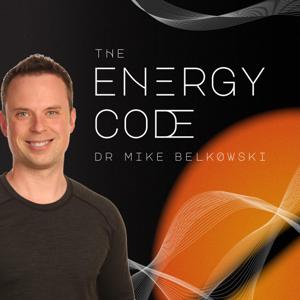

This episode is a graduate-seminar style scholarly review of biohacking; not as a vibe or a shopping list, but as an ecosystem of claims, evidence types, incentives, and failure modes. Dr. Mike Belkowski walks through peer-reviewed biochemical arguments, academic frameworks, consumer books, surveys, mainstream media translation, and manifesto-style writing — then filters it all through one lens: mitochondria, redox balance, inflammation control, cellular cleanup, and the upstream metabolic terrain that determines whether “hacks” create resilience or just add noise.
You’ll learn why changing 12 variables at once isn’t a protocol (it’s a story), why wearables are dashboards (not engines), how constraints like sleep and circadian rhythm govern everything downstream, and how to use evidence-tiering to separate real effects from compelling narratives. The end result is a practical, mitochondria-first framework: define outcomes, stabilize the baseline, add one lever at a time, and let measurement be the referee... not your identity.
(Educational content only, not medical advice.)
-
Key Quotes From Dr. Mike:
“Biohacking is not one discipline, it’s an ecosystem.”
“You can feel like you’re doing a lot while actually destabilizing your physiology.”
“People change too many variables too quickly — they never stabilize long enough to see what’s helping.”
“The stress of tracking becomes a biological stressor.”
“A real biohack improves the slope of recovery and the durability of function.”
-
Key points
Biohacking is an ecosystem, not a single discipline; it contains truth, hype, and ideology.
The scholarly move: classify claims by mechanism, evidence type, and limits.
Real “biohacking” = shifting upstream terrain (metabolic state), not adding tricks.
City analogy: fix the power grid (mitochondria/redox/inflammation) before buying “better cars” (more tools).
Maximalist stacks (12 changes at once) create stories, not causal protocols.
Health is constrained by fundamentals: sleep, circadian rhythm, movement, nutrients, stress load.
Wearables are dashboards: they inform iteration, but don’t change the engine by themselves.
Surveys show adoption truth: protocols must be sustainable (time/cost barriers matter).
Media rewards novelty → often overemphasizes shortcuts and underemphasizes constraints.
Manifesto writing can weaponize mitochondrial language into overconfident worldviews.
Common failure modes: novelty addiction, metric worship, evidence flattening, baseline neglect, context blindness.
Use evidence tiers to guide safety and precision (don’t treat anecdotes like RCTs).
Build a stack like a scientist: one goal, few metrics, one variable at a time.
A “real stack” is earned through validated iteration, not purchased.
-
Episode timeline
0:02–1:31 — Setup: “scholarly review” of biohacking through a mitochondria-first lens; sources overview
1:31–4:57 — Biohacking = ecosystem; classification; metabolic terrain + “city/grid” analogy
4:57–8:15 — Maximalist stack critique; constraints; dashboards vs engines; measurement vs entertainment
8:15–10:52 — Consumer books + surveys + media framing: adoption, hype incentives, sustainability
10:52–12:57 — Manifesto layer: how mitochondria language can out-run evidence
12:57–14:49 — Failure modes (novelty addiction, metric worship, evidence flattening, baseline neglect, context blindness)
14:49–19:47 — Evidence-tiering + what “effectiveness” really means (subjective → functional → biomarkers → long-term)
19:47–23:04 — Practical method: define outcome, simplify metrics, fix terrain, add one lever, evaluate humbly, build stack
23:04–26:59 — Personas + closing thesis: biohacking works when it respects biology, evidence, dose, context, and constraints
Dr. Mike's #1 recommendations:
Deuterium depleted water: Litewater (code: DRMIKE)
-
Stay up-to-date on social media:
Dr. Mike Belkowski:
BioLight:
Website
YouTube
 View all episodes
 By Dr. Mike Belkowski

4.8
124124 ratings
This episode is a graduate-seminar style scholarly review of biohacking; not as a vibe or a shopping list, but as an ecosystem of claims, evidence types, incentives, and failure modes. Dr. Mike Belkowski walks through peer-reviewed biochemical arguments, academic frameworks, consumer books, surveys, mainstream media translation, and manifesto-style writing — then filters it all through one lens: mitochondria, redox balance, inflammation control, cellular cleanup, and the upstream metabolic terrain that determines whether “hacks” create resilience or just add noise.
You’ll learn why changing 12 variables at once isn’t a protocol (it’s a story), why wearables are dashboards (not engines), how constraints like sleep and circadian rhythm govern everything downstream, and how to use evidence-tiering to separate real effects from compelling narratives. The end result is a practical, mitochondria-first framework: define outcomes, stabilize the baseline, add one lever at a time, and let measurement be the referee... not your identity.
(Educational content only, not medical advice.)
-
Key Quotes From Dr. Mike:
“Biohacking is not one discipline, it’s an ecosystem.”
“You can feel like you’re doing a lot while actually destabilizing your physiology.”
“People change too many variables too quickly — they never stabilize long enough to see what’s helping.”
“The stress of tracking becomes a biological stressor.”
“A real biohack improves the slope of recovery and the durability of function.”
-
Key points
Biohacking is an ecosystem, not a single discipline; it contains truth, hype, and ideology.
The scholarly move: classify claims by mechanism, evidence type, and limits.
Real “biohacking” = shifting upstream terrain (metabolic state), not adding tricks.
City analogy: fix the power grid (mitochondria/redox/inflammation) before buying “better cars” (more tools).
Maximalist stacks (12 changes at once) create stories, not causal protocols.
Health is constrained by fundamentals: sleep, circadian rhythm, movement, nutrients, stress load.
Wearables are dashboards: they inform iteration, but don’t change the engine by themselves.
Surveys show adoption truth: protocols must be sustainable (time/cost barriers matter).
Media rewards novelty → often overemphasizes shortcuts and underemphasizes constraints.
Manifesto writing can weaponize mitochondrial language into overconfident worldviews.
Common failure modes: novelty addiction, metric worship, evidence flattening, baseline neglect, context blindness.
Use evidence tiers to guide safety and precision (don’t treat anecdotes like RCTs).
Build a stack like a scientist: one goal, few metrics, one variable at a time.
A “real stack” is earned through validated iteration, not purchased.
-
Episode timeline
0:02–1:31 — Setup: “scholarly review” of biohacking through a mitochondria-first lens; sources overview
1:31–4:57 — Biohacking = ecosystem; classification; metabolic terrain + “city/grid” analogy
4:57–8:15 — Maximalist stack critique; constraints; dashboards vs engines; measurement vs entertainment
8:15–10:52 — Consumer books + surveys + media framing: adoption, hype incentives, sustainability
10:52–12:57 — Manifesto layer: how mitochondria language can out-run evidence
12:57–14:49 — Failure modes (novelty addiction, metric worship, evidence flattening, baseline neglect, context blindness)
14:49–19:47 — Evidence-tiering + what “effectiveness” really means (subjective → functional → biomarkers → long-term)
19:47–23:04 — Practical method: define outcome, simplify metrics, fix terrain, add one lever, evaluate humbly, build stack
23:04–26:59 — Personas + closing thesis: biohacking works when it respects biology, evidence, dose, context, and constraints
Dr. Mike's #1 recommendations:
Deuterium depleted water: Litewater (code: DRMIKE)
-
Stay up-to-date on social media:
Dr. Mike Belkowski:
BioLight:
Website
YouTube

770 Listeners
364 Listeners
7,205 Listeners

4,986 Listeners
717 Listeners

1,705 Listeners
4,872 Listeners
3,457 Listeners

9,231 Listeners

142 Listeners
1,096 Listeners
1,781 Listeners

840 Listeners
516 Listeners
292 Listeners