
Sign up to save your podcasts
Or

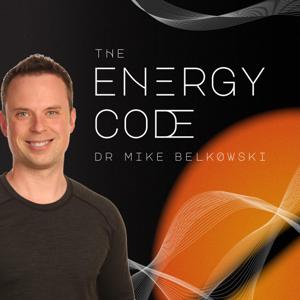

In this episode of The Energy Code, Dr. Mike Belkowski breaks down BPC-157, one of the most popular and debated peptides in the wellness, recovery, and biohacking worlds. He covers its origins as a synthetic fragment of a protective compound found in gastric juice, its potential roles in tendon, ligament, muscle, gut, nerve, and tissue repair, and the major caveat around angiogenesis. The episode then unpacks a recent Pharmaceutics review highlighting the central paradox of BPC-157: decades of compelling animal data and powerful anecdotal reports, but still a major lack of rigorous human clinical evidence, standardized formulations, and long-term safety data. Ultimately, BPC-157 is framed as a high-potential, low-certainty peptide — promising enough to deserve serious attention, but not yet proven enough to justify blind faith.
(Educational content only, not medical advice.)
-
Article Discussed in Episode:
BPC-157 as an Investigational Peptide Therapeutic: Biopharmaceutical Challenges, Formulation Strategies, and Translational Development Barriers
-
Key Quotes From Dr. Mike:
“BPC-157 has been investigated primarily through studies looking at gastrointestinal protection, tissue repair, and healing mechanisms.”
“BPC-157’s gastric stability does not equal oral bioavailability… “The claim that oral BPC-157 reaches systemic circulation is an unverified hypothesis, not a clinical fact.”
“It enters the blood, triggers a response, and is cleared by the kidneys almost instantly. Yet its healing effects can persist for days or weeks.”
“There are over 544 peer-reviewed studies, mostly in rodents… In terms of total human efficacy subjects, there’s fewer than 30 people documented in all history.”
“For now, BPC-157 remains the ultimate biological paradox: a compound that can seemingly heal anything in the lab, but officially nothing in the clinic.”
-
Key Points
⚡ BPC-157 stands for Body Protecting Compound 157 and is derived from a protective protein found in human gastric juice.
⚡ It has been studied mostly in animal models for tissue repair, tendon healing, ligament recovery, muscle injury, gut protection, angiogenesis, nerve support, inflammation modulation, and oxidative stress reduction.
⚡ Despite its popularity, BPC-157 has almost no robust human clinical data.
⚡ A recent Pharmaceutics review describes BPC-157 as an investigational peptide with major formulation, pharmacokinetic, regulatory, and translational barriers.
⚡ BPC-157 is unusually stable in acidic stomach-like environments, but gastric stability does not prove oral bioavailability.
⚡ Its systemic half-life appears to be under 30 minutes, yet animal studies suggest effects may last days or weeks, creating a major pharmacokinetic/pharmacodynamic mystery.
⚡ The review suggests BPC-157 may act as a transcriptional primer, briefly triggering gene and growth-factor cascades that continue after the peptide is cleared.
⚡ The evidence base is heavily skewed toward preclinical animal studies, with very limited human data.
⚡ Much of the BPC-157 literature comes from one research group at the University of Zagreb, creating a need for independent replication.
⚡ BPC-157’s native stability may make it difficult to patent, reducing pharmaceutical incentive to fund large clinical trials.
⚡ Current gray-market products are research chemicals, not FDA-approved pharmaceutical-grade human therapeutics.
⚡ Potential risks include inconsistent dosing, lack of GMP oversight, lack of long-term safety data, and theoretical concern around angiogenesis in the setting of hidden malignancy.
⚡ Dr. Mike’s view: BPC-157 has earned scientific curiosity, but not scientific certainty.
-
Episode timeline
0:00 – Introduction to BPC-157
0:49 – The Review Being Covered
1:20 – Brief History of BPC-157
2:05 – Anecdotal Use and Recovery Claims
2:45 – Potential Benefits
3:36 – Angiogenesis Caveat
4:11 – The Phantom Peptide
5:42 – The Gastric Survivor
7:25 – The 30-Minute Phantom
8:49 – The 554-to-1 Evidence Gap
9:35 – The Zagreb Paradox
10:15 – Armor Made of Proline
10:47 – Why Big Pharma May Not Be Interested
11:48 – Regulatory Limbo
13:23 – What BPC-157 Needs Next
15:18 – Dr. Mike’s Viewpoint
16:55 – Scientific Curiosity vs. Scientific Certainty
-
Dr. Mike's #1 recommendations:
Deuterium depleted water: Litewater (code: DRMIKE)
-
Stay up-to-date on social media:
Dr. Mike Belkowski:
BioLight Labs:
Website
BioLight:
Website
YouTube
 View all episodes
 By Dr. Mike Belkowski

4.8
124124 ratings
In this episode of The Energy Code, Dr. Mike Belkowski breaks down BPC-157, one of the most popular and debated peptides in the wellness, recovery, and biohacking worlds. He covers its origins as a synthetic fragment of a protective compound found in gastric juice, its potential roles in tendon, ligament, muscle, gut, nerve, and tissue repair, and the major caveat around angiogenesis. The episode then unpacks a recent Pharmaceutics review highlighting the central paradox of BPC-157: decades of compelling animal data and powerful anecdotal reports, but still a major lack of rigorous human clinical evidence, standardized formulations, and long-term safety data. Ultimately, BPC-157 is framed as a high-potential, low-certainty peptide — promising enough to deserve serious attention, but not yet proven enough to justify blind faith.
(Educational content only, not medical advice.)
-
Article Discussed in Episode:
BPC-157 as an Investigational Peptide Therapeutic: Biopharmaceutical Challenges, Formulation Strategies, and Translational Development Barriers
-
Key Quotes From Dr. Mike:
“BPC-157 has been investigated primarily through studies looking at gastrointestinal protection, tissue repair, and healing mechanisms.”
“BPC-157’s gastric stability does not equal oral bioavailability… “The claim that oral BPC-157 reaches systemic circulation is an unverified hypothesis, not a clinical fact.”
“It enters the blood, triggers a response, and is cleared by the kidneys almost instantly. Yet its healing effects can persist for days or weeks.”
“There are over 544 peer-reviewed studies, mostly in rodents… In terms of total human efficacy subjects, there’s fewer than 30 people documented in all history.”
“For now, BPC-157 remains the ultimate biological paradox: a compound that can seemingly heal anything in the lab, but officially nothing in the clinic.”
-
Key Points
⚡ BPC-157 stands for Body Protecting Compound 157 and is derived from a protective protein found in human gastric juice.
⚡ It has been studied mostly in animal models for tissue repair, tendon healing, ligament recovery, muscle injury, gut protection, angiogenesis, nerve support, inflammation modulation, and oxidative stress reduction.
⚡ Despite its popularity, BPC-157 has almost no robust human clinical data.
⚡ A recent Pharmaceutics review describes BPC-157 as an investigational peptide with major formulation, pharmacokinetic, regulatory, and translational barriers.
⚡ BPC-157 is unusually stable in acidic stomach-like environments, but gastric stability does not prove oral bioavailability.
⚡ Its systemic half-life appears to be under 30 minutes, yet animal studies suggest effects may last days or weeks, creating a major pharmacokinetic/pharmacodynamic mystery.
⚡ The review suggests BPC-157 may act as a transcriptional primer, briefly triggering gene and growth-factor cascades that continue after the peptide is cleared.
⚡ The evidence base is heavily skewed toward preclinical animal studies, with very limited human data.
⚡ Much of the BPC-157 literature comes from one research group at the University of Zagreb, creating a need for independent replication.
⚡ BPC-157’s native stability may make it difficult to patent, reducing pharmaceutical incentive to fund large clinical trials.
⚡ Current gray-market products are research chemicals, not FDA-approved pharmaceutical-grade human therapeutics.
⚡ Potential risks include inconsistent dosing, lack of GMP oversight, lack of long-term safety data, and theoretical concern around angiogenesis in the setting of hidden malignancy.
⚡ Dr. Mike’s view: BPC-157 has earned scientific curiosity, but not scientific certainty.
-
Episode timeline
0:00 – Introduction to BPC-157
0:49 – The Review Being Covered
1:20 – Brief History of BPC-157
2:05 – Anecdotal Use and Recovery Claims
2:45 – Potential Benefits
3:36 – Angiogenesis Caveat
4:11 – The Phantom Peptide
5:42 – The Gastric Survivor
7:25 – The 30-Minute Phantom
8:49 – The 554-to-1 Evidence Gap
9:35 – The Zagreb Paradox
10:15 – Armor Made of Proline
10:47 – Why Big Pharma May Not Be Interested
11:48 – Regulatory Limbo
13:23 – What BPC-157 Needs Next
15:18 – Dr. Mike’s Viewpoint
16:55 – Scientific Curiosity vs. Scientific Certainty
-
Dr. Mike's #1 recommendations:
Deuterium depleted water: Litewater (code: DRMIKE)
-
Stay up-to-date on social media:
Dr. Mike Belkowski:
BioLight Labs:
Website
BioLight:
Website
YouTube

770 Listeners
364 Listeners
7,205 Listeners

4,986 Listeners
717 Listeners

1,705 Listeners

4,872 Listeners

3,457 Listeners

9,231 Listeners

142 Listeners
1,096 Listeners
1,781 Listeners
840 Listeners

516 Listeners

292 Listeners