
Sign up to save your podcasts
Or

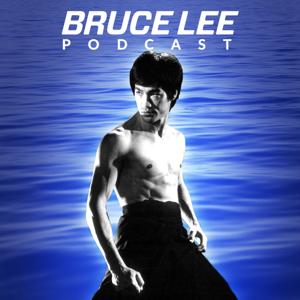


This week we have a special guest on the podcast, Shannon's mom Linda Lee Cadwell!
Linda joins us to share her firsthand stories of Bruce and their life as a family. She talks about Bruce's back injury, how Bruce was better than her at English grammar, and how Bruce charmed his way up to first class with the Cha Cha.
It is always a pleasure to have Linda on the podcast, and we love that she was able to join us for this episode. Thank you Linda for sharing your stories with us!
We'd love to hear from you! Please write to us at [email protected] or tag us on social media @BruceLee #BruceLeePodcast.
Help support the Bruce Lee Podcast and check out our Podcast Bundle on the Bruce Lee Store!
Five Ways of Flow
1. The highest truth is inexpressible.
The highest truth, your truth, is an experience, a knowing, it is a reverberation in the soul and heart of man.
"When both the man and his surroundings are eliminated, neither man nor his surroundings are eliminated – Walk On!"
"Between enlightenment and knowledge, in the latter a contrast exists between the knower and the known, whereas in the former, there is no such contrast."
2. Spiritual cultivation cannot be cultivated.
After spiritual cultivation you return to the ordinariness of life but filled with the extraordinariness of life; gratitude; acceptance; allowance; flow; a return to effortlessness.
"After the completion of cultivation, one remains amid the phenomenal yet devoid of the phenomenal."
"The aim is not the one-sided promotion of spirit, soul and senses, but the opening of all human capacities to the life rhythm of the world and nature."
3. In the last resort nothing is gained.
When we come down to the last resort of a situation, we are reaching a sort of giving up - a place where we have reconciled ourselves with losing; so don't hang onto a last resort, rather be willing to die.
"Are you a flowing entity capable to flow with circumstances?"
"Do not run away; let go. Do not seek; it will come when least expected."
4. There is nothing much in the teaching.
Modeling as a form of teaching. A teacher is a guide, the student has to experience things for themselves.
"A good teacher functions as a pointer to truth but not a giver of truth. He employs a minimum of form to lead his student to the formless. Furthermore, he points out the importance of being able to enter a mold without being imprisoned by it or to follow the principles without being bound by them."
"There is no fixed teaching. All I can provide is an appropriate medicine for a particular ailment."
5. In throwing punches and moving, therein lies the wonderful Tao.
In instinctual and direct movement, the flow of the universe is revealed.
"Behind every motion is the music of the soul made visible."
"The spirit of the universe or the integrating principle of the whole – instinct with contrivance which flows with purpose."
"Simplicty. Directness. Freedom."
Please write to us at [email protected] or tag us on social media @BruceLee #BruceLeePodcast.
Help support the Bruce Lee Podcast and check out our Podcast Bundle on the Bruce Lee Store!
"A struggle of any nature can never be settled satisfactorily until the absolute fact is touched. Where neither opponent can affect the other – not neutrality, not indifference, but TRANSCENDENCE is the thing needed."
The dictionary definition of Transcendence is:
Extending or lying beyond the limits of ordinary experience; transcending material existence; universally applicable or significant
The 19th century movement of Transcendentalism had the core belief that there is an inherent goodness of people and nature. Transcendentalists also believed that society and its institutions have corrupted the purity of the individual and they have faith that people are at their best when truly self-reliant and independent. They believed that man was one with nature, emphasized personal freedom, and also attempted to embrace the empiricism of science. (Some famous Transcendentalists are Ralph Waldo Emerson and Henry David Thoreau.)
Parts of the movement of Transcendentalism align with Bruce Lee's philosophies. In martial arts, Bruce rejected reliance on institutions and wanted everyone to create their own style. The focus on the individual, pursuing your own path, and being one with nature are all a part of Bruce's philosophy.
Transcendence is a useful daily tool for our lives. Transcendence is about seeing the "big picture." It is a change in perspective where you can take in the whole of the situation to better move through what you are struggling with.
It is hard to have transcendence when you are in the thick of being "for" or "against" something. In that situation the other person has to be "wrong" in order for you to be "right."
"See that there is no one to fight, only an illusion to see through. Be aware of illusions."
Seeing through an illusion can be difficult because it is hard to give up your position in a fight with another person. It takes practice to be able to zoom out and see the big picture when you are in the midst of conflict.
A way to transcend a situation is to ask yourself, "What am I projecting onto this situation that may or may not be true? How am I trying to make this other person wrong? Why am I doing that? What am I projecting out of myself in order to win this argument?"
Sometimes in order to justify our thinking we have to make the other person "wrong." We set up our thinking in ways that only show the other person as being wrong so that we can be right. This can keep us in anger and held in a state of confrontation and combat. This way of thinking does not rise above and it does not heal.
"To transcend the dualistic comprehension of a situation, let go at the point where the mind stops to abide – where it attaches to an object and stops the flow; don't allow your attention to be arrested."
Instead of fixating on the words or the blame, pull back and let go to take in the full picture and see your part in the situation.
Transcendence is a practice, and it can be difficult, but it is also extremely healing.
Another way to transcend when you are in an "I'm right and you're wrong," conflict is to try to see how both of you could be right or both of you could be wrong. This thought practice will give you some headspace to help transcend the conflict.
"Awareness is never exclusive – it includes everything."
If you want to have a sense of full awareness, you have to include everything, not just your side.
At the Bruce Lee Family Company, when we are looking for partners and collaborators, we want our collaborative work to result in "1+1=11." This means that when we come together with a partner we make something BIGGER, our work is not just additive it is transcendent. This type of transcendental relationship makes collaboration and working together more fun and produces better solutions.
When you're confronted with a difficult challenge, it can be easy to shut down, ignore it, or avoid it. But if you shift your energy towards embracing the challenge, whether you succeed or fail, ultimately you transcend the challenge and move beyond it instead of remaining stuck.
"The waters are in motion all the time, but the moon retains its serenity. The mind moves in response to the ten thousand situations but remains ever the same."
There is always something happening around you, the waters are always in motion, but the goal is to remain serene, still, and secure in your root.
"The mind must be wide open to function freely in thought. A limited mind cannot think freely."
In order to transcend, you have to pull back and see the big picture. You have to feel the feelings in your body. Part of allowing yourself to feel your feelings, even grief and sadness, is that once you have allowed yourself to feel then you can return to a calm stillness and begin to transcend.
"No-mindedness is not being without emotion or feeling but being one in whom feeling is not sticky or blocked - the non-grasping mind."
Feel your feelings, but do not hold onto them and get stuck. Once you have felt your feelings you can release them instead of allowing them to create blockages. The sticky feeling is the fear you feel where you want to shut out everything, lock the door, and hunker down. The sticky mind is denial, refusing to examine something closely.
When you are in a conflict with someone, ask yourself afterwards, "What if what this person is saying is true? How could it be possible?" Argue from the other person's point of view. Let your mind consider it. Even if it turns out that what the other person is claiming is not true, this exercise allows you to have compassion and understanding for them because you can see their perspective.
"To know oneself is to study oneself in action with another person. Relationship is a process of self-revelation. Relationship is the mirror in which you discover yourself – to be is to be related."
It is hard to transcend if you are not willing to consider a bigger picture or unwilling to examine yourself.
"All movement comes out of emptiness, and the mind is the dynamic aspect of this emptiness. There is no crookedness or ego-centered motivation. The emptiness is sincerity, genuineness, and straightforwardness. Allow nothing between itself and its movements."
"Scratch away all the dirt our being has accumulated and reveal reality in its nakedness."
Take Action:
Transcendence is a daily practice. Practice zooming out and looking at the big picture in low-risk situations and it will become easier to transcend in more difficult conflicts. If you find that your thoughts are becoming entrenched in one side of a situation, interrupt your thought pattern by trying to look at the whole situation.
We would love to hear about how practicing transcendence is going for you! Please write to us at [email protected] or tag us on social media @BruceLee #BruceLeePodcast
Help support the Bruce Lee Podcast and check out our Podcast Bundle on the Bruce Lee Store! Any item is 15% off and if you buy the entire bundle it is 20% off. A portion of all proceeds go to support the Bruce Lee Foundation and the Podcast Bundle helps support the Bruce Lee Podcast!
"Centering is the reconciliation of opposites so that they no longer waste energy in useless struggle with each other but can join in productive combination and interplay."
Often we waste energy by engaging in the struggle between two opposing things. But if you can take these two opposing things and join them into a productive combination and interplay then you can use their energy instead of waste it.
"We are vortices whose center is a point that is motionless and eternal but which appears in manifestation as motion which increases in velocity in the manner of a whirlpool or tornado. The nucleus is reality whereas the vortex is phenomenon. Hold to the core!"
If you are centered, then your power is the center of the storm and there is stillness there. This manifests in your life as a powerful motion that you are engaged in.
Bruce Lee is a great physical example of this powerful motion. On screen you can see that right before he moves to attack he has stillness, like a cat about to pounce. He wastes no energy before moving to attack; he gathers his energy into his stillness before a whirlwind attack.
As in the concept of Yin Yang, things are not truly opposite; they are compliments to each other. They are extremes as part of one whole, such as how hot and cold are not opposites, but extremes of temperature. As a part of reconciling these opposites it is important to know that they are not separate, but are on the same scale.
"When we hold to the core, the opposite sides are the same if seen from the center of a moving circle."
We want to look at the sides of ourselves, and the sides of other people, as having gradation of scale rather than as "good" and "bad."
You have to be aware and neutral in your assessments in order to recognize that one extreme is the expression of the other extreme.
"It is futile to argue as to which single leaf, which design of branch or which attractive flower you like; when you understand the root, you understand all its blossoming."
When it comes to our minds and our hearts, we cannot separate them out into different parts; they are all apart of the same whole.
The moment we bump into something about ourselves that we do not like and we push it away, we are not integrating or accepting what we do not like about ourselves. This can lead to self-hatred because we are labeling part of ourselves as the "other" or as "wrong." Since we still have to live with ourselves we start to beat ourselves up over this part of us that is "wrong" and this becomes an energy depleting exercise of self-hate.
You have to neutrally examine that part of yourself you do not like, feel how it feels in your body, and assess how it is showing what you need in your life. This will help your form an understanding of yourself and will help in your centering.
The reason centering is hard is because we are in the habit of picking one side or the other to identify with.
By examining yourself neutrally without judgment, you can really see and process difficult parts of yourself, integrate those parts, and then center yourself.
If you are stuck more on one side or the other, and it cures into more extreme versions, it makes us feel more and more separate.
Centering yourself is not just about calming you down from one extreme towards the center; it is also about finding this power source. If you confront a situation from your center then you have both sides to put your energy towards, instead of just limiting your energy to one side.
Be willing to give yourself a break when you overshoot to one extreme or another. Life has waves and we are only human. Take each overshoot as a learning experience and eventually your pendulum will swing less wide and you will remain closer to your center.
Centering is a difficult process. It is challenging in real life to integrate this learning in the moment.
"You are what you are, and self-honesty occupies a definite and vital part in the ever-growing process to become a "real" human being."
Self-honesty is hard because we do not want to get real with ourselves and look at the ugly parts. We want to place the blame outside of ourselves, but we have to own our own involvement.
"Instead of establishing rigid rules and separative thoughts, we should look within ourselves to see where our particular problems lie and our cause of ignorance. You must look for the truth yourself and experience every minute detail of for yourself."
To find the "cause of our ignorance" we have to look deeply into what we do not know or what causes us confusion.
Everything is an experiment and a process to know your self. You have to practice and accept that it will be hard.
A good place to start your process of centering is by examining your strengths and your weaknesses. What sides do you lean towards? What biases do you have?
"Those who are walking in darkness will never see the light."
When you get to the center, it is a powerful place of mobility and infinite possibility.
What is available in the center is choice. When you're sitting in the center, you have the ability to choose any direction you want.
"If you disown yourself to perpetuate an image, you become the target."
"Being one's self leads to real relationships and acceptance of oneself leads to change."
"Wisdom does not consist of trying to wrest the good from the evil, but in learning to ride them as a cork adapts itself to the crests and troughs of the waves."
"This achieving the center – being grounded in one's self – is about the highest state a human being can achieve."
We'd love to hear from you! Write to us at [email protected] or tag us @brucelee on social media with #bruceleepodcast
"A man is born to achieve great things if he can conquer himself."
Last episode we talked about the things with which we shackle ourselves, and this episode we discuss the keys that will unlock our fetters and liberate us.
"True mastery stems from mastery of oneself."
Although you can apply this idea to the mastery of a skill, this quote is really about the knowing and the freeing oneself. But in mastering a skill, knowing oneself masterfully, will only make one more artful in that discipline. True mastery is built up through the mastery of oneself.
The fetters were:
Fear
Ignorance
Self-consciousness
Laziness
The keys are:
Know Yourself (Self-knowledge)
Optimism
Self-Awareness
Learning
Remain Neutral
Taking Action
"Action is a high road to confidence and self-esteem. Its rewards are tangible. The cultivation of the spirit is elusive and difficult and the tendency toward it is rarely spontaneous, whereas, the opportunities for action are many."
Sometimes we use action as a distraction technique, doing the small things to avoid looking inwards to what actually need to be done. If your sequence of actions are taking you away from Self-Knowledge, that is not the type of action we want when we Take Action. Act instead of distract.
Self-Knowledge
"Self-knowledge has a liberating quality."
Self-knowledge gives you your freedom. Self-knowledge is not about finding just the positive in yourself; it is the willingness to look at your whole self, shadow and the light. Be honest with yourself. Create intimacy with yourself so that you feel safe in your mind and heart in order to really examine your whole self.
"We should look within ourselves to see where our particular problems lie and our cause of ignorance. You see, ultimately all types of knowledge simply means self-knowledge. You must look for the truth yourself and directly experience every minute detail for yourself."
For those who tend towards just the negative, this is not an inventory of everything bad about you. Looking inward is about every detail and being honest with yourself about the good and the bad.
"A man is at his worst when he does not understand himself."
The Self-Knowledge journey will be hard work, but the gift is that you know your true self.
Optimism
It is important to have optimism when looking at your tools and getting to know them, so that you will have faith that those experiences will teach you and help you grow into your best self.
"Optimism is a faith that leads to success."
"Pessimism blunts the tools you need to succeed."
Learning
When looking at your ignorance, it is a void of good information and it becomes a great opportunity to fill that void with good information. Seek out the information and teachers to help you fill that void of ignorance.
"Learning is discovery, the discovery of the cause of our ignorance."
Ignorance is just something that you do not know. People can have a lot of shame around not wanting to admit their ignorance out of fearing that they will look stupid to others. Acknowledging your ignorance is a part of the discovery process and you discover through learning.
It is better to say, "I don't know. Let's find the answer," instead of refusing to admit your ignorance and manufacturing a false answer.
"Learning is discovering, uncovering what is there in us. When we discover, we are uncovering our own ability, our own eyes, in order to find our potential, to see what is going on, to discover how we enlarge our lives, to find means to our disposal that will let us cope with a difficult situation."
Remain Neutral
"Eliminate all opportunities for rivalry."
We can waste a lot of our time and energy in competition with others. Some competition can be good to push or motivate yourself, but when competition becomes rivalry then you start aiming to make the other person fail so that you can win. Rivalry is "me against you," and does not lift up you or anyone else.
"If you want the truth to stand clear before you, never be for or against. The struggle between "for" and "against" is the mind's worst disease."
When you look at something neutrally then you can look at its whole, instead of its parts. Then, by looking at something wholly you can decide if it works for you or if it does not.
"Completeness is the absence of the conscious mind to strive to divide that which is indivisible."
"Be a calm beholder of what is happening around you."
Take in the information, allow it to be as it is, take what works for you and leave what does not work for you for someone else.
Take Action + Self-Awareness
You learn through experience.
"Be self-aware rather than a repetitious robot."
Combine your action with self-awareness. You do not want to go through the day unaware with robotic action because then you are not living in the present or acting with awareness of your actions.
"A healthy person has both a good orientation and an ability to act."
A healthy person uses all of the keys together: Self-Knowledge, Optimism, Self-Awareness, Learning, Remain Neutral, and Taking Action.
Be in inquiry with yourself. You must do in order to know.
For example, if you are in inquiry with yourself, instead of saying "I hate exercise," you could ask, "How do I like to move?"
"Decide to be cured."
Do not examine yourself with shame and guilt, it will make you want to shut down and stop your self-inquiry. Approach your investigation with openness.
"I have to leave you now, my friend. You have a long journey ahead of you, and you must travel light. From now on, drop all your burden of preconceived conclusions behind, and "open" yourself to everything and everyone ahead. Remember, my friend, the usefulness of the cup is in its emptiness."
Other episodes to delve into:
Episode #3 "Take Action"
Episode #60 " Choiceless Awareness"
Episode #46 "The Mind is a Fertile Garden"
Episode #57 "Self-Knowledge"
We'd love to hear from you! Write to us at [email protected] or tag us @brucelee on social media with #bruceleepodcast
"A man is born to achieve great things if he can conquer himself."
When Bruce Lee says "conquer" it is not about subjugating yourself, but instead it is about knowing yourself in order to liberate yourself.
"Each man binds himself – the fetters are ignorance, laziness, preoccupation with self and fear. You must liberate yourself."
Fetters are a chain or manacle used to restrain a prisoner. In this quote the fetters are our own restrictions of ignorance, laziness, preoccupation with self, and fear. These things hold us prisoner, restraining us from being free to be our most authentic selves.
Bruce Lee was a normal person dealing with his personal chains and traps. Here, he was describing his own fetters, describing what was holding him back and what he needed to work on in order to free himself.
Ignorance
Bruce wrote often about how we have to discover the cause of our ignorance. To accept and know that you do not know is a huge initial step. Then you have to ask "What is it that I am ignorant about?"
Self-work is hard work. It can be draining and take a long time, but it is worth putting in the work.
When we have those feelings of love and joy, it feels good in our bodies and our souls, and we always want to get more of that. We return to our fetters because they are familiar and easy and we fear leaving them behind. We fear looking at our chains too closely.
"To understand your fear is the beginning of really seeing."
"Most of us would rather suffer being self-conscious than to realize our blindness and get our eyes again."
We are fearful of looking closely at ourselves because that means that there is a part of you that has to change. You have to let go of some story you might have been holding on to your whole life.
Self-work is such hard work because they way that you grow and change is by going through, working through the hard feelings. You cannot just put aside the hard feelings; they will not go away, they must be dealt with.
If you are numbed to a big part of your feelings, it is hard to know yourself.
Ego
"Use the ego as a tool."
We all have an ego. We all have a place in our lives where we do not want to be challenged or told we are wrong.
To use our ego as a tool, we look at the places in our life where we are rigid and do not want to hear that we could be wrong.
Where are you resisting with your set choice patterns?
When Bruce Lee talks about being a flowing entity, capable to flow with whatever comes at you, this means you cannot be in resistance with your ego or your story.
Look at the ego rigidity within you, and ask, "How am I resisting?" Investigate why there is rigidity and as yourself if you really want that.
The first step is being willing to see the ego rigidity.
Have a willingness to listen. In our present culture, there is a push to debate in order to force your point to be heard, but when you do this you are not listening to the other person. Be present. Be willing to listen.
It is important to engage in these conversations even if you do not think the other person will listen to you. Even if someone does not listen to you, you still were able to express yourself. You got to practice being in relationship in conversation with someone and practicing these things helps you grow.
"One should get rid of the obtruding self or ego-consciousness and apply himself to the work to be done."
Fear
Fear is a heavy chain. We are often fearful of being hurt so we do not engage. If we are fearful and defensive all of the time, we cut off connection and growth.
Do not put so much energy into guarding against being hurt, especially if the hurt might not even come. It requires so much of your time and personal power to stay defensive against hurt. It is uncomfortable to be anxious and tense, tiptoeing through life out of fear.
"Sensitivity is not possible when you are afraid."
Truly seeing and really listening is not possible when you are coming from a place of fear because you are on guard. Sensitivity is about having mastery of your senses.
"There can be no initiative if one has fear. Fear compels us to cling to traditions and gurus, etc."
If you are fearful, you seek other people or structures to make yourself whole.
If you cling to others for validation then Bruce says, "We know ourselves chiefly by hearsay."
You do not want to get stuck in the esteem of others because then you will not know yourself.
Self-Consciousness
"The consciousness of self is the greatest hindrance to the proper execution of all action."
If you are always self-conscious about how you do something, even if the desire is to do it well, but you want to do it well to receive esteem from others, then you will never achieve flow in that action. That self-consciousness prevents you from truly doing the task the best that you can and expressing yourself.
Striving for perfection will prevent you from starting something or prevent you from finishing something.
"Freedom discovers man the moment he loses concern over what impression he is making or about to make."
If you fear sharing something because you fear the impression that you will make, your projected self is in conflict with your true self. If you can always be your true self then you have freedom to create and share anything.
"Secretiveness plays the same role as boasting – both are engaged in the creation of a disguise. Of the two, secretiveness is the more difficult and effective."
Secretiveness is dishonesty to yourself and those around you. If you're secretive you are engaged in the creation of a disguise because you are not comfortable in your own skin. It is ok to come out and be yourself.
Laziness
Laziness is heaviness and paralysis. It is a result of not dealing with your fear, ego, or self-consciousness. You feel that you have no energy to do anything productive.
Ask yourself: Where is my energy going? How can I reclaim that energy?
"Use the ego as a tool rather than a possession. Inwardly, psychologically, be a nobody."
Know yourself, look inside yourself, develop yourself to be a better master of yourself.
Use you ego, be in relationship, have sensitivity.
"It is the ego that stands rigidly against things coming in from the outside."
This ego rigidity makes it impossible for us to meet where we are and who we are in every moment. Ego rigidity is the source of losing energy.
"The ego boundary is the differentiation between the self and the otherness. If the ego boundary is fixed, then the character becomes an armor. Inside the ego boundary, there is love and cooperation, and outside the ego boundary, there is suspicion and unfamiliarity."
The boundary should be limitless; you need to dissolve the boundary so that the love and cooperation that is within can flow out.
Write to us at [email protected] or tag us @brucelee on social media with #bruceleepodcast
This is a special episode of the Bruce Lee Podcast honoring Brandon Bruce Lee. We just celebrated Brandon's birthday February 1st and coming up on March 31st is the 25th anniversary of his passing, so Shannon wanted to share some stories of growing up with Brandon as her big brother and share some excerpts from Brandon's journals.
Shannon and Brandon had a very special relationship and Brandon viewed himself as her protector. Brandon was also the typical older brother in that he loved to mess with Shannon playing pranks and picking fights, but there were instances where he would come to Shannon's rescue. If he thought Shannon was in trouble, or had really hurt herself, or if someone was picking on her, he would come to save her.
Brandon was a larger than life soul. He was a voracious reader and would have a dictionary with him so that when he encountered a word he didn't know he would look it up. Brandon knew the definition of everything and he got a perfect score on the English portion of the SATs. His favorite book was "Zen and the Art of Motorcycle Maintenance."
Brandon was super sharp, smart, and theatrical. He loved to tell stories and capture the attention of the room and was able to sell any story he told.
Brandon always knew that he wanted to be an actor. Even though it could have been daunting to go into acting like his larger than life father Bruce Lee, Brandon saw himself as different from his father because Bruce Lee's passion was martial arts and Brandon's passion was acting. Brandon was an artist through and through.
He only went to one semester of college at Emerson before dropping out to pursue acting. Since he was Bruce Lee's son, Brandon was expected to do martial arts and be in action films. So while being Bruce Lee's son opened some doors for him, he was pigeonholed as an action star. However, neither Brandon nor Shannon studied martial arts after their father died.
Brandon eventually started to study martial arts around the age of 19, and because he was naturally coordinated he was able to pick it up quickly. He studied at the Inosanto Academy with Dan Inosanto and picked up proficiency in muay thai and JKD, but while he enjoyed martial arts it was not his life's passion. Brandon studied martial arts because he kept being asked to do action films, but ultimately wanted to be a real actor and not be stuck in action roles.
Brandon was romantic, bohemian, and literary. He kept journals and wrote letters written in a way that reminds Shannon of an old timey "days of yore" style of writing.
Fun epitomized Brandon. He loved to play jokes, and had a big boisterous laugh and a huge smile. He was a daredevil and used to skateboard and ski, he was constantly breaking bones, getting stitches, and knocked himself unconscious a few times. He was always building rickety skate ramps in the backyard.
Brandon loved nature. From when they were young, their mom would take them on camping trips and he continued to love nature and camping as a teen and adult. When he was an adult he would take his motorcycle and go on solo camping trips.
On one such camping trip, when he was around 19 or 20, Brandon rode up with some friends and then he went off on his own into the wilderness. He ended up in a meadow when a rainstorm hit. He pitched his tent, but it was old and had holes so it was waterlogged and leaking, barely keeping him protected. Here he wrote some journal entries.
"Day 5: I am depressed again. This trip, which was supposed to save me, is failing. I am having extremely fatalistic feelings. I'm in the woods now – alone. Right now, I wish I had some other people around. This small blue tent has become a prison of sorts. Outside, it's raining, and if it rains much harder, I am going to die. Literally. I am far from help and it is cold and wet. Never have I been alone for this long. The tent is sagging around me, and a flood of water is rushing into the meadow…I want to go home. If the weather doesn't improve tomorrow, I may snap."
"Day 6: Aha! I have it figured out. The day began with rain. There was a brief period of sunshine, which induced me to begin packing up. I was in high spirits. But then the crafty rain caught me just as I was taking the tent down and utterly soaked both it and me. I reset the tent and huddled within. This brief period while I sat in a water-logged tent – which bore a new rip made by my careless step – was, in a sense, my catharsis.
I was truly fearful, with that gut fear one may experience after losing large sums of someone else's money – but I do not believe I was fearful for my life. No, I was fearful for my ego, for my comfort.
The rain eventually stopped and the sun actually shone intermittently. With a zeal born of fear, I rushed forth, took down the dilapidated tent, packed my bags and set off at what can only be described as a dead run. The meadow had seemed to have acquired evil – bad karma. Through some sort of grace (the good karma of affirmative action) it did not rain again. In fact, I had the distinct impression that I was the storm front, for the small patch of blue sky through which the sun peeked occasionally seemed to center itself directly above my head and follow me as I walked.
I made it to China Camp without further ado. Whereupon, being a man of extreme good taste, I moved into the men's bathroom where I am at present and where I expect to remain. …The weather is a great gumption effector, and I hope I did not carve "I'M HAPPY" on the bathroom door ephemerally. I am no longer alone, for I have as company now myself. After you have been away from other people long enough, there is nothing to do but be with yourself. Your ego – which operates solely for others – is gone.
Hopefully I will make it to a town tomorrow where it is my fervent desire to check into a hotel. This tent has had it anyway. An interesting note – my flashlight batteries just died very slowly. Good thing I have more.
I'M HAPPY."
Brandon always had an excellent grasp of writing. Here's an excerpt from his 8th grade graduation speech his teacher had them write as an exercise:
"To me, my educational career thus far, seems to resemble (in a way) the myth of Sisyphus; who was forever condemned to push a boulder up a steep hill in Hades; but ere he reached the top, the boulder would slip from his grasp. …The more we learn, the more we are forced to realize we do not know. As Socrates said, "I am the smartest man in all Athens because I know how ignorant I am."
As an aspiring actor, Brandon understood that being Bruce Lee's son gave him access to the industry and landed him meetings that he would not have had normally. But being Bruce Lee's son also pigeonholed him in the action genre, which is not where he wanted to be. Brandon approached the roles he got wholeheartedly, but he was using these action films toward the goal of landing future dramatic roles.
When Brandon got "The Crow" he was very excited because it was a different genre than the typical action films. While there was some action, the role was dramatic with the main character being a tortured soul. One of the reasons that this role was successful for him was because Brandon's portrayal of this role was very engaging, emotional, and deep.
Even though Brandon struggled with being Bruce Lee's son in the acting industry, he knew what he wanted and did not rely on the legacy of his famous father. With just the short time that Brandon was working in film, he had begun to be recognized as Brandon Lee, not just as Bruce Lee's son.
"Yes, I think that I could share the fact that I am Bruce Lee's son with someone else. It is a fact that it is both a burden and a blessing, which one it is will be determined in years to come when I intend to share it with the whole world."
From a camping trip in northern California:
"Gorgeous. It is absolutely gorgeous. The sun is out, the sky is blue. Few black clouds mar the horizon. Time passes slow up here. I will make a concerted effort to concentrate on it alone."
Brandon was the only other person who walked in shoes similar to Shannon. Even though they were four years a part, they had a deep bond between them. Brandon died just a few weeks before his wedding and he had asked Shannon to be his best man. They lived a part when they were adults, but the times that they spent together were very meaningful. They would have real conversations and talk to each other in a very real way. Shannon always knew that he was there for her, and that he still is.
Thank you Brandon for sharing your artistic beauty and work you gave the world. Today we honor Brandon Bruce Lee.
-----
Social media links for Brandon Lee:
https://www.facebook.com/BrandonBLeeOfficial/
https://www.instagram.com/brandonlee/
https://twitter.com/brandonblee
Broken Rhythm is Bruce Lee's technique for creating an opening in combat.
"Ordinarily, two people (of more or less equal ability) can follow each other's movements. They work in rhythm with each other. If the rhythm has been well established, the tendency is to continue in the sequence of the movement. In other words, we are "motorset" to continue a sequence. The person who can break this rhythm can now score an attack with only moderate exertion."
The notion is that there are rhythms in fighting, and in life. In combat, Bruce's form of disruption is to create an opening to strike. In life, we have our own habits and patterns, and if we can disrupt that rhythm then progression can be made and new things can be allowed into our life.
In the combat analogy, Bruce says you can break the rhythm though a small hesitation or a large unexpected shift or change. This way of disruption can be applied to life as a way to shift ourselves off of our plateaus and go to the next level. We all get stuck in patterns or loops in life.
If we are in our practice of wanting to level-up and grow, can we look at our lives to see where we are stuck in a pattern? How can we disrupt that pattern? How can we break that rhythm to move forward?
"Broken rhythm is meant to break the trance."
"Running water never grows stale."
When talking about injuring his back, Bruce says it is because his routine became stale. Bruce talked often of pattern and habit, and how he did not believe in them. He believed in living life and being fully present and engaged.
"Mirror repetition of rhythmic calculated movements robs you of your aliveness."
In recent years, there is a self-help trend that promotes the creation of habits. The emphasis on creating habits is so you do not have to think about everything in order to increase your overall productivity or creativity. This can create robotic, unthinking motions and can take away your aliveness.
"Don't think, feel."
The "feel" is a part of your aliveness.
An easy way to practice disruption in your life is to break the rhythm of how you get dressed in the morning. How do you feel in the morning? Practice switching up your morning routine.
"Free yourself by observing closely what your normally practice. Do not condemn or approve, merely observe."
Sharon is a professional disrupter. She's hired by companies to come in and change up the routine. Back when she first started, disruption was unusual for the workplace and she often met resistance within the establishment when trying to implement changes. Now, disruption is often demanded in the workplace with companies using disruption to promote innovation and new ideas.
The point is not to disrupt for the sake of being disruptive, but to highlight areas that are experiencing stagnation and are no longer serving you.
There can be a willingness to disrupt in the mind, but not in the heart or the body because we are scared to disrupt our stability. What we want is stability and predictability, even though nothing is stable since everything is in flow and changes constantly, so a shift away from that idea of stability is scary.
"Pliability is life, rigidity is death."
The idea of stability and predictability give us a sense of security, but we are not experiencing our aliveness. To cultivate a sense of stability within instability is the true stability. Being grounded within oneself in the midst of a storm and to feel secure is the sense of stability that serves you well.
"The real stillness is the stillness in movement."
Breaking the rhythm in small ways can be a good way to infuse aliveness back into anything that is feeling stale or where you're feeling stuck. Notice where you are in routine and pattern and try to break that rhythm in a small way.
Find your fun in breaking the rhythm; it does not have to be a painful disruption to your routine. If you can infuse your shifts with a sense of play then it can be a fun break in your rhythm and you do not have to be fearful.
As a working mother, Sharon found that her mornings were often stressful trying to get the kids, her husband, and herself all ready for the day and out the door. As a small way to make those mornings more enjoyable she started listening to a 70's funk playlist to infuse some fun into her morning. It was a small change to her morning routine, but has greatly changed how she feels about her mornings from feeling robotic to feeling fun and alive.
The way to break the rhythm is to become aware of the rhythms and patterns that you are in.
We are engaged in many small routines throughout our lives, from how we put or socks on in the morning to how we wash our hair in the shower. Try to change one thing about one of your small routines, just to see what happens.
Bruce Lee talked about timing, cadence, and rhythm as something that had to be felt and mastered as a psychological problem, even more than it being a physical thing. Noticing where we are and having awareness of the ruts we are in, is a noticing of your psychological state. To be able to disrupt or change that pattern, to insert play, is an issue of the heart and the mind. Aliveness is about the whole of mind, body, and spirit together.
Doing your duty can be something that pulls us away from our aliveness because duty creates a sense of obligation and is therefore outside of oneself. We should engage our aliveness whenever possible.
"Life is meant to be lived."
If we can alter our internal framing where we are not doing something out of a feeling of obligation, but instead because you enjoy it and it makes you feel alive, then you will be more present and enjoy your life.
"If you meet a situation with a chosen pattern, then your reaction and your response will always be lacking pliability and aliveness."
We would love to hear about your experiments in breaking the rhythm! Write to us at [email protected] or tag us @brucelee on social media with #bruceleepodcast
Read full show notes at Brucelee.com/podcast
"The Tools" are what you have in your arsenal at your disposal to tackle life head-on.
Bruce Lee repeatedly wrote about different Tools he used in life. We have talked about these tools separately on the podcast, but what is it to have these tools in your arsenal and to use them?
"Your tools have a dual-purpose, to destroy whatever is in front of you that stands in the way of peace, justice, and humanity, and to destroy your own impulse of self-preservation, to destroy anything bothering your mind, to overcome your own greed, anger, and folly."
We have the obstacles in our life that are outside of ourselves and then we have the obstacles within our own mind. Bruce has a warrior-like mentality to destroy these barriers in life to achieve peace.
These are Bruce Lee's Tools:
Willpower
Simplicity
Intuition
Presence
Love
Joy
Flexibility and Adaptability
Awareness
Stillness
Willpower was a tool that was extremely important to Bruce Lee as he considered himself a self-willed man. He had the power to direct his energy toward the things that he wanted.
Bruce Lee wanted to destroy these obstacles not to force through his own path, but to achieve greater harmony and connectedness with the world around him. He is asking us to replace our greed and anger with peace and humanity.
"When you are training, your mind and body are active and dynamic in every way. But in actual combat your mind must be calm, you must feel as if nothing critical is happening. Your movements should be light and secure, not fixed and glaring. Your behavior should not be in any way different from your everyday behavior."
You cultivate these tools so that when the situation arises and you need them, you can use these tools in a masterful way with calmness, with presence, and put them into service to handle the situation without aggression.
"If you are pure-hearted, and choicelessly aware, then your tools will hold these qualities, and will play their role to the utmost degree. Your tools stand as symbols of the invisible spirit, and they keep the mind and body in full engagement."
Simplicity is an important tool because it can be easy to overcomplicate and overthink a situation or a solution. You have to "Hack away the unessentials." You want to know exactly what you need and to go directly to a solution.
Our instinct to overthink or overcomplicate situations is fear-based. We fear that something will go wrong and it can create a negative thought spiral taking us out of the reality of the situation.
Listen to people expressing themselves. If they are expressing themselves simply, it is easier to understand and connect through communication.
"Our tools represent the force of intuitive or instinctive directness and do not divide or block our freedom. Our tools move us onward without looking back or to the side."
Use your intuition to test how good your tools are and if they are moving you forward.
For Shannon, she has been working on her tool of Joy recently. She has been trying to turn her ego, when it comes up, into Joy. Shannon's process is to first notice ego showing up, then she aims to remain present, and look around herself to ask, "What is there I can be Joyful about?"
Sometimes when we are in a negative state of being, such as anger, we can forget about using our other tools. Try to give your tools a definite shape, imagine a toolbox filled with your tools that you can visualize to help bring your out of a negative state and utilize your tools instead.
Shannon has also been experimenting with her tools of Simplicity and Intuition. Sometimes we will have an intuition about something and we sit and overthink it. Shannon has been practicing noticing her intuition and applying it as simply as she can. This action requires Willpower to move you to act on your intuition.
"This is not a matter of petty techniques, but of highly developed personal spirituality. It is not a question of developing what has already been developed, but of recovering what has been left behind. It is not a matter of technology, but of spiritual insight and training."
We tend to think of tools as something outside of ourselves, but these tools we were born with and they are always inside of us. All spiritual growth is a remembering of the love, joy, and intuition inside of us, the remembering of our true essence.
"Make the tools see. All movements come out of the mind, keep it straight without ego-centered motivation. Keep the mind sincere and genuine and straightforward; allow nothing between itself and its movements."
You have these tools that are innate to you and have their own energy, keep yourself genuine and straightforward and do not block these tools.
"The tools are at an undifferentiated center of a circle that has no circumference. Moving and yet not moving, intention and yet relaxed, seeing everything happening and yet not at all anxious about its outcome, with nothing purposefully designed, nothing consciously calculated, no anticipation, no expectation. In short, standing innocently like a baby, and yet with all the keen intelligence of a fully mature mind."
There is limitless ability of these tools within our own person.
Bruce Lee emphasizes the idea that there is work and training to be done, there is awareness and utilization of the tools, but there is also the letting go of the tools. You do the work and then you just "be." You let these tools come forth as needed and you continue to move down your path.
"One can never be the master of his knowledge unless all psychic hindrances are removed and he can keep his mind in a state of fluidity even purged of whatever knowledge he has attained."
We would love to hear about the Tools you are working with in your internal toolbox! Write to us at [email protected] or tag us @brucelee on social media with #bruceleepodcast.
Most people know Bruce Lee as an actor and martial artist, but he defined himself as an Artist of Life.
This term comes from a series of drafts of his essay "In My Own Process" which we discussed in Episode 29.
In Bruce's essays on "In My Own Process" he stated that being an Artist of Life was his overall goal and how he identified himself. It is because he was an artist of life that we still know about Bruce Lee today. He was intentional about cultivating his life and who Bruce Lee was.
"I am a martial artist by choice, an actor by profession, and I am actualizing myself daily to be an Artist of Life."
This definition was both concise and broad enough to allow Bruce to grow and expand. Bruce wrote often about how he is an ever expanding person and that there is no end or limit to this process and that he is discovering and growing exponentially all the time.
Bruce put his identity in the context of humanity, not a profession or trade. This is applicable to everyone.
If you are the artist and your canvas is the body that you are in, what do you want to do with it?
In order to pursue being an artist of life, you have to have done some self-work already. In order to cultivate who you are, you have to start with the premise that you know who you are.
There is a quote we use around Bruce Lee that is not actually one of his quotes, but it is: "The key to immortality is first living a life worth remembering."
This is not about trying to create a legacy by which people will remember you, but instead living a life of value to yourself.
Anyone can identify themselves as an Artist of Life, you do not have to be creative or a painter or a musician.
Bruce starts off his "In My Own Process" writings by saying:
"It is most difficult to write about oneself because each of us is such a complexity. In an attempt to really write something about oneself demands an honesty toward oneself, to be able to take responsibility to be what we actually are."
Bruce said that, "Being honest is one of the least things a human being can do."
Honesty can be one of the hardest things that human beings can do. We can hide our true self from different people in our lives because we fear rejection of our self as an Artist of Life.
"To be what I term, a quality human being, one has to be transparently real and have the courage to be what he is."
Being an Artist of Life is not a temporary project it is a lifelong endeavor.
Through all the work that Bruce did in his life he came to realize as he has grown and worked through things in his life that the only kind of help there is, is self-help. Even if through the self-help you have to ask someone else for help, you still have to ask for that help. You have to help yourself move to the next step.
"Self-help comes in many forms: daily discoveries through choiceless awareness, honestly as well as wholeheartedly doing one's best, indomitable dedication, and realizing that there is no end or limit to this."
If you are in exploration like Bruce Lee, the constant learning and curiosity becomes like breathing.
"Discovery is one of the means to uncovering our potentiality."
Discovering something you did not know before is a way to uncover your potential and to help you know yourself.
Bruce Lee knew himself early and was able to act on it at a young age. Some of us take longer to know ourselves.
If you really want to know yourself, start your self-inquiry. What do you love? What makes you angry? What makes your heart sing? What don't you like?
"I feel best when I am showing my skill. Why? Because baby I have worked my ass off to be able to do just that. And that means dedication, constant hard work, constant learning and discovering, and lots of sacrifices."
It is not about showing off, it is about shining your light.
In his essays Bruce wrote:
"I would just love it if someday somebody said, 'Oh look at that guy, now there is something real.'"
How would you fill out Bruce's Artist of Life statement?
"I am a martial artist by choice, an actor by profession, and I am actualizing myself daily to be an Artist of Life."
"What it boils down to is my sincere and honest revelation of a man called Bruce Lee. Some significant traits of him are his honesty to himself, quality over quantity, and he is hardworking. But, just who is Bruce Lee? Where is he heading? What does he hope to discover? To do this a person has to stand on his own two feet and find out his cause of ignorance. Bruce Lee is a changing person because he is always learning, discovering, and expanding. And at best, Bruce Lee represents a possible direction and nothing more. You must let your inner light guide you out of the darkness."
"Our duty is to become real and simply be."
If this speaks to you, embrace the Artist of Life philosophy. Shine your light and we would love to hear about your experience. Write to us at [email protected] or tag us @brucelee on social media with #bruceleepodcast.
From the publisher's feed
78,422 Listeners
11,785 Listeners
1,650 Listeners
21,048 Listeners

6,345 Listeners
12,714 Listeners
1,653 Listeners
10,188 Listeners

8,527 Listeners
4,095 Listeners

4,966 Listeners
27,762 Listeners

29,204 Listeners

19,254 Listeners

628 Listeners