
Sign up to save your podcasts
Or

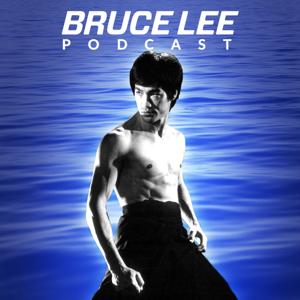


Bruce Lee is a true warrior.
A warrior is often thought of in the physical sense, as a fighter and physically strong.
But it is possible to be a warrior in the mind, body, and spirit.
Shannon comes from a lineage of warriors and has been exploring what being a a true warrior means for her.
What does it take for us to become true warriors?
"The warrior is the average man with laser-like focus."
There is no language about fighting or physical prowess in this quote, but what does Bruce Lee mean by "laser-like focus"? Laser-like is to put intense energy towards something.
To be a warrior is a big commitment in one's life and Bruce put an intense, energetic beam of focus towards that goal.
For Bruce, being a warrior was actually about one's growth and healing, and the combination of using your mind, body, and spirit in harmony toward the cultivation of one's self.
Bruce was a warrior in the broader sense of life. Every day Bruce got up with the intention of working on himself, bettering himself, actualizing himself, and cultivating his own essence and energy. He did this in a way that benefited himself and everyone around him.
Bruce Lee was so committed to this laser-like focus that he was able to achieve so much in a short time, and seemed at times super-human. His embodiment of his warrior focus could be intimidating.
Becoming a true warrior is about taking action towards this path and living your life by your own warrior code.
"Warriors have the discipline to change their behavior for the sake of honorable ends."
The warrior path is not an easy path, it takes commitment, work, and effort. You will have struggles and failures along the way, and it will take time. You are shifting towards your more true self when you decide to pursue the warrior path.
"Not tense, but ready."
For those of you feeling called to the warrior awakening, to start you have to have an honest assessment of where you need help, what you're good at, your strengths, and your weaknesses. You have to have courage to pursue your warrior awakening; it is not an easy undertaking.
Read full show notes at Brucelee.com/podcast
If you would like to share your own stories about your path to becoming a true warrior email us at [email protected] or tag us @brucelee on social media with #bruceleepodcast.
In our final Core Values at Work Episode Shannon and Sharon discuss Relationship, Communication, and Trust.
These Core Values are derived from Bruce Lee's philosophies and Shannon has adjusted them for her workplace. Shannon has put together these Core Values based on how her workplace functions best, incorporating the philosophy and essence of her father, including what was important to him and what is important to Shannon.
For many of us, work is where we spend most of our time. It is important to have values in the workplace, even if you work for yourself or a small company.
Shannon carries her values and principles through all aspects her life. She likes to be able to show up at work as she would be at home, with an integrated principle of being able to be herself and continue to work on what is important to her as a human being no matter where she is.
It is a good thing to know what your values are. Are your values different in your personal life than at work? How can you make those values more integrated?
Relationship:
Be in relationship. You are not working or living in a bubble. You are part of a team, part of an environment. Relate actively to your work, to your coworkers, to yourself. Treat others with respect. Take care of your side of the relationship. Have care for the humans around you and the human who makes this all possible – Bruce Lee.
Bruce Lee always said life is about relating; relating to, learning from, and growing within your environment and people you're in relationship with.
If you are paying attention and actively willing to engage with people and everything outside of yourself, you will learn about yourself, what is important to you, and how you want to move through the world.
Something we found at the Bruce Lee Family Company is that even though we are a small company, each member of the team was working in isolation. People would work on their specific job without relating with the rest of the team. We created a better ecosystem by working on how each team member could help each other and contribute to other aspects of the company.
Sometimes workplaces can be hierarchical and isolating, so it's important to remember that your coworkers are people too. You are with your coworkers every single day, and no matter their job, you are in relationship with them.
We all started at the bottom, and we remember the people who were jerks to us. We also remember the people who were kind and respectful. Everyone deserves to be treated with a basic level of respect no matter their position in the company.
Communication:
Communicate clearly and openly. No one knows what you need. No one knows how you feel. No one knows what you know or don't know. If you need help, ask. Don't wait to be communicated to. Be proactive and straightforward with communication.
This Core Value is specific to Shannon and the Bruce Lee Family Company. She found that people were waiting to be communicated to because they did not want to bother her since she is very busy. Instead they would wait for Shannon to come to them to explain things. This resulted in projects getting stalled when someone did not know what to do and they would not ask how to do it.
There were a few times where it got to the point where Shannon would wonder why someone was not doing their job or not doing what she had asked them to do. It was because they did not know what to do and were afraid to ask for guidance.
Shannon does not expect everyone to know how to do everything, but she does expect people to ask for help and to do research in order to move forward with a project.
There are some workplaces where this value of communication is discouraged. Where if you ask for help or admit you do not know how to do something it is a mark against you and can be detrimental to your position. This can make you fearful to ever ask for help. However, not every place is like that so it is important to leave that fear behind when you move to a new job.
Know that people cannot read your mind and you have to ask for what you need. Practice asking for what you need before it gets to a point of anger or frustration for you. Usually there is at least one person you can reach out to ask for help no matter where you work.
Observe who you are in relationship with, and know that their reactions might have nothing to do with you. If someone is speaking heatedly to you, be curious and ask, "Are you upset with me or just upset?" It's possible the person is just tired or upset about something unrelated to you and it is affecting their communication with you.
We can sense when things are not quite right. If you walk into a room you can sense the energy of the people and whether it is a good or bad energy. This is helpful in a work environment since you can read the room and decide how to communicate accordingly.
Trust:
Trust yourself. Trust your instincts. Trust your skills. Trust your ability to learn. Trust your coworkers. Trust your leadership. Trust Shannon. Trust Bruce. Have faith that we are in a process together. You don't need to trust blindly - communicate and question from a place of centered curiosity and relationship.
This is an important Core Value to Shannon and one that she has been working on personally as well as at work.
When you first start working with someone, they can be inclined to check in with you often to make sure that they are doing the job correctly. However, at some point the person has to start trusting in themselves that they know how to their job or trust that they will be able to figure it out. For Shannon, she has to trust that her employees will do their jobs and move forward with projects. If people are constantly checking in with her for assurance that makes her wonder if she can continue to trust that they're doing their jobs.
Even if you don't have a boss like Shannon: trust yourself, trust your instincts, and trust your skills. If you're in a bad situation, if you trust yourself you can work to the highest of your ability until you're ready to move on.
This is about having a positive attitude mindset. Focus on the positive instead of the negative, even though as humans we tend to focus on what is wrong instead of what is right. You got this job, so somebody believed enough in you to give you this chance. That should give you a boost; someone believed in you so you should believe in yourself. If you trust in yourself, are in relationship, and communicate, then you will grow.
It can be hard to be positive if you're in a company where you don't trust your leadership. But by trusting yourself, you will trust that you will figure out how to be in your environment, or you can trust that you'll know when to move on.
Practice trusting yourself in small ways. Trust that you remembered to turn off the light before leaving. Don't second-guess your ideas or feelings you have. Just decide that you're going to believe in yourself, as impossible as that might seem.
Shannon and Sharon decided to talk about these Core Values at Work because many of us feel helpless and out of control at work. This helpless feeling can stem from the fact that we are not in power, we are not making decisions, or in control of the finances. With reframing Bruce Lee's philosophy into these Core Values at work, it is to help us realize that we are in control of our own experience and to let go of that idea of powerlessness.
You are in control of how you show up in your life. No one's job is 100% guaranteed since there can be major shifts or changes that are out of our control. Even if you are not secure in your job, you can be secure in how you show up in your life.
Life is a co-creation, whether you recognize it or not you are constantly co-creating with those around you and your environment.
Life can be a struggle so remember to have fun! Fun and play were integral to Bruce Lee's life and Shannon incorporates fun into her work and life.
Go out and have fun co-creating, be in relationship, embrace communication, and trust in yourself!
What are your work values? We would love to hear from you about what values at work that you really appreciate, enjoy, and that work for you. Email us at [email protected] or tag us @brucelee on social media with #bruceleepodcast and tell us about your work values!
Read full show notes at Brucelee.com/podcast
In this episode, we continue our conversation on Core Values at Work, and this week we talk about the Core Values Change and Curiosity.
Bruce Lee thought change was very important:
"To change with change is the changeless state."
Bruce's idea of "Be water," is about adapting to change because life is always different. Change is a constant on big or small levels.
Shannon included the core value of Change for the Bruce Lee Family Company because over the years the company has gone through a lot of changes. Change has been challenging at times, but for a small company like ours change is necessary.
Change:
Embrace change. Be open to change. Learn to love change. Change is inevitable. Don't get paralyzed in the face of change. Be open to pivots, goal shifts, reframes, change of strategy. This is a living organism in constant process.
It can be difficult to think of your company as a changing, living organism because change can spark the fears of "Am I going to lose my job?" "Will I be replaced?" "Will I lose my stability?"
Company changes can be caused by more than just the company's internal structure. Society, culture, politics, and even the environment can all cause a company to go through change.
For the Bruce Lee Family Company, we had to deal with change almost immediately after opening our doors. Shannon had finally acquired the Bruce Lee licensing rights back from the studios and officially opened up shop with a few employees when the 2008 recession hit. Shannon gave her employees the options to leave and look for another job or to stay and take a pay cut and ride through the recession together. She was very fortunate that all of her employees decided to stay with the Bruce Lee Family Company.
Like her father Bruce Lee, Shannon loves change and thrives on new experiences. Since Bruce Lee was constantly innovating, flowing, and changing, Shannon thought it would be obvious that the Bruce Lee Family Company would function the same way. There was a disconnect between Shannon's expectation of change and what her employees expected, so she had a company meeting to clarify that change and innovation are a integral part of the Bruce Lee Family Company.
The Bruce Lee Family Company is a company based on the values, work, and innovation of Bruce Lee, and Shannon wants the whole company to embody those values. Bruce Lee was a clear example of his own values at work and that is extensively documented in his writings and in all he accomplished.
Much of our fear about change is worrying about the past and the future, which brings us out of the present moment. If we stay in the present, then change can be invigorating.
Change in business can be scary because it is connected to your financial stability. For Shannon, change can be hard as the leader of the company since it can require her having to let a team member go. By living her core values at work and outside of work, Shannon finds that if she communicates well, communicates kindly, and communicates the changes happening, these difficult situations are easier to navigate. Shannon has found that by working on her core values in and out of work she is growing as a human being.
If you take away the fear of change, change is actually about growth and renewal. Try to have a different perspective on change. What do you get to create out of this change?
Curiosity:
Engage your curiosity. Be interested in your environment, in your work, in the people around you, in Bruce Lee. Wonder. Investigate. Learn.
As Bruce Lee would say: "Be the Eternal Student," and "Research your own experience."
At the Bruce Lee Family Company, it helps people do their job better if they are curious about and interested in Bruce Lee. For other companies, you can do your job better if you are interested and actively curious about your work.
Curiosity is the energy of play. Often, when people go to work they do not think of it as a place where fun can happen, so they leave their playful curiosity at home. When they are at work they are there to work. This is common delineation that happens. But what if you came to work to play? What if you engaged your curiosity at work?
Shannon engages her curiosity at work whenever something business related comes up and she has to figure out how to do it. With a Bachelor of Fine Arts, Shannon has had to learn as she goes about how to run a business. She investigates, reads, asks questions, and finds answers to problems that come up in the business. This is fueled by her curiosity as to how a good business is run.
Curiosity helps with the other Core Values at work we discussed, Uplift and Personal Responsibility. Curiosity feeds into positive energy creating uplift at work. Curiosity helps you be personally responsible for your job as you are curious about how to do your job better or to figure out the task you have to do.
If you are engaged in curiosity about how to do your job, you will do your job better. You will learn how to be more self-sufficient and personally responsible as you follow your curiosity at work.
Curiosity does not lead you down a direct path, if you are following your curiosity it will be a winding road. Even if your curiosity leads you to a dead-end, you will learn from that too.
Bruce Lee was always curious, nothing could keep him down, and he was constantly looking towards what he could do next.
If you are curious about change, it shifts the whole experience of change and what change might bring.
"There are no limits. There are only plateaus, and you must not stay there, you must go beyond them."
What are your work values? We would love to hear from you about what values at work that you really appreciate, enjoy, and that work for you. Email us at [email protected] or tag us @brucelee on social media with #bruceleepodcast and tell us about your work values!
Many companies have core values, which are a set of values that they share throughout the company on how everyone should proceed in their jobs.
At the Bruce Lee Family Company, Shannon has created core values for the company. With the New Lunar Year approaching Shannon has decided to revisit those core values. Shannon started with core values from her father's philosophy and has refined her own core values for the Bruce Lee Family Company.
In developing her core values for the Bruce Lee Family Company, Shannon asked herself, "What does it really take to work at the Bruce Lee Family Company?"
Bruce Lee was against compartmentalizing your life. Often we have our own personal values at home and then we have to switch to our workplace's values. It is really important to Shannon to create harmony between her personal values and her work values, and she is lucky enough to get to shape the culture at her work.
The Bruce Lee Family Company is a really small workplace, and it has been an interesting journey for Shannon to decide what the workplace culture will be. She has found that the people who stay in the company really work well within the core values and those who leave did not fit the values. This is why having core values at work is so important, it helps you build a solid team of people who work well together.
The conversation of core values at work is an important one to have because many people have small businesses or work for themselves, and might not have considered creating an office culture for themselves. The work place has shifted so much that there are many more people who are working in small work environments and establishing shared values will help you build a better workplace and team.
Shannon's core values of Best Effort, Personal Responsibility, and Uplift are how she wants to show-up in the workplace and how she wants others to show-up.
Best Effort:
Understanding that your best is different depending on the day and where you are in your life, try to approach everything with your best quality effort. Do just a little more than what's required. There's fulfillment and gratification in a job well done.
Personal Responsibility:
Know what you need to do (or find out) and do it. You will not be micro-managed or handheld. You will be supported and encouraged to be a strong, competent, skilled and creative individual, but you are responsible for your own success, progress and advancement. You are responsible for figuring out how best to do your job through Communication, Relationship, Curiosity, Best Effort and being open to Change. Take initiative toward your own growth.
Uplift:
Be a source of uplift. Positive attitude and energy make yourself and everyone else around you resonate at a higher frequency. It's okay to struggle. It's not okay to take it out on those around you or to desire for others to get in the mud with you if they don't want to. Cultivate empathy and compassion. Remember that you are a light. Illuminate yourself and we will all be illuminated.
Even if you don't work in an environment quite like the Bruce Lee Family Company, you can still apply these values to yourself and your work.
If you become the person who is always a source of uplift, showing up, doing high quality work, you start to attract people who practice the same work values. Then you will have a small group within the larger company that can be your best effort, high quality, work group. Your group can feed your positive energy, improve your work, and create wonderful collaborations. This will make working at a larger company more satisfying, fulfilling, and fun.
Ask yourself:
What are my values in Life?
What are my values at Work?
Are those values the same?
Can you apply those same values in both Life and Work?
What are your work values? We would love to hear from you about what values at work that you really appreciate, enjoy, and that work for you. Email us at [email protected] or tag us @brucelee on social media with #bruceleepodcast and tell us about your work values!
We are experimenting with the formatting for the podcast so we do not have an #AAHA or #BruceLeeMoment this week, but we would still love to hear from you!
We get many emails requesting advice with "What would Bruce Lee do?" and would like to start a "What would Bruce Lee do?" section of the podcast where Shannon and Sharon respond to your emails for advice. If you need advice and are wondering, "What would Bruce Lee do?" write to us at [email protected]
Read full show notes at Brucelee.com/podcast
For Bruce Lee the notion of compassion extends beyond the common definition that compassion is "allowing ourselves to be moved by suffering and wanting to alleviate or prevent suffering."
Bruce Lee was a huge admirer of Kuan Yin, the goddess of compassion and mercy. Kuan Yin shows up in many different cultures in East Asia. In Bruce's home he had a huge, full-size statue of Kuan Yin and as a kid Shannon used to sit in her lap. Bruce had a great relationship with Kuan Yin and he believed in compassion because he believed humankind as One Family. He believed in living in relationship and understanding of our surroundings and everyone you come into contact with, living the oneness of things.
Compassion is acceptance of others for who they are and where they are. It's freedom from judgment and acceptance of your whole experience.
Bruce Lee was an integrated masculine and feminine energy. As an esteemed athlete in a highly masculine practice of martial arts, Bruce balanced that with his inclusion of Kuan Yin in his home and life. Kuan Yin has her own balance of masculine and feminine as in her origin story she started as a man and then transformed into a woman. She became known as the goddess of compassion and mercy.
Many years later, Shannon asked one of her father's friends what was something about her father that really stood out. Bruce's friend replied that it was how much Bruce cared about people.
"I'm not one of those people who can just brush people off. I feel that if I can just take a second to make someone happy, why not do it?"
The story of Bruce's life is filled with many instances where he tried to help as many people as he could. From helping his friend and partner in the Oakland school James Lee write a book because James was dying of cancer and needed money. To taking Ted, Shannon's sifu, out to buy new clothes and get a haircut so Ted could find a girlfriend. Later, when he was more famous, Bruce went on the telethons to help raise money.
Bruce Lee was genuinely interested in humans and the human condition because he was interested in his own human condition. This is a part of the Bruce Lee compassion message that the more that you understand about yourself and the world, the greater and deeper your connection will be with everything around you.
Having compassion is not just having compassion for others, but also for yourself. Self-compassion is key in all the work that Bruce Lee was doing. If we cannot have compassion for ourselves, then we will not have compassion for other people.
If we think harshly about ourselves, we will project that onto other people. The judgments we pass on other people are usually the judgments we have about ourselves. Often people do not notice when they are projecting, try to practice awareness and notice when you are projecting.
"Please do not take the finger to be the moon, or fix your intense gaze on the finger and thus miss all the beautiful sight of heaven. After all, the usefulness in the finger is in pointing away from itself to the light that illuminates."
This is a great metaphor for compassion; that in the seeking and looking at something outside ourselves, we can be illuminated about ourselves and everything around us. Then we can experience that oneness and which helps us feel connected, which helps us feel compassion.
It can be easy to be compassionate if you are only practicing compassion for people who are suffering. The real test of compassion is practicing compassion for someone who you are challenged by.
Everyone in the world is dealing with their own issues. We do not know the depths of anyone else's story. As humans, we have all been through trials in life. If we disagree with someone, can we respond in the framework of humanity?
Remember that we all want to be happy, to be loved, to feel joy, we are the same on this human level.
Instead of engaging in meaningless small talk, try asking a deeper question. "Are you in love?" "What are you really into at the moment?" These types of questions are intimate, but engage people on a deeper level in a real moment of humanity.
Instead of looking at people with negative judgment on the differences between you and them, look at how they are similar to you. Acknowledge that this way of thinking is challenging.
Bruce Lee on self-mastery:
"The ability developed through self-work, to be calm, fully aware, and completely in tune with oneself and one's surroundings."
You have to be right with yourself in order to be right with others. If you are not right with yourself, you will project your issues on to others.
"A man is at his worst when he does not understand himself. He will work to accumulate external securities rather than do the inner work that will bring true security and rootedness. So cultivate and school yourself."
#TakeAction
Practice approaching the world through the lens of kindness. Work on yourself, look for connection and acceptance, free yourself from judgment. Take that compassion out into a challenging situation.
Read our full show notes at Brucelee.com/podcast
Share your #AAHAs, #BruceLeeMoments, and #TakeAction progress with us at [email protected].
"It's not what you give, it's how you give it."
Bruce Lee is talking about how you approach life, how you show-up in the world. It's not what you're doing, but how you're approaching it. This concept is about effort, quality, and injecting your heart into what you do. Bruce was a big believer in putting in the training, the hours of practice, and applying effort towards his goals. He also believed in natural action, being in the flow, and not being in opposition to life. Bruce believed in sincerity, with your work coming from your heart.
When Bruce Lee came to the US when he was 18, he could speak some English, but was not fluent. He really wanted to communicate and have facility with the English language in a way that he did not have. Bruce put in the effort and applied himself learning the grammar and syntax of English. He also wanted to be able to communicate colloquially, and practiced this through telling jokes. Being able to understand humor in another language helps you to communicate in a more natural way. So, Bruce Lee was very into telling jokes, especially puns. Bruce approached learning the English language from all angles, including perfecting his handwriting and signature.
Quality was a very important value to Bruce as a human being and in all that he did. It was important to Bruce to have the quality of nice penmanship and sentence structure, but also the quality of communication and expression in English. To be able to express himself clearly and beautifully was important to Bruce because his goal in life was self-actualization and expressing who he was as a human being to the world.
"I don't want to do things halfway."
It was a value of Bruce Lee to express himself fully in whatever he decided to engage in.
"Some people may not believe it, but I have spent hours perfecting and working on whatever I did."
Bruce Lee's hard work shows, but for some reason, we want to look at Bruce Lee and declare him a natural talent. Which is not to say that Bruce had no natural talent, but he put in the effort, the time, the practice, and the love to craft his talents and achieve his level of mastery. He is an example of what can be accomplished if we put work into and develop our natural talents.
You have to work hard, but not work against yourself. Just because Bruce Lee followed a certain path, does not mean you have to follow the same path. You have to find what works for you and your goals. How you give is also the way that you give. It has to be your way, not someone else's way.
When you listen to Bruce Lee talk, it is very distinct and memorable. Anything that he is saying, he is expressing at a high level because he is so tuned into who he is. When Bruce is speaking he is very present and connected to whomever he is talking to because he is trying to connect and relate to that person.
"It is sincerity that leads you to the Way."
What is sincerity? It is coming from your heart, your feeling, your emotion, and your genuineness. This notion of sincerity is about "how you give it."
"You should express yourself as an effect from within."
Express yourself from the inside out. There was a balance of masculine and feminine within Bruce, which can be jarring for some people since visually Bruce was such a representation of the masculine. Bruce Lee was a balanced masculine because he was vulnerable about his sincerity and genuineness.
Bruce did not start out this way. Growing up he experimented with expressing himself brashly and confidently (others might call it arrogantly,) and in a way that was challenging or upsetting to people. He had to learn to apply the generosity of gentleness to the way he communicated because in that way people will hear what you're saying. Early on, Bruce was criticized for being brash and critical, and he realized that speaking that way was not accomplishing what he wanted to. If your words rile and inflame people then they are going to immediately be in conflict with you, they will not listen and become defensive.
The reason that we still talk about Bruce Lee's words is because he moved into a sincere place with his communication.
"Living destiny is to follow the silent, unshakeable law in your own heart which to the self-expressed man is godhead."
If you're going to live your destiny you need to follow what you know to be true and real in your own heart and self-express that. To express who you are and what is in heart is to live your destiny harmoniously.
You as a human being are an experience in this world. When you are present with people you are inviting them to the experience of you. What do you want the experience of you to be in this world?
"To live is a constant process of relating."
If you are truly rooted in yourself, if you truly know who you are, if your internal world and your outer expression are really flowing as one, then what you manifest out in the world will be an expression of your soul. When you meet someone who is expressing their soul, you feel it. This is what is so compelling and captivating about Bruce Lee, he was expressing his soul.
"The root is the fulcrum on which will rest the expression of your soul. The root is the starting point of natural manifestation. If the root is right, so will be its manifestations."
Don't neglect who you are because the experience of you out in the world is what you are cultivating within yourself.
"To mature means to take responsibility for your life and to be your own. Maturing is the transcendence from environment to self."
Take Action:
What is the "you" experience? Are you expressing that experience? Experiment with a small, manageable moment to see how close you can get that interaction to be an expression of your truest self, the "you" experience. If you have a task or conversation you have to do, ask yourself what you want the experience to be. Remember to anchor the experience of "you" in your own sincerity.
Read our full show notes at Brucelee.com/podcast
Share your #AAHAs, #BruceLeeMoments, and #TakeAction progress with us at [email protected].
Bruce Lee referred to Natural Action in different ways. He would write about "spontaneous action" or "naturalism" or used a Taoist term "wu wei" which means non-action or non-doing.
From Wikipedia: Wu Wei
"In the Tao Te Ching, Lao Tzu explains that beings (or phenomena) that are wholly in harmony with the Tao behave in a completely natural, uncontrived way. The goal of spiritual practice for the human being is, according to Lao Tzu, the attainment of this purely natural way of behaving, as when the planets revolve around the sun."
This grand, celestial action of the planets, the sun, stars, moons; it is a concert of beauty and movement happening naturally with no force or effort.
The idea of natural action is action in one's life without forcing. Bruce talked frequently about the Tao, and a nice synonym for the Tao is nature or the natural world. Bruce Lee talked often about not being in opposition to nature.
Our culture is mind-heavy. We are always trying to hack, force, speed up this natural action. Sometimes we can lose sight of our naturalness as human beings.
Bruce Lee talked about willpower and being a self-willed man, which is about applying some force and effort into your journey. But this was in the context of naturalness, it is not forcing your way through life. Natural action allows you to gather information to see what works and what does not, revealing a natural path to take towards your purpose. Bruce's whole concept of being like water is about natural action, being in flow, flowing around obstacles.
Natural Action, or Wu Wei, is described as non-action, but this does not mean no action.
"Non-action does not mean no action, but no such action as begets opposition. Right action is neither to oppose nor to give way, but to be pliable, as a reed in the wind."
It is true that life's circumstances can toss us around, we can get really mentally busy, and we can blindly engage without sensing the environment around us or without knowing who we really are. Let's tune in more to our environment, and ourselves, and let those cues help guide us.
Pay attention to what your body tells you. Our bodies are the number one indicator that we are not following natural action. The body will become tense and tight in response to unnatural pressure. Our bodies will initially give us feedback in subtle ways, but often we don't listen until our body escalates to a more extreme reaction.
Bruce Lee would talks a lot in his writings about the difference between the rational, thinking mind and the deep mind. The deep mind is the feeling mind that is in tune with the heart, the body, and the soul. It is the opposite of the calculating mind.
Trust and listen to your intuition. Do not let your mind rationalize away a bad feeling. Try not to compartmentalize your life; this takes away from the naturalness of your life. Since we are human, we will want to have goals and make plans, to take action. The goal is to calibrate the naturalness with our efforts and actions.
Bruce Lee ignites the feeling of a naturally occurring phenomenon, beautiful and in flow. But he was not always that way because he was a person. There were times where he would not listen to his natural way. Bruce was a growing and evolving human being, and wrote extensively about learning from mistakes, which means even Bruce Lee made mistakes.
When Bruce was a kid living in Hong Kong he was getting into fights. He had this innate energy in him and he wanted to explore and push those boundaries. Bruce wanted to tap that energy and use it aggressively, but he had no direction, no container. He was getting into fights, people were getting hurt, and his teacher was sending him home from class. Bruce had to learn how to cultivate his energy and harness it.
"You are not in an independent position, but rather you are acting as an assistant. It is not your task to try to lead, that would only make you lose the Way, but to let yourself be led. The superior person lets himself be guided; do not go ahead blindly but learn from the situation what is demanded of you and then follow."
A good test is when we have a decision or a question, what is the feeling in our chest, in our heart? Is it a feeling of skipping towards that decision or answer with ease? Or do you feel that you are forcing yourself to march forward? From time to time, we do have to force ourselves to do things, such as getting out of bed in the morning, but if you are grounded in your life then you can still achieve flow throughout your day.
When Bruce was in Hollywood, he had the goal of wanting to show the world the beauty of his culture and his art in a big way in Hollywood where it was not being done. This was a huge goal. He started it initially by being in the system, getting roles, writing treatments, trying to convince people to make his ideas, and doing everything he could to try to break Asians out of the stereotypical, racist portrayals. The natural state of Hollywood at the time was not going to allow Bruce to achieve this goal, so he had to find another way. Bruce had to find another, more natural route to his goal since all this efforting on his part was yielding nothing. So that is when he decided to go to Hong Kong where there were no barriers to an Asian actor being the lead actor. There, Bruce was able to write, direct, and star in his own projects. Bruce was able to execute his creativity and ideas in a place where it was more accepted, and was able to do it at such a high level because his ideas were good, and his artistry and mastery were superb. He took his learning's from Hollywood, and implemented them in Hong Kong, creating his won production company. This is when Hollywood finally noticed Bruce Lee.
Bruce Lee's natural action was always towards innovation and weaving east and west together.
"Support all things in their natural stage and allow them to transform."
Bruce Lee was able to achieve so much so fast because he was so attuned to listen to his body and feelings. As soon as he started feeling that something was not right, he was able to shift and pivot. Many of us waste days, years, even our lives, not hearing and not shifting because we are in fear.
"Naturalness is expressed in producing and rearing things without taking possession of them and doing work but not taking pride in it. In this way, the natural way can stand in compliment to all artificial ways."
We can exert our effort without using the effort to satisfy our ego. As you level up, you can let the past go as you move forward. In this way you can combine your will with nature.
Take Action:
Where in life can you go with the grain more and follow the unfolding of things rather than force your way in opposition? Notice the times where your body feels like it is going into that controlled, tight feeling. When you notice that feeling take the opportunity to explore how you could experience that occasion by going with the grain. Don't create problems where there aren't problems, see what is there to be seen, accept it, incorporate it, and move through it. Start practicing being in your natural action.
"Simplicity is a quality of perception in approaching any problem."
"Philosophy does not accept what life believes and strives to convert reality into a problem. Like asking a question such as, 'Is this chair that I see in front of me really there? Can it exist by itself?' Thus rather than making life easy for living by living in accord with life, philosophy complicates it by replacing the tranquility with the restlessness of problems."
Read our full show notes at Brucelee.com/podcast
Share your #AAHAs, #BruceLeeMoments, and #TakeAction progress with us at [email protected].
Shannon met former Kristen Ulmer at the Spartan Race in Lake Tahoe. Kristen is the author of The Art of Fear: Why Conquering Fear Won't Work and What to Do Instead. In this episode she shares her journey with fear and discusses how we deal with fear.
Kristen Ulmer started out as a professional athlete, she was the best female big mountain extreme skier in the world, a status she kept for 12 years. She risked her life on a pair of skis, jumping off cliffs and skiing "you fall you die" descents. Kristen was voted "Most Fearless Woman in America" by the outdoor industry beating women in all sports and disciplines, not just skiing.
While Kristen felt fearless, she realized after looking under her everyday reality that fear was with her in every single moment of every day and in every decision she made. She came to this realization after retiring her ski career in 2003 and studying with a Zen master for 15 years. Kristen started off as a mindset sports coach and currently is a fear specialist. Now Kristen's whole world is talking about and thinking about fear.
When Kristen retired, it wasn't because her career was over; it was because she got to the point where she hated skiing. Every time winter would roll around she would cringe. Kristen started getting injured more and she had PTSD from seeing a lot of her friends die in the mountains and having many near death experiences herself. She was exhausted all the time and felt that there was something really wrong. So Kristen quit her ski career and set out to find out what was wrong. This is when she met the Zen master with whom she studied with for 15 years.
Within the first ten minutes of working with her Zen master, Kristen discovered that she had been repressing her fear for years in order to ski the way that she wanted. Repressing your fear only works for about ten years then things begin to go south. Kristen started working with other athletes, and found they were underperforming due to their repressed fear. She also worked with people dealing with depression, panic attacks, anxiety disorders, and insomnia, discovering that repressing fear caused these problems too. Kristen realized that she needed to declare herself a fear specialist and write a book.
In a fear exercise, Kristen asked Shannon to talk to her like Kristen is Shannon's fear. Kristen points out that fear is a huge part of our lives and with us everyday, in everything that we do, and how we treat our fear is ultimately how we treat our self. It's important to have the best relationship with fear and it's important how we talk to our fear.
How do you talk to your fear? Do you tell it to go away? Do you tell it you hate it? Do you ignore it?
If you hate your fear, how does that make fear feel?
Darkness is not the opposite of light, it is just the absence of light.
"Those who are unaware they are walking in darkness will never see the light." –Bruce Lee
If we see fear as a dark voice, then that is how it will appear. If we try to crush fear, push it away, conquer it, lock it away in the basement and throw away the key, then fear will come out in a very dark way. How would you feel if you were locked in the basement?
Fear will not be denied. If you repress it, fear will come out as anger, sadness, or depression. It is a bad idea to repress fear, but it is something many of us do, and our fear comes out in a dark way.
Fighting your fear creates a war in your subconscious. It is an exhausting war that you cannot win because fear is a part of life.
Take Action:
First, change your language surrounding fear. Instead of saying "Fear and anxiety is a problem in my life," you should say, "Because I'm unwilling to deal with my fear and anxiety in an honest way that has become a problem in my life."
Second, have a fear practice:
"Courage is not the absence of fear, it is the ability to act in the presence of fear." – Bruce Lee
#AAHA
(Awesome Asians and Hapas)
Kristen nominated her friend Bill Tai who is her kiteboarding buddy. Bill Tai is a Silicon Valley entrepreneur, philanthropist, and a fantastic kiteboarder. Tai is the Founding Chairman of Treasure Data, board director of BitFury and Voxer, seed investor in Canva, Color Genomics, Tweetdeck/Twitter, Wish.com, and Zoom Video, and Adjunct Professor of Innovation & Economic Development at Curtin University. He just started ACTAI, which is a group that brings together entrepreneurs, innovators, athletes, artists, tech heads, and thought leaders supporting causes around the world. Bill Tai, officially from the Bruce Lee Podcast, you're awesome!
#BruceLeeMoment
Kristen shares her #BruceLeeMoment:
"Of course everyone knows who Bruce Lee is, I'm no exception. I am really drawn to his quotes, the second I hear a quote of his it just goes into my soul. I think of "Be water my friend. Water can flow." Which your dad said. When I think of flow, I think of water, I think of myself as a hose. And I have these droplets of water coming into, through, and out of my life. These droplets of water are fear, anger, joy, love, a thought, a belief, they all come into, through, and out of my life just influencing me.
I remember one time I was invited to compete in this very prestigious competition to see who the best female/male skier in the world was. And I didn't want to do it, I just wanted to make movies. I felt obligated to go though because they were paying me to be there, but I felt even more obligated to win the thing, if I didn't win this thing it would be humiliating. It was the best of two runs and after the first run I was not winning. I just rode the chairlift, I had two hours before my next run and I was feeling frustrated. That was a droplet of water. I was embarrassed, that was a droplet of water. I was afraid, of looking like a fool, I felt like a fraud. That I was pulling the wool over these guys' eyes, maybe I'm not the best. I had all these really unpleasant, uncomfortable [feelings], fear of failure, coming into, through [me].
But because I was in flow with them because they were like water droplets, they were coming into my eyes and motivating me and helping me come alive and be more sharp. By the time two hours passed, and I got in the gate again, I went and skied this run that I jumped off a 70ft cliff. I took 4th overall for the men out of 120 men, and of course won for the women. It was this incredible moment where I was completely in flow with all these unpleasant experiences not resisting any of them and they all helped me be amazing for my second run."
Thank you Kristen for doing your teaching and for sharing your insights with our community! Everyone should go out and get Kristen's book "The Art of Fear." Thank you so much for joining us!
Read our full show notes at Brucelee.com/podcast
Share your #AAHAs, #BruceLeeMoments, and #TakeAction progress with us at [email protected].
"All in all, the goal of my planning and doing is to find the true meaning in life – peace of mind."
Achieving peace of mind was Bruce Lee's ultimate goal. Peace of mind is something that we all desire, whether we know it or not. We want to feel peaceful so that we can enjoy life fully.
Having peace of mind does not mean that you are removed from your everyday life, but instead you are living in a calm state while fully engaged in life.
Shannon shares that she has, at times, achieved peace of mind, but that it is very difficult to live your life constantly in that state. This is because there is always something that is going to come and shake things up in life. For Shannon, peace of mind can come in the form of acceptance, just accepting where she is in life right now, that she is in process, and that it is enough. Especially when things are difficult and challenging, being able to step back, observe, and reflect, helps Shannon accept where she is in the moment. This reflection and acceptance helps bring peace of mind in a challenging situation. The reflection and acceptance during challenging times becomes easier with practice.
Life will not always be good, there will be struggles, but if we can approach these times with pliability and acceptance, we can move through our struggles more peacefully. Knowing that change is constant can be comforting because then we know that whatever difficulty we are facing, it will pass.
For Sharon, she finds peace of mind through shifts in consciousness. From moments of beauty and laughter to practicing "zooming out" her perspective in order to take a step back from a situation. Sometimes Sharon finds herself too close to a situation and has to practice a mental exercise of visualizing zooming out, such as on Google maps. This zooming out practice helps her step back and get perspective on situations and decreases her anxiety surrounding the situation. The "zoom out" helps Sharon create distance and space from a situation and helps her process what is happening.
Sometimes when our minds get caught in an anxiety loop with our thoughts racing around in a circle. Performing an action can help break that loop and can give peace of mind. Sharon uses laughter as a way to break her anxiety loop and when she feels stuck in sadness or anger, she seeks out either a funny movie or a comedy show to make her laugh and bring her peace of mind. Nature is another consciousness shifter for Sharon, so she will seek out natural places to help calm her mind.
If you do not have the time to seek out a funny show or to go out into nature, your action to break your anxiety loop can be as simple as getting up and going outside. Taking a walk or just feeling the wind can help quiet your mind.
Bruce Lee accomplished a great deal in his life, and it can be hard comparing our lives to his, but he accomplished so much because he pursued his passions with his ultimate goal of achieving peace of mind. The bigger picture of Bruce's life was to move toward a more heart-centered place, which he did by pursuing what he loved and wanted to express. That love is what drove the Bruce Lee machine.
Bruce was kickass at kung-fu and wanted to express his passion for martial arts to the world. What are you kickass at? What is your kung-fu? It can be difficult to answer this question for yourself, so you should ask five people who are close to you, "What are some of my greatest contributions?" People will tell you what you're good at and can help you find your kung-fu. This is about finding what you love.
What will help bring you peace of mind is integrating your internal with your external.
"Man's mind and his behavior are one. His inner thought and outer expression cannot contradict each other."
We know that in life our mind and our behavior contradict each other all of the time. What Bruce is saying that it is the aim to investigate the inner realm, to know yourself, and then to begin to match how you move through the world with how you are inside.
"Love is never lost. If not reciprocated, love will flow back to oneself and soften and purify the heart."
Many people fear putting themselves out in the world because they worry that people will not love them, or that they are not good enough. If putting your love out in the world is not well received, you can draw that love back into yourself. Peace of mind is the state where you are trusting yourself, knowing yourself, and expressing your honest self.
"If you're busy with your mental computer, your energy goes into your thinking, and you can't hear or see anymore."
#TakeAction
Practice staying present. Be in the experience of where you are in this moment and engage with where you are right now. Synchronize your inner world with your outer expression. Be the same "you" wherever you go. Stop the mental chatter and remember that you are not your mind, accept where you are right now.
#AAHA
Karyn Kusama is an American independent film director know for the 2000 film Girlfight which she wrote, directed, and produced. It took two years to finance the film due to her insistence that the main character be Latina rather than allowing the film to become a vehicle for a well-known white actress. The film was released in 2000 and won the Director's Prize and the Grand Jury Prize at the Sundance Film Festival as well as the Prix de la Jeunesse at the Cannes Film Festival. Kusama went on to direct Aeon Flux staring Charlize Theron in 2005. She also directed Jennifer's Body in 2009 and The Invitation in 2015. Starting in 2015, Kusama began working regularly in TV as a director on shows Halt and Catch Fire, Casual, and Billons. In 2017, Kusama directed a segment of an all female directed anthology horror film called XX. Karyn Kusama, thank you for being out in the world writing your own story, we think you're awesome!
#BruceLeeMoment
A #BruceLeeMoment from listener Heath:
"One of my greatest intuition moments just came this week. For several months now, I had been considering leaving my current job because of how toxic the environment had become. Although I was the leader of the organization, and had been through some terribly troubling situations over the past couple years with the team, the bonding we "felt" over persevering in those situations Was very short lived. The culture had always been very self centered and defensive of the status quo. Growth and change, even if better for our customers was seen as a negative, as a threat, and was defended against unfairly. Even as the leader of this organization, I felt completely helpless to change the culture of this team.
I knew it was time to move on, but I was afraid of leaving without having something to go to. Wife, kids, home mortgage...a lot of responsibilities to take care of. Everyone can understand that fear. But it was killing me, and my intuition for MONTHS had been screaming for me to move on.
So after telling myself I was going to do it tomorrow (for nearly one year of "tomorrows"), I finally did so this week. Not knowing what I was going to do or where that was going to be, I felt internally that nothing would be revealed until I took that ONE step. And it felt great when I did. Not in a vengeful or vindictive way, though. I felt like I had continuity with my mind and what my spirit was telling me. Harmony. And that harmony was freeing. Uplifting even. And I now had energy to move forward toward what was next, whatever...whenever that might be, without fear. Without anxiety. With hope that my intuition would continue to lead me and end up in my next "moment"."
Read our full show notes at Brucelee.com/podcast
Share your #AAHAs, #BruceLeeMoments, and #TakeAction progress with us at [email protected].
For our end of year episode we asked our listeners to submit questions they wanted us to answer or advice they wished they could receive from Bruce Lee. We had many, many questions submitted and we noticed that many dealt with finding motivation when you're stuck. People were feeling stuck and unmotivated in a range of topics from their work and jobs, to dealing with injuries and feeling isolated.
From listener Anthony:
"I've had an empty feeling in me for as long as I can remember. It's not what I would call depression, more like an unmotivated feeling. Like a "nothing really matters" feeling. It's been with me since early years (I'm 20 now) and I've had problems feeling any belonging. Bruce has written about this type of thing. How loneliness is an opportunity to find yourself. I was wondering, were there any rituals Bruce would find himself doing when things were rough?. For example, when he was struggling to land genuine movie roles that weren't discriminatory to him in his early years.
Best wishes from Ireland."
Shannon shares that she knows this sort of low-grade depression well, and remembers feeling this way during her childhood. She remembers her mom telling her that when things wouldn't work out for Bruce, at first he would be really angry and frustrated. Then, he would get really quiet and give himself some space and time to contemplate and "go in."
For many of us, the problem with feeling stuck is that we do not want to feel stuck and we want to fix it right away. We feel judgment if we cannot fix it immediately and be rid of it. This is a natural reaction, but it prevents us from really experiencing what the "stuckness" is and looking at it. Instead we push it away and we beat ourselves up when it comes back. If you allow yourself to be with that feeling, it has information for you. When you allow yourself to feel the feelings fully, it can help it pass through.
The first step: be gentle and kind with yourself. Let go of the judgment you have about what you're feeling and don't beat yourself up or push the feeling away. Just say, "Ok, this is where I am right now."
The second step: feel your feelings. When Bruce would become quiet he would sit with the problem, allow himself to feel it, and investigate it. Some of Bruce's greatest philosophical realizations and writings came from these times of hardship.
The third step: take action. After sitting with your feelings and investigating, you have to take a step towards action. Do not skip the first two steps and go right to the action item because then you are trying to fix the problem before knowing what the problem is. For some it works to come up with an aggressive action plan, but for others we do not know what action to take at all. The actions you can take can be small, and they should not be viewed as a fight you have to make to overcome your problem. These action steps should be towards your wellness and wholeness, and that bring you joy. What works for someone else might not work for you, so you have to customize and personalize your action steps for yourself.
Affirmations and journaling can be actions that you can take. Affirmations are statements you read aloud everyday, which are meaningful to you that you want to make a part of your life. Then it becomes a part of your everyday thoughts and you're planting a seed in you mind that will grow.
If you're having a difficult time thinking of anything that brings you joy, remember the things that brought you joy as a kid. Or remember the last time that you felt joyful. When you're depressed it can feel impossible to think of anything that makes you happy, which is why you might have to go way back to think of a thing that brings you joy.
Doing these small actions will not immediately solve your problems or how you feel, but they create space for you to start to energize and heal. Creating this space helps you tackle the next bigger action steps to address your larger problem.
Bruce Lee had tools to help him such as to be quiet, to meditate, to write, to move his body, to laugh and tell jokes. Find out what your tools might be. Bruce's lesson is that YOU are the medicine and you have to participate in your own healing. You have to be willing to engage in your own wellness and healing.
"The medicine for my suffering I had within me from the very beginning but I did not take it. My ailment came from within myself, but I did not observe it until this moment. Now I see I will never find the light unless, like a candle, I am my own fuel."
For more listen to Episode "#12 The Medicine For My Suffering"
"Man, the living creature, the creating individual, is always more important than any established style or system."
Listen to Episode "#18 The Individual Over Any Established System"
When we are talking about our own healing and unsticking of ourselves, you are the most important thing. Take the focus off of "I have to be well so that I can participate in this other thing." You have to treat yourself as the most important thing in your life. We often put ourselves last in the wake of our obligations to our family, job, and friends. The truth is all those people might need you to do things, but without you as a whole, functioning human being, they are not going to get those things or a very partial version.
Read our full episode show notes for "#78 Motivation When You're Stuck" at Brucelee.com/podcast. We share more about healing from injury, time management, feeling stuck in your job, and letting go.
Share your #AAHAs, #BruceLeeMoments, and #TakeAction progress with us at [email protected].
From the publisher's feed

78,422 Listeners
11,785 Listeners
1,650 Listeners
21,048 Listeners

6,345 Listeners

12,714 Listeners
1,653 Listeners

10,188 Listeners

8,527 Listeners
4,095 Listeners

4,966 Listeners
27,762 Listeners

29,204 Listeners

19,254 Listeners

628 Listeners