
Sign up to save your podcasts
Or

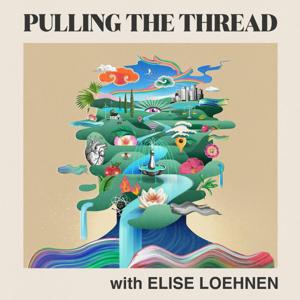

“Do you want to continue to live out the patterns of your childhood? Or do you want to make different choices? Are you programmed or are you self-determining?” So says Loretta Ross, Professor at Smith College in the Program for the Study of Women and Gender, a founder of reproductive justice theory, and an expert on feminism, racism, and human rights. Loretta has co-written three books on reproductive justice and is the author of the forthcoming book, Calling In the Calling Out Culture. Loretta has been a leader in the human rights movement for decades—she worked with Reverend C.T. Vivian, one of Martin Luther King’s right hands, to rehabilitate former members of hate groups. As a rape and incest survivor herself, she taught Black feminism to incarcerated rapists. She has learned, throughout her career, to lift the hood on peoples’ lived experiences—the identity they project to the world—and determine, through courageous conversation, where their humanity lies, and where their values overlap. She believes with a certain fierceness that we have far more in common with each other—across the entire political spectrum—than not. In recent years, she has become a vocal opponent of cancel culture—ironically, people have attempted to cancel her for this—because, as she explains, she’s interested in being part of a movement and not a cult. She believes that political purity and the policing of other allies is...the opposite of helpful. And that in the process of building coalitions for sweeping social change and evolution, we alienate and lose people who would otherwise want the very same things as us.
Today, she gives us a crash course in the practice of calling in - an alternative to calling out, or publicly shaming those whose behavior or beliefs we deem unacceptable. In a culture devoid of empathy and grace, Ross implores us to offer people a chance to change, to give them the opportunity to be as good on the outside as they think they are on the inside. For Ross, recognizing that how we do the work is just as important as the work we do, gives us the incredible opportunity to bring more people in, building the power base of the social justice movement. When we choose to use calling in practices, she says, we choose them because of who we are, not because of who the other person is, and when we affirm the humanity of others, we affirm our own humanity in turn.
EPISODE HIGHLIGHTS
MORE FROM LORETTA ROSS
Loretta Ross’ Website
Preorder her book, Calling in the Calling Out Culture, by joining her mailing list
Take the online course: Calling In the Calling Out Culture in the Age of Trump
Follow Loretta on Twitter
READ HER WORK
Undivided Rights: Women of Color Organizing for Reproductive Justice
Reproductive Justice: an Introduction
Radical Reproductive Justice: Foundations, Theory, Practice, Critique
Reproductive Justice as Intersectional Feminist Activism
DIG DEEPER
I’m a Black Feminist. I Think Call-Out Culture Is Toxic. - Loretta Ross, NYT Op-Ed, August 2019
Speaking Up Without Tearing Down - Loretta Ross, Spring 2019
What if Instead of Calling People Out, We Called Them In? - Jessica Bennett, NY Times, November 2020
Up From Hatred - Michael D'Antonio, LA Times, August 1997
Learn more about your ad choices. Visit podcastchoices.com/adchoices
See omnystudio.com/listener for privacy information.
Learn more about your ad choices. Visit megaphone.fm/adchoices
 View all episodes
 By Elise Loehnen

4.8
10761,076 ratings
“Do you want to continue to live out the patterns of your childhood? Or do you want to make different choices? Are you programmed or are you self-determining?” So says Loretta Ross, Professor at Smith College in the Program for the Study of Women and Gender, a founder of reproductive justice theory, and an expert on feminism, racism, and human rights. Loretta has co-written three books on reproductive justice and is the author of the forthcoming book, Calling In the Calling Out Culture. Loretta has been a leader in the human rights movement for decades—she worked with Reverend C.T. Vivian, one of Martin Luther King’s right hands, to rehabilitate former members of hate groups. As a rape and incest survivor herself, she taught Black feminism to incarcerated rapists. She has learned, throughout her career, to lift the hood on peoples’ lived experiences—the identity they project to the world—and determine, through courageous conversation, where their humanity lies, and where their values overlap. She believes with a certain fierceness that we have far more in common with each other—across the entire political spectrum—than not. In recent years, she has become a vocal opponent of cancel culture—ironically, people have attempted to cancel her for this—because, as she explains, she’s interested in being part of a movement and not a cult. She believes that political purity and the policing of other allies is...the opposite of helpful. And that in the process of building coalitions for sweeping social change and evolution, we alienate and lose people who would otherwise want the very same things as us.
Today, she gives us a crash course in the practice of calling in - an alternative to calling out, or publicly shaming those whose behavior or beliefs we deem unacceptable. In a culture devoid of empathy and grace, Ross implores us to offer people a chance to change, to give them the opportunity to be as good on the outside as they think they are on the inside. For Ross, recognizing that how we do the work is just as important as the work we do, gives us the incredible opportunity to bring more people in, building the power base of the social justice movement. When we choose to use calling in practices, she says, we choose them because of who we are, not because of who the other person is, and when we affirm the humanity of others, we affirm our own humanity in turn.
EPISODE HIGHLIGHTS
MORE FROM LORETTA ROSS
Loretta Ross’ Website
Preorder her book, Calling in the Calling Out Culture, by joining her mailing list
Take the online course: Calling In the Calling Out Culture in the Age of Trump
Follow Loretta on Twitter
READ HER WORK
Undivided Rights: Women of Color Organizing for Reproductive Justice
Reproductive Justice: an Introduction
Radical Reproductive Justice: Foundations, Theory, Practice, Critique
Reproductive Justice as Intersectional Feminist Activism
DIG DEEPER
I’m a Black Feminist. I Think Call-Out Culture Is Toxic. - Loretta Ross, NYT Op-Ed, August 2019
Speaking Up Without Tearing Down - Loretta Ross, Spring 2019
What if Instead of Calling People Out, We Called Them In? - Jessica Bennett, NY Times, November 2020
Up From Hatred - Michael D'Antonio, LA Times, August 1997
Learn more about your ad choices. Visit podcastchoices.com/adchoices
See omnystudio.com/listener for privacy information.
Learn more about your ad choices. Visit megaphone.fm/adchoices

2,555 Listeners
10,522 Listeners

845 Listeners

3,348 Listeners

1,876 Listeners
10,193 Listeners
12,754 Listeners
2,529 Listeners
5,067 Listeners

6,668 Listeners

1,665 Listeners

3,306 Listeners
319 Listeners

1,259 Listeners

5,115 Listeners

748 Listeners
598 Listeners
682 Listeners

3,486 Listeners

41,321 Listeners
387 Listeners
243 Listeners
88 Listeners
119 Listeners

1,890 Listeners

1,186 Listeners

614 Listeners

87 Listeners

473 Listeners
46 Listeners
144 Listeners
76 Listeners

23 Listeners

219 Listeners