
Sign up to save your podcasts
Or

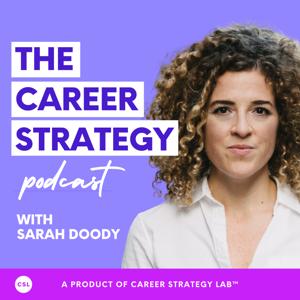


In this episode of the Career Strategy Podcast, Sarah goes over some of the common mistakes people make with their LinkedIn profiles and guides you towards creating a more dynamic and memorable profile.
Sarah shares:
- Creating posts of value, that would create conversation and interaction
- How to optimize your profile with strategic language
- The two hidden features of LinkedIn that help with visibility
00:21 The problem that I've noticed is that many people don't understand how to really effectively use LinkedIn
01:33 The name of the game here is we need to focus on quality and not quantity.
03:12 Tip #1: the four parts of your LinkedIn profile you must optimize
04:18 The headline is super important because this is heavily factored into the algorithm
08:08 The importance of the about section
10:23 Optimizing your work history
12:28 Five or more skills listed on their skills section are 27% more likely to be contacted by recruiters and hiring managers and talent acquisition specialists.
14:02 Tip number two, two hidden features in LinkedIn to help you be more visible to hiring managers and recruiters.
18:08 Tip number three is you need to strategically increase your visibility with the people and the companies
21:21 Recap
🎯 How I can help with your UX job search
📋 Get my UX case study template
👋 Follow me, on LinkedIn, Instagram, & YouTube
In this episode of the Career Strategy Podcast, Sarah does a deep dive into the UX mistakes commonly made with resumes and how to correct them to stand out from other candidates.
00:29 Your resume is a big factor in your job search, mainly regarding whether you get an interview or not
01:07 Okay, so let's get into the UX of your resume and some of those myths, and then we will dive into some of those tips as well.
01:42 So at a really high level, there's kind of three users of your resume
02:18 They want to know more than just you tick all the boxes of the job description.
05:41 So let's dive into the UX mistakes that some people are making on their resume
06:49 We need a human friendly version of your resume, and we need one that I call the applicant tracking system
8:51 Your resume, it has to be formatted correctly and it needs to have the right keywords
11:42 The second kind of UX mistake that some of you might be making on your resume is that you do not have what I call a strategic summary sentence at the top of your resume.
13:59 If you do not have a summary statement at the top of your resume, this would be something you could do really quickly today to improve the user experience of your resume
14:37 The third thing that a lot of people get wrong with their resume is that the bullet points in the work experience section sound, frankly, really weak and boring to the reader.
15:43 So how do you stand out? You do it by replacing “what I was responsible for” with specific action verbs.
19:26 If you've been applying to a lot of jobs and maybe not getting interviews, Start with your resume
🎯 How I can help with your UX job search
📋 Get my UX case study template
👋 Follow me, on LinkedIn, Instagram, & YouTube
Although a job offer is an exciting accomplishment, don't let your judgment be clouded by the salary or other shiny objects. In this episode Sarah shares reflection questions to ask yourself when you get an offer to determine if it’s the next best step for you as well as steps to follow when you determine it’s not.
Timestamps:
0:09: Don’t let your judgment be clouded by the salary or other shiny objects.
0:49: The goal today is for me to share how to decide a job is right for you or not so you can reduce the risk that you accept a job and then realize a few weeks or months later that it's actually not right for you.
1:30: Many people who work in tech are obsessed with working at a FAANG company.
2:13: Q1: Does the offer set you up for the role you want?
2:52: Q2: does the job align with your values and deal breakers?
3:51: Q3: What would my day-to-day look like and does that work with my lifestyle?
4:45: If you know the role is not right, let someone know and do this sooner than later.
4:53: Keep it brief and don't feel compelled to give extensive reasons about why you no longer wanna proceed with the interviews or the offer.
5:11: A simple note to the effect of, I've decided to pursue other opportunities is completely fine.
5:22: You never have to feel guilty about declining a job offer or removing yourself from the interview.
5:55: A job offer should boost your confidence and signal that together, your resume, your LinkedIn and your interview skills did a great job at communicating your skills and experience.
6:10: Take time to reflect on your job search and interview process that got you to this point. Write down anything you think that went well or that you do differently next time.
6:31: If you don't write it down, you will most likely forget when the next time comes around for job interviews or a job search.
🎯 How I can help with your UX job search
📋 Get my UX case study template
👋 Follow me, on LinkedIn, Instagram, & YouTube
What would change if you treated your resume and portfolio as products? What would an MVP look like? In this episode of the Career Strategy Podcast, Sarah shares how to beat perfectionism and get solid versions of your resume and portfolio out into the world.
0:30: Is it possible that your resume portfolio isn't ready because of the bar you've set for yourself?
0:55: In this quest for perfect, it's easy to pass on applying to lots of awesome job opportunities.
1:40: I want you to think of your resume and portfolio as products.
2:19: The bar to stand out is low.
2:59 There’s a good chance you’re focused on the wrong details.
3:31 You should have two versions of your resume, one for people and one for the ATS.
3:40: Resume Tip 1: don’t try to make your resume 1 page.
4:07 Resume Tip 2: Don't start the bullet points in the work experience section with vague statements.
5:18: Resume Tip 3: Don't over-design or under-design your resume.
5:34: You don't want the design of your resume to literally distract the reader from the content.
6:01: You need to be consistent with font sizes and use headings to draw attention to different sections of your resume.
6:13: Put space between each bullet.
6:55: Portfolio Tip 1: Number one, don't skip context. I cannot emphasize this enough.
7:36: Portfolio Tip 2: Don’t just skip screenshots.
8:34: In addition to annotating the screens, you should label them so that people know what screen this.
8:51: Portfolio Tip 3: Don't write your portfolio like you're writing answers to a UX exam.
10:30: Get someone who knows what they're talking about to give you feedback.
11:54: Don't just say, “what do you think of my resume?” Instead, be more specific with your questions.
13:27: Set aside time to re-listen to this episode.
13:40: After you do that, then identify two quality people who you could ask to review your resume or portfolio.
🎯 How I can help with your UX job search
📋 Get my UX case study template
👋 Follow me, on LinkedIn, Instagram, & YouTube
Many candidates obsess over job titles, salaries, or having a certain company on their resume, and as a result, they often turn a blind eye to other things that can have a bigger impact in their career in the long term. In this episode, Sarah shares 3 things to consider that many people miss.
1:02: When thinking about their next career. Most candidates aren't thinking long-term enough.
2:04: If you know you wanna get into management or get more specialized, that should inform your next career move
2:22: Some roles help you build a foundation to help you get to where you wanna be in the future.
2:37: Strategy isn’t always linear
3:14:: The phrase “there’s a time to learn and a time to earn.
3:51: Consider the skills you need to gain or experience gap to fill in order to be the best possible candidate after this next job.
4:02: It is not enough to know what job you hypothetically want five years from now. You have to think about the specific skills and experience that you'll need to actually acquire between now and then.
4:07: Spend more time searching for job descriptions that describe jobs you want in the future.
🎯 How I can help with your UX job search
📋 Get my UX case study template
👋 Follow me, on LinkedIn, Instagram, & YouTube
"Playing the numbers game isn't a strategy; it's a recipe for burnout."
In this episode of The Career Strategy Podcast, Sarah debunks the popular advice to apply to as many jobs as possible and shares a more effective way to land the career of your dreams.
Timestamps:
0:19 Congrats on getting hired, Tessa!
1:42: Why would you keep applying if you haven't received an interview after 30, 50, 100 or more roles applied to it?
2:16: You should not play the numbers game in your career.
2:34: The numbers game is not a strategy. It's a recipe for burnout.
3:39: Another problem with applying to tons of jobs is that you probably won't have time to customize your resume and cover letter for each job you apply to.
4:50: Cover letters are not dead.
4:57: Stop focusing on the quantity of jobs applied to, and instead focus on applying to fewer jobs, but more of the right jobs for you.
6:06: Write these down! I will not play the numbers game in my job search and I will not gamble with my career.
🎯 How I can help with your UX job search
📋 Get my UX case study template
👋 Follow me, on LinkedIn, Instagram, & YouTube
Career Switchers are incredibly well positioned for jobs in tech but so many of them don’t realize it. In this episode of The Career Strategy Podcast, Sarah shares 3 common mistakes career switchers make and how to avoid them.
0:31: Today I'll share some tips for career switchers to stand out by avoiding some common mistakes and mindset traps.
0:50: I want you to know that as a career switcher, you are not starting from scratch. You don't need to start from the bottom. So stop assuming you'll get hired into a junior role and need to work your way up or take a pay cut.
1:12: Skills like communication, critical thinking, writing, teamwork, and dealing with conflict are TIMELESS.
1:30: Companies who are hiring don't just look for candidates who know all the right software or methodologies, because these things can be taught much faster than soft skills.
1:58: Number one, stop hiding your experience because you don't think it applies and is connected.
2:05: As a career switcher, you have a major advantage over many candidates.
2:28: How to leverage your previous experience on your resume and LinkedIn profile.
4:07: Number two, stop waiting for the perfect job and strategically apply. Rejection is okay.
4:35: Launch early and launch often. This applies to your job search too.
5:48: Applying to jobs is a test. It's an experiment to see if your resume, LinkedIn, et cetera, can get you an interview. Rejection in your job search is feedback.
6:04: Rejection is not a definition of your self worth or a signal that you're doomed in your career or your life.
8:43: Number 3, Three, don't skip the portfolio because you don't think you have anything to put in it, and don't go spend weeks or months making fake projects.
6:44: Remember, just because you have not held a job with the literal word UX in the job title (or whatever job title you want in the future) does not mean you haven't been doing these things already.
7:36: A portfolio is not just meant to showcase the hard skills involved in the job you want next.
7:53: Software changes and can easily be taught, but skills like these are timeless and take much longer to learn. So highlighting these skills might give you an edge over other candidates.
🎯 How I can help with your UX job search
📋 Get my UX case study template
👋 Follow me, on LinkedIn, Instagram, & YouTube
If you’ve ever considered joining CSL (or any career development program, really) you’ve likely wondered if it’s for YOU. In this episode, Sarah shares reflection questions to ask yourself to help discern if investing in a program is right for you.
1:20: Today I want to invite you to consider three questions to ask yourself instead of this common question
2:14: In design, we rely on research to make decisions all the time, and it's smart.
2:44: There is probably no perfect case study. No perfect example I could give you that is going to fully convince you that this will work for you.
3:45: Everyone has different circumstances and skills and variables and strengths that. Impact how they got to their end result.
4:38: The 3 types of people we support in CSL.
5:38: How to get access to the 4C Training.
6:20 Imagine we're in a workshop together and I want this to be very interactive. So grab a piece of paper, pause this if you need to.
6:50 I want to invite you to take a moment and do a quick little career assessment, if you will, and think about your career story so far.
6:58: How did you get to where you are today?
7:45: Notice what comes up as you start to think and reflect on your career story so far.
9:18: Question number one is, what are other times in your life or career when you've taken on some type of challenge and come out successful on the other side?
9:56: Question two is what other projects have you started and actually gotten your desired result?
10:41: Think back and imagine how you felt when you actually did those things right? That's gonna give you some confidence that you can do hard and challenging things in the future.
10:54: The third question I want you to ask yourself is, what is an example of something else you've learned?
12:21: When you have evidence from yourself about you, that you have the right character traits to do stuff, and you combine that with the testimonials of people similar to you then I can say with confidence that Career Strategy Lab, or frankly any other program or thing you do in the future, it will likely work for you.
🎯 How I can help with your UX job search
📋 Get my UX case study template
👋 Follow me, on LinkedIn, Instagram, & YouTube
Getting chosen for an interview means you're doing something right. But, if you’re not getting callbacks or offers, then there are likely specific things that you can tweak when it comes to what you’re sharing and how you’re sharing it. In this episode, Sarah talks through her Job Search Checkpoint Methodology to help show you how to analyze what may need to change and put the shifts into practice.
0:41: In 2021, Pew Research Center did a study with 715 US adults and found one third said they felt more stress than usual, and 56% said they experienced more emotional or mental health issues while unemployed.
1:23: A directionless job search where you simply play the numbers game sets you up for rejection and self-sabotage
1:51: Today I want to share something I created, my Job Search Checkpoint Methodology. It's helped countless clients of mine get hired at top companies without applying to hundreds of jobs.
2:05 Imagine your job search has four steps, just for the sake of simplicity and discussion. Step number one is applying to jobs. Step two is the initial screening calls or interview. Step three is a series of more interviews, more in depth, and four is actually getting hired.
2:28 Between those three steps, there are three checkpoints. One, applying to jobs and not getting interviews. Two, not proceeding past the initial screenings.
And three, Not getting job offers.
4:36: While your resume gets you in the door, your interview is what often helps get you hired.
4:46: Consider the content you're sharing and how you deliver it.
5:05: It can be really helpful to have examples of work or a case study presentation to highlight during your interviews.
5:43: It's important to examine how you speak, your confidence and your body language in interviews.
6:00: Record yourself doing a mock interview.
6:07: Try using Google's interview warmup tool or a screen recording tool like Loom.
7:04: Rejection is not always a reflection of your skills and your experience.
7:35: Ask thoughtful questions about the position or company during your interviews.
7:55: Spend 15 minutes before your next interview preparing some questions you could ask about the team product, or even the company culture. This will help you come across as a more prepared, thoughtful, and mature candidate.
🎯 How I can help with your UX job search
📋 Get my UX case study template
👋 Follow me, on LinkedIn, Instagram, & YouTube
In this episode of The Career Strategy Podcast, Sarah talks to hiring managers from Gusto, Meta, Shopify, IBM, and a recruiter who works in the field of user experience to share some of their top advice to avoid making major mistakes and increase the chances that you stand out in the sea of candidates.
1:20 You have to think of the users or stakeholders involved in the hiring process and just like users and stakeholders of projects you work on.
1:47 The three stakeholders in the hiring process.
1:54 Stakeholder 1: Human resources and recruiters
3:06 Stakeholder 2: Hiring Managers
3:53 It's crucial that your cover letter, resume, and LinkedIn are filled with rich examples of what you've already done.
4:04 Stakeholder 3: Interviewer
4:57 People who are from other teams are less focused on your qualifications and more focused on your character.
5:34 Tip 1: Cover letters make a difference.
5:40 Amy Thibodeau, Head of Creative at Gusto on the power of cover letters.
7:14 Tip 2: Customize your materials and connect the dots.
7:32 McClean Donnely, Professor of UX Design at SCAD, on the principle of, "don't make me think" and how that principle applies to your job search.
8:49 The value of adding video to your career materials.
11:20: Tip 3: Sweat the details of layout and design.
12:21 Tyler King, Senior UX Researcher on being cognizant of font, typeface, weights, etc.
12:57 Tip 4: Job descriptions are a wishlist.
13:04 Alec Brundrett, a product manager at Meta, on how job descriptions are written, why sometimes they aren't written very well, and why candidates need to see job descriptions as a wishlist and not a hard set of requirements.
15:09 Tip 5: Your career materials and interview skills are a preview of how you'll perform on the job.
16:40 Your portfolio is another deisgn asset with Lois Siegal, Director of Recruiting at UX Hires.
17:03 Your portfolio is just never done, you're always tweaking it, but get it to a point where you're proud of it.
18:40 Regardless of what you're interviewing for, you have to think about the steps that you're taking through the process and be able to articulate it.
🎯 How I can help with your UX job search
📋 Get my UX case study template
👋 Follow me, on LinkedIn, Instagram, & YouTube
From the publisher's feed

31,922 Listeners

43,334 Listeners

127 Listeners

111,800 Listeners
127 Listeners

319 Listeners

8,343 Listeners

369,372 Listeners

20 Listeners

805 Listeners

107 Listeners

40 Listeners
148 Listeners

49 Listeners

740 Listeners