
Sign up to save your podcasts
Or

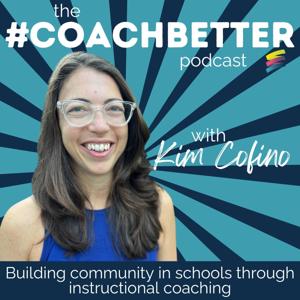


In this #coachbetter episode, Kim introduces the domains of a coaching mindset.
Did you know that the number one indicator of student success is collective efficacy? (Donohoo, 2017). Research shows that when we believe in one another, student learning improves.
How we can improve our collective efficacy through the lens of coaching – without hiring an instructional coach or a formal coaching program?
Because we all want to improve student learning. And we all can benefit from coaching. But not every school has the capacity or finances to build an instructional coaching program. And the great news is, you don't have to have a formal coaching program to do it. All you need to get started is a coaching mindset. And every single person (students included) can work towards cultivating a coaching mindset.
Find the show notes for this episode here.
Like this episode, you'll enjoy these:
Let's Connect:
Learn with Kim
Read more from Kim:
This #coachbetter episode is a case study conversation with two amazing educators: EAL (English as an Additional Language) Teacher Lindsay Manzella and INS Teacher John Stephany. Lindsay and John worked together at NIST (Thailand) at the time of recording, where they developed a unique model for co-teaching and coaching to support all learners in John's classroom, where Lindsay was supporting EAL students. Both Lindsay and John have had training in coaching so they have come to the co-teaching experience with a foundational understanding of how coaching works.
In this episode they talk about:
Find the show notes for this episode here.
Like this episode, you'll enjoy these:
Let's Connect:
Learn with Kim
Read more from Kim:
This #coachbetter episode is a highlight from one of Kim's favorite episodes from a previous season, featuring Anne Marie Chow, who at the time was Middle School Vice Principal and English teacher at United World College Southeast Asia, East Campus in Singapore.
We're excited to be sharing this highlight today, because not only is Anne Marie amazing (listen to her full episode here) but if you've been watching or listening to #coachbetter this season, you know we're talking a lot about measuring your impact (see links to previous episode below).
Because instructional coaching is a non-teaching position, it's so important for coaches to be proactive about measuring and sharing the impact of their work. It's a role that's both challenging to find the budget to hire for, and one that's easy to cut if school leaders don't see the intended outcome. The more coaches can do to collect and share data around their work, the easier it will be for school leaders, and teachers, to see the value of coaching.
This episode highlights the experience of coaches at UWC Singapore and the actual types of data they are collecting. If you're an instructional coach, curious about getting started collecting data, there are some great ideas here - and hopefully this clip will inspire even more ideas that will work just right in your school context.
Find the show notes for this episode here.
Like this episode, you'll enjoy these:
Let's Connect:
Learn with Kim
Read more from Kim:
This #coachbetter episode is another in our series of coaching case studies, with one of Kim's amazing clients, Melissa Car, Grade 1 classroom teacher at St. Mary's International School in Japan. Melissa is a graduate of The Coach Certificate & Mentorship Program and when we recorded this episode she had just finished the program.
In this conversation we talk about
Find the show notes for this episode here.
Like this episode, you'll enjoy these:
Let's Connect:
Learn with Kim
Read more from Kim:
In this #coachbetter episode, Diana is going to share 5 tips to redirect a coaching conversation.
Sometimes our coaching conversations take an unexpected turn. This can be really challenging because we know that it's important for our coaching partners to take the lead in directing the conversation.
But what happens when…
It can be tricky to know if you should find a way to address these issues and potentially redirect the conversation - let alone actually try to do it!
Find the show notes for this episode here.
Like this episode, you'll enjoy these:
Let's Connect:
Learn with Kim
Read more from Kim:
In this #coachbetter episode, Kim talks with Jim Laney, Head of School & Sara Brodhead, Director of Teaching and Learning at Kaohsiung American School in Taiwan. Sarah has now moved on to Hong Kong International Sschool, and Jim, who's still HoS at Kaohsiung, is a repeat guest on the show - check out his earlier episode where we talk about how instructional coaching supports at all levels.
Kim has been working with KAS for the last two years to support their brand new middle leadership team in developing their instructional leadership capacity and applying a coaching mindset to their work. In that time, KAS has also hired two new instructional coaches, and this conversation developed from our work together.
In this episode, Jim, Sara and Kim talk about..
This conversation highlights the huge impact an investment in teacher professional growth can have in our schools.
Find the show notes for this episode here.
Like this episode, you'll enjoy this one: Instructional Coaching Supports at All Levels with Jim Laney
Let's Connect:
Learn with Kim
Read more from Kim:
In this #coachbetter episode we're talking about what coaching looks like in schools where it's been implemented well.
This is a highlight from one of our favorite episodes from a previous season, featuring Ji Han, Associate Director of School Evaluation and Support at the Council of International Schools (CIS).
Ji has such a wide experience with coaching in so many schools, hearing her description of what coaching looks like when it's working well can provide a powerful vision for school leaders, or coaches advocating for instructional coaching.
We're sharing this specific clip because it addresses several of the most common questions we hear when we speak with school leaders about coaching, they wonder:
Ji clearly articulates how coaching can grow, when we ensure that we have some essential structures in place: coaching is invitational, coaching happens with a peer, and we see coaching as an experience for all teachers, rather than viewing it as a way to "fix" teachers (or a deficit model).
These are three big components that come up on the show all the time, so if this is interesting to you, please be sure to check out the other episodes:
Find the show notes for this episode here.
Let's Connect:
Learn with Kim
Read more from Kim:
This #coachbetter episode is another in our series of coaching case studies, with one of Kim's amazing clients, Lana Yashchyna, 4th grade classroom teacher at the American International School in Kuwait. Lana is a graduate of The Coach Certificate & Mentorship Program and when they recorded this episode she had just finished the program.
These case study episodes are designed to share the story of a coach, and the development of their coaching program and practice in their unique setting.
In this conversation Kim and Lana talk about ...
This episode is a fantastic example of all of the ways that classroom teachers can influence a culture of coaching at the team level - and why this is ultimately not a sustainable combination of roles for the long term! If you're curious about building a coaching culture at the team level - this episode is for you!
Find the show notes for this episode here.
Let's Connect:
Learn with Kim
Read more from Kim:
In this #coachbetter episode we are talking about the importance of measuring the impact of instructional coaching - and sharing that data with all stakeholders. This topic is one of the most common concerns we hear from senior leaders or school boards is: How do you know coaching is making an impact? How can I see the return on investment when I hire instructional coaches?
When schools are choosing to invest in non-teaching positions, it is essential to understand how that work is positively impacting student (and in this case, teacher) learning.
This can come as a surprise to new and even experienced instructional coaches, because as educators we are not required to formally "prove" our value on a regular basis. That process is already "baked in" to the structure of the school. However, for instructional coaches, this is not the case. If coaches are not measuring their impact, there is likely no one else on staff who will be doing this work. Which means, it can become very easy to say that no impact has been made. Instead, it is essential for instructional coaches to recognize that intentionally collecting data to measure their impact, and then sharing it within the school community is part of their role.
Find the show notes for this episode here.
Let's Connect:
Learn with Kim
Read more from Kim:
In this #coachbetter episode Kim chats with Kim Porter, who at the time of recording was a Primary Math Coach at UWC Singapore, and is now UDL Coach & Support Specialist at ASIJ in Japan.
Kim and Kim talk about the elements that make instructional coaching thrive, how international schools are unique in terms of instructional coaching environments, the cognitive load for instructional coaches, particularly in an international school setting where we have additional complexities in our environments; and what Kim wishes she knew when she started out as an instructional coach.
If this sounds interesting to you, please make sure to check out a previous #coachbetter Quick Tips episode from this season: Navigating the Complexities of Instructional Coaching in International Schools.
Find the show notes for this episode here.
From the publisher's feed

2,414 Listeners
1,250 Listeners

1,024 Listeners

56,579 Listeners

21 Listeners

2,424 Listeners

35,840 Listeners

425 Listeners

438 Listeners

645 Listeners

799 Listeners
87 Listeners

569 Listeners

18,953 Listeners
34 Listeners