
Sign up to save your podcasts
Or

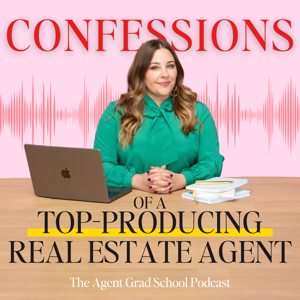


If you want to be wildly successful in real estate there is one thing that you have to do, first and foremost. Not doing this one thing is the biggest mistakes I see almost every single real estate agent make.
If I could shout from the rooftops and tell every single new or struggling real estate agent in all the land the ONE thing that can change everything for the better for them it's to do this.
https://agentgradschool.com/007
Every, single real estate agent should be able to attract more clients than they know what do with...but unfortunately, most agents don't.
In fact, according to the National Association of Realtors, 80% of real estate agents leave the business after only being licensed for two years because they don't have enough clients or income!
Not only should every real estate agent have more clients than they know what to do with, but these clients should be seeking YOU out, not you chasing them down begging them to work with you. Homey shouldn't play that...
Find the full show notes at https://agentgradschool.com/realestateagenthavemoreclients/
Amy Wease was my very first agent at the brokerage I started back in 2012, Dwell Residential Brokerage. Amy is featured today as part of the How I Did It series. Amy was the catalyst for me creating Agent Grad School, and I am so excited to have her here to talk about her career in real estate.
Amy shares how she noticed that Jennifer was doing things differently and wanted to do what she was doing. Amy reached out to Jennifer, she learned Jennifer's system and her life and real estate career has completely changed. She now has a plan and system in place for real estate and her life. She shares her love of real estate, and how she went from fear to fearless while building a sustainable business.
You can find Amy here:
Amy Wease
Show Notes
[01:42] In 2011, Jennifer had just opened Dwell Residential Brokerage and Amy and Jennifer had only done one deal together. Amy reached out and called Jennifer, and Jennifer feels like it changed her life for the better.
[03:22] Amy was struggling to get her business going and she remembered seeing Jennifer give a client a huge folder of information. She had never seen anyone do that.
[04:33] Amy thought Jennifer was doing something right with buyers and she decided to see if Jennifer could help her get her business going.
[05:29] Amy became the first agent, and Jennifer wanted to show her how to do things right.
[05:59] Jennifer had so many clients and business that she needed help, but she wanted her clients to go through the same process and experience that they would go through with her.
[06:45] She wanted to train Amy on every small little step, and she felt committed to Amy and wanted to help her succeed and prove to her that she could do it.
[07:41] Amy was smart and a hard worker, and Jennifer knew that if she was willing to do the steps should be a huge success.
[08:00] This is why Jennifer created Agent Grad School Buyer Edition.
[09:41] Amy's mom suggested real estate. Amy was determined to be a writer, but she finally decided to try real estate. She got a license and then didn't know where to go from there.
[11:30] Amy worked in new construction and did well. In 2007, she sold 34 million dollars of real estate.
[12:23] There was a vivacious environment. There were a lot people counting their chickens before they hatched, but his haunted people after the bust. Amy was doing a good job, but she didn't have a system for her client database or taxes or other important business building systems.
[14:02] Jennifer's business grew substantially during the bust.
[20:03] Amy wanted to do what Jennifer is doing. She was excited to work at Dwell. Jennifer focused on clients and shared how she did it. They had the same client focused core beliefs.
[21:45] Jennifer said she would train Amy if she promised to do everything she said. She wanted Amy to put clients through Jennifer's process.
[22:39] The training sounded like a lot of stuff with a lot of steps. You have to be willing and open to go through the training. Having a plan is what helped her. Practicing the system and building results helped with her confidence. The system actually worked.
[26:19] It's not just building confidence for the client it's also about building confident in the agent. If something doesn't work, it not a right fit. There is no reason to beat yourself up. Clear steps with results.
[30:22] Things started to change and Amy started to feel like a professional. Now working with clients is second nature to her.
[32:14] Amy's sales have grown over the last five years that she has been at Dwell.
[32:56] She stays in touch with people in a systematic way to grow her business.
[33:36] Amy has even prepaid her taxes this year.
[34:32] She is also investing in a real 401k this year. She sat down with an investment manager. She is looking towards the future with a 20 year trajectory.
[35:46] Real estate has ups and downs, so you have to have business systems in place. Downturns weed out the strong who survive. The person who has built a strong foundation.
[37:34] How the steps insure that people remember you when the market goes down.
[38:59] Each business needs to be built with a strong concrete foundation.
[41:14] If you want to have a sustainable business, Agent Grad School is worth every bit.
[42:52] Amy created a real business. Her numbers were surprisingly good. There is freedom in not worrying about paying the bills and being able to do or buy fun things. Thinking about what you are bringing to the table financially and emotionally. The whole thing has been a completely different and fearless shift for Amy. Having the fundamentals in place work for her.
Links and Resources:
Agent Grad School Buyer Edition
Join the Entrepreneurial Real Estate Agent Book Club
Stick around and stay connected by subscribing to Confessions of Top Producing Real Estate Agent on iTunes. Head over to Agent Grad School and sign up for my Free Weekly Training. You can also stay connected on Instagram or Facebook.
I share my story in this first episode of the How They Did It series where I'll be highlighting different agent's stories. We'll be talking about how they got from where they were to where they are today. We'll talk about how they changed their businesses and applied the things that we are teaching here at Agent Grad School.
I am sharing my story of how I went from rock-bottom to millionaire real estate agent, and why I created Agent Grad School. The number one question I have been getting asked is why start another business when you already have a thriving real estate business. In this episode, I set the record straight and answer the question of why I created Agent Grad School.
I'm also going to share a few things that I hope you can directly apply to your own business. I share the pivotal question that I asked myself when going from struggling and rock-bottom to making over a million dollars a year selling real estate.
I'm also going to share three strategies that I applied to my business that turned out to be the cog that turned the wheel:
1.) The riches are in the niches
2.) Choosing a unique selling proposition (usp), which means being able to answer the question, "why should someone choose you, among all other options, including doing nothing at all."
3.) Have a weekly email that went out to these clients that I chose and attracted so that there would be consistent contact with the information they needed that they couldn't get anywhere else.
Doing these three things, at the same time, is what changed my business and I started to get clients seeking me out. I never had to pay for an online lead, but instead learned how to create my own leads for free.
Take a listen to the entire episode now and I'd love for you to subscribe and even review it over on iTunes too!
I hope you can apply these lessons to your own business and it helps you feel like you have a magic wand that you can just move anything separating you from where you are to where you want to be. That's how it feels once you get this all figured out.
Show Notes
[04:12] What I was doing before becoming a real estate agent and why I expected the same immediate success when I became an agent.
[08:30] My first home-time buying experience was so life-changing and necessary for me to be where I am at today. Sometimes the worst experiences turn out to be exactly what we need to get from where we were to where we are today.
[09:01] Even if something terrible happens, try to use it for good.
[09:50] Buying your first house should be the best experience. I found a need and though I could fill the need.
[11:07] Instead, I couldn't get clients. Finally, one of my friends bought a house with me. I was in real estate for two years and only sold one house. I was going to the office every day and was kind of like a glorified receptionist.
[12:43] I asked every agent I worked with what they did, and I tried everything. The only place I was making money was at Rock Bottom Brewery. I was l hitting rock bottom in every way, and I was at literally at Rock Bottom every night.
[13:56] I had good intentions, but nothing was working.
[14:25] I sat down and decided that I either needed to figure it out or go back to a PR job.
[15:03] The question I asked myself that changed everything. This is the question to ask if yourself too if you struggling in your business.
[16:12] I knew I had to stop looking at what everyone else was doing. What everyone else was doing wasn't working for me or the other majority of agents.
[16:48] How I went from feeling like being "successful" in real estate was unattainable to figuring out my answer to that question creating clarity for me to know exactly how to be successful (and you can use this same strategy to go from overwhelm to clear too).
[17:58] I decided to look outside the real estate industry at other ways for me to get clients.
[19:13] The things I was learning were blowing my mind. I felt like I was learning secrets of marketing that actually worked. I became obsessed and read every book and listened to every tape (there were no podcasts back then, lol!). I was also noticing patterns, and I implemented those things.
[20:42] I started marketing online and slowly but surely things started to work. It was like a marketing snowball.
[21:09] Implementation, consistency, and making adjustments until things work for you.
[21:41] I learned that the riches are in the niches and the idea of a unique selling proposition from Dan Kennedy.
[22:04] Being able to answer the question of why someone should choose you over all options including doing nothing and having a niche will change your business.
[22:36] The third concept was having a weekly email to a list of people.
[23:00] Once I heard and understood these concepts, I still had to learn how to apply them on a consistent basis.
[23:28] I started studying and seeing what everyone else was doing. I started to see patterns again.
[24:01] Four years into a real estate career and I had sold 2 houses.
[24:23] I chose a niche and answered the question of why someone should choose me.
[24:46] First time home buyers were the only people who I knew more than because I had already bought a house. Plus, if I can make it a fun experience, why wouldn't they use me.
[25:17] This gave me the confidence to keep going. All I needed was eight or ten people.
[25:53] I resisted choosing a niche, but it makes all the difference.
[26:36] I had my target audience, and I knew why they should choose me. You need to know who and how?
[27:52] Who, how, and why they should choose me and why they should buy. Putting these concepts together and my business took off. I want from tips to almost $80,000 a month.
[28:56] Niche down who you are marketing to and your business will change forever.
[29:07] I wanted to create a brokerage that specialized in first-time home buyers. I created Dwell Residential Brokerage.
[30:14] I attracted clients and agents who wanted to work with those clients.
[30:46] In 2011, I was doing more business than ever. Agents wanted to learn and I hired ones who generally wanted to niche and do right by their clients.
[31:34] I had to train my step-by-step system to all of the new agents. I knew I couldn't keep doing this over and over, so I created a recorded module system and taught the agents who joined my broker, which at the time was Dwell Residential Brokerage, now Dwell Residential, an RLAH Company
[33:29] When I gave an agent a lead, they had to put the lead through the buyer edition program. Eight modules of exactly what to do and create a one of a kind experience.
[34:17] We have an email that we send to each lead. Then we have an initial consultation.
[34:33] This program ended up becoming Agent Grad School.
[34:55] I realized seeing agents go from being new or struggling to thriving was something that I loved.
[35:45] It wasn't my intention to grow a large brokerage. I'm good at training, not managing.
[36:21] I partnered with a company to help me manage the brokerage to free up my time to share Agent Grad School with agents across the country.
[37:14] I started teaching and mentoring other agents what I was teaching at my office. I love helping people take something that seems impossible and showing them how to make it possible for yourself.
[38:12] Get the step by step roadmap and then have the courage and perseverance to do it and know how to adjust and get back on course.
[39:17] The information here is never theory or fluff. I have so much exciting stuff coming up. Stick around and stay in touch.
Links and Resources:
Rich Dad Poor Dad
Rock Bottom Brewery
Tony Robbins
Dan Kennedy
Shift Happens
Dwell Residential Brokerage
Sign Up for Free Weekly Training
Stick around and stay connected by subscribing to Confessions of Top Producing Real Estate Agent on iTunes. Head over to Agent Grad School and sign up for my Free Weekly Training. You can also stay connected on Instagram or Facebook.
My friend and colleague Amy Wease is here to talk about how to use the book The Paradox of Choice to help your buyers make better decisions faster. I started a book club with the agents that I work with because every day I reference certain books. The concepts in the books we talk about can be applied to our lives, our businesses, and with our clients.
If you want to help your mindset and grow your business, you may want to join us in the book club! You can join here. It's free and it's fun and it will help your business grow!
Every month, I choose a book that has profoundly changed the way I think and do business. Then a month later, I have a conversation about the book. Join and you will get your first book club pick right away and then the discussion will be four weeks later.
You can find Amy here: Amy Wease
Show Notes
[03:59] How this book helped me to become a better decision maker, and it helped me to help my clients become better decision makers. [04:21] We must first narrow our options then we can make a decision. [05:19] How having more options makes decision making more difficult. When I see clients struggle with decision making, I actually send them the book. [06:06] You don't have to look at every house and every neighborhood. We can start by casting a wide net, but buying a house is a process in decision making. It is my job to help clients narrow their choices right away. [07:19] Applying the principles in the book has helped people make decisions better and faster. [08:08] How having too many choices make people shut down and stop. [08:22] If you see clients struggling, it is time to start narrowing the choices. [08:40] How to create a framework to help people make decisions. [08:57] Budget, location, and criteria such as bedrooms etc. Organizing decision points in these categories makes it easier to make a decision. [10:04] Picking one thing that doesn't change and then narrow from there. [12:30] The danger of having too many decisions points and using the framework to narrow things down. Ask the client how long they want to live in the property? [13:29] Why Amy decided to join the book club. The book choice seemed unexpected because it wasn't real estate specific. This sparked her curiosity. [15:14] How to help clients feel confident and happy about the home buying process. [17:02] Amy's mom didn't understand the connection of reading this book for real estate purposes. How the book helps us understand how people make decisions and the pitfalls they run into and how to apply it to home buying. [19:38] How looking outside the real estate industry to be better at our jobs. We are here to help clients for life and show that we are different. [20:44] Maximizers versus the satisfiers. There are two types of people. Satisfiers make decisions fairly quickly. Maximizers have to have the best of the best. They may focus on status and what other people are doing. [22:23] No one is exclusively one or the other, but understanding the concepts helps us understand what the client is going through and what their wants and needs are. This helps agents to not waste time when all of the boxes need to be checked. [24:48] If you keep hitting a dead end, you may be dealing with a maximizer. It helps you to recognize it and know what you are dealing with. [25:30] The way people make decisions in other aspects of their lives also affects how they will make decisions about buying a house. [26:19] How the idea of more is better is constantly promoted. Even though, more choices can be overwhelming. [27:12] Constantly wondering if you can do better and how that can hurt home buyers. [28:39] Getting what you want when you become crystal clear about what you want. [29:23] The importance of being upfront and honest when there are trade offs. [30:04] The concept of the imagined alternative. It is an agents job to cut this off by adding clarity to the home search. Jennifer sends them a list of houses that have sold which can eliminate the imagined alternative or let them know that it exists through waiting. [33:23] How clients always ask the what if question. Giving evidence and using the resources you have at hand helps give clients a sense of peace [35:01] Jennifer wants every real estate agent to read this book and understand how more choices leads to bad decision making. [35:35] Amy found that taking the client through the process and being more than just a house hunter has had a positive impact on her clients lives. These people start making decisions better and faster. This new way of thinking even helps people become happier.
Links and Resources: The Paradox of Choice Join the Entrepreneurial Real Estate Agent Book Club [email protected]
This is part two of two of how to plan for a successful year in real estate.
If you haven't listed to part one yet or read those show notes, start there.
As that episode and show notes explains, there are three steps to planning for a successful year in real estate.
Step One: Where are you now?
We covered this step in part one of this episode.
The goals of step one is to figure out where you are currently. Think of it as point A on the roadmap.
In order to figure out where you are going, you must "come clean" and be honest about where you are currently. Only from that point, where you are right now, can you chart the course and create a roadmap from where you are to where you want to be.
Step Two: Where do you really want to be one year from now?
This is where this episode begins. We discuss what they really want for this upcoming year. Not how they are going to get there yet, but what they really actually want.
Most importantly, though, we ask why. Why do you want that to be the outcome one year from now?
What they really want is not just how many houses they want to sell. How do they want to feel. What if they want to be able to sell the same number of homes, but do it in less time or only working one weekend day?
I've experienced it time and time again and see it in the agents I coach. We think we want something, we focus on the "thing," the goal. "I want to sell four homes a month," but then when we look at the why or we look at what they really want, "so I can spend more time with my kids" we run into conflicts. Sorting out what you really want and why leads to more specific goals that are often times easier to accomplish than we think.
Step Three: What is the easiest, most direct route to get there?
Sometimes the way we think we are going to get somewhere might not be the only way. Just like a roadmap when you are driving from point a to point b, there are several routes to get to the destination, some longer than others, some more direct. Some may be more miles, but you go more quickly, like on the superhighway vs. the back country roads.
So, we look at the specific steps of how they want to get where they are going. Is how they think they can accomplish what they really want truly going to get them where they want to be? Is it the only way? Is there an easier/less expensive/less stressful way to accomplish the same true end goal they are looking to achieve?
In part two, this podcast episode, we take you through how to plan for your year ahead. How to know exactly what's possible and achievable for the next twelve months.
Want to take these same steps to plan for a successful next year in real estate?
I have a guide that can help you. You can get that here.
In order to figure out where you are going, you must "come clean" and be honest about where you are currently. Only from that point, where you are right now, can you chart the course and create a roadmap from where you are to where you want to be.
From that perspective, at the end of every year, I sit down with each of the agents I work with and we do a business planning session for the following year.
This planning session involves three steps:
Step One: Where are you now? We start by pulling up the document we created for them at last year's meeting. That document is full of notes, goals and commitments we wrote down for them for the year we just went through. We review and remember what they wanted one year ago and how far they've come. We discuss and celebrate the big and little wins they accomplished.
This defines where they are currently. Point A in the roadmap.
Step Two: Where do you really want to be one year from now?
We discuss what they really want for this upcoming year. Not how they are going to get there yet, but what they really actually want.
Most importantly, though, we ask why. Why do you want that to be the outcome one year from now?
What they really want is not just how many houses they want to sell. How do they want to feel. What if they want to be able to sell the same number of homes, but do it in less time or only working one weekend day?
I've experienced it time and time again and see it in the agents I coach. We think we want something, we focus on the "thing," the goal. "I want to sell 4 homes a month," but then when we look at the why or we look at what they really want, "so I can spend more time with my kids" we run into conflicts. Sorting out what you really want and why leads to more specific goals that are often times easier to accomplish than we think.
Step Three: What is the easiest, most direct route to get there?
Sometimes the way we think we are going to get somewhere might not be the only way. Just like a roadmap when you are driving from point a to point b, there are several routes to get to the destination, some longer than others, some more direct. Some may be more miles, but you go more quickly, like on the superhighway vs. the back country roads.
So, we look at the specific steps of how they want to get where they are going. Is how they think they can accomplish what they really want truly going to get them where they want to be? Is it the only way? Is there an easier/less expensive/less stressful way to accomplish the same true end goal they are looking to achieve?
In this podcast episode, I take you through step one with one of the newer agents in my office. This is part one of our planning session, focusing on the past year.
You'll love hearing his perspective on how although he didn't reach his sales goals, this year was a huge turning point for him and how he gained the knowledge and confidence that will change his business forever.
Want to take these same steps to plan for a successful next year in real estate?
I have a guide that can help you. You can get that here.
From the publisher's feed

39,047 Listeners

16,689 Listeners
694 Listeners
1,105 Listeners

14,889 Listeners

12,079 Listeners
13,975 Listeners

272 Listeners

164,432 Listeners
325 Listeners
337 Listeners
906 Listeners

1,809 Listeners

19,071 Listeners
393 Listeners