
Sign up to save your podcasts
Or

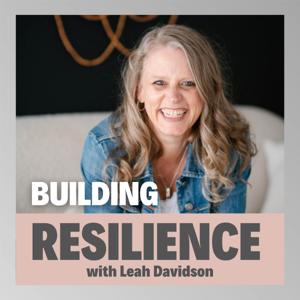

How you process information. Problem solving. Reasoning. How you accomplish your goals. These are all cognitive skills. They impact our language skills, how we read, how we write, how we understand information we hear and how we express ourselves through speech.
When people say they're having a hard time reading, they may actually be struggling with focus or concentration, or retaining the information or processing it. It's not necessarily reading. And this. Applies to how we understand information in a conversation as well. It's not necessarily your comprehension skills—it could be your attention skills. So many of these skills are really closely integrated and that's what we work on when people have cognitive communication disorder.
Today, we're going to talk about cognitive reserve—a term that neuroscientists coined to basically understand why some individuals are able to remain cognitively healthy—and remain healthier despite biological adversity, even warding off disease, such as Alzheimer's or social adversity, like stressors or personal losses. In today's episode, we'll examine the research, as well as explore ways to expand our own cognitive reserve.
As always, you can find us on our website, http://hl-lifecoaching.com, and join our Facebook group at facebook.com/groups/thebuildingresilienceclub. See you next week!
Hosted on Acast. See acast.com/privacy for more information.
 View all episodes
 By Leah Davidson
5
7878 ratings
How you process information. Problem solving. Reasoning. How you accomplish your goals. These are all cognitive skills. They impact our language skills, how we read, how we write, how we understand information we hear and how we express ourselves through speech.
When people say they're having a hard time reading, they may actually be struggling with focus or concentration, or retaining the information or processing it. It's not necessarily reading. And this. Applies to how we understand information in a conversation as well. It's not necessarily your comprehension skills—it could be your attention skills. So many of these skills are really closely integrated and that's what we work on when people have cognitive communication disorder.
Today, we're going to talk about cognitive reserve—a term that neuroscientists coined to basically understand why some individuals are able to remain cognitively healthy—and remain healthier despite biological adversity, even warding off disease, such as Alzheimer's or social adversity, like stressors or personal losses. In today's episode, we'll examine the research, as well as explore ways to expand our own cognitive reserve.
As always, you can find us on our website, http://hl-lifecoaching.com, and join our Facebook group at facebook.com/groups/thebuildingresilienceclub. See you next week!
Hosted on Acast. See acast.com/privacy for more information.
8,784 Listeners
2,612 Listeners
5,660 Listeners
1,099 Listeners
7,511 Listeners
656 Listeners
2,312 Listeners
1,569 Listeners
418 Listeners

1,070 Listeners
178 Listeners
524 Listeners

226 Listeners
3,096 Listeners
218 Listeners