
Sign up to save your podcasts
Or

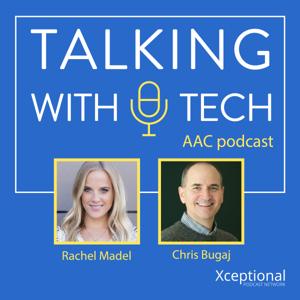

This week, Chris talks with Assistive Technology Specialist David Moehn about supporting general education and special education students more effectively with assistive technology (including AAC). They discuss how to train staff more effectively, supporting all students with text-to-speech and speech-to-text, the specific language system first approach, and the benefits of providing AAC and core language instruction to all students in a classroom.
Before the interview, Chris and Rachel answer a listener question: how can we make using AAC more spontaneous and expressive for a child who is accustomed to lots of hand-over-hand prompting? Chris and Rachel offer lots of helpful suggestions for making AAC more motivating, including: changing the appearance of the device, evaluating what the child is most excited about, modeling without expectation, using expected routines, and the benefits of targeting motivating sensory experiences.
Key ideas this week:
🔑 To tempt communication and reduce prompt dependence, combine an expectant pause with an expected routine, like “ready, set….” during a highly motivating activity.
🔑 Some technology supports, like Read & Write for Chrome, can be helpful for both general- and special-education students. For example, all students, not just students with dyslexia, can benefit from listening to their writing before submitting it.
🔑 When AAC and core language is more universally adopted in a district, consults go down over time because everyone is more accustomed to using the app. Many students also use language more expressively when modeling increases in the classroom.
🔑 Look at the time spent by specialists and support staff to train vs the cost of universal deployment of a tool like Read & Write - if teachers and staff are comfortable and do not need training, then less specialist involvement is required overall.
Help us develop new content and keep the podcast going strong! Support our podcast at patreon.com/talkingwithtech!
Visit talkingwithtech.org to access previous episodes, resources, and CEU credits that you can earn for listening to TWT episodes!
 View all episodes
 By Rachel Madel and Chris Bugaj

4.9
220220 ratings
This week, Chris talks with Assistive Technology Specialist David Moehn about supporting general education and special education students more effectively with assistive technology (including AAC). They discuss how to train staff more effectively, supporting all students with text-to-speech and speech-to-text, the specific language system first approach, and the benefits of providing AAC and core language instruction to all students in a classroom.
Before the interview, Chris and Rachel answer a listener question: how can we make using AAC more spontaneous and expressive for a child who is accustomed to lots of hand-over-hand prompting? Chris and Rachel offer lots of helpful suggestions for making AAC more motivating, including: changing the appearance of the device, evaluating what the child is most excited about, modeling without expectation, using expected routines, and the benefits of targeting motivating sensory experiences.
Key ideas this week:
🔑 To tempt communication and reduce prompt dependence, combine an expectant pause with an expected routine, like “ready, set….” during a highly motivating activity.
🔑 Some technology supports, like Read & Write for Chrome, can be helpful for both general- and special-education students. For example, all students, not just students with dyslexia, can benefit from listening to their writing before submitting it.
🔑 When AAC and core language is more universally adopted in a district, consults go down over time because everyone is more accustomed to using the app. Many students also use language more expressively when modeling increases in the classroom.
🔑 Look at the time spent by specialists and support staff to train vs the cost of universal deployment of a tool like Read & Write - if teachers and staff are comfortable and do not need training, then less specialist involvement is required overall.
Help us develop new content and keep the podcast going strong! Support our podcast at patreon.com/talkingwithtech!
Visit talkingwithtech.org to access previous episodes, resources, and CEU credits that you can earn for listening to TWT episodes!

21,790 Listeners

43,528 Listeners

12,237 Listeners

14,880 Listeners

69,540 Listeners

4,802 Listeners

428 Listeners

4,480 Listeners

3,461 Listeners

5,751 Listeners

12,794 Listeners

17,668 Listeners

11,157 Listeners

13,636 Listeners

3,581 Listeners