
Sign up to save your podcasts
Or

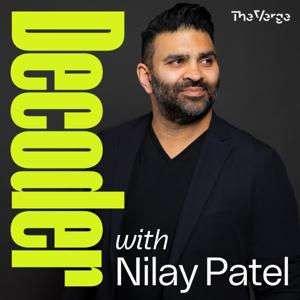


Based on Podcast App listening data
Katie Welch is the Chief Marketing Officer of Rare Beauty — the beauty products company founded by superstar musician and actress Selena Gomez. Rare Beauty sells its products online and in Sephora retail stores, and importantly, Katie does almost no traditional marketing: Rare Beauty is a true internet brand, that depends on social media strategy, influencer marketing, and community to drive sales. Specifically, the enormous community around Selena Gomez, who, again, is an international superstar with a fandom of her own.
This kind of marketing is essentially new. Famous people making their own products and companies and using their online reach to launch and grow those businesses is a combination of art and commerce that is 10 – 15 years old at most, Rihanna’s Fenty Beauty is only five years old, but it’s redefined the industry and helped make her a billionaire. Some of the first big successes came from the Kardashian-Jenners including Kylie Cosmetics, founded in 2015, as well as Kim Kardashian’s Skims, founded in 2019.
I’ve been really curious about how these businesses work, how they reach their audiences and customers, how CMOs like Katie measure success, whether being the marketing executive for an super online celebrity-driven business feels different than being a traditional marketing person, and whether the ever-present risk of weird things happening online make her plan differently.
Transcript:
https://www.theverge.com/e/23071490
Links:
Why BeReal is breaking out
Why Hank Green can’t quit YouTube for TikTok
Apple’s app tracking transparency feature isn’t an instant privacy button
Apple’s app tracking policy reportedly cost social media platforms nearly $10 billion
Updating The Verge’s background policy
Marketing Funnels
Katie's TikTok
Instagram walks back TikTok-style changes — Adam Mosseri explains why
Makeup company Glossier to sell its products at Sephora as new CEO pushes to expand reach
Credits:
Decoder is a production of The Verge, and part of the Vox Media Podcast Network.
Today’s episode was produced by Creighton DeSimone and Jackie McDermott and it was edited by Callie Wright.
The Decoder music is by Breakmaster Cylinder. Our Sr Audio Director is Andrew Marino. Our Editorial Director is Brooke Minters. And our Executive Producer is Eleanor Donovan.
Learn more about your ad choices. Visit podcastchoices.com/adchoices
In 2019, the Trump administration brokered a deal allowing TMobile to buy Sprint as long as it helped Dish Network stand up a new 5G network to keep the number of national wireless carriers at 4 and preserve competition in the mobile market. Now, in 2022, Dish’s network is slowly getting off the ground. And it’s built on a new kind of wireless technology called Open Radio Access Network, or O-RAN. Dish’s network is only the third O-RAN network in the entire world, and if O-RAN works, it will radically change how the entire wireless industry operates.
I have wanted to know more about O-RAN for a long time. So today, I’m talking to Tareq Amin, CEO of Rakuten Mobile. Rakuten Mobile is a new wireless carrier in Japan, it just launched in 2020 – it’s also the world’s first Open RAN network, and Tareq basically pushed this whole concept into existence. I really wanted to know if ORAN is going to work, and how Tareq managed to make it happen in such a traditional industry. So we got into it – like, really into it.
Links:
Rakuten
Rakuten Edge Cloud
"Nobody ever got fired for buying IBM"
Rakuten Group to Acquire Mobile Industry Innovator Altiostar
Gadgets 360
Massive MIMO
Transcript:
https://www.theverge.com/e/23061797
Credits:
Decoder is a production of The Verge, and part of the Vox Media Podcast Network.
Today’s episode was produced by Creighton DeSimone and Jackie McDermott and it was edited by Callie Wright.
The Decoder music is by Breakmaster Cylinder. Our Sr Audio Director is Andrew Marino. Our Editorial Director is Brooke Minters. And our Executive Producer is Eleanor Donovan.
Learn more about your ad choices. Visit podcastchoices.com/adchoices
Today I’m talking to Hank Green. Hank doesn’t need much introduction. In fact, he invited himself on Decoder to talk about YouTube's partner program, which shares ad revenue between YouTube and the people making videos. The split is 55/45 in favor of creators. But other platforms don't have this. There is no revenue share on Instagram. There is no revenue share on Twitter. There’s no revenue on Twitter at all, really. And importantly there is no revenue share on TikTok: instead there’s something called a creator fund, which shares fixed pool of money, about a billion dollars, among all the creators on the platform. That means as more and more creators join TikTok, everyone gets paid. You might understand this concept as: basic division.
This episode is long, and it’s weedsy. Honestly, it’s pretty deep in our feelings about participating in the internet culture economy, and the relationship between huge platform companies and the communities that build on them. But it’s a good one, and it’s not really something any of us talk about enough.
Links:
Vlogbrothers
Decoder interview with YouTube Chief Product Officer Neal Mohan
Viacom Has Officially Acquired VidCon, A Global Online Video Convention Series
Patreon Acquires Subbable, Aligning the YouTube Stars
The Verge EMAILS t-shirt
Crash Course
SciShow
Eons
The medium is the message
The Kardashians hate the new Instagram
Hank Green: So… TikTok Sucks
Waveform: The MKBHD Podcast, “TikTok vs YouTube with Hank Green”
Decoder: The videos that don’t work on YouTube and the future of the creator business with Nebula CEO Dave Wiskus
Awesome Socks Club
Awesome Coffee Club
Transcript:
https://www.theverge.com/e/23051537
Credits:
Decoder is a production of The Verge, and part of the Vox Media Podcast Network.
Today’s episode was produced by Creighton DeSimone and Jackie McDermott and it was edited by Callie Wright.
The Decoder music is by Breakmaster Cylinder. Our Sr Audio Director is Andrew Marino. Our Editorial Director is Brooke Minters. And our Executive Producer is Eleanor Donovan.
Learn more about your ad choices. Visit podcastchoices.com/adchoices
Today we’re talking to Jennifer Hyman, co-founder and CEO of Rent the Runway.
Rent the Runway is a a pretty simple idea: it’s a clothing rental and subscription business for women which launched in 2008. The basic idea is pretty simple: you can rent clothes one by one, and Subscribers pay a certain monthly amount for a certain number of pieces that they can swap out anywhere from 1 to 4 times a month depending on the tier of their membership. Rent the Runway also lets customers buy secondhand clothing either after they rent it or just outright.
But Rent the Runway has had a pretty intense path from its founding in 2008 to going public in 2021: the onset of the pandemic in 2020 cratered the business as 60 percent of customers canceled or paused their subscriptions, and Jennifer was forced to make drastic cuts to survive. But she says that now things are swinging back, as more and more people are spending their dollars going out, traveling, and generally shifting their spending from things to experiences. There’s a post Covid wedding boom going on: Rent the Runway is right there for people.
Jenn and I talked about that swing in the business, but we spent most of this conversation talking about running a company that basically does really high-risk logistics: sourcing clothes, sending them to people, getting them back, cleaning them, and sending them out again. Spotify and Netflix run subscription businesses where the products never wear out or get dirty; Jenn has to deal with red win stains at scale. In fact, Rent the Runway runs one of the country’s biggest dry cleaning operations, which I find to be completely fascinating: what does dry cleaning innovation actually look like, and how does it hit the bottom line?
My favorite episodes of Decoder are the ones where simple ideas – renting clothes – turn out to be incredible complicated to execute. This is one of those.
Links:
Apple defends upcoming privacy changes as ‘standing up for our users’
Rent the Runway, a secondhand fashion site, makes its trading debut.
Transcript:
https://www.theverge.com/e/23041884
Credits:
Decoder is a production of The Verge, and part of the Vox Media Podcast Network.
Today’s episode was produced by Creighton DeSimone and Jackie McDermott and it was edited by Callie Wright.
The Decoder music is by Breakmaster Cylinder. Our Sr Audio Director is Andrew Marino. Our Editorial Director is Brooke Minters. And our Executive Producer is Eleanor Donovan.
Learn more about your ad choices. Visit podcastchoices.com/adchoices
All right, let’s talk about the metaverse.
You probably can’t stop hearing about it. It’s in startup pitches, in earnings reports, some companies are creating metaverse divisions, and Mark Zuckerberg changed Facebook’s name to Meta to signal that he’s shifting the entire company to focus on the metaverse.
The problem, very simply, is that no one knows what the metaverse is, what it’s supposed to do, or why anyone should care about it.
Luckily, we have some help. Today, I’m talking to Matthew Ball, who is the author of the new book called The Metaverse: And How It Will Revolutionize Everything. Matthew was the global head of strategy at Amazon Studios. In 2018, he left Amazon to become an analyst and started writing about the metaverse on his blog. He’s been writing about this since way before the hype exploded, and his book aims to be the best resource for understanding the metaverse, which he sees as the next phase of the internet. It’s not just something that you access through a VR headset, though that’s part of it. It’s how you’ll interact with everything. That sort of change is where new companies have opportunities to unseat the old guard.
This episode gets very in the weeds, but it really helped me understand the decisions some companies have made around building digital worlds and the technical challenges and business challenges that are slowing it down — or might even stop it. And, of course, I asked whether any of this is a good idea in the first place because, well, I’m not so sure. But there’s a lot here, so listen, and then you tell me.
Links:
Matthew Ball on Twitter
Mark Zuckerberg on why Facebook is rebranding to Meta
Microsoft, Meta, and others are founding a metaverse open standards group
Android emoji will actually look human this year
Apple’s app tracking policy reportedly cost social media platforms nearly $10 billion
Microsoft and Activision Blizzard: the latest news on the acquisition
Microsoft HoloLens boss Alex Kipman is out after misconduct allegations
European Parliament Think Tank memorandum—Metaverse: Opportunities, risks and policy implications
Transcript:
https://www.theverge.com/e/23033211
Credits:
Decoder is a production of The Verge, and part of the Vox Media Podcast Network.
Today’s episode was produced by Creighton DeSimone and Jackie McDermott and it was edited by Callie Wright.
The Decoder music is by Breakmaster Cylinder. Our Sr Audio Director is Andrew Marino and our Executive Producer is Eleanor Donovan.
Learn more about your ad choices. Visit podcastchoices.com/adchoices
This week, we're sharing the first episode of Land of the Giants: The Facebook/ Meta Disruption. Long before Mark Zuckerberg renamed Facebook Meta and made an unprecedented pivot into the metaverse, he invented a feature that turned Facebook into a social network behemoth. The News Feed, which put your friends’ status updates onto your homepage, changed the way we interact online. It was a strong statement of Zuckerberg’s values: that connecting, and sharing, at scale would be de-facto good for the world. It was also his first public controversy. Follow Land of the Giants to get new episodes every Wednesday.
Learn more about your ad choices. Visit podcastchoices.com/adchoices
Happy Fourth of July to our listeners in the States. Decoder is only a year old, but we’ve decided a Decoder tradition is that every summer, we’re going to do an episode about the outdoor grill industry, which is gigantic and growing.
Last year, I talked to Roger Dahle, the CEO of Blackstone Products, a griddle company that blew up on TikTok and actually went public a few months after we talked.
This year, I’m talking to Jeremy Andrus, the CEO of Traeger, which makes beloved wood pellet smokers with all sorts of features — the high-end models even have cloud connectivity so you can control them from your phone. Traeger also recently went public; the company says it will book between $800–850 million in revenue this year.
The Traeger story is fascinating: the company was around for 27 years and not growing very much when Jeremy bought it with the help of a private equity firm and became the CEO. He had no background in cooking; he had previously been CEO of Skullcandy, the headphone brand. His early run as CEO of Traeger was a bit of a nightmare, culminating in an arson of a truck at one of Traeger’s warehouses. Jeremy responded by cleaning house, replacing most of the team, and moving the company from Oregon to Utah.
Since then, Traeger has grown its revenue by 10 times and hopes to close in on a billion dollars in revenue soon. But, it has all the challenges that come along with shipping big, heavy hardware products through the supply chain crisis, looming recession, and changing consumer behavior as one version of the pandemic seems to be ending and people are spending their money on travel instead of home goods. Jeremy was game to talk about all of that; we really got into it.
Links:
How Traeger's CEO Cleaned Up a Toxic Culture
Jeremy Andrus Found Success With Skullcandy. Now He Hopes To Do It Again With Traeger Grills.
Traeger buys wireless thermometer company Meater
Jeremy Andrus Found Success With Skullcandy. Now He Hopes To Do It Again With Traeger Grills.
Traeger's stock opens 22% above IPO price, to value the grill market at $2.6 billion
Transcript:
https://www.theverge.com/e/22953717
Credits:
Decoder is a production of The Verge, and part of the Vox Media Podcast Network.
Today’s episode was produced by Creighton DeSimone and Jackie McDermott and it was edited by Callie Wright.
The Decoder music is by Breakmaster Cylinder. Our Sr Audio Director is Andrew Marino and our Executive Producer is Eleanor Donovan.
Learn more about your ad choices. Visit podcastchoices.com/adchoices
I’m old enough to remember what it was like to fly before 9/11 — there were no TSA lines, there was no PreCheck, and there certainly wasn’t any requirement to take off your shoes. In fact, there wasn’t any TSA at all.
But 9/11 radically changed the way we move through an airport. The formation of the new Department of Homeland Security and the new Transportation Security Administration led to much more rigorous and invasive security measures for travelers trying to catch their flight.
This year is the 20th anniversary of the Department of Homeland Security and the TSA, and I think it’s safe to say that nobody enjoys waiting in the airport security line. And in the post-9/11 world, things like PreCheck are the great innovation of the department.
At least according to Dan McCoy, who is the TSA’s chief innovation officer, who told me that PreCheck is “a hallmark government innovation program.”
But what do programs like PreCheck and the larger surveillance apparatus that theoretically keep us safe mean for the choices we make? What do we give up to get into the shorter security line, and how comfortable should we be about that?
This week, The Verge launches Homeland, our special series about the enormous influence of the Department of Homeland Security and how it has dramatically changed our country’s relationship with technology, surveillance, and immigration. So we have a special episode of Decoder with Dan McCoy to see where the TSA fits into that picture.
Links:
Read more stories from the Homeland series
Transcript:
https://www.theverge.com/e/22945989
Credits:
Decoder is a production of The Verge, and part of the Vox Media Podcast Network.
Today’s episode was produced by Creighton DeSimone and Jackie McDermott and it was edited by Callie Wright.
The Decoder music is by Breakmaster Cylinder. Our Sr Audio Director is Andrew Marino and our Executive Producer is Eleanor Donovan.
Learn more about your ad choices. Visit podcastchoices.com/adchoices
Mercedes-Benz CEO Ola Källenius became CEO in 2019 but has been working for Mercedes since 1993 in almost every part of the company. During that period, Mercedes spent time getting a lot bigger; the company famously merged with Chrysler for a time, forming a giant called DaimlerChrysler. But, over the past few years, it’s actually been getting much smaller and more focused. The Chrysler deal was undone and, just recently, Ola spun off the truck division into its own public company called Daimler Truck, leaving Mercedes-Benz to stand alone as a premium car brand.
Car companies are either consolidating into giant conglomerates like Stellantis or shrinking and focusing like Mercedes. A lot of that is driven by the huge shift to electric vehicles and then, on top of that, to cars essentially becoming rolling computers. You’ll hear Ola refer to cars as “digital products” a lot — and to Mercedes itself as a tech company. (Actually, he says it’s a luxury and tech company.)
Mercedes now has two new EVs, the EQS and the EQE, both of which have massive infotainment screens running Mercedes’ proprietary MBUX system, which even has its own voice assistant called Hey Mercedes. I had to ask Ola about Apple’s recent announcement that the next version of CarPlay would be able to take over every display in the car, including the instrument cluster. Apple showed a Mercedes logo on a slide during that presentation — so, is Ola ready to hand over his UI to Cupertino?
Let’s find out. Ola Källenius, CEO of Mercedes-Benz. Here we go.
Links:
Mercedes-Benz Vision EQXX concept car traveled over 1,000 km on a single charge
Mercedes-Benz unveils sporty, ultra-long-range vision EQXX electric concept car
The six-figure Mercedes-Benz EQS gets a 350-mile range rating
Daimler AG to rebrand as Mercedes-Benz on Feb. 1
Big automakers are breaking themselves apart to compete with Silicon Valley
Mercedes-Benz reveals an electric G-Wagen concept for the future
Transcript:
https://www.theverge.com/e/22936880
Credits:
Decoder is a production of The Verge, and part of the Vox Media Podcast Network.
Today’s episode was produced by Creighton DeSimone and Jackie McDermott and it was edited by Callie Wright.
The Decoder music is by Breakmaster Cylinder. Our Sr Audio Director is Andrew Marino and our Executive Producer is Eleanor Donovan.
Learn more about your ad choices. Visit podcastchoices.com/adchoices
The Verge is all about how technology make us feel. Our screens and our systems aren’t inert, or neutral – they create emotions, sometimes the strongest emotions anyone actually feels in their day to day lives. I’ve been thinking about that a lot ever since I read a new book called Everything I Need I Get From You: How Fangirls Created the Internet by Kaitlyn Tiffany, who was a culture reporter at The Verge several years ago. The thesis of her book is that online fandom, specifically the hardcore fans of the British boy band One Direction, created much of the online culture we live in today on social platforms. And her bigger thesis is that fandom overall is a cultural and political force that can’t be ignored; it shapes elections, it drives cultural conversation, it can bring joy to people who feel lonely, and it can result in dramatic harassment campaigns when fans turn on someone.
Links:
Kaitlyn Tiffany Verge Archive
One Direction Playlist
Transcript:
https://www.theverge.com/e/22930314
Credits:
Decoder is a production of The Verge, and part of the Vox Media Podcast Network.
Today’s episode was produced by Creighton DeSimone and Jackie McDermott and it was edited by Callie Wright.
The Decoder music is by Breakmaster Cylinder. Our Sr Audio Director is Andrew Marino and our Executive Producer is Eleanor Donovan.
Learn more about your ad choices. Visit podcastchoices.com/adchoices
From the publisher's feed
Ranked by our users in the last 21 days

7,846 Listeners
10,719 Listeners
2,678 Listeners
9,615 Listeners

3,644 Listeners
3,713 Listeners

1,091 Listeners
3,143 Listeners
555 Listeners

2,146 Listeners
507 Listeners
1,461 Listeners
10,265 Listeners

2,163 Listeners
40 Listeners
23,550 Listeners
732 Listeners
555 Listeners
512 Listeners
5,557 Listeners

6,478 Listeners

2,319 Listeners

1,217 Listeners

189 Listeners
3,442 Listeners
1,780 Listeners
1,438 Listeners
452 Listeners

26 Listeners
51 Listeners