
Sign up to save your podcasts
Or



Based on Podcast App listening data
Tomer Cohen is the chief product officer at LinkedIn, and actually, I talked to Tomer twice. Here’s a little secret about Decoder: we do the interviews, and then often, the guest and I just keep chatting for a while. So after my first interview with Tomer, we were hanging out, talking about the perpetual battles between engineers, product managers, and designers. And he said something that completely jumped out at me:
“We might be wrong, but we’re not fucking confused.”
This isn’t a totally new line — it’s been floating around for a while, you can Google it — but you know I love an f-bomb, and honestly, it’s one of the most simple and clarifying things a manager can say, especially when managing across large teams. So I asked Tomer to come back and really dig in on that idea.
On top of that, we’ve been talking a lot about running social networks lately, and LinkedIn is a fascinating social network because it doesn’t have the same engagement-based success metrics as other social platforms like Twitter and Instagram. Tomer doesn’t care about time spent on LinkedIn; the platform is designed to be successful when people get new jobs. That means his ideas for features and user experiences are just really different.
Links:
Employment Situation Summary (Jobs Report)
December Workforce Report 2022 (LinkedIn)
Vision to values flowchart
ChatGPT proves AI is finally mainstream — and things are only going to get weirder
LinkedIn buys California-based SaaS learning platform
How big companies kill ideas — and how to fight back, with Tony Fadell
RAPID decision making
Transcript:
https://www.theverge.com/e/23281360
Credits:
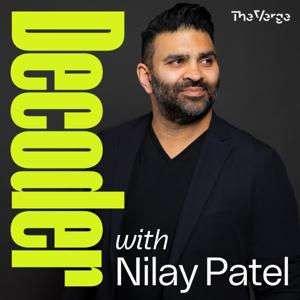
Decoder is a production of The Verge and part of the Vox Media Podcast Network.
It was produced by Creighton DeSimone and Jackie McDermott and it was edited by Callie Wright.
The Decoder music is by Breakmaster Cylinder. Our Editorial Director is Brooke Minters and our Executive Director is Eleanor Donovan.
Learn more about your ad choices. Visit podcastchoices.com/adchoices
We have to talk about Twitter, right? Elon Musk bought it. He’s making all these changes, and he’s realizing that content moderation decisions are quite complicated, especially when the stakes are high.
But talking about Twitter in a vacuum seems wrong. There are lots of other social networks and community-based products, and they all have basically the same problems: some technical (you have to run the service), some political (you have to comply with various laws and platform regulations around the world), and some social (you have to get millions of users to post for free while making sure what they post is good stuff and not bad stuff).
So, we’re doing something a little different this week. First, I’m talking to Matt Mullenweg, who is the CEO of Automattic, which owns WordPress, the blog hosting platform, and Tumblr, the social network, which he purchased from Verizon in 2019. Then, Verge deputy editor Alex Heath and I are going to break down a bunch of what Matt told me and apply it to Twitter to see what we can learn.
Okay, Matt Mullenweg, CEO of Tumblr, followed by Alex Heath. Here we go.
Links:
How WordPress and Tumblr are keeping the internet weird
GPL - General Public License
Verizon is selling Tumblr to WordPress’ owner
Kanye West suspended from Twitter after posting a swastika
‘Martin Scorsese’s lost film’ Goncharov (1973), explained
Yahoo acquires Tumblr in $1.1 billion cash deal, promises 'not to screw it up'
Verizon is selling Tumblr to WordPress’ owner
Turnaround Definition
Welcome to Tumblr. Now Go Away.
Work With Us / Twitter – Automattic
Tumblr will sell you two useless blue check marks for $8
Elon Musk is laying off even more Twitter workers
Welcome to hell, Elon
Why “Go Nuts, Show Nuts” Doesn't Work in 2022
How America turned against the First Amendment
About – SHOSHANA ZUBOFF
A Framework for Moderation
First Amendment - Freedom of Religion, Speech, Press, Assembly, and Petition | Constitution Center
America’s Favorite Flimsy Pretext for Limiting Free Speech
Brandenburg v. Ohio
Elon Musk says Tim Cook told him Apple ‘never considered’ removing Twitter - The Verge
The Twitter Files - Matt Taibbi
Elon Musk’s promised Twitter exposé on the Hunter Biden story is a flop that doxxed multiple people
Twitter Blue is back, letting you buy a blue checkmark again
Transcript:
https://www.theverge.com/e/23270126
Credits:
Decoder is a production of The Verge and part of the Vox Media Podcast Network.
It was produced by Creighton DeSimone and Jackie McDermott and it was edited by Callie Wright.
The Decoder music is by Breakmaster Cylinder. Our Editorial Director is Brooke Minters and our Executive Director is Eleanor Donovan.
Learn more about your ad choices. Visit podcastchoices.com/adchoices
Today, we need to talk about Bob. Two Bobs, actually: Bob Iger, the former and now current CEO of Disney, and Bob Chapek, the man Iger handpicked as his replacement, who flamed out and was fired by the board, and then, on November 20th, was replaced by Bob Iger. Bobs, man.
The heart of this whole thing is total Decoder bait. It’s a story about how to structure a company like Disney. Then you add in the complexity of the shift to streaming, the future of TV and movies generally, and the gigantic reputation of a character like Bob Iger, who many people think could plausibly run for president. There’s just a lot going on here.
Whenever I need to talk Disney, media, and Bobs, I call one person: Julia Alexander, director of strategy at Parrot Analytics and a former reporter at The Verge. Julia pays a lot of attention to the streaming giants, she’s sourced inside all the companies battling for our attention, and she has a lot to say about the Bobs.
Links:
Bob Iger steps back in as Disney CEO, replacing Bob Chapek
Reed Hastings on Twitter
Disney+ launch lineup: Every movie and TV show available to stream on day one - The Verge
Bob Iger steps down as Disney CEO, replaced by Bob Chapek - The Verge
Disney streaming chief Kevin Mayer resigns to become TikTok CEO - The Verge
Disney Plus surpasses 100 million subscribers - The Verge
Meta announces huge job cuts affecting 11,000 employees - The Verge
Netflix's $6.99 per month ad tier is now live
Stranger Things - The Verge
Disney’s major reorganization is good news for anyone who loves Disney Plus - The Verge
Functional Structure: Advantages and Disadvantages | Indeed.com
Pros and Cons of Implementing a Divisional Structure | Indeed.com
Disney Proposal to Restructure, on McKinsey’s Advice, Triggered Uproar From Creative Executives - WSJ
Disney Shows the Limits of Streaming - WSJ
Disney Erases Almost All Its Pandemic Gains After Earnings Miss
‘Strange World’: Beautiful to look at, but not much below the surface - The Washington Post
Watch The Future Of | Netflix Official Site
Kevin Mayer quits as TikTok CEO due to ongoing political turmoil - The Verge
Kevin Mayer Says His Firm Is In Deal Mode After Buying Reese Witherspoon's Hello Sunshine
WarnerMedia CEO Jason Kilar announces exit as Discovery deal nears close - The Verge
Transcript:
https://www.theverge.com/e/23259187
Credits:
Decoder is a production of The Verge and part of the Vox Media Podcast Network.
It was produced by Creighton DeSimone and Jackie McDermott and it was edited by Callie Wright.
The Decoder music is by Breakmaster Cylinder. Our Editorial Director is Brooke Minters and our Executive Director is Eleanor Donovan.
Learn more about your ad choices. Visit podcastchoices.com/adchoices
Bose is one of the most recognizable audio brands in the world: it was famous for the Wave radio in the 80s, it invented noise cancellation, you can see its logo on NFL sidelines every Sunday, and of course there are the popular consumer products like the QuietComfort headphones that reviewers like Chris Welch here at The Verge rate as some of the best in the game. Bose is in tons of cars as well: audio systems in GM, Honda, Hyundai, Porsche, and more are developed and tuned by Bose.
Bose was founded in 1964 by Dr. Amar Bose, who donated a majority of the shares of the company to MIT, where he was a professor. That means to this day, Bose is a private company with no pressure to go public. However, Bose still has to compete against big tech in talent, products, and compatibility.
So today I’m talking to Bose CEO Lila Snyder about Bose’s dependence on platform vendors like Apple and Google, how she thinks about standards like Bluetooth, and where she thinks she can compete and win against AirPods and other products that get preferential treatment on phones.
Links:
Bose QuietComfort Earbuds II review: noise cancellation domination
How Amar Bose used research to build better speakers
List of Bose shelf stereos
Hearing Aids | FDA
Digital signal processor
Functional organization
Bose names its first female CEO as wait continues for new products
Amar Bose ’51 makes stock donation to MIT
Meta announces huge job cuts affecting 11,000 employees
Amazon mass layoffs will reportedly ax 10,000 people this week
Elon Musk demands Twitter employees commit to ‘extremely hardcore’ culture or leave
The iPhone 7 has no headphone jack
Bluetooth Special Interest Group
Qualcomm Partners with Meta and Bose
Bose gets into hearing aid business with new FDA-cleared SoundControl hearing aids
Over-the-counter hearing aids could blur the line with headphones
New Bose-Lexie Hearing Aid to Enter the Over-the-Counter Market
Lexie Partners with Bose to Offer Lexie B1 Powered by Bose Hearing Aids
Bose Frames Tempo review: the specs to beat
Bose discontinues its niche Sport Open Earbuds
BMW starts selling heated seat subscriptions for $18 a month
Seven CEOs and one secretary of transportation on the future of cars
Why Amazon VP Steve Boom just made the entire music catalog free with Prime
Transcript:
https://www.theverge.com/e/23246668
Credits:
Decoder is a production of The Verge and part of the Vox Media Podcast Network.
It was produced by Creighton DeSimone and Jackie McDermott and it was edited by Callie Wright.
The Decoder music is by Breakmaster Cylinder. Our Editorial Director is Brooke Minters and our Executive Director is Eleanor Donovan.
Learn more about your ad choices. Visit podcastchoices.com/adchoices
Chris Licht faces an uphill battle at CNN. He got the CEO gig in the midst of a prickly merger between Warner Bros. and Discovery and right after the shocking exit of beloved long-time boss, Jeff Zucker. In his first six months, he’s shut down CNN+, ousted Brian Stelter, and shuffled anchors around, including Don Lemon and Jake Tapper. This week, the network chief held an internal town hall meeting where he faced a staff of thousands and discussed upcoming layoffs. Shortly afterwards, he sat down with Kara — who grilled him, of course.
She asks Licht whether he has any real actual power or if he’s simply executing orders from Warner Bros. Discovery CEO David Zaslav — who is in search of cuts, as the company stares down the barrel at $50 billion in debt — and billionaire board member, John Malone, who has said he’d like to see more “centrist” programming from CNN. They discuss Licht’s vision for the newsroom, his plan to build trust with journalists who fear losing jobs, and how CNN will cover Donald Trump during the 2024 election.
Before the interview, Kara and Nayeema discuss the challenges facing journalism in an era of disinformation. Stay tuned for Kara’s closing rant on “citizen journalism” and Elon’s latest broadside against the press.
You can find Kara and Nayeema on Twitter @karaswisher and @nayeema.
Learn more about your ad choices. Visit podcastchoices.com/adchoices
Phil Spencer, CEO of Microsoft Gaming, is in charge of Xbox and all the game studios that Microsoft has acquired over the years. Phil came to talk to us hours before the European Commission announced an in-depth investigation into Microsoft’s proposed 68.7 billion dollar acquisition of Activision Blizzard, which makes the enormous Call of Duty series, as well as Candy Crush on phones.
So I had the chance to ask Phil: Will he make the concessions that regulators want in order to close this deal? And is the deal really just about Call of Duty, or something else? Is Microsoft committed to keep Call of Duty available on Playstation?
Phil’s a candid guy. He’s been on Decoder before. I always enjoy talking to him, and this was a fun one.
Links:
Microsoft’s Phil Spencer on the new Xbox launch - The Verge
Microsoft to acquire Activision Blizzard for $68.7 billion - The Verge
Why Microsoft bought Bethesda for $7.5 billion
Microsoft announces big, multistudio push to create more Xbox exclusives
Bethesda’s Starfield and Redfall have been delayed to 2023
Tech antitrust pioneer Lina Khan will officially lead the FTC
Sony says Microsoft’s Call of Duty offer was ‘inadequate on many levels’
Microsoft: Xbox game streaming console is ‘years away'
This is Microsoft’s Xbox game streaming device
Google is shutting down Stadia in January 2023 - The Verge
Razer’s Edge is one sharp-looking cloud gaming Android handheld
Logitech G Cloud Gaming Handheld review: terminally online
Steam Deck review: it’s not ready
Steam Deck, one month later
Tech Leaders Discuss the Metaverse’s Future | WSJ Tech Live 2022
Microsoft CEO Satya Nadella on the business of Windows
Microsoft partners with Meta to bring Teams, Office, Windows, and Xbox to VR
EU opens ‘in-depth investigation’ into Microsoft’s Activision Blizzard acquisition
Transcript:
https://www.theverge.com/e/23223230
Credits:
Decoder is a production of The Verge and part of the Vox Media Podcast Network.
It was produced by Creighton DeSimone and Jackie McDermott and it was edited by Callie Wright.
The Decoder music is by Breakmaster Cylinder. Our Editorial Director is Brooke Minters and our Executive Director is Eleanor Donovan.
Learn more about your ad choices. Visit podcastchoices.com/adchoices
Dylan Field is the co-founder and CEO of Figma, which makes a very popular design tool that allows designers and their collaborators to all work together right in a web browser. You know how multiple people can edit together in Google Docs? Figma is that for design work. We just redesigned The Verge; we used Figma extensively throughout that process.
So for years, people have been waiting on the inevitable Figma vs. Adobe standoff since Figma was such a clear upstart competitor to Photoshop and Illustrator and the rest. Well, buckle up because in September, Adobe announced that it was buying Figma for $20 billion. Figma is going to remain independent inside Adobe, but you know, it’s a little weird.
So I wanted to talk to Dylan about the deal, why he’s doing it, how he made the decision to sell, and what things he can do as part of Adobe that he couldn’t do as an independent company.
Dylan’s also a pretty expansive thinker, so after we talked about his company getting the “fuck you” money from Adobe, we talked about making VR Figma for the metaverse and AGI, which is artificial general intelligence, or the kind of AI that can fully think for itself. This episode takes a turn. I think you’re going to like it.
Okay, Dylan Field, CEO of Figma. Here we go.
Links:
Welcome to the new Verge
Adobe to acquire Figma in a deal worth $20 billion
A New Collaboration with Adobe
Designers worry Adobe won't let Figma flourish
WebGL - Wikipedia
How big companies kill ideas — and how to fight back, with Tony Fadell - Decoder
Dylan Field on Twitter: "Our goal is to be Figma not Adobe"
College Dropout Turns Thiel Fellowship Into a $2 Billion Figma Fortune
Generative adversarial network (GAN) - Wikipedia
GPT-3 - Wikipedia
Is VR the next frontier in fitness? - Decoder
Artificial general intelligence - Wikipedia
Transcript:
https://www.theverge.com/e/23209862
Credits:
Decoder is a production of The Verge and part of the Vox Media Podcast Network.
It was produced by Creighton DeSimone and Jackie McDermott and it was edited by Jackson Bierfeldt.
The Decoder music is by Breakmaster Cylinder. Our Editorial Director is Brooke Minters and our Executive Director is Eleanor Donovan.
Learn more about your ad choices. Visit podcastchoices.com/adchoices
The Federal Communications Commission (FCC) is currently short a commissioner, and the Biden Administration and Senate Democrats just can't seem to get that seat filled despite having nominated an amazingly qualified person. Her name is Gigi Sohn. The inability to get Gigi confirmed at the FCC has left the commission deadlocked with two Democrats and two Republicans. That means the commission in charge of regulating all telecom in the United States, including how you get your internet service, is unable to get much done. The Biden administration can't accomplish some of its biggest policy priorities like rural broadband and restoring net neutrality. President Biden first nominated Gigi Sohn to the FCC over a year ago, but the full Senate vote to confirm her just hasn't happened. We’ve been digging into the story for a few months now, trying to figure out what's going on here, and we found a simple but really frustrating answer…
Links:
Gigi Sohn Author Profile - The Verge
Comcast trying to “torpedo” Biden FCC pick Gigi Sohn, advocacy group says
The Slime Machine Targeting Dozens of Biden Nominees
Attempted acquisition of Tribune Media by Sinclair Broadcast Group
The Vergecast: Net neutrality was repealed a year ago. Gigi Sohn explains what’s happened since
Confirmation Hearing for FCC and Commerce Department Nominees
Biden signs $280 billion CHIPS and Science Act
Biden Signs Bill to Help Veterans Exposed to Toxic Burn Pits
With the Inflation Reduction Act, the US brings climate goals within reach
Federal Communications Commission v. Pacifica Foundation
Federal Communications Commission v. Pacifica Foundation
A Media Censor for the FCC?
Hyperpartisan Gigi Sohn Doesn’t Belong at the FCC
Gigi Sohn and the Police
Gigi Sohn Facebook Tweet
Tech antitrust pioneer Lina Khan will officially lead the FTC
Confirmation Hearing For FCC Nominee
FCC Commissioner Jessica Rosenworcel on staying connected during a pandemic
Transcript:
https://www.theverge.com/e/23201559
Credits:
Decoder is a production of The Verge and part of the Vox Media Podcast Network.
Today’s episode was written and reported by Jackie McDermott.
It was produced by Creighton DeSimone and Jackie McDermott and it was edited by Callie Wright. Additional mixing by Andrew Marino.
The Decoder music is by Breakmaster Cylinder. Our Editorial Director is Brooke Minters and our Executive Director is Eleanor Donovan.
Learn more about your ad choices. Visit podcastchoices.com/adchoices
I love covering the music industry, but over the past 10 years I’ve found that it’s one of the most challenging things to make accessible to a wide audience. See, my theory is that the music industry is like five years ahead of everything else when it comes to being disrupted by tech: whatever happens to the music industry because of technology eventually happens to everything else.
Today I'm talking to Steve Boom, the VP of Amazon Music. Amazon just announced that they are upgrading the music service that Prime members get as part of their subscription. Starting today, one of the benefits for Amazon Prime members is that you now get access to the entire Amazon Music catalog, about 100 million songs, to play in shuffle mode. That service used to only contain 2 million songs. And they are removing ads from a large selection of podcasts including the entire Wondery catalog.
I wanted to ask Steve: what’s it like to negotiate with the record labels for a service like this? What can streaming services do to make artists more money? And where do podcasts fit into the overall strategy? Amazon and Spotify both spend a lot of money buying podcast studios. Is it paying off?
Links:
Amazon buys Wondery, setting itself up to compete against Spotify for podcast domination
Apple’s Anti-Competitive Behavior Hurts Everyone—Including Audiobook Listeners, Publishers, and Authors
Why Rdio died
Why it makes sense for Amazon to buy Twitch
Amazon Launches Audio App Amp Combining Music and Live Conversation
The days of cheap music streaming may be numbered
Why did Jack Dorsey’s Square buy Tidal, Jay-Z’s failed music service?
Amazon Music rolls out a lossless streaming tier that Spotify and Apple can’t match
How Amazon runs Alexa, with Dave Limp
Apple’s new podcast charts show Amazon at the top
Spotify gets serious about podcasts with two acquisitions
Vox Media acquires Cafe Studios, Preet Bharara’s podcast-first company
Vox Media Acquires Criminal Productions, Leading Narrative Podcast Studio
Time to Play Fair - Spotify
Apple’s New App Store Rules a Big Boon for Netflix, Hulu & Co.
MusiCares
Transcript:
https://www.theverge.com/e/23197384
Credits:
Decoder is a production of The Verge, and part of the Vox Media Podcast Network.
Today’s episode was produced by Creighton DeSimone and Jackie McDermott and it was edited by Callie Wright.
The Decoder music is by Breakmaster Cylinder. Our Sr Audio Director is Andrew Marino and our Executive Producer is Eleanor Donovan.
Learn more about your ad choices. Visit podcastchoices.com/adchoices
Steve Cagle is the CEO of Clearwater Compliance, which is a cybersecurity firm focused on the healthcare industry. Basically, they lock down hospital computer systems, which contain a huge amount of personal data, and are so mission critical that ransomware attackers know that hospitals are more likely to just pay up. If the cryptocurrency explosion has accomplished anything, it’s making ransomware attacks easier and more lucrative for bad guys.
Steve told me there’s so much personal information in a hospital system that a single patient’s record can sell for a huge premium over somthing like a credit card number. And we talked about amount of regulation needed to secure that data and that some insurance providers require hospitals to have a minimum level of security, or they won't be covered. It's a fascinating one.
Links:
Cyber Security Week 2022
Penetration test
Cyberattack delays patient care at major US hospital chain
Average Healthcare Data Breach Costs Surpass $10M, IBM Finds
Transcript:
https://www.theverge.com/e/23175031
Credits:
Decoder is a production of The Verge, and part of the Vox Media Podcast Network.
It was produced by Creighton DeSimone and Jackie McDermott. Research by Liz Lian and it was edited by Jackson Bierfeldt.
The Decoder music is by Breakmaster Cylinder. Our Sr Audio Director is Andrew Marino and our Executive Producer is Eleanor Donovan.
Learn more about your ad choices. Visit podcastchoices.com/adchoices
From the publisher's feed
Ranked by our users in the last 21 days
7,846 Listeners
10,719 Listeners
2,678 Listeners

9,615 Listeners

3,644 Listeners
3,713 Listeners

1,091 Listeners
3,143 Listeners
555 Listeners

2,146 Listeners
507 Listeners
1,461 Listeners
10,265 Listeners
2,163 Listeners
40 Listeners
23,550 Listeners
732 Listeners
555 Listeners

512 Listeners
5,557 Listeners
6,478 Listeners

2,319 Listeners
1,217 Listeners
189 Listeners
3,442 Listeners
1,780 Listeners
1,438 Listeners
452 Listeners
26 Listeners
51 Listeners