
Sign up to save your podcasts
Or



Based on Podcast App listening data
Today I'm talking to Prashanth Chandrasekar the CEO of Stack Overflow – a highly specialized kind of social network, with a really unique business model. If you don't know Stack Overflow is a major part of the modern software development landscape: it’s where developers come together, ask questions, and get answers about how to build software, including actual code they can use in their own projects. It’s basically a huge question and answer forum. More than 100 million people visit Stack Overflow every single month. The company also sells Stack Overflow as an internal forum tool that big companies can use for their own teams: Microsoft, Google, Logitech—you name it, they’re using Stack Overflow to coordinate conversations between their engineers.
The platform has a long reputation of elitism; Prashanth himself is a developer and he told me his own first experience on Stack Overflow was a negative one. In fact, he took over as CEO about three years ago, after a pretty serious moderation controversy that saw several longtime Stack Overflow moderators quit. I wanted to talk to Prashanth about how it works, how the company makes money, and how to grow such a specialized user base while still being welcoming to new people.
Links:
Software-as-a-Service (SaaS)
Stack Overflow Sold to Tech Giant Prosus for $1.8 Billion
Stack Overflow helps millions of developers do their jobs every single day. Its new CEO says the next stage of its growth is selling to businesses.
Big Tech's hiring freeze unlocks rich talent pool for U.S. startups
Stack Overflow raises $85M in Series E funding to further accelerate SaaS business
Chris Dixon thinks web3 is the future of the internet — is it?
Stack Overflow Has a New Code of Conduct: You Must 'Be Nice'
Code of Conduct - Stack Overflow
Eight great sites that offer online classes
The other side of Stack Overflow content moderation
Everything you need to know about Section 230
Transcript:
https://www.theverge.com/e/23185361
Credits:
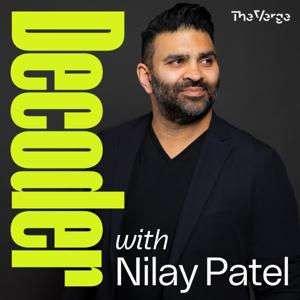
Decoder is a production of The Verge, and part of the Vox Media Podcast Network.
Today’s episode was produced by Creighton DeSimone and Jackie McDermott and it was edited by Callie Wright.
The Decoder music is by Breakmaster Cylinder. Our Sr Audio Director is Andrew Marino and our Executive Producer is Eleanor Donovan.
Learn more about your ad choices. Visit podcastchoices.com/adchoices
Meredith Whittaker is the president of Signal, the popular messaging app that offers encrypted communication. You might recognize Meredith’s name from 2018 when she was an AI researcher at Google and one of the organizers of the Google walkout. Now she’s at Signal, which is a little different than the usual tech company: it’s operated by a nonprofit foundation and prides itself on collecting as little data as possible.
But messaging apps are a complicated business. Governments around the world really dislike encrypted messaging and often push companies to put in backdoors for surveillance and law enforcement because criminals use encrypted messaging for all sorts of deeply evil things. But there’s no half step to breaking encryption, so companies like Signal often find themselves in the difficult position of refusing to help governments. You might recall that Apple has often refused to help the government break into iPhones, for example. I wanted to know how that tradeoff plays out at Signal’s much smaller and more idealistic scale.
This is a good one, with lots of Decoder themes in the mix. We have to start doing checklists or something. Okay, Meredith Whittaker, president of Signal. Here we go.
Links:
The battle inside Signal
Yes, even Signal is doing stories now
Here’s why Apple’s new child safety features are so controversial
Signal is ‘starting to phase out SMS support’ from its Android app
A very brief history of every Google messaging app
RCS: What it is and why you might want it
Let’s chat about RCS
WhatsApp is now entirely end-to-end encrypted
Moxie Marlinspike has stepped down as CEO of Signal
Meredith Whittaker Tweet
Transcript:
https://www.theverge.com/e/23173757
Credits:
Decoder is a production of The Verge, and part of the Vox Media Podcast Network.
Today’s episode was produced by Creighton DeSimone and Jackie McDermott and it was edited by Jackson Bierfeldt.
The Decoder music is by Breakmaster Cylinder. Our Sr Audio Director is Andrew Marino and our Executive Producer is Eleanor Donovan.
Learn more about your ad choices. Visit podcastchoices.com/adchoices
Meta CEO Mark Zuckerberg joined The Verge’s deputy editor Alex Heath for an in-depth conversation about the company’s new high-end, mixed reality headset, the $1,499 Quest Pro, and why he isn’t backing down from building the metaverse. Zuckerberg and Heath also talked about the future of social media, why he enjoys “being doubted,” and the growing concerns about TikTok’s Chinese ownership.
Links:
The Meta Quest Pro is a cutting-edge headset looking for an audience
Xbox Cloud Gaming is coming to the Meta Quest
Apple’s mixed reality headset will reportedly come with an M2 chip
We finally got our hands and eyes on the PlayStation VR2
Apple’s app tracking policy reportedly cost social media platforms nearly $10 billion
Mark Zuckerberg took on China in a speech defending free expression
Why BeReal is breaking out
Elon Musk is buying Twitter, probably?
Transcript:
https://www.theverge.com/e/23161228
Credits:
Decoder is a production of The Verge, and part of the Vox Media Podcast Network.
Today’s episode was produced by Creighton DeSimone, Vjeran Pavic, and Jackie McDermott and it was edited by Callie Wright.
The Decoder music is by Breakmaster Cylinder. Our Sr Audio Director is Andrew Marino and our Executive Producer is Eleanor Donovan.
Learn more about your ad choices. Visit podcastchoices.com/adchoices
Today I'm talking to Pat Gelsinger, the CEO of Intel. I’ve been excited to have this conversation for a very long time – ever since Pat took over as CEO a little over a year and a half ago. After all. Intel is a very important company with a huge series of challenges in front of it. It’s still the largest chip manufacturer by revenue, and makes more chips than any other company in the United States. In fact there are basically only three major chip manufacturers: Taiwan Semiconductor Manufacturing Company, or TSMC, which is in Taiwan, Samsung, based in South Korea. And Intel, here in the United States.
The Intel Pat took over was struggling, and was losing ground to in a variety of markets. But in the past year and a half, Pat’s restructured the company, turned over almost all of its leadership positions, opened a new line of business that would compete with TSMC and make chips for other companies including Intel’s competitors, and generally tried to reset Intel’s famous engineering culture around engineering.
Glossary:
IFS - Intel Foundry Service.
Raptor Lake - codename for intel's Gen 13 processors that were just the day before we had our conversation.
Sapphire Rapids - the codename for Intel's 4th generation Xeon server processors.
20A and 18A - 20A is a rebranding of what was intel's 5nm process scheduled to debut in 2024 and 18A is a rebranding of Intels 5nm+ node due out in 2025.
Packaging - integrated circuit packaging is the last step of semiconductor fabrication. It's where a block of semiconductor material is put into a case. The case, is known as a "package" and that is what allows you put a circuit on a board.
Wafers - When a processor is made they make processors you make hundreds of them at once on a giant wafer.
EUV - is Extreme Ultraviolet Lithography. It's the most advanced way to make chips.
ASML - Is the company that makes the machines that lets you make chips. They are the only company that makes EUV machines.
RibbonFET - A new transistor technology that Intel developed.
ISV - Independent Software Vendors.
PDK - Process Design Kit is a set of files that have data and algorithms that explain the manufacturing parameters for a given silicon process.
EDA tools - stands for Electronic Design Automation tools. Basically software tools that are used to design and validate the semiconductor manufacturing process.
Robert Noyce and Gordon Moore - the founders of Intel.
Andy Grove - employee #3 who went on to become one of their most successful CEOs.
Links:
Moore's Law
Intel is replacing its CEO in February
Intel has to be better than ‘lifestyle company’ Apple at making CPUs, says new CEO
Apple is switching Macs to its own processors starting later this year
Apple MacBook Air with M1 review: new chip, no problem
What we know about Intel’s $20 billion bet on Ohio
Intel is building a new €17 billion semiconductor manufacturing hub in Germany
Intel delays ceremony for Ohio factory over lack of government funding
Intel needs 7,000 workers to build its $20 billion chip plant in Ohio
Biden signs $280 billion CHIPS and Science Act
President Joe Biden speaks after groundbreaking for Intel’s $20 billion semiconductor plant
Intel’s top Arc A770 GPU is priced at $329, available October 12th
Intel’s 13th Gen processors arrive October 20th with $589 flagship Core i9-13900K
Transcript:
https://www.theverge.com/e/23149693
Credits:
Decoder is a production of The Verge, and part of the Vox Media Podcast Network.
Today’s episode was produced by Creighton DeSimone and Jackie McDermott and it was edited by Callie Wright.
The Decoder music is by Breakmaster Cylinder. Our Sr Audio Director is Andrew Marino and our Executive Producer is Eleanor Donovan.
Learn more about your ad choices. Visit podcastchoices.com/adchoices
One of the more interesting quirks of the modern tech world is that there’s a really important company at the center of it all that doesn’t make anything. But its work is in your phone, in your TV, your car and maybe even your laptop. I’m talking about ARM, a chip design company that’s been through quite a lot these past few years, and I'm talking to Arm CEO Rene Haas.
Arm designs the instruction sets for modern chips: Qualcomm’s chips are Arm chips. Apple’s chips are Arm chips. Samsung’s chips are Arm chips. It’s the heart of modern computing. Arm licenses the instruction set to those companies, who then go off and actually make chips with all sorts of customizations. Basically every smartphone runs an Arm processor, Apple’s Macs now run arm processors, and everything from cars to coffee machines are showing up with more and more arm processors in them.
We want to know what you think about Decoder. Take our listener survey!
Transcript:
https://www.theverge.com/e/23137412
Links:
The Vergecast: The HDMI Holiday Spec-tacular on Apple Podcasts
Biden signs $280 billion CHIPS and Science Act
Intel needs 7,000 workers to build its $20 billion chip plant in Ohio - The Verge
What comes after the smartphone, with Qualcomm CEO Cristiano Amon - The Verge
Why the global chip shortage is making it so hard to buy a PS5
Nvidia’s huge Arm deal has just been scrapped
What is a SoC?
What is an ECU?
Credits:
Decoder is a production of The Verge, and part of the Vox Media Podcast Network.
Today’s episode was produced by Creighton DeSimone and Jackie McDermott and it was edited by Callie Wright.
The Decoder music is by Breakmaster Cylinder. Our Sr Audio Director is Andrew Marino. Our Editorial Director is Brooke Minters. And our Executive Producer is Eleanor Donovan.
Learn more about your ad choices. Visit podcastchoices.com/adchoices
Ryan Petersen, is the CEO of Flexport, ac ompany that builds software that integrates all the different shipping vendor systems you might run into as you try to get a product from a factory in China to a consumer in Idaho: rail, sea, truck. We’ve talked about the supply chain and inventory management on Decoder with a lot of our guests — the chip shortage seems to affect every company, and sorting out how to get products made and delivered on time is a pretty universal problem. But we haven’t really talked about how products get from one place to another around the world.
So I wanted to talk to Ryan, figure out what Flexport’s role in all this is, what his bigger supply chain solutions would be, and why he’s leaving his job as CEO to be executive chairman and handing the reins to Dave Clark, who used to work at Amazon.
Links:
Dave Clark to Join Flexport As Our New CEO
Flexport Wants to Be Uber of the Oceans
At Google, Eric Schmidt Wrote the Book on Adult Supervision
The real story behind a tech founder’s ‘tweetstorm that saves Christmas’
Ryan's twitter thread
Transcript:
https://www.theverge.com/e/23126062
Credits:
Decoder is a production of The Verge, and part of the Vox Media Podcast Network.
Today’s episode was produced by Creighton DeSimone and Jackie McDermott and it was edited by Callie Wright.
The Decoder music is by Breakmaster Cylinder. Our Sr Audio Director is Andrew Marino. Our Editorial Director is Brooke Minters. And our Executive Producer is Eleanor Donovan.
Learn more about your ad choices. Visit podcastchoices.com/adchoices
Today, I’m talking to Mark Bergen, a reporter at Bloomberg and the author of a new book about YouTube called. Like, Comment, Subscribe: Inside YouTube’s Chaotic Rise to World Domination.
YouTube has always been fascinating to me because it’s such a black box: everyone feels like they know how the platform works, but very few people have a real understanding of the internal politics and tradeoffs that actually drive YouTube’s decision. Mark’s book is one of the best of its kind I’ve read: not only does he take you inside the company, but he connects the decisions made inside YouTube to the creators who use the platform and the effects it has on them.
This was a fun one – keep in mind that for as little as we might know about YouTube, we might know even less about TikTok, which is driving all sorts of platforms, even YouTube, into competing with it.
Transcript: https://www.theverge.com/e/23113078
Links:
YouTube Partner Program
Hank Green on Decoder
iJustine
Credits:
Decoder is a production of The Verge, and part of the Vox Media Podcast Network.
Today’s episode was produced by Creighton DeSimone and Jackie McDermott and it was edited by Callie Wright.
The Decoder music is by Breakmaster Cylinder. Our Sr Audio Director is Andrew Marino. Our Editorial Director is Brooke Minters. And our Executive Producer is Eleanor Donovan.
Learn more about your ad choices. Visit podcastchoices.com/adchoices
This episode was originally published on May 3rd, 2022.
Tony Fadell was instrumental in the development of the iPod and iPhone at Apple and then co-founded Nest Labs, which kicked off the consumer smart home market with its smart thermostat in 2011. Tony sold Nest to Google for $3.2 billion in 2014 and eventually left Google. He now runs an investment company called Future Shape.
Links:
Inside the Nest: iPod creator Tony Fadell wants to reinvent the thermostat
General Magic - Trailer
Inside Facebook’s metaverse for work
Silicon Graphics
Google is reorganizing and Sundar Pichai will become new CEO
Fire drill: can Tony Fadell and Nest build a better smoke detector?
Google purchases Nest for $3.2 billion
Twitter accepts buyout, giving Elon Musk total control of the company
Nest is rejoining Google to better compete with Amazon and Apple
Apple Music Event 2005 - Motorola Rokr E1 / iTunes Phone
Activision Blizzard hit with another sexual harassment lawsuit
Nest buying video-monitoring startup Dropcam for $555 million
What matters about Matter, the new smart home standard
ZIGBEE ON MARS!
Directory:
Steve Jobs, CEO of Apple
Andy Grove, former CEO of Intel
Pat Gelsinger, current CEO of Intel
Sundar Pichai, current CEO of Alphabet
Elon Musk, CEO of Tesla, SpaceX, and The Boring Company
Jeff Williams, COO of Apple
Matt Rogers, Nest co-founder
Jeff Robbin, VP of consumer applications at Apple
Steve Hoteling, former CEO gesture recognition company Finger Works
Jon Rubinstein, senior VP of the iPod division at Apple
Steve Sakomen, hardware engineer and executive at Apple
Avie Tavanian, chief software technology officer at Apple
Scott Forstall, senior VP of iOS software, Apple
Jony Ive, chief design officer, Apple
Transcript:
https://www.theverge.com/e/22817673
Credits:
Decoder is a production of The Verge, and part of the Vox Media Podcast Network.
Today’s episode was produced by Creighton DeSimone and Jackie McDermott and it was edited by Callie Wright.
The Decoder music is by Breakmaster Cylinder. Our Sr Audio Director is Andrew Marino and our Executive Producer is Eleanor Donovan.
Learn more about your ad choices. Visit podcastchoices.com/adchoices
We’ve got a special episode of Decoder today – an interview between Verge deputy editor Alex Heath and Meta’s Tom Alison, the head of Facebook. Alex is the co-host of the newest season of Vox Media’s podcast Land of the Giants. This season is about Facebook and Meta. The season finale comes out tomorrow.
Alex has been reporting for Land of the Giants for many months, and along the way he interviewed Tom. Facebook has a lot of challenges, but it seems like the biggest problem is TikTok: Facebook's problem is that it spent years – you spent years – building out a social graph that, it turns out, is less interesting than just being shown content that the company thinks you might like. Alison has been at Facebook for more than a decade and previously ran engineering for the News Feed, so he knows more than almost anyone about the history of feeds and where they are going.
Links:
Land of the Giants
Facebook is changing its algorithm to take on TikTok, leaked memo reveals
Facebook is revamping its home feed to feel more like TikTok
Transcript:
https://www.theverge.com/e/23092319
Credits:
Decoder is a production of The Verge, and part of the Vox Media Podcast Network.
Today’s episode was produced by Creighton DeSimone and Jackie McDermott and it was edited by Callie Wright.
The Decoder music is by Breakmaster Cylinder. Our Sr Audio Director is Andrew Marino. Our Editorial Director is Brooke Minters. And our Executive Producer is Eleanor Donovan.
Learn more about your ad choices. Visit podcastchoices.com/adchoices
One thing that strikes me, in all these episodes of Decoder, is how little any of us really pay attention to the advertising industry, and how deeply connected it is to almost other every modern business. After all you can start a company and invent a great product, but you still need to market it: you need to tell people about it, and eventually convince them to buy it. And so you take out an add on a platform and, well, the platform companies we all depend on mostly run on ads. Google’s entire consumer business is ads. Meta’s entire business is ads. And when we talk to creators, they’re even more tied to ads: their distribution platforms like TikTok and YouTube are all ad-supported, and a huge portion of their revenue is ads.
This week I’m talking to Neal Arthur, the CEO of Weiden and Kennedy, one of the few independent major ad agencies in the world, and maybe the coolest one? It’s got a rep. Weiden is the agency that came up with Just Do It for Nike and Bud Light Legends for Bud Light. They’ve done campaigns for Coke, Miller, Microsoft, ESPN – you name it. Coming off our conversation last week with Katie Welch about building a brand from the ground up using influencer marketing and potentially never hiring an ad agency, I wanted to get a view from the other side: how does a big ad agency work? Where does their money come from? So many of the big agencies are merging into what are called holding companies – why is Wieden still independent?
Links:
Bud Light puts creative account up for review after years with Wieden+Kennedy
Mover Over Millennials -- Here Comes Gen Z
How Selena Gomez's Rare Beauty Goes Viral, With CMO Katie Welch
Mad Men (TV Series 2007-2015)
Transcript:
https://www.theverge.com/e/23081723
Credits:
Decoder is a production of The Verge, and part of the Vox Media Podcast Network.
Today’s episode was produced by Creighton DeSimone and Jackie McDermott. It was edited by Callie Wright. And researched by Liz Lian.
The Decoder music is by Breakmaster Cylinder. Our Sr Audio Director is Andrew Marino. Our Editorial Director is Brooke Minters. And our Executive Producer is Eleanor Donovan.
Learn more about your ad choices. Visit podcastchoices.com/adchoices
From the publisher's feed
Ranked by our users in the last 21 days
7,846 Listeners

10,719 Listeners

2,678 Listeners

9,615 Listeners

3,644 Listeners
3,713 Listeners

1,091 Listeners
3,143 Listeners
555 Listeners

2,146 Listeners
507 Listeners

1,461 Listeners
10,265 Listeners

2,163 Listeners
40 Listeners
23,550 Listeners
732 Listeners
555 Listeners
512 Listeners
5,557 Listeners

6,478 Listeners
2,319 Listeners

1,217 Listeners

189 Listeners

3,442 Listeners
1,780 Listeners
1,438 Listeners
452 Listeners
26 Listeners
51 Listeners