
Sign up to save your podcasts
Or

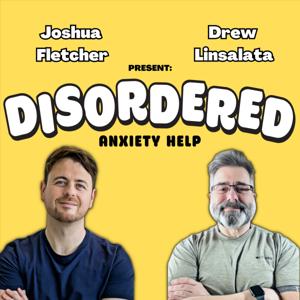


Based on Podcast App listening data
Send a question or comment via text message
When we struggle with chronic or disordered anxiety, we regularly experience powerful emotions that tend to look like fear or tension. We may experience intense feelings of being vulnerable, or doomed. We talk about these things all the time.
But what about when you have emotions about having those emotions? Struggling to overcome an anxiety problem that is creating disruption in your life is going to trigger actual emotions beyond just fear.
Many feel:
This is just a partial list. The emotions that come along with the struggle are real, valid, and must be acknowledged and addressed. Expressing them is important! This week Josh and Drew are talking about these often confusing and hard to handle emotions.
Have a listen. The conversation touches on the validity of all emotions, learning to be OK with all states of your humanity, why doing hard things is going to bring other parts of your life into the process, and how declaring catastrophe over how you're feeling NOW is a trap.
----
Want to talk about this episode, interact with us, and communicate with others that are sharing your experience? We're hanging out in the Disordered Community Space
https://disordered.fm/community
----
The Disordered Guide to Health Anxiety is available now:
https://www.disordered.fm/the-disordered-guide-to-health-anxiety/
---
Struggling with worry and rumination that you feel you can't stop or control? Check out Worry and Rumination Explained, a two hour pre-recorded workshop produced by Josh and Drew.
-----
Got questions or did it anyways to share? Send us an email or voicemail on our website.
https://disordered.fm
---
Disclaimer: Disordered is not therapy or a replacement for therapy. Listening to Disordered does not create a therapeutic relationship between you and the hosts or guests of the podcast. Information here is provided for psychoeducational purposes. As always, please consult your mental health and/or medical care providers. If you are having a mental health crisis, always reach out immediately for in-person help.
Send a question or comment via text message
"Hey ChatGPT. Please tell me how I'll know if I'm accepting my anxiety or avoiding it."
"Hey ChatGPT. When I get anxious my vision gets weird. Can anxiety do that? "
"Hello Reddit. Does anyone else feel like ...."
The guys are back after a short break to talk about the use of ChatGPT, AI, Reddit, Google, and the Internet in general in the context of anxiety and mental health issues.
There's no doubt that large language models - software that aggregates extremely large amounts of information found on the Internet and in libraries and huge databases - are here to stay. But while AI bots and engines like ChatGPT are sometimes quite impressive and can even present themselves as human, we do have to be mindful of how we're using these new tools as we work toward overcoming chronic and disordered forms of anxiety.
This episode includes
If you want to use AI or online tools to help you get better, this episode is probably worth a listen.
----
Drew's Substack Is Here
https://theanxioustruth.substack.com
----
Want to talk about this episode, interact with us, and communicate with others that are sharing your experience? We're hanging out in the Disordered Community Space
https://disordered.fm/community
----
The Disordered Guide to Health Anxiety is available now:
https://www.disordered.fm/the-disordered-guide-to-health-anxiety/
---
Struggling with worry and rumination that you feel you can't stop or control? Check out Worry and Rumination Explained, a two hour pre-recorded workshop produced by Josh and Drew.
-----
Got questions or did it anyways to share? Send us an email or voicemail on our website.
https://disordered.fm
---
Disclaimer: Disordered is not therapy or a replacement for therapy. Listening to Disordered does not create a therapeutic relationship between you and the hosts or guests of the podcast. Information here is provided for psychoeducational purposes. As always, please consult your mental health and/or medical care providers. If you are having a mental health crisis, always reach out immediately for in-person help.
Send a question or comment via text message
We're taking a short two week break, so no new episode of Disordered for April 18 or April 25. We'll be back again on May 2!
In the meanwhile, head over to disordered.fm and check out our back catalog of episodes. We've done some cool (and fun) stuff over the last two years so check it out.
Thank you for all your support. We really appreciate all of you guys!
----
Want to talk about this episode, interact with us, and communicate with others that are sharing your experience? We're hanging out in the Disordered Community Space
https://disordered.fm/community
----
The Disordered Guide to Health Anxiety is available now:
https://www.disordered.fm/the-disordered-guide-to-health-anxiety/
---
Struggling with worry and rumination that you feel you can't stop or control? Check out Worry and Rumination Explained, a two hour pre-recorded workshop produced by Josh and Drew.
-----
Got questions or did it anyways to share? Send us an email or voicemail on our website.
https://disordered.fm
---
Disclaimer: Disordered is not therapy or a replacement for therapy. Listening to Disordered does not create a therapeutic relationship between you and the hosts or guests of the podcast. Information here is provided for psychoeducational purposes. As always, please consult your mental health and/or medical care providers. If you are having a mental health crisis, always reach out immediately for in-person help.
Send a question or comment via text message
When working on anxiety recovery, sometimes we're DOING. Other times we have to focus on NOT doing. How confusing is that!?
This week Drew and Josh are chatting about how DOING things specific to anxiety recovery and NOT DOING things specific to anxiety recovery are related and how these two concepts work together.
In a nutshell, doing is about activating and engaging in behavior that anxiety says you should avoid. On the flip side, not doing is about refraining from the actions (including mental actions like rumination) that anxiety and fear will insist are good ideas.
This is subtle and nuanced, and will look a bit different from one person to the next. Things may change from day to day. So if you are confused by this - especially if you are dealing with GAD or health anxiety and want to know what you're "exposures" should be - this episode may help clear things up for you.
As usual the episode celebrates some wins from your peers - others struggling with the same issues you may be struggling with - and a healthy dose of humor and compassion. So listening is a good DOING thing. On the other hand, judging Josh and Drew for their continued insistence on talking about bologna sandwiches is definitely a NOT DOING thing. ;-)
----
Want to talk about this episode, interact with us, and communicate with others that are sharing your experience? We're hanging out in the Disordered Community Space
https://disordered.fm/community
----
The Disordered Guide to Health Anxiety is available now:
https://www.disordered.fm/the-disordered-guide-to-health-anxiety/
---
Struggling with worry and rumination that you feel you can't stop or control? Check out Worry and Rumination Explained, a two hour pre-recorded workshop produced by Josh and Drew.
-----
Got questions or did it anyways to share? Send us an email or voicemail on our website.
https://disordered.fm
---
Disclaimer: Disordered is not therapy or a replacement for therapy. Listening to Disordered does not create a therapeutic relationship between you and the hosts or guests of the podcast. Information here is provided for psychoeducational purposes. As always, please consult your mental health and/or medical care providers. If you are having a mental health crisis, always reach out immediately for in-person help.
Send a question or comment via text message
Emetophobia - an intense fear of vomiting and any thoughts or sensations associated with vomiting - is a more common struggle among anxious people than anyone might initial think. But Emetophobia can make its way into virtually every aspect of life, often resulting in a highly restricted lifestyle and a dramatic decrease in the ability to function.
This week Dara Lovitz and Dr. David Yusko join Drew and Josh to talk about emetophobia. Dara suffered for over 30 years before finally overcoming emetophobia through exposure based treatment with Dr. Yusko. Now they're sharing this experience with others in need of help, which is pretty awesome.
If your anxiety is driven by an intense fear of vomiting, this episode is absolutely worth a listen.
---
Dara Lovitz is an attorney working for a legal nonprofit organization, adjunct professor of animal law at two law schools in the Philadelphia area, and an author. She is a recovered emetophobe and co-wrote her fourth book, Gag Reflections: Conquering a Fear of Vomit Through Exposure Therapy, with her therapist Dr. David Yusko. With Dr. Yusko, she also co-founded Emetophobia Institute, which is the premier online resource for individuals struggling with emetophobia as well as therapists of all experience levels who wish to learn how to help their clients conquer emetophobia.
Dr. David Yusko is a licensed clinical psychologist in Pennsylvania and is the co-founder of the Center for Anxiety & Behavior Therapy. He received his Psy.D. in clinical psychology from the Graduate School of Applied and Professional Psychology at Rutgers, The State University of New Jersey. Upon completing his doctoral studies, Dr. Yusko joined The Center for the Treatment and Study of Anxiety (CTSA) at the University of Pennsylvania where his expertise in anxiety disorders broadly speaking was developed and refined. Under the mentorship of Dr. Edna Foa, Dr. Yusko focused his career on providing clients, and teaching other mental health professionals, evidence based treatments for anxiety related disorders (e.g. OCD, panic disorder, social phobia, PTSD, generalized anxiety disorder, and specific phobias).
----
Want to talk about this episode, interact with us, and communicate with others that are sharing your experience? We're hanging out in the Disordered Community Space
https://disordered.fm/community
----
The Disordered Guide to Health Anxiety is available now:
https://www.disordered.fm/the-disordered-guide-to-health-anxiety/
---
Struggling with worry and rumination that you feel you can't stop or control? Check out Worry and Rumination Explained, a two hour pre-recorded workshop produced by Josh and Drew.
-----
Got questions or did it anyways to share? Send us an email or voicemail on our website.
https://disordered.fm
---
Disclaimer: Disordered is not therapy or a replacement for therapy. Listening to Disordered does not create a therapeutic relationship between you and the hosts or guests of the podcast. Information here is provided for psychoeducational purposes. As always, please consult your mental health and/or medical care providers. If you are having a mental health crisis, always reach out immediately for in-person help.
Send a question or comment via text message
One of the perfect storms in the anxiety disorder world is the combination of existential related anxiety with the sensations/experiences of depersonalization and derealization. Unfortunately for many, this is a common combination and it can be so difficult to understand and address that it seemed an episode dedicated to this issue was in order.
As you might expect, the overall message in this episode is that while this is a very scary combination that be difficult to accept without fighting or resisting, in the end having existentially based thoughts/fears alongside this common anxiety symptom (DP/DR) is safe. It really is OK - though difficult - to take an acceptance based approach in this situation too.
The discussion touches on how anxiety can turn curiosity and wonder into dread, how an anxious mind will try very hard to answer un-answerable questions, and how DP/DR might seem to confirm the important/dangerous nature of existential thoughts and fears (but it really doesn't confirm anything except the fact that you are afraid and anxious).
As usual, the guys share some of their own experience, add clinical experience and expertise, and sprinkle a dash of humor and a helping of kindness and understanding into the discussion.
If you feel like DP/DR alongside existential anxiety is a deal breaker or show-stopper for you .... tune in. This one might be helpful.
----
Want to talk about this episode, interact with us, and communicate with others that are sharing your experience? We're hanging out in the Disordered Community Space
https://disordered.fm/community
----
The Disordered Guide to Health Anxiety is available now:
https://www.disordered.fm/the-disordered-guide-to-health-anxiety/
---
Struggling with worry and rumination that you feel you can't stop or control? Check out Worry and Rumination Explained, a two hour pre-recorded workshop produced by Josh and Drew.
-----
Got questions or did it anyways to share? Send us an email or voicemail on our website.
https://disordered.fm
---
Disclaimer: Disordered is not therapy or a replacement for therapy. Listening to Disordered does not create a therapeutic relationship between you and the hosts or guests of the podcast. Information here is provided for psychoeducational purposes. As always, please consult your mental health and/or medical care providers. If you are having a mental health crisis, always reach out immediately for in-person help.
Send a question or comment via text message
Do you feel like you've "mostly" overcome your chronic or disordered anxiety issues but there are still challenges that linger? Maybe you've felt fully recovered once before, or even several times before, but you keep finding yourself back in the thick of it or unable to overcome a few specific challenges.
If this is you, then tune in as Josh and Drew talk about the concept of "incomplete" anxiety disorder recovery.
And as usual, there's a healthy dose of understanding and a few laughs along the way!
----
Want to talk about this episode, interact with us, and communicate with others that are sharing your experience? We're hanging out in the Disordered Community Space
https://disordered.fm/community
----
The Disordered Guide to Health Anxiety is available now:
https://www.disordered.fm/the-disordered-guide-to-health-anxiety/
---
Struggling with worry and rumination that you feel you can't stop or control? Check out Worry and Rumination Explained, a two hour pre-recorded workshop produced by Josh and Drew.
-----
Got questions or did it anyways to share? Send us an email or voicemail on our website.
https://disordered.fm
---
Disclaimer: Disordered is not therapy or a replacement for therapy. Listening to Disordered does not create a therapeutic relationship between you and the hosts or guests of the podcast. Information here is provided for psychoeducational purposes. As always, please consult your mental health and/or medical care providers. If you are having a mental health crisis, always reach out immediately for in-person help.
Send a question or comment via text message
When working to overcome an anxiety disorder, the biggest challenge many in our community can identify is flying. For chronically anxious people, the idea of getting on a plane, being trapped for hours, and being terrified or out of control for that long seems like something they will never be able to.
Even for people that are well on the way to recovery, flying can still feel like the "ultimate test" of recovery. The fear that they will crumble and be in a totally uncontrollable, inconsolable state while in the air can be powerful. It leads some to avoid travel completely.
This week Drew and Josh had a chat with Dr. David Carbonell about the intersection of anxiety disorders and flying. Dave is well known in the anxiety disorder community and brings us not only a wealth of knowledge and experience in this area, but also a healthy dose of understanding and much needed humor.
We're covering all the usual issues:
If you're struggling with disordered anxiety and terrified at the thought of flying not because you fear a crash but because you fear your own thoughts, emotions, and physical sensations, tune in. This episode is for you.
For more on Dr. David Carbonell visit his website:
https://anxietycoach.com
----
Want to talk about this episode, interact with us, and communicate with others that are sharing your experience? We're hanging out in the Disordered Community Space
https://disordered.fm/community
----
The Disordered Guide to Health Anxiety is available now:
https://www.disordered.fm/the-disordered-guide-to-health-anxiety/
---
Struggling with worry and rumination that you feel you can't stop or control? Check out Worry and Rumination Explained, a two hour pre-recorded workshop produced by Josh and Drew.
-----
Got questions or did it anyways to share? Send us an email or voicemail on our website.
https://disordered.fm
---
Disclaimer: Disordered is not therapy or a replacement for therapy. Listening to Disordered does not create a therapeutic relationship between you and the hosts or guests of the podcast. Information here is provided for psychoeducational purposes. As always, please consult your mental health and/or medical care providers. If you are having a mental health crisis, always reach out immediately for in-person help.
Send a question or comment via text message
How can I learn to self-soothe when I get anxious and I'm terrified of my body or my thoughts?
Well ... while it might seem like launching into a soothing technique designed to control the fight or flight response is a good idea, this week Josh and Drew are talking about why the concept of self-soothing doesn't automatically make sense in the context of anxiety disorders.
Self-soothing, supporting yourself while you naturally work through difficult moments and experiences, is awesome. There are a few excellent examples in this episode of what that might look like (including a reference to Josh in a cozy onesie), but when we feel like we must immediately escape from feelings inside us because we are in what feels like an urgent situation, self-soothing can be counterproductive.
If you're struggling with the idea that you should be learning how to forcibly soothe your anxiety and frustrated because you can't find ways to reliably or consistently do this on demand, this episode is worth a listen ... even if it took us almost 30 minutes to mention crying, which is one of the greatest organic natural soothing responses of all time.
----
Want to talk about this episode, interact with us, and communicate with others that are sharing your experience? We're hanging out in the Disordered Community Space
https://disordered.fm/community
----
The Disordered Guide to Health Anxiety is available now:
https://www.disordered.fm/the-disordered-guide-to-health-anxiety/
---
Struggling with worry and rumination that you feel you can't stop or control? Check out Worry and Rumination Explained, a two hour pre-recorded workshop produced by Josh and Drew.
-----
Got questions or did it anyways to share? Send us an email or voicemail on our website.
https://disordered.fm
---
Disclaimer: Disordered is not therapy or a replacement for therapy. Listening to Disordered does not create a therapeutic relationship between you and the hosts or guests of the podcast. Information here is provided for psychoeducational purposes. As always, please consult your mental health and/or medical care providers. If you are having a mental health crisis, always reach out immediately for in-person help.
Send a question or comment via text message
Breathing anxiety! This is such a common issue in the Disordered community. Breathing or breath focused anxiety often involves a few key concepts:
"I feel like I can't get a deep enough breath!"
"When I get really anxious it feels like I can't breathe."
"I'm super focused on my breath all day long and I hate it!"
Today we're joined by clinical psychologist Dr. Amy Janzen-Claude to chat about breathing and breath-focused anxiety, and the most effective ways to approach and address this common struggle.
Of particular note is the discussion about how while acceptance and tolerance concepts are universal, how we apply them can be very individual and might look different from one person to the next.
In the end ... as expected ... approaching breathing anxiety isn't much different than approaching anxiety focused on any other somatic experience or core fear. You might feel like this a very special and super important issue, but that is your brain insisting that it must keep you safe ... while you ARE safe and always have been.
Thanks to Dr. Janzen-Claude for getting up early to join us today!
To find Dr. Amy Janzen-Claude online:
https://www.instagram.com/drjanzenclaude/
----
Want to talk about this episode, interact with us, and communicate with others that are sharing your experience? We're hanging out in the Disordered Community Space
https://disordered.fm/community
----
The Disordered Guide to Health Anxiety is available now:
https://www.disordered.fm/the-disordered-guide-to-health-anxiety/
---
Struggling with worry and rumination that you feel you can't stop or control? Check out Worry and Rumination Explained, a two hour pre-recorded workshop produced by Josh and Drew.
-----
Got questions or did it anyways to share? Send us an email or voicemail on our website.
https://disordered.fm
---
Disclaimer: Disordered is not therapy or a replacement for therapy. Listening to Disordered does not create a therapeutic relationship between you and the hosts or guests of the podcast. Information here is provided for psychoeducational purposes. As always, please consult your mental health and/or medical care providers. If you are having a mental health crisis, always reach out immediately for in-person help.
From the publisher's feed
Ranked by our users in the last 21 days

2,589 Listeners

1,799 Listeners
1,436 Listeners

1,217 Listeners

829 Listeners

753 Listeners

2,509 Listeners

1,381 Listeners

3,611 Listeners
430 Listeners
585 Listeners
364 Listeners

364 Listeners

18,949 Listeners
198 Listeners