
Sign up to save your podcasts
Or



Based on Podcast App listening data
Connect with us on Patreon for our exclusive content.
Email [email protected]
Instagram @downtobirthshow
Call us at 802-GET-DOWN
Work with Cynthia:
203-952-7299
HypnoBirthingCT.com
Work with Trisha:
734-649-6294
Please remember we don’t provide medical advice. Speak to your licensed medical provider for all your healthcare matters.
At least one-third of women report to experiencing birth trauma. Traumatic experiences can be trapped in the physical body and manifest as post-traumatic stress disorder, easily triggered by everyday events and preventing us from fully embracing our experience as a mothers. Talk therapy can be helpful but often is not sufficient to fully resolve trauma, because trauma causes our brains to become wired to focus on repetitive thoughts, creating a maladaptive circuit. Fortunately, when we sleep, our brains process our emotions and release negative associations, but it takes many weeks or even years for trauma to fully process in our sleep. EMDR works to accelerate this process through specific, guided eye movement therapy, and has been shown to be extremely effective at quickly and successfully releasing trauma. In the United States, the Department of Veterans Affairs and Department of Defense have cited EMDR as a “best practice” in treating veterans with PTSD. Research demonstrating the effectiveness of EMDR includes dozens of clinical trials, research studies and academic papers. It has been approved by the World Health Organization (WHO) and multiple other governmental and/or health organizations. Carolyn Yates, LMFT and EMDR practitioner joins us today to explain how and why EMDR is a revolutionary treatment for not only birth trauma but any traumatic event.
For more about EMDR visit:
https://www.emdria.org/about-emdr-therapy/
Carolyn Yates, LMFT
Down to Birth is sponsored by:
Needed -- Optimal nutritional products to nourish yourself before, during, and after pregnancy
DrinkLMNT -- Purchase LMNT today and receive a free sample kit. Stay salty.
Love Majka Products -- Support your milk supply with nourishing protein powder, hydration boosters and lactation bites.
Silverette Nursing Cups -- Soothe and heal sore nipples with 925 silver nursing cups.
Postpartum Soothe -- Herbs and padsicles to heal and comfort after vaginal birth.
Send us Fan Mail
Support the show
Access our workshops: Have a Physiologic Birth in the Hospital and Ultrasound: The Research vs Rhetoric
Needed <-- for 20% off
DrinkLMNT <-- for FREE 8-day supply
Primally Pure Skincare: Use code DOWNTOBIRTH
Postpartum Soothe: Use code DOWNTOBIRTH
ENERGYBits Superfood<--for 20% off
Join Patreon here
IG @downtobirthshow
Call 802-GET-DOWN.
Watch us on YouTube! Please note we don’t provide medical advice.
With the right knowledge and education about the intricacies of our own health, we have the potential to influence how our body gives birth. Did you know that by twenty-eight weeks of pregnancy your body is already making physiological and functional shifts to prepare for labor? Or that your baby's adrenal glands are the biggest factor in the initiation of labor? Have you ever heard that sub-clincal hypothyroidism is associated with a significantly higher rate of postpartum hemorrhage or that if you are magnesium deficient, your oxytocin receptors may not be as readily available? Are you curious about the role of CoQ-10 in the prevention of pre-eclampsia or how hylauronic acid influences cervical readiness for labor? Author Sarah Thompson of @functionalmaternity gets into all the fascinating details of the functional birth process and gives us practical tips on what we can do to optimize our bodies for birth. We're sure you've never heard physiologic details like this before. Grab a pen, a pad of paper, and your thinking cap for this one!
Functional Maternity on Instagram
Functional Maternity
**********
Down to Birth is sponsored by:
Needed -- Optimal nutritional products to nourish yourself before, during, and after pregnancy
DrinkLMNT -- Purchase LMNT today and receive a free sample kit. Stay salty.
Love Majka Products -- Support your milk supply with nourishing protein powder, hydration boosters and lactation bites.
Silverette Nursing Cups -- Soothe and heal sore nipples with 925 silver nursing cups.
Postpartum Soothe -- Herbs and padsicles to heal and comfort after vaginal birth.
Send us Fan Mail
Support the show
Access our workshops: Have a Physiologic Birth in the Hospital and Ultrasound: The Research vs Rhetoric
Needed <-- for 20% off
DrinkLMNT <-- for FREE 8-day supply
Primally Pure Skincare: Use code DOWNTOBIRTH
Postpartum Soothe: Use code DOWNTOBIRTH
ENERGYBits Superfood<--for 20% off
Join Patreon here
IG @downtobirthshow
Call 802-GET-DOWN.
Watch us on YouTube! Please note we don’t provide medical advice.
Hello! We are back with the May Q&A. This month we kick things off with a short conversation on obstetrical rhetoric around the risks of cesarean birth and induction, followed by your excellent questions on:
And in our extended version of this episode, we dive into:
Pitocin Episode #134 here.
Join us over on Patreon or subscribe on Apple podcasts for the extended version of this episode.
Down to Birth is sponsored by:
Needed -- Optimal nutritional products to nourish yourself before, during, and after pregnancy
DrinkLMNT -- Purchase LMNT today and receive a free sample kit. Stay salty.
Love Majka Products -- Support your milk supply with nourishing protein powder, hydration boosters and lactation bites.
Silverette Nursing Cups -- Soothe and heal sore nipples with 925 silver nursing cups.
Postpartum Soothe -- Herbs and padsicles to heal and comfort after vaginal birth.
Send us Fan Mail
Support the show
Access our workshops: Have a Physiologic Birth in the Hospital and Ultrasound: The Research vs Rhetoric
Needed <-- for 20% off
DrinkLMNT <-- for FREE 8-day supply
Primally Pure Skincare: Use code DOWNTOBIRTH
Postpartum Soothe: Use code DOWNTOBIRTH
ENERGYBits Superfood<--for 20% off
Join Patreon here
IG @downtobirthshow
Call 802-GET-DOWN.
Watch us on YouTube! Please note we don’t provide medical advice.
Lisa Marie and Richard Oxenham are a water-birthing midwifery duo extraordinaire in addition to being husband and wife and protégés of Barbara Harper of Waterbirth International. Lisa has attended over six hundred water births and has never, not once, induced a woman's labor. Through their years of experience, they have come to believe that giving birth in water improves birth outcomes over giving birth out of the water. In this episode, we cover the ways in which water birth increases the safety of home birth by reducing complications associated with cord evulsion, shoulder dystocia, deep tearing, postpartum hemorrhage, and newborn transition. Lisa also touches on how water birth may be the most effective tool for easing the birth experience for those with a history of trauma or abuse. We also learn the real meaning of the word "vagina." Don't miss this incredibly important and highly informative episode on the benefits of home water birth.
BarefootMidwife
Beardedmidwife
**********
Down to Birth is sponsored by:
Needed -- Optimal nutritional products to nourish yourself before, during, and after pregnancy.
DrinkLMNT -- Purchase LMNT today and receive a free sample kit. Stay salty.
Love Majka Products -- Support your milk supply with nourishing protein powder, hydration boosters, and lactation bites.
Silverette Nursing Cups -- Soothe and heal sore nipples with 925 silver nursing cups.
Postpartum Soothe -- Herbs and padsicles to heal and comfort after vaginal birth.
Send us Fan Mail
Support the show
Access our workshops: Have a Physiologic Birth in the Hospital and Ultrasound: The Research vs Rhetoric
Needed <-- for 20% off
DrinkLMNT <-- for FREE 8-day supply
Primally Pure Skincare: Use code DOWNTOBIRTH
Postpartum Soothe: Use code DOWNTOBIRTH
ENERGYBits Superfood<--for 20% off
Join Patreon here
IG @downtobirthshow
Call 802-GET-DOWN.
Watch us on YouTube! Please note we don’t provide medical advice.
When your hospital birth plan repeatedly includes the word "No", considering home birth becomes extremely enticing. In this episode, Colleen of @uncomplicatedfamily shares with us how she left her OB and chose home birth not only the first time but six more thereafter! Many mothers fear the idea of home birth because they only imagine what might go wrong. And while there are certain risks to consider before home birthing and it isn't the preference of every woman, we review how it can be a safe and smart choice for many, even the first time around.
In this conversation we discuss the top reason for home-to-hospital transfer, the data from the largest study ever conducted on home birth (and what information was "conveniently" kept out of the study), and why home birth can be a reasonable choice for 99% of women, yet only 1% are pursuing them.
Perinatal mortality and morbidity in a nationwide cohort of 529,688 low-risk planned home and hospital birth.
Down to Birth is sponsored by:
DrinkLMNT -- Purchase LMNT today and receive a free sample kit. Stay salty.
Love Majka Products -- Support your milk supply with nourishing protein powder, hydration boosters and lactation bites.
Silverette Nursing Cups -- Soothe and heal sore nipples with 925 silver nursing cups.
Postpartum Soothe -- Organic herbal padsicles to support healing after vaginal birth.
Send us Fan Mail
Support the show
Access our workshops: Have a Physiologic Birth in the Hospital and Ultrasound: The Research vs Rhetoric
Needed <-- for 20% off
DrinkLMNT <-- for FREE 8-day supply
Primally Pure Skincare: Use code DOWNTOBIRTH
Postpartum Soothe: Use code DOWNTOBIRTH
ENERGYBits Superfood<--for 20% off
Join Patreon here
IG @downtobirthshow
Call 802-GET-DOWN.
Watch us on YouTube! Please note we don’t provide medical advice.
Chanie of @yoledetacademy is an experienced labor and delivery nurse and expert witness in cases which the appropriate use of Pitocin is in question. Today, she joins us to give us an insider's perspective on the use of Pitocin in hospital birth. Pitocin, now known as the narcotic of modern obstetrics, is increasingly overused and the harms of its use are significantly under represented. Join us in this discerning conversation around the use and abuse of Pitocin in hospital birth.
Down to Birth is sponsored by:
Needed -- Optimal nutritional products to nourish yourself before, during, and after pregnancy
DrinkLMNT -- Purchase LMNT today and receive a free sample kit. Stay salty.
Love Majka Products -- Support your milk supply with nourishing protein powder, hydration boosters and lactation bites.
Silverette Nursing Cups -- Soothe and heal sore nipples with 925 silver nursing cups.
Postpartum Soothe -- Herbs and padsicles to heal and comfort after vaginal birth.
Send us Fan Mail
Support the show
Access our workshops: Have a Physiologic Birth in the Hospital and Ultrasound: The Research vs Rhetoric
Needed <-- for 20% off
DrinkLMNT <-- for FREE 8-day supply
Primally Pure Skincare: Use code DOWNTOBIRTH
Postpartum Soothe: Use code DOWNTOBIRTH
ENERGYBits Superfood<--for 20% off
Join Patreon here
IG @downtobirthshow
Call 802-GET-DOWN.
Watch us on YouTube! Please note we don’t provide medical advice.
RhoGAM or Anti-D is a blood product offered to pregnant women with an Rh-negative blood type who have conceived with an Rh-positive father. The use of RhoGAM is said to significantly reduce the chances of the mother becoming sensitized to a future baby if the current baby she is carrying has an Rh-positive blood type. The RhoGAM injection is routinely offered to all Rh-negative women, despite that it is not always needed, comes with certain side effects, and isn't 100% effective.
In this episode, we hear from two women: Kelsey and Emily, both of whom are Rh-negative mothers. Kelsey and Emily each had RhoGAM in the past: Kelsey had it with her first baby, and Emily had it when she miscarried. Both of them had some degree of side-effects from the shot. In Kelsey's second pregnancy and birth, she declined RhoGAM entirely, and Emily (currently pregnant) is open to getting RhoGAM after her baby's birth. In this roundtable-style episode, we learn about the thought processes leading to their respective decisions.
If you are struggling to determine if RhoGAM is the right choice for you, this episode will give you the statistics and factors to consider if and when RhoGAM or Anti-D is necessary and the right choice for you and your baby.
**********
Send us Fan Mail
Support the show
Access our workshops: Have a Physiologic Birth in the Hospital and Ultrasound: The Research vs Rhetoric
Needed <-- for 20% off
DrinkLMNT <-- for FREE 8-day supply
Primally Pure Skincare: Use code DOWNTOBIRTH
Postpartum Soothe: Use code DOWNTOBIRTH
ENERGYBits Superfood<--for 20% off
Join Patreon here
IG @downtobirthshow
Call 802-GET-DOWN.
Watch us on YouTube! Please note we don’t provide medical advice.
Hello everyone! We are back with our April Q&A episode, and it is loaded with your excellent questions! Don't forget you can subscribe on Apple podcasts Patreon to hear the extended, ad-free versions.
Here's what we are talking about today:
And in our extended version (available on Apple subscriptions & Patreon):
And of course, everyone's favorite: Quickies!
Thanks for joining us, and remember you can call our phone line with your questions 24/7 at 802-GET-DOWN. (That's 802-438-3696)
**********
Send us Fan Mail
Support the show
Access our workshops: Have a Physiologic Birth in the Hospital and Ultrasound: The Research vs Rhetoric
Needed <-- for 20% off
DrinkLMNT <-- for FREE 8-day supply
Primally Pure Skincare: Use code DOWNTOBIRTH
Postpartum Soothe: Use code DOWNTOBIRTH
ENERGYBits Superfood<--for 20% off
Join Patreon here
IG @downtobirthshow
Call 802-GET-DOWN.
Watch us on YouTube! Please note we don’t provide medical advice.
Chelsea was determined to have an unmedicated hospital birth. When she was unexpectedly diagnosed with cholestasis at 38 weeks, she found herself getting induced with Misoprostil, Pitocin, and ruptured membranes at 3 cm dilated. She quickly progressed to full dilation, had a short pushing phase and birthed her baby vaginally. Everything seemed great until she went home and starting passing large blood clots. After multiple calls to different OBs that all passed it off as normal, she started bleeding profusely and was transferred back to the hospital for delayed postpartum hemorrhage. Chelsea's story is one of knowing the importance of trusting our own intuition and insisting we get the care we need when we know something is wrong.
Down to Birth is sponsored by:
DrinkLMNT -- Purchase LMNT today and receive a free sample kit. Stay salty.
Love Majka Products -- Support your milk supply with nourishing protein powder, hydration boosters and lactation bites.
Silverette Nursing Cups -- Soothe and heal sore nipples with 925 silver nursing cups.
Postpartum Soothe -- Herbs and padsicles to heal and comfort after vaginal birth.
**********
Send us Fan Mail
Support the show
Access our workshops: Have a Physiologic Birth in the Hospital and Ultrasound: The Research vs Rhetoric
Needed <-- for 20% off
DrinkLMNT <-- for FREE 8-day supply
Primally Pure Skincare: Use code DOWNTOBIRTH
Postpartum Soothe: Use code DOWNTOBIRTH
ENERGYBits Superfood<--for 20% off
Join Patreon here
IG @downtobirthshow
Call 802-GET-DOWN.
Watch us on YouTube! Please note we don’t provide medical advice.
From the publisher's feed
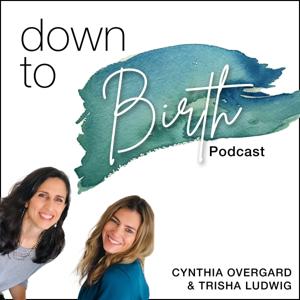
Join Cynthia Overgard and Trisha Ludwig once per week for evidence-based straight talk on pregnancy, birth and postpartum --- beyond the clichés and beyond the system. With 40 years' combined…
Ranked by our users in the last 21 days

2,171 Listeners

1,227 Listeners
1,035 Listeners

558 Listeners

727 Listeners
1,297 Listeners

14,743 Listeners
171 Listeners
661 Listeners
819 Listeners

223 Listeners

209 Listeners
160 Listeners
90 Listeners

145 Listeners