
Sign up to save your podcasts
Or



Based on Podcast App listening data
Yvonne Strahovski is the Emmy-nominated, SAG Award-nominated and Golden-Globe-nominated actress whose voice you may recognize as the stoic Serena Joy Waterford from The Handmaid's Tale. She is the mother of a toddler and newborn, with starkly different birth stories to share. During Yvonne's first pregnancy, she felt an intuitive pull toward birthing at home, but suppressed her inner voice in favor of the rational, which warned Yvonne that she lived too far from the hospital in the event of a possible transfer. Choosing not to explore it further, Yvonne had her first baby in the hospital. Despite having an obstetrician she deeply trusted, she felt her birthing body start to shut down as soon as she arrived to the unfamiliar setting and found herself surrounded by numerous "strangers" - e.g. hospital staff. Yvonne began her second pregnancy sensing some PTSD from her first birth, and this time allowed her inner voice to grow louder. Yvonne shares her story of consuming a series of inspiring home-birth stories on Down to Birth Show and other platforms, until finally she said, "If all these women can do it, why can't I?" Yvonne's second son was born at home in December 2021, with her husband, midwives and doula present, along with some of her closest friends and even her obstetrician, who served as a back-up attendant.
Yvonne shares how her fear was never completely eradicated before going into her second labor, and said her supportive team and HypnoBirthing - which she had once assumed was best-suited for those with an inclination toward yoga and meditation - were what kept her erring on the side of grounded and calm through pregnancy and birth rather than fearful.
Yvonne commented on the irony of playing Serena Waterford in the world of Gilead during these formative years as a new mother, and is certain she'll have more to say when she can speak freely after the next season drops. Even though Yvonne is typically very private, she felt compelled to join us as a way to pay forward an inspiring story that might reach those with their own inner voices about pursuing home birth.
This show is sponsored by:
Silverette USA
DYPER
NOM Maternity
Serenity Kids
Wildbird.co
Beautiful Births and Beyond
Postpartum Soothe
**********
Send us Fan Mail
Support the show
Access our workshops: Have a Physiologic Birth in the Hospital and Ultrasound: The Research vs Rhetoric
Needed <-- for 20% off
DrinkLMNT <-- for FREE 8-day supply
Primally Pure Skincare: Use code DOWNTOBIRTH
Postpartum Soothe: Use code DOWNTOBIRTH
ENERGYBits Superfood<--for 20% off
Join Patreon here
IG @downtobirthshow
Call 802-GET-DOWN.
Watch us on YouTube! Please note we don’t provide medical advice.
It is time for our monthly Q&A episode! This month we kick it off with a follow-up conversation on the impact of early, frequent breastfeeding on significant jaundice. Next, we address the question of why babies who are born "big" get heel sticks for blood sugar monitoring; the impact of a c-section birth on your pelvic floor; how to manage family boundaries around your birth and birth preferences with your sister and mother-in-law; if you tear during vaginal birth and get medication for stitches, is it still considered an unmedicated or natural birth? Is there a way to monitor your baby's heart rate and still be able to move freely and change position? Will an anterior placenta impact my labor? Tune in to catch all these great questions and more. Thank you to everyone who submitted questions for our monthly Q&A. If you have a questions for a future episode, please submit on our website downtobirthshow.com
* * * * * * * * * *
Connect with us on Instagram @DownToBirthShow, where we post new information daily related to pregnancy, childbirth and postpartum. You can reach us at [email protected]. We are always happy to hear from our listeners and appreciate questions for our monthly Q&A episodes. To submit a question, visit the Down To Birth website or send us a voice memo through Instagram messenger.
This show is sponsored by:
Silverette USA*
DYPER*
NOM Maternity*
Serenity Kids*
Wildbird.co*
Beautiful Births and Beyond*
Postpartum Soothe*
*Use promo code DOWNTOBIRTH
**********
Send us Fan Mail
Support the show
Access our workshops: Have a Physiologic Birth in the Hospital and Ultrasound: The Research vs Rhetoric
Needed <-- for 20% off
DrinkLMNT <-- for FREE 8-day supply
Primally Pure Skincare: Use code DOWNTOBIRTH
Postpartum Soothe: Use code DOWNTOBIRTH
ENERGYBits Superfood<--for 20% off
Join Patreon here
IG @downtobirthshow
Call 802-GET-DOWN.
Watch us on YouTube! Please note we don’t provide medical advice.
When Jessica Pin was a teenager, she became convinced her labia minora were unusually large and unattractive. Within days of her 18th birthday, she underwent labiaplasty with a prominent and trusted OB/GYN. Without her consent or knowledge, her surgeon severed the dorsal nerve of her clitoris, resulting in a loss of clitoral sensation. In the face of clear evidence, her doctor denied wrongdoing.
Jessica has since discovered labiaplasty is regularly performed by OBs even though (a) it's not covered in residency, (b) there are no training standards, and (c) there is no procedure code, which means there is no way to know how many labiaplasty surgeries are performed, and (d) adequate vulvar anatomy is not talk to OBGYNs, which makes damages difficult to prove in litigation. Through her online platform, Jessica has attracted countless women who've shared their stories of losing sensation during the same surgery.
Jessica is here to tell her personal story - including how her parents reluctantly supported her surgery - and to share the achievements and challenges of her activism. Jessica has already succeeded in have some medical texts and journals corrected, and she's on a tireless mission to warn women that surgeons know little to nothing about clitoral anatomy.
Jessica Pin
This show is sponsored by:
Silverette USA*
DYPER*
NOM Maternity*
Serenity Kids*
Wildbird.co*
Beautiful Births and Beyond*
Postpartum Soothe*
*Use promo code DOWNTOBIRTH
**********
Send us Fan Mail
Support the show
Access our workshops: Have a Physiologic Birth in the Hospital and Ultrasound: The Research vs Rhetoric
Needed <-- for 20% off
DrinkLMNT <-- for FREE 8-day supply
Primally Pure Skincare: Use code DOWNTOBIRTH
Postpartum Soothe: Use code DOWNTOBIRTH
ENERGYBits Superfood<--for 20% off
Join Patreon here
IG @downtobirthshow
Call 802-GET-DOWN.
Watch us on YouTube! Please note we don’t provide medical advice.
Postpartum psychosis occurs in 1 to 2 per thousand births and involves extreme conditions such as hallucinations, intrusive thoughts, paranoia, suspiciousness, hyperactivity and inability to sleep. Today, Christa Ardelean joins us to share her powerful story of suffering with postpartum psychosis. Her story begins with a difficult pregnancy and birth, which, unbeknownst to Christa, included numerous risk factors associated with perinatal mood disorders. When Christa's son was born, she didn't want to hold him. Shortly after, she woke up one morning and said to herself, "My baby would be so much better off if he were dead or if I were." Terrified, she found 24/7 support for the next six weeks while she suffered with hallucinations, intrusive thoughts, and an inability to bond with her baby. With continuous support, medication, and journaling, in time, she completely overcame these feelings. By nine months, she felt like her own person again and now reflects on how her deep love for her son saved her life.
If you are suffering from postpartum psychosis, you can can get help now.
Call the PSI HelpLine: 1-800-944-4773
Postpartum Support International
More episodes like this:
#50 | Postpartum Mini: You're Not Going Crazy, It's Probably Postpartum Anxiety
#94 | The Terror of Intrusive Thoughts: Lisa's Postpartum Anxiety
This show is sponsored by:
Silverette USA*
DYPER*
NOM Maternity*
Serenity Kids*
Wildbird.co*
Beautiful Births and Beyond*
Postpartum Soothe*
*Use promo code DOWNTOBIRTH
**********
Send us Fan Mail
Support the show
Access our workshops: Have a Physiologic Birth in the Hospital and Ultrasound: The Research vs Rhetoric
Needed <-- for 20% off
DrinkLMNT <-- for FREE 8-day supply
Primally Pure Skincare: Use code DOWNTOBIRTH
Postpartum Soothe: Use code DOWNTOBIRTH
ENERGYBits Superfood<--for 20% off
Join Patreon here
IG @downtobirthshow
Call 802-GET-DOWN.
Watch us on YouTube! Please note we don’t provide medical advice.
Gestational Diabetes Mellitus (GDM) is the most common metabolic complication of pregnancy impacting 5-10% of pregnancies in the United States. It is controversial, complicated and loaded with misinformation. Do I really have it? Can I reverse it? Is there a way to prevent it? According to Lily Nichols, RDN CDE author of Real Food for Gestational Diabetes and Real Food for Pregnancy, you can certainly "stack the deck in your favor" to reduce your chances of it impacting your pregnancy and birth. In this episode, we discuss the nutritional deficits that may set you up for the development of GDM along with the flaws in how we screen women for GDM and finally, the things you can do to best manage your diet if you are diagnosed with GDM.
Lily Nichols
This show is sponsored by:
Silverette USA*
NOM Maternity*
Serenity Kids*
Wildbird.co*
Beautiful Births and Beyond*
Postpartum Soothe*
*Use promo code DOWNTOBIRTH
**********
Send us Fan Mail
Support the show
Access our workshops: Have a Physiologic Birth in the Hospital and Ultrasound: The Research vs Rhetoric
Needed <-- for 20% off
DrinkLMNT <-- for FREE 8-day supply
Primally Pure Skincare: Use code DOWNTOBIRTH
Postpartum Soothe: Use code DOWNTOBIRTH
ENERGYBits Superfood<--for 20% off
Join Patreon here
IG @downtobirthshow
Call 802-GET-DOWN.
Watch us on YouTube! Please note we don’t provide medical advice.
It is time for our monthly Q&A episode! Thank you to all who submitted excellent questions. Today we are talking about managing postpartum boundaries with in-laws, newborn nursing blisters--are they normal or not? What can I do to ensure my baby is not separated from us after giving birth in the hospital--do they really need to leave the room to be examined? What are the actual reasons I might truly need a C-section? What is the best way to split parental duties after baby arrives? And finally, we finish with a round of rapid fire quickies touching on topics like leaking breasts, prolapse, enlarged feet in pregnancy, gestational diabetes, bathing babies and what surprises women most about birth!
This show is sponsored by:
NOM Maternity*
Serenity Kids*
Wildbird.co*
Silverette USA*
Beautiful Births and Beyond*
Postpartum Soothe*
*Use promo code DOWNTOBIRTH
**********
Send us Fan Mail
Support the show
Access our workshops: Have a Physiologic Birth in the Hospital and Ultrasound: The Research vs Rhetoric
Needed <-- for 20% off
DrinkLMNT <-- for FREE 8-day supply
Primally Pure Skincare: Use code DOWNTOBIRTH
Postpartum Soothe: Use code DOWNTOBIRTH
ENERGYBits Superfood<--for 20% off
Join Patreon here
IG @downtobirthshow
Call 802-GET-DOWN.
Watch us on YouTube! Please note we don’t provide medical advice.
"You'll never get sued for doing a C-section. You'll only get sued for the C-section you didn’t do." This is the narrative in obstetrics and the lens through which hospital birth is viewed. Litigation is feared in obstetrics but for the wrong reasons. What if, instead of resorting to C-sections to prevent liability exposure, doctors were rewarded for avoiding unnecessary C-sections? United States law as it's practiced today actually incentivizes OBs to perform C-sections, and this system plays a role in today’s high maternal mortality rates in the U.S. Further, obstetricians get paid more from their hospital administrators for cesarean sections.
You may remember Hermine Hayes-Klein, the women's healthcare and human rights attorney who joined us in December for Down To Birth Episode #138 for Legal Case Study #1. Hermine is back today to tell us of one woman whose bladder was permanently damaged by her birth management team. Our discussion demonstrates how U.S. law protects providers in such cases, not the patient, and how true informed consent is routinely and repeatedly neglected in obstetrics.
Hermine Hayes-Klein
This show is sponsored by:
Silverette USA*
NOM Maternity*
Serenity Kids*
Wildbird.co*
Beautiful Births and Beyond*
Postpartum Soothe*
*Use promo code DOWNTOBIRTH
**********
Send us Fan Mail
Support the show
Access our workshops: Have a Physiologic Birth in the Hospital and Ultrasound: The Research vs Rhetoric
Needed <-- for 20% off
DrinkLMNT <-- for FREE 8-day supply
Primally Pure Skincare: Use code DOWNTOBIRTH
Postpartum Soothe: Use code DOWNTOBIRTH
ENERGYBits Superfood<--for 20% off
Join Patreon here
IG @downtobirthshow
Call 802-GET-DOWN.
Watch us on YouTube! Please note we don’t provide medical advice.
Today's discussion with sisters Jenny & Carrie, the pediatric occupational therapists behind Ontrack baby and the NOEL method, is a fascinating exploration of how the way we give birth impacts infant development. In particular, when the baby does not experience the "vaginal squeeze" the infant Moro or "startle" reflex may become over-reactive, leading to more fussy babies and slower development. Jenny & Carrie explain how vaginal birth can help infant development and answer the important question of how to best support babies born via cesarean section or have a high stress, high-intervention birth. They share the number one thing we can do to help our babies development and give us their take on swaddling, SIDS, and stomach sleeping for infants.
Ontrack Baby
This show is sponsored by:
Silverette USA*
NOM Maternity*
Serenity Kids*
Wildbird.co*
Beautiful Births and Beyond*
Postpartum Soothe*
*Use promo code DOWNTOBIRTH
**********
Send us Fan Mail
Support the show
Access our workshops: Have a Physiologic Birth in the Hospital and Ultrasound: The Research vs Rhetoric
Needed <-- for 20% off
DrinkLMNT <-- for FREE 8-day supply
Primally Pure Skincare: Use code DOWNTOBIRTH
Postpartum Soothe: Use code DOWNTOBIRTH
ENERGYBits Superfood<--for 20% off
Join Patreon here
IG @downtobirthshow
Call 802-GET-DOWN.
Watch us on YouTube! Please note we don’t provide medical advice.
"I don't have time for this today. My son has a soccer game. I am going to say that her baby's heart rate is decelerating and we need to do a c-section." This is just one of the many things Shelby, a nurse in Arizona, heard from doctors in labor & delivery when she worked on the maternity ward. This episode brings to light the very real fact that providers don't always have the laboring woman's best interest in mind. Instead, profits, time, and liability concerns drive many of the decisions leading to unnecessary birth interventions. Shelby joins us today to share what she witnessed in her years as a nurse and why she left obstetrics.
This show is sponsored by:
Silverette USA*
Beautiful Births and Beyond*
Postpartum Soothe*
*Use promo code DOWNTOBIRTH
**********
Send us Fan Mail
Support the show
Access our workshops: Have a Physiologic Birth in the Hospital and Ultrasound: The Research vs Rhetoric
Needed <-- for 20% off
DrinkLMNT <-- for FREE 8-day supply
Primally Pure Skincare: Use code DOWNTOBIRTH
Postpartum Soothe: Use code DOWNTOBIRTH
ENERGYBits Superfood<--for 20% off
Join Patreon here
IG @downtobirthshow
Call 802-GET-DOWN.
Watch us on YouTube! Please note we don’t provide medical advice.
Dr. Rachel Reed, PhD, is a midwife and author of Reclaiming Childbirth as a Rite of Passage. Since earning her doctorate, she is inarguably now among the world’s leading experts on placentas. The publication of her book has come during an era in which women are often told placentas can “fail”, “calcify” and “stop working”, or even cause stillbirth. This rhetoric - all of which we discuss in the episode - is not only terrifying, but false and harmful, and consistently contributes to high rates of unnecessary medical interventions, such as labor inductions and scheduled cesareans.
Dr. Reed also debunks the myth of the “aging” placenta and tells us the real reasons for compromised placentas. Spoiler alert: It has nothing to do with placental age and isn’t shown to correlate with stillbirth even when signs of it do occur.
By the end of this episode, you’ll know what the world’s research has and hasn’t shown, and you’ll develop both an understanding of and appreciation for the placenta, which will help to inform your own decisions around induction and your birth plan in general.
@midwifethinking
Dr. Rachel Reed
This show is sponsored by:
Silverette USA*
NOM Maternity*
Serenity Kids*
Wildbird.co*
Beautiful Births and Beyond*
Postpartum Soothe*
*Use promo code DOWNTOBIRTH
**********
Send us Fan Mail
Support the show
Access our workshops: Have a Physiologic Birth in the Hospital and Ultrasound: The Research vs Rhetoric
Needed <-- for 20% off
DrinkLMNT <-- for FREE 8-day supply
Primally Pure Skincare: Use code DOWNTOBIRTH
Postpartum Soothe: Use code DOWNTOBIRTH
ENERGYBits Superfood<--for 20% off
Join Patreon here
IG @downtobirthshow
Call 802-GET-DOWN.
Watch us on YouTube! Please note we don’t provide medical advice.
From the publisher's feed
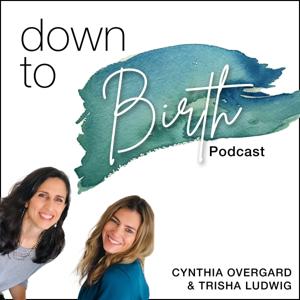
Join Cynthia Overgard and Trisha Ludwig once per week for evidence-based straight talk on pregnancy, birth and postpartum --- beyond the clichés and beyond the system. With 40 years' combined…
Ranked by our users in the last 21 days

2,171 Listeners
1,227 Listeners
1,035 Listeners

558 Listeners

727 Listeners
1,297 Listeners
14,743 Listeners
171 Listeners
661 Listeners
819 Listeners

223 Listeners
209 Listeners
160 Listeners
90 Listeners

145 Listeners