
Sign up to save your podcasts
Or

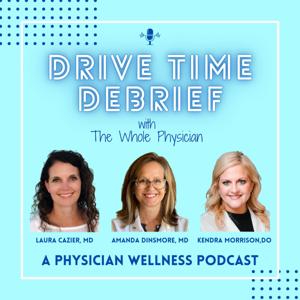


In this episode, Amanda, Laura, and Kendra explore schema therapy and its relevance to physicians, focusing on how deep-rooted patterns from childhood influence burnout and professional behavior. They discuss practical ways to recognize and respond to these schemas to foster well-being and resilience.
Key Topics:
Takeaways:
Chapters:
00:00 Introduction to Schema Therapy and Physician Burnout
02:50 Understanding Schemas and Their Impact
05:17 The Role of Coping Strategies in Medicine
08:21 How Schema Therapy Works
11:25 Identifying and Naming Schemas
14:05 Case Example: Patient Complaints and Responses
16:47 Reflection Questions and Next Steps
19:27 Conclusion and Future Topics
Resources:
Schema Therapy by Jeffrey Young - https://www.amazon.com/Schema-Therapy-Jeffrey-Young/dp/1462535924
Podcast Fast Track:
https://www.thewholephysician.com/fast-track
Physician Wellness Retreat Sign up here!
Schedule a FREE Physician Wellness Triage Session:
https://calendly.com/twp-one-on-one-coaching/triage
Sign up for the Weekly Well Check:
https://www.thewholephysician.com/weekly-well-check
Follow us on social media: @TheWholePhysician
Love the podcast? We'd be so grateful if you left us a rating and review on Apple Podcasts! Screenshot your review and email it to [email protected], and we'll send you our free Emotional Regulation eBook as a thank-you.
If this episode resonated with you, please subscribe, leave a review, and share it with a physician colleague who could use the reminder that they don't have to keep surviving medicine alone.
Remember: You are whole. You are a gift to medicine. And the work you do matters.
Schedule a FREE Physician Wellness Triage Session:
https://calendly.com/twp-one-on-one-coaching/triage
Sign up for the Weekly Well Check:
https://www.thewholephysician.com/weekly-well-check
Follow us on social media: @TheWholePhysician
Love the podcast? We'd be so grateful if you left us a rating and review on Apple Podcasts! Screenshot your review and email it to [email protected], and we'll send you our free Emotional Regulation eBook as a thank-you.
If this episode resonated with you, please subscribe, leave a review, and share it with a physician colleague who could use the reminder that they don't have to keep surviving medicine alone.
Remember: You are whole. You are a gift to medicine. And the work you do matters.
Why do so many physicians keep pushing through exhaustion—even when they know it's unsustainable?
In the final episode of our cognitive dissonance series, we're moving from theory to practical application. Once you recognize the internal conflict between your values, identity, and daily reality, what comes next?
This week, we're exploring the common ways physicians cope with cognitive dissonance—from overworking and emotional suppression to comparison and perfectionism—and why these strategies may provide short-term relief while fueling long-term burnout.
You'll also learn healthier, evidence-based ways to create greater alignment between your work, your values, and your well-being without sacrificing your compassion or commitment to medicine.
If you've ever thought:
...this episode is for you.
Cognitive dissonance isn't proof that you're failing—it's often the first sign that something important needs your attention. Greater awareness creates the opportunity to choose a different path.
Schedule a FREE Physician Wellness Triage Session:
https://calendly.com/twp-one-on-one-coaching/triage
Sign up for the Weekly Well Check:
https://www.thewholephysician.com/weekly-well-check
Follow us on social media: @TheWholePhysician
Love the podcast? We'd be so grateful if you left us a rating and review on Apple Podcasts! Screenshot your review and email it to [email protected], and we'll send you our free Emotional Regulation eBook as a thank-you.
If this episode resonated with you, please subscribe, leave a review, and share it with a physician colleague who could use the reminder that they don't have to keep surviving medicine alone.
Remember: You are whole. You are a gift to medicine. And the work you do matters.
This one might sting a little. We're just going to warn you now.
In part three of our cognitive dissonance series, we're digging into why incredibly smart, capable people stay stuck in situations that are clearly harming them. Spoiler: it's not weakness. It's psychology. And once you see it, you can't unsee it.
We cover:
This is not an episode telling you to quit medicine. It's an episode inviting you to get honest about whether the way you're living is actually sustainable.
Leave us a review and screenshot it to [email protected] — we'll send you our free e-book on emotional regulation as a thank you!
📧 [email protected]
📱 @thewholephysician
Retreat: https://medtreksinternational.com/trips/costaricaphysicianretreat/
You worked hard. You achieved the dream. You became the physician you set out to be.
So why does something still feel off?
Many physicians reach a point where they begin asking deeper questions: Who am I outside of medicine? Why doesn't success feel the way I thought it would? What happened to the version of me who felt excited, hopeful, and alive?
In this episode, Amanda, Laura, and Kendra explore identity dissonance—the painful gap between who you thought you would become and how your life actually feels today. Together, they unpack why burnout often becomes more than exhaustion and can evolve into a profound identity crisis.
This conversation offers compassion, insight, and practical reflection for physicians who feel disconnected from themselves beneath the weight of achievement, responsibility, and endless expectations.
You'll discover why healing doesn't require becoming someone new—it begins with reconnecting to who you've been all along.
In this episode, you'll learn:
• How physician identity is formed through achievement, performance, and self-sacrifice
• Why burnout can feel deeply personal and existential
• The hidden relationship between perfectionism, productivity, and self-worth
• How identity dissonance creates emotional exhaustion, resentment, and shame
• Why many physicians struggle to separate who they are from what they do
• The difference between unhealthy coping strategies and genuine healing
• How reconnecting with your values can help you build a more authentic and sustainable life
• Why "both/and" thinking creates more freedom than perfectionism ever will
If you've ever wondered whether there's more to you than your white coat, this episode is for you.
Resources Mentioned:
Weekly Well Check:
https://www.thewholephysician.com/weekly-well-check
Podcast Fast Track:
https://www.thewholephysician.com/fast-track
Connect with The Whole Physician:
https://www.thewholephysician.com
Remember: You are more than your productivity. More than your performance. More than your title. Your worth was never meant to depend on what you accomplish—and your humanity deserves just as much care as the patients you serve.
What if the very stories helping you cope are also keeping you stuck?
In this episode, Amanda, Laura, and Kendra explore cognitive dissonance—the mental tension that occurs when our actions, beliefs, values, or identity no longer align. They discuss why physicians may be especially vulnerable to rationalizing burnout and how greater awareness can create opportunities for meaningful change.
This conversation isn't about judgment. It's about curiosity, self-compassion, and learning to recognize the stories your brain tells you so you can move toward a life and career that feel more aligned and sustainable.
In this episode, you'll learn:
✨ What cognitive dissonance is and why everyone experiences it
✨ The three ways people resolve internal conflict
✨ Why high-achieving physicians are especially susceptible to rationalizing burnout
✨ How burnout can hide behind believable stories and explanations
✨ Why curiosity is more effective than self-criticism
✨ Practical questions to help you identify narratives that may be keeping you stuck
Reflection Question:
→ What story am I repeatedly telling myself right now?
→ Is that story helping me move forward—or helping me stay where I am?
Quote of the Episode:
"Sometimes the stories protecting us from discomfort are also the stories keeping us from growth."
Resources Mentioned:
📖 Cognitive Dissonance Theory — Leon Festinger (1957)
Connect With Us:
📱 @thewholephysician
💌 Weekly Well Check Newsletter:
https://www.thewholephysician.com/weekly-well-check
If this episode resonated with you, please subscribe, leave a rating and review, and share it with a colleague. Your support helps more physicians discover these conversations.
There's a dangerous myth in medicine: that the best physicians are the ones who can do everything themselves. But that model doesn't just create burnout — it breaks people. In this episode, Amanda, Laura, and Kendra dig into why the lone wolf physician approach is unsustainable, and how one simple mind shift can completely change the way you work, lead, and show up for your patients.
Inspired by the book Who Not How by Dan Sullivan and Benjamin Hardy, the core idea is this: stop asking "How do I do this?" and start asking "Who can help me do this better?"
——————————————————————————
KEY TAKEAWAYS
——————————————————————————
The "lone wolf" model breaks people.
Independence was glorified in training, but healthcare is now too complex, too specialized, and too emotionally demanding for isolated excellence to be sustainable. The future of great medicine is collaboration.
Ask "who," not "how."
Instead of asking how you can do more, start asking who can help you do it better. This single shift changes how you lead, delegate, and build your team.
The eighty percent rule is your permission slip.
If someone else can do something eighty percent as well as you can, let them do it. That's not failure — that's efficiency. Save your A-game for clinical decisions, procedures, and connecting with patients.
B-minus charting is still excellent care.
Over-charting at the expense of your time, your family, and your sanity is not a virtue. A thorough, efficient chart checks every box it needs to. You do not need to write a novel.
Fast feedback builds fast trust.
Strong teams normalize quick, clear, respectful feedback. The faster problems get named, the faster they get solved — and the better your culture becomes.
Humility multiplies your effectiveness.
True collaboration requires letting go of needing to be the smartest person in the room. When your team feels safe to speak up, they catch things. That's good medicine.
You were never supposed to carry this alone.
The best physicians aren't the ones doing the most. They're the ones creating environments where everyone can do their best work together.
——————————————————————————
MENTIONED IN THIS EPISODE
——————————————————————————
📖 Who Not How — Dan Sullivan & Benjamin Hardy
The book that inspired this whole conversation. A must-read for any physician who's tired of doing it all alone.
https://whonothow.com
🌿 The Whole Physician Wellness Retreat with MedTreks International
Our first-ever exclusive physician-only wellness retreat at the beautiful Bodhi Tree Yoga Resort in Nosara, Costa Rica — this November. Come recharge, reconnect, and collaborate with your people.
https://medtreksinternational.com/trips/costaricaphysicianretreat/
——————————————————————————
CONNECT WITH US
——————————————————————————
Have a great team story or collaboration win? We'd love to hear it.
Email us: [email protected]
Follow us on socials: @thewholephysician
Join our weekly newsletter, The Weekly Well Check: link in show notes
If this episode resonated with you, please subscribe, leave a rating and review, and share it with a colleague who needs to hear it. It helps other physicians find us!
——————————————————————————
Until next time — you are whole. You are a gift to medicine, and the work you do matters.
What if the problem isn’t your discipline… but your stage of learning?
After years of telling yourself “tomorrow will be different,” it can feel defeating when you keep ending up in the same patterns—behind on charts, emotionally exhausted, or struggling to show up the way you want to at home.
In this episode, we unpack the Conscious Competence Learning Model and why sustainable change doesn’t happen through shame, hustle, or trying harder. Whether you’re learning emotional regulation, boundary-setting, time management, or simply how to stop numbing out after difficult shifts, this conversation will help you understand why growth feels so hard before it feels natural.
We explore the 4 stages of learning:
✨ Unconscious Incompetence — you don’t know what you don’t know
✨ Conscious Incompetence — you finally see the problem, but don’t know how to fix it yet
✨ Conscious Competence — you’re doing the work, but it still takes effort
✨ Unconscious Competence — the habit becomes part of your identity
Through relatable physician examples, emotional health insights, and practical mindset shifts, we discuss:
Because sustainable growth isn’t about becoming perfect overnight—it’s about learning how to build a life that actually works for you.
📚 Resources Mentioned
• The Gap and the Gain by Dan Sullivan & Dr. Benjamin Hardy
📣 Connect With Us
💌 Email: [email protected]
📱 Instagram & Facebook: @thewholephysician
📰 Join our newsletter: Get the Weekly Well Check
⭐️ Loved This Episode?
If this conversation resonated with you:
Remember: growth is not proof that you were failing before. It’s proof that you’re learning. 💛
Guilt is one of the most common emotions women physicians experience—but also one of the least examined.
In this episode, psychiatrist, author, and podcast host Jennifer Reid joins us for a powerful conversation about the impossible expectations many women carry in medicine, motherhood, leadership, and everyday life.
Together, we explore why guilt feels so constant for high-achieving women and how medicine can magnify perfectionism, hyper-responsibility, and burnout. Dr. Reid explains how guilt often disguises itself as productivity, compassion, or accountability—while quietly draining our confidence, energy, and emotional well-being.
You’ll learn:
Why women physicians are especially vulnerable to chronic guilt
The “guilt equation” and how unrealistic expectations fuel emotional exhaustion
How childhood roles and social conditioning shape the way we cope as adults
Why guilt creates the illusion of control
The difference between healthy guilt and toxic guilt
How perfectionism and people-pleasing contribute to burnout
Why “having it all” often becomes an impossible standard
Practical ways to challenge guilt-driven thinking and reclaim agency
Dr. Reid also discusses how healthcare systems can unintentionally weaponize compassion and why women need spaces where they can support each other instead of silently struggling alone.
Because freedom from guilt doesn’t mean you stop caring—it means you stop measuring your worth by impossible standards.
📣 Connect With Dr. Reid
🌐 Website: Jennifer Reid MD
🎙️ Podcast: A Mind of Her Own
📘 Book: Guilt Free
📣 Connect With Us
💌 Email: [email protected]
📱 Instagram & Facebook: @thewholephysician
📰 Join our newsletter: The Weekly Well Check
⭐️ Loved This Episode?
If this conversation resonated with you:
Subscribe to the podcast
Leave a rating & review
Share this episode with another physician who needs this reminder today
Resources:
https://www.jenniferreidmd.com/
Guilt Free Book
Get the Weekly Well Check
From the publisher's feed

43,853 Listeners
1,865 Listeners

2,052 Listeners
5,144 Listeners

2,440 Listeners

111,766 Listeners

1,158 Listeners

7,997 Listeners
14,341 Listeners
227 Listeners

1,610 Listeners

19,209 Listeners
268 Listeners
40 Listeners

12,486 Listeners