
Sign up to save your podcasts
Or

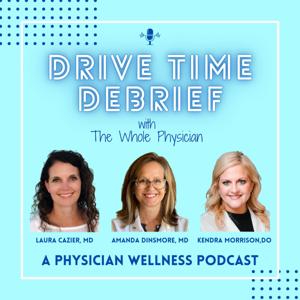


In this episode of Drive Time Debrief, we continue our emotional intelligence series by exploring motivation—and why many high-achieving physicians feel stuck, depleted, or disconnected even after achieving their professional goals.
Motivation isn’t just about discipline or willpower. In medicine, physicians are often trained to rely on external motivators like grades, productivity, and achievement. Over time, however, these pressures can drain energy and contribute to burnout, demoralization, and nervous system shutdown.
Using insights from emotional intelligence and polyvagal theory, we discuss how chronic stress can impact motivation and why a loss of motivation is often a signal that your nervous system needs support—not criticism.
We also share practical ways to begin rebuilding motivation by reconnecting with personal values, energy, and choice.
• Why motivation is about energy, not discipline
• The physician motivation trap created by external pressure
• Burnout vs. demoralization in medicine
• How the nervous system affects motivation and engagement
• Why loss of choice can shut down motivation
• Simple ways to begin restoring energy and alignment
What currently gives you energy, and what is quietly draining it?
Email: [email protected]
Instagram: @thewholephysician
https://thewholephysician.com/weekly-well-check
Subscribe, rate, and review to help other physicians discover the podcast.
You are whole.
You are a gift to medicine.
And the work you do matters. ✨
Ever caught yourself thinking, “I shouldn’t react like that”… and then reacting exactly like that anyway? You’re not alone.
In Part 2 of our emotional intelligence series, we’re diving into self-regulation — the skill that helps you stay grounded when emotions run high and pressure is constant. For physicians trained to push through stress and “keep it together,” learning to regulate instead of suppress can be a game-changer.
In this episode, we explore:
✨ Why suppression isn’t the same as regulation
✨ How chronic activation shows up in physicians’ lives
✨ Simple tools to reset your nervous system in real time
✨ How to pause, recover faster, and show up more intentionally
Self-regulation isn’t about being calm all the time — it’s about choosing your response and recovering with intention.
Your nervous system deserves the same care you give your patients.
Take a breath. Reset. You’ve got this.
Until next time: You are whole. You are a gift to medicine. And the work you do matters. 💙
Links & Resources:
• Ari @ MedTreks International: [email protected]
• The Whole Physician & MedTreks International Costa Rica Retreat: https://medtreksinternational.com/trips/costaricaphysicianretreat/
In medicine and high-performance environments, we’re trained to push through discomfort, ignore our needs, and stay composed under pressure. Over time, that conditioning can disconnect us from what’s happening inside.
This episode introduces the foundation of emotional intelligence:
👉 Self-awareness — the ability to notice what’s happening inside you in real time.
Because the truth is:
You cannot regulate what you don’t notice.
If you’ve ever said “I’m fine” but later snapped at someone you love, this conversation is for you.
✔ What emotional intelligence (EQ) really is
✔ Why high functioning ≠ emotional regulation
✔ How medical training conditions us to ignore internal signals
✔ Signs low self-awareness may be affecting you
✔ Early burnout signals doctors often miss
✔ Why naming emotions calms the nervous system
✔ Simple tools you can use immediately — even on shift
• Calm at work but irritable at home
• Saying yes automatically → resentment builds
• Feeling emotionally flat or numb
• Identity tied to performance
• Growing cynicism or loss of curiosity
This isn’t a personality flaw — it’s unprocessed stress.
Replace vague words like stressed or fine with precise emotions like:
resentful • discouraged • anxious • powerless
Naming emotions reduces stress and improves regulation.
S — Sensation (what’s happening in your body)
E — Emotion (what are you feeling)
W — Want (what do you need right now)
Ask:
What am I feeling?
What story am I telling about this?
Self-awareness helps you:
✔ prevent emotional spillover at home
✔ reduce burnout and resentment
✔ improve relationships and teamwork
✔ regulate stress in real time
✔ reconnect with meaning and purpose
• Daniel Goleman — Emotional Intelligence
• Brené Brown — Atlas of the Heart
• feelingswheel.com
https://www.thewholephysician.com/weekly-well-check
Subscribe & share to help more physicians find these conversations.
📧 [email protected]
📱 @TheWholePhysician
You are whole. You are a gift to medicine. And the work you do matters.
We’re celebrating AND having a real conversation today.
The Drive Time Debrief was honored with the 2026 Doctor Podcast Award for Best Physician Wellness & Burnout Podcast — and we’re incredibly grateful to our listeners and community.
But today’s episode tackles something many physicians silently carry:
👉 the helper identity
👉 the pressure to always say yes
👉 and how over-helping quietly leads to burnout
Most physicians enter medicine because they genuinely want to help.
But when helping becomes automatic instead of intentional, it can lead to:
chronic exhaustion
resentment and emotional overload
self-abandonment
unsustainable work patterns
quiet burnout
Being a helper isn’t the problem.
Over-identifying as the helper is.
Medical training rewards:
✔ reliability
✔ endurance
✔ self-sacrifice
✔ saying yes
✔ putting personal needs last
Over time, physicians may learn to:
ignore basic needs
fear disappointing others
equate boundaries with being “difficult”
feel responsible for fixing everything
Saying yes automatically without checking in with yourself
Covering gaps that aren’t yours to cover
Absorbing emotional chaos from patients, staff, and systems
Feeling responsible for everyone’s comfort
Quiet resentment building beneath constant giving
This isn’t generosity.
It’s conditioning.
Over-functioning can:
✔ fuel burnout
✔ reinforce broken systems
✔ inhibit others’ growth
✔ create emotional exhaustion
✔ erode relationships at home
When helping becomes self-abandonment, your health and wellbeing pay the price.
You don’t need to stop caring.
You need to start choosing.
Instead of:
❌ “I must help.”
Try:
✅ “I choose where I help.”
knows their limits
chooses where their energy goes
helps without abandoning themselves
sacrifices intentionally — not habitually
Before saying yes, ask:
• Do I want to do this?
• Am I avoiding discomfort or disapproval?
• Will this cost me my wellbeing?
Try:
✔ pausing before responding
✔ saying “Let me check and get back to you.”
✔ choosing intentional yeses
✔ allowing others to be disappointed
Discomfort is not danger.
Where am I helping out of identity rather than values?
Where am I trying to avoid being disliked?
What is one small boundary I can practice this week?
You can be a deeply caring physician
without setting yourself on fire.
Helping is powerful —
when it doesn’t cost you yourself.
✨ Celebrating our 2026 Doctor Podcast Award
🌴 Announcing our physician wellness retreat in Costa Rica
***Link to retreat: https://medtreksinternational.com/trips/costaricaphysicianretreat/
💛 Tools for sustainable helping and long-term career longevity
Subscribe, rate, and review — it helps other physicians find support and sustainable wellness.
You matter.
Your wellbeing matters.
And the work you do matters.
Regret Isn’t the Enemy. Rumination Is.
Regret is part of being human.
Rumination is optional.
In this episode, we’re diving into something physicians (and high-achievers in general) know all too well: replaying mistakes on loop.
Whether it’s:
A patient outcome you wish had gone differently
A diagnosis you missed
A moment you snapped at your child after a night shift
Or something you said years ago that still makes you cringe
Regret can quietly take up residence in your mind.
But here’s the truth:
Regret’s job is growth. Not self-punishment.
We explore the difference between helpful reflection and harmful rumination — and why replaying the past over and over actually increases stress, burnout, anxiety, and defensive medicine.
You’ll learn:
✨ Why regret exists (and why it’s not a flaw)
✨ The psychological difference between useful regret and rumination
✨ How regret can subtly become tied to your identity
✨ Signs that regret has outlived its usefulness
✨ A powerful “Regulated Reflection Window” tool
✨ The 3 R’s for moving forward: Repair, Release, Refocus
✨ Why guilt is actually a healthy emotion
✨ How to stop letting imagined “better outcomes” steal your peace
✨ Why transparency after poor outcomes can be restorative
We also share personal stories from residency and clinical practice — including how regret shaped us into better physicians without becoming something we carried forever.
Remember:
Regret is a signal.
It is not a sentence.
It is not your identity.
Once the lesson is learned, you get to move forward.
And you are already a better physician because you care.
If this episode resonated with you, subscribe, rate, and leave a review so more physicians can find the show.
📩 Have a story or insight to share? Email us at [email protected]
📱 Follow us @thewholephysician on Instagram, Facebook, LinkedIn, and TikTok
Until next time —
You are whole.
You are a gift to medicine.
And the work you do matters.
In this episode of The Drive Time Debrief, Amanda, Laura, and Kendra continue their three-part deep dive into “random internet advice” they found while scrolling TikTok — and how these bite-sized ideas actually play out in real life, relationships, and medicine.
The conversation blends humor, psychology, and hard-earned wisdom as the trio explores what advice is worth keeping, what needs nuance, and what might actually help us show up better at work and at home.
Why “focus on the good” actually changes what you see
The science of selective attention and the reticular activating system
The famous “black gorilla” experiment
How medicine trains our brains toward negativity — and how to shift that habit
Why gratitude is not gaslighting, but a way of “changing the channel” in your brain
Assuming good intentions — even when it’s hard
How small mindset shifts can reduce conflict in relationships
Why people often push others away (and what that really means)
Practical ways to pause before reacting
“If someone walks out of your life, let them” — true or false?
When this advice is protective vs. when it’s oversimplified
The idea of relationships as “seasons” rather than failures
Why some relationships come full circle — and others are meant to close
A powerful gratitude exercise
Write a list of what you want — but every other item must be something you already have
Why this rewires your brain away from scarcity
The right doors won’t open until you’re ready
Why missed opportunities often make sense in hindsight
How rejection can actually prepare you for what’s next
Why persistence matters more than timing
“You’ve survived everything so far.”
Resilience, humor, and hard seasons
A playful nod to Amanda’s Oklahoma Sooners (“hard to kill” energy 💪)
Why growth often comes from the challenges we wish we could skip
This wraps up Part 3 of their TikTok-inspired advice series — but don’t worry, more parts are likely coming.
Email your favorite internet advice to: [email protected]
Follow on Instagram: @thewholephysician
Sign up for The Weekly Well Check (link below) — encouragement + updates on masterclasses and events.
https://www.thewholephysician.com/weekly-well-check
Thanks for listening — you are whole, you are a gift to medicine, and your work matters. 💙
Credit: @jesss.kr
Travel Beyond the Hospital: How Adventure & Purpose Restore Burned-Out Medical Professionals | MedTreks International Interview with Ari Rasori
In this episode, we sit down with Ari Rasori, NP, founder of MedTreks International, to explore how global adventure, wellness, and community can help healthcare professionals recover from burnout and reconnect with their purpose.
Ari shares her journey from working in the emergency department to building a boutique travel and retreat company for physicians, NPs, PAs, and nurses—combining continuing medical education (CME), wilderness medicine, and restorative retreats across six continents.
We talk about:
• Why burnout is so common in high-achieving healthcare professionals
• How changing environments can reset the nervous system
• The power of traveling with people who truly “get” medicine
• Why purpose-driven adventure can reignite your spark
• What MedTreks International offers and how their curated retreats work
• A special announcement: The Whole Physician Retreat in Nosara, Costa Rica (Nov 7–14)
• Early bird discount code: RESTORE26
If you love medicine but feel exhausted, disconnected, or in need of renewal, this conversation will help you remember who you are beyond the hospital walls—and how to restore the part of you that first fell in love with healing.
🎧 Listen now and learn how to travel the world instead of just the hospital.
Links & Resources:
• Ari @ MedTreks International: [email protected]
• The Whole Physician & MedTreks International Costa Rica Retreat: https://medtreksinternational.com/trips/costaricaphysicianretreat/
• Early Bird Code (February only): RESTORE26
**Special going on for Feb: RESTORE26 is coupon code for $200 off
Drive Time Debrief – Episode 202
Random Internet Advice, Part 2: Protect Your Peace & Stop Worshiping the Problem
In Part Two of our “Random Internet Advice” series, the DTD crew dives into more thought-provoking (and surprisingly wise) wisdom pulled from the endless scroll—this time inspired by @JessKR on TikTok.
We unpack powerful ideas like:
✨ Why other people’s opinions of you are truly none of your business
✨ How protecting your peace is often more important than proving a point
✨ What boundaries really mean (and why they actually help relationships last)
✨ Letting go of the need for universal approval
✨ Taking responsibility for your own happiness instead of outsourcing it
✨ And the mic-drop truth: Worrying is like worshiping the problem.
Through stories from medicine, family life, relationships, and personal growth, we explore how to live from your values, honor your integrity, and stop letting conflict, criticism, or fear steal your emotional energy. From the wisdom of your 8-year-old and 80-year-old selves, to Terry Real’s insight on the “losing strategy” of being right, to the freedom that comes from setting loving boundaries—this episode is packed with perspective-shifting takeaways.
If you’ve ever felt drained by trying to manage others’ opinions, stuck in endless worry loops, or tempted to sacrifice your peace just to make a point… this conversation is for you.
Take a breath, protect your peace, and remember: where your attention goes, your energy flows.
🎧 Listen in, reflect, and let these “random” insights bring a little more clarity, calm, and courage into your week.
Credit: @jesss.kr [email protected]
Ever stumble across a piece of advice that makes you stop scrolling and think, “Whoa… that’s actually really good”? In this episode, Amanda, Laura, and Kendra dive into powerful mindset shifts inspired by viral wisdom—and put them through a coach's lens.
From walking through fear and embracing discomfort, to remembering that other people’s reactions say more about them than about you, this conversation is full of clarity, compassion, and courage. They explore why following your plan (not your mood) is a game-changer, how indecision is often a hidden choice, and why criticism almost always comes from the cheap seats—not the arena.
You’ll walk away feeling:
💡 More grounded in your own worth
💪 More willing to do the brave, uncomfortable thing
🧠 More equipped to stop over-thinking and start living
❤️ More connected to the truth that growth is the goal
If you’ve been stuck, second-guessing yourself, or needing a gentle push to trust your inner wisdom—this episode is for you.
FREE Physician Wellness Triage Session: www.thewholephysician.com
Podcast Fast Track (handpicked episodes): www.thewholephysician.com/fast-track
You are whole. You are a gift to medicine. The work you do matters.
https://www.facebook.com/thewholephysician
https://www.instagram.com/thewholephysician
https://youtube.com/@thewholephysician6505
https://www.tiktok.com/@thewholephysician
https://www.linkedin.com/company/the-whole-physician/
https://x.com/WholePhysician
Credit: @jesss.kr [email protected]
We can’t believe we’re saying this… Episode 200 of the Drive Time Debrief is here!
What started as a few honest conversations has grown into a community of physicians who are re-imagining what it means to practice medicine without losing themselves in the process. Whether this is your very first episode or you’ve been with us since the beginning — welcome. We’re so glad you’re here. 🤍
To celebrate this milestone, we’re sharing some of the most important lessons we believe every physician should hear early — and revisit often — if they want true career longevity, emotional health, and fulfillment.
✨ In this special episode, we talk about:
• Why burnout is often a boundaries problem, not a resilience problem
• How to decide what you will not sacrifice — sleep, relationships, movement, joy
• Why emotional processing is essential (and suppression is costly)
• The power of deeply safe, connected relationships
• How medicine will take everything you allow it to take — and why that matters
• Learning to tolerate disappointing people (a core physician skill no one teaches)
• Why coaching or therapy before crisis is a game-changer
• How pivoting — in mindset or career — is wisdom, not failure
• Letting go of the fantasy that happiness comes “later”
• Learning to leave work at work mentally, not just physically
🌱 Plus two bonus truths we wish we’d learned sooner:
• Build recovery into your week, not just your vacations
• Stop outsourcing your internal compass — you already know what matters
Along the way, we explore ideas from voices like Brené Brown and Brianna Wiest, share personal stories, and remind you of something we never want you to forget:
💛 Physician wellness isn’t about finding the perfect job or mastering stress.
It’s about learning how to live inside the system without letting the system live inside you.
✨ New here? Start with our Podcast Fast Track!
We’ve curated our top must-listen episodes so you can jump in without feeling overwhelmed.
👉 Visit thewholephysician.com/fast-track
💬 Let’s stay connected:
• Leave a review — it helps other physicians find the show
• Email us at [email protected] if one of these truths resonated
• Follow us on social @TheWholePhysician
• Sign up for our Weekly Well Check for encouragement, tools, and updates
Thank you for being part of this community — and for the work you do every day.
Until next time, remember:
✨ You are whole. You are a gift to medicine. And the work you do matters. ✨
From the publisher's feed

43,801 Listeners

1,866 Listeners

2,053 Listeners

5,140 Listeners

2,442 Listeners

111,868 Listeners

1,157 Listeners
7,997 Listeners
14,366 Listeners
227 Listeners

1,606 Listeners

19,271 Listeners
268 Listeners
40 Listeners

12,519 Listeners