
Sign up to save your podcasts
Or

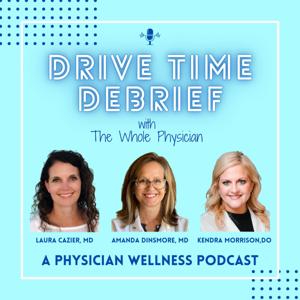


You learned about dorsal vagal shutdown—that numbness and disconnection physicians feel. Now here's the hope: There are ways to climb back up the ladder.
Sometimes you're so far outside your zone of resilience, you can't outthink it. You have to do something with your body.
SSRIs/SNRIs can help stabilize mood and increase arousal when you're too depleted to self-regulate.
No shame. We work in extreme stress. Therapy and medication are tools, not failures.
Simple ways to enhance vagal tone:
These aren't woo-woo—they're biological recalibrations.
Somatic therapy uses your body during sessions to release stored stress through body awareness and gentle movement.
Real talk: "I go to therapy. I love my therapist. It makes my life so much better. We need to normalize this."
Why it matters: We're treated like we should be superhuman, taking on trauma with no sleep or self-care. That's a recipe for hitting the wall.
Why yoga works: Gets you back into your body where you can reconnect. It's calming in a ventral vagal way (not dorsal shutdown).
Too exhausted to exercise? Try ONE yoga pose for 30 seconds. Just break the frozen state.
Different breathing techniques:
HeartMath device: Like a pulse ox that shows your heart rate variability as you do exercises
Neurofeedback: EEG probes detect when you're revved up—TV goes black until you calm yourself down
Perfect for control enthusiasts: Learn to control your own physiologic responses
Ever been around someone you just feel safe with? That person who makes you laugh and calm down instantly?
That's co-regulation. Seek those people out.
Also works:
Singing increases ventral vagus tone (car singers, rejoice!)
Create your comedy arsenal:
Reminder: Life is worth living. You won't be stuck in dorsal vagal forever.
"This is my dorsal reset. My biological recalibration. Not me failing."
Focus on the EXHALE—that's when parasympathetics turn on
Try the 5-minute body scan:
Text someone you care about. Check in on someone who needed help.
Gets you out of rumination and back into meaning
Speak to yourself with compassion (the strongest antidote to burnout)
Each micro step signals safety to your nervous system.
"This is an era, not who I am."
Sometimes it feels like "maybe this is just who I am now."
NO. Your true self is still in there waiting.
This is a physiologic reaction to things that have been happening to you. Your ventral vagal state—your executive brain—wants to get back online. It wants to reconnect with your empathy, humor, and creativity.
Burnout tricks you into thinking that version of you is gone. That's a lie.
Your nervous system is doing its best. It's meant for survival. With small signals of safety—grounding, breathing, humming—you can return to connection, vitality, and purpose.
Your nervous system is here for you. We're here for you.
Dr. Kristin Neff's Center for Mindful Self-Compassion - Research-backed approach to self-compassion
Podcast Fast Track - Nearly 200 episodes can be overwhelming. We've handpicked the most high-yield episodes to jumpstart your journey.
Get it: www.thewholephysician.com/fasttrack
That feeling of burnout numbness isn't your fault. It's not who you are. And it isn't permanent.
Share your recalibration tricks: [email protected]
You can find yourself again. Let's climb together.
Our new Podcast Fast Track Book a Session or Physician Wellness Triage (same link) Sign up for the Weekly Well Check
"I feel totally numb. I don't care anymore, and I hate that I don't care."
"Even when I sleep, I wake up tired."
"I used to be so empathetic. Now I just want everyone to leave me alone."
What you're experiencing isn't just burnout—it's dorsal vagal shutdown.
1. Ventral Vagal (Safe Zone) ✨ Calm, connected, creative, social - where we want to be
2. Sympathetic (Fight or Flight) ⚡ Heart racing, hyperalert, frantic productivity mode
3. Dorsal Vagal (Shutdown/Freeze) 🥶 Emotional flatness, complete disconnection, life behind glass Your body playing dead like a possum
Sympathetic overdrive (constant productivity) → Dorsal collapse (complete numbness)
You're cycling between: Fixing everything frantically → Can't even get out of your car at home
The Vagus Nerve has two branches:
Dorsal shutdown creates:
This isn't weakness. This is evolution.
Your nervous system developed this over millennia. When fight/flight fails, your body chooses shutdown to conserve energy and protect you.
We live in near-constant sympathetic overdrive:
Eventually, the system flips to shutdown.
Just having words for this changes everything.
"I'm experiencing dorsal vagal shutdown." "I'm in my dorsal vagal era." "This is a nervous system state—not who I am."
Naming it is a technique for getting out of it.
Taylor Swift has fascinating eras. You have your dorsal vagal era. Nearly every burned-out physician experiences this.
The empowering news: This isn't permanent. Nervous system states change. You can climb back up the ladder.
When your partner says you're "being emotional":
"Actually, I'm experiencing dorsal vagal shutdown due to prolonged sympathetic overdrive."
Boom. Science.
How to climb out of shutdown with medical tools, therapy approaches, and daily practices.
You're not broken. Your nervous system is doing exactly what it evolved to do.
Share your stories: [email protected]
Your nervous system can heal. Let's climb together.
Ever find yourself replaying the same moment from a shift over and over in your head? Lying awake at night running through every step of a procedure? Welcome to rumination—and you're definitely not alone.
In this episode, Amanda, Laura, and Kendra dive deep into the mental trap that keeps so many physicians stuck: ruminative thinking. They break down why our brains do this, the different types of rumination, and most importantly—how to break free from the cycle.
Understanding Rumination:
The Four Types of Rumination:
Why Physicians Struggle:
Breaking the Cycle:
✨ You are more than your rumination - This isn't who you are, it's just what your brain is doing
✨ Pain × Resistance = Suffering - Allowing uncertainty to exist reduces your suffering
✨ Get out of your limbic system - Mindfulness helps you return to your prefrontal cortex
✨ Write it down - Externalizing your thoughts gives your brain permission to rest
The past is unchangeable—no amount of "what ifs" will rewrite it. The only thing that's real is this present moment. And in this moment, you are whole, you are a gift to medicine, and the work you do matters.
If this episode resonated with you, share it with a colleague who might need to hear it. Have thoughts or questions? Reach out at [email protected]
#PhysicianWellness #MentalHealth #Rumination #BurnoutPrevention #MindfulnessForDoctors
Welcome back to the Drive Time Debrief! Today, Amanda, Laura, and Kendra are diving into a universal struggle: comparison. Whether it’s at work, on social media, or even within our own families, comparison sneaks in and steals joy, fueling anxiety, burnout, and disconnection. But there’s good news: with awareness, we can flip the script. ✨
In this episode, we unpack:
🔎 The anatomy of comparison — why it’s our default, and how it masquerades as connection.
📚 Insights from Dr. Brené Brown (Atlas of the Heart, The Gifts of Imperfection) and Dr. Caroline Leaf on how comparison impacts our brains and wellbeing.
💡 The shift from comparison → admiration → reverence — and how each step brings more freedom, creativity, and peace.
🏥 Real-life examples inside and outside medicine: patient outcomes, social media highlight reels, even parenting moments.
🌊 “Stay in your lane” wisdom — how focusing on your path fosters growth without the mental scoreboard.
🙌 Practical strategies to move forward:
Name comparison when it shows up.
Flip it into admiration (what can I learn?).
Cultivate awe and reverence through gratitude, nature, and everyday miracles.
Catch yourself in a comparison moment, pause, and choose admiration instead. Bonus points if you share your admiration out loud with someone else — you’ll be amazed at how it transforms connection. 💬
Remember: comparison fuels anxiety, but admiration and reverence foster connection, peace, and joy. You are whole. You are a gift to medicine. And the work you do truly matters. 💖
✨ Tag us with your “From Comparison to Connection” moments on socials or drop us a message at [email protected] — we’d love to hear how you’re practicing this shift!
Bringing the Soul Back to Medicine with Dr. Mark Sullivan
Medicine isn’t just lab results and checkboxes—it’s about humans caring for humans. 💙 In this episode, Dr. Mark Sullivan, a physician with a heart for whole-person care, reminds us what truly matters: listening, presence, and compassion.
We talk about:
🌟 Why “to be heard is to be healed” may be the most powerful prescription
🌟 The Four Pillars he uses with every patient (sleep, nutrition, movement, boundaries)
🌟 How to protect your time and your soul in a rushed system
🌟 Burnout vs. moral injury—and why your calling still matters
🌟 Three simple “assignments” every doctor (and human!) can use to reset
This conversation is hopeful, practical, and inspiring. If you’ve ever wondered how to keep your spark alive in medicine—or life—you’re going to love this one.
✨ Tune in, get encouraged, and remember: you are whole, you are a gift, and the work you do matters.
Resources:
https://www.physiciansweekly.com/author/mark-sullivan-md
nvafamilypractice.com
Our new Podcast Fast Track
Book a Session or Physician Wellness Triage (same link)
Sign up for the Weekly Well Check
Our Social Media Accounts!! :)
https://www.facebook.com/thewholephysician
https://www.instagram.com/thewholephysician
https://youtube.com/@thewholephysician6505
https://www.tiktok.com/@thewholephysician
https://www.linkedin.com/company/the-whole-physician/
https://x.com/WholePhysician
Ever notice how one little mess—a pile of mail, a sink full of dishes, or shoes scattered everywhere—can snowball into stress, frustration, and overwhelm? In this episode, Dr. Amanda Dinsmore, Dr. Laura Cazier, and Dr. Kendra Morrison dive into the Broken Windows Theory and how tiny signs of neglect (at home or at work) can quietly erode your sense of peace and control.
But here’s the good news: just as small signs of disorder add up, so do small acts of repair. 💡
✨ The surprising psychology behind the Broken Windows principle and why it matters for your wellbeing.
✨ Everyday “broken windows” that sneak into home life—dishes, mail piles, laundry, cluttered counters—and how they impact mood and stress.
✨ Work “broken windows” like backlog charting, inbox overload, messy workstations, and how they drain focus.
✨ Tiny but powerful interventions (make the bed, sort one stack of mail, answer one inbox message) that restore order and calm.
✨ How to use habit stacking and micro-routines to turn chaos into clarity.
✨ Mindset windows: reframing critical thoughts, reducing perfectionism, and keeping your prefrontal cortex online.
✔️ You’ll feel validated (yes, those dishes really do make a difference!).
✔️ You’ll gain practical, doable hacks you can try TODAY.
✔️ You’ll discover how micro-decisions build momentum, reduce stress, and create a sense of accomplishment.
✔️ You’ll be reminded that you are not alone—everyone has “broken windows,” and attending to them is a gift to yourself.
✨ Listener Challenge: Do one small “window repair” today. Make the bed, clear a counter, or sort the mail—then notice how your energy shifts.
💬 We’d love to hear YOUR strategies for spotting and fixing broken windows before they spiral! Share them with us at [email protected] .
And remember:
👉 A stitch in time saves nine.
👉 You are whole.
👉 You are a gift to medicine.
👉 The work you do matters.
Resources:
Fly Lady
Sidetracked Home Executives
Tiny Habits
Atomic Habits
Society glamorizes perfectionism, but psychology reveals a darker reality: Most physicians enter medical school as healthy high achievers but graduate as maladaptive perfectionists.
The shift happens around year 2 of med school - from being driven by potential to being driven by fear of criticism.
Healthy High Achiever:
Maladaptive Perfectionist:
The most dangerous habit: Everything is perfect or disaster. One complication = entire day failed. One missed note = fraud.
Reality check: Medicine is full of nuance and shades of gray. All-or-nothing thinking erases partial successes and turns normal complexity into emotional catastrophe.
The Mental Movie Reel:
Physical & Emotional Symptoms:
The Research: Perfectionism + imposter syndrome = strongest predictor of physician distress (even more than workload)
"Treat myself like I would treat other people"
Revolutionary concept for doctors: Your charts don't need to be Nobel Prize literature
After each shift: List 3 things that went well, 1 thing to improve
Real example: Doctor brought dark chocolate kisses to work. Every time she kept her cool in a tense situation → pop a kiss → celebrate the win. Result: Less irritability, better relationships, rewired brain.
"To be heard is to be healed"
Maladaptive perfectionism looks like hard work on the outside but feels like chronic self-criticism, fear, and exhaustion on the inside.
The antidote isn't abandoning excellence - it's redefining it.
From impossible flawlessness → resilient human high achievement
Your worth is inherent because you're human, not because you're perfect.
Ready to break free from the perfectionism trap? Start with one B-minus piece of work this week.
Email your perfectionism quirks to [email protected] - we see you
Excellence without exhaustion is possible.
Metacognition = Thinking about your thinking. This single concept can revolutionize your entire medical career and life.
Reality Check: Sometimes you get a song stuck in your head. That's not "you" - that's just your brain doing its thing while you observe it happening.
You are the watcher, not the thoughts.
The Formula: Circumstance → Thought → Feeling → Action → Result
Same circumstance, different thoughts, completely different lives:
Your kid gets a D:
Patient shows up for 20th time with belly pain:
Same facts. Wildly different experiences.
Beliefs = thoughts you've practiced so much they became automatic
The Process:
Real Example: "I deserve Taco Bell after every shift" started as reward thinking, became automatic habit affecting health for years.
When a thought is causing you pain, ask:
The Science: It takes approximately 63 days (three 21-day cycles) to rewire a neural pathway from dirt road to superhighway.
The Process:
Inspiration: Bob Ross went from stern Army sergeant to "happy little accidents" guy by literally rewiring his identity.
These beliefs served you once. Do they serve you now?
Step 1: Catch yourself in a moment of strong emotion Step 2: Ask "What thought is driving this feeling?" Step 3: Just notice it (this alone deserves celebration)
Don't paste smiley faces over unresolved trauma. Some pain needs professional processing, not just reframing. Your body knows when you're lying to yourself.
The Goal: Find equally true thoughts that actually serve your wellbeing and goals.
From Corrie ten Boom's sister in a Nazi concentration camp: She found gratitude for fleas because they kept guards away.
If someone can find empowering thoughts in that horror, you can find them in your daily frustrations.
Your thoughts are not facts. Your beliefs are not permanent. Your neural pathways are malleable.
Start building the superhighways that actually take you where you want to go.
Ready to rewire? Start with one thought this week.
Connect with us: [email protected]
Master your metacognition. Master your life.
Fleas in a jar learn to jump only as high as the lid - even after it's removed. Sound familiar? This is learned helplessness in action, and it's quietly sabotaging your career and wellbeing.
The Pattern: Try to improve things → Get shut down → Stop trying → Accept dysfunction as "normal"
Real Examples:
When YOU stop pushing boundaries, the system gets comfortable with YOUR discomfort. They'll gladly let you overfunction until you burn out, then replace you with the next overfunctioner.
But here's the kicker: Your silence isn't protecting you - it's enabling a broken system.
Most limits are learned, not real. That lid was removed long ago - you just haven't tested how high you can actually jump.
Your voice matters. Your boundaries matter. Your wellbeing matters.
The system needs healthy, empowered physicians who refuse to accept dysfunction as normal.
Ready to break free? Start with one micro experiment this week.
Join fellow physicians breaking barriers at the Happier Hour - ACEP Scientific Assembly 2025, Salt Lake City
Email your breakthrough stories to [email protected]
Transform your limits into launching pads - you're capable of more than you know.
Ever feel personally attacked by every setback at work? This episode will revolutionize how you handle those moments when life seems to be targeting you specifically!
Picture yourself floating peacefully down a river when WHAM - another boat crashes into you! Your blood boils, ready to unleash fury... until you realize the boat is completely empty. No malicious intent, no personal vendetta - just a random collision.
This changes everything.
✨ Most conflicts aren't personal - You're often just stepping into someone else's storm
✨ Neutral events become personal attacks only when we create that story
✨ Pain × Resistance = Suffering - The resistance hurts more than the original event
✨ Your inner critic is also an empty boat - Those harsh thoughts don't define reality
🔥 Grumpy Patients? They were frustrated before you walked in the room - you just happened to be there
📞 Difficult Consultants? Maybe they've had 10 calls in the last hour or personal stress you can't see
💻 EMR Crashes? The system isn't plotting against YOU specifically - it's just being a system
👨⚕️ Missing Lab Values? Grace over self-attack - what can you learn for next time?
⏰ Delayed Imaging? Workflow backlogs happen to everyone - call for updates instead of stewing
Build resilience so powerful that things that used to send you into fight-or-flight mode become... just neutral events you can handle with grace.
💪 Bottom Line: You can't control others, but you can master your responses. That's where your real power lives!
Want to connect with fellow physicians building resilience? Join us at the Happier Hour during ACEP Scientific Assembly 2025 in Salt Lake City!
Follow @thewholephysician for daily inspiration and email us at [email protected]
⭐ Leave us 5 stars if this helped you find your calm in the storm!
From the publisher's feed

43,801 Listeners
1,867 Listeners

2,053 Listeners

5,140 Listeners

2,443 Listeners

111,874 Listeners

1,160 Listeners

7,986 Listeners
14,359 Listeners
227 Listeners

1,606 Listeners

19,270 Listeners
268 Listeners
40 Listeners

12,495 Listeners