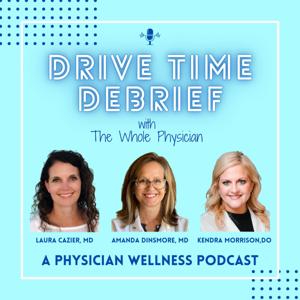
DRIVE TIME DEBRIEF: A Physician Wellness Podcast with The Whole Physician

DRIVE TIME DEBRIEF: A Physician Wellness Podcast with The Whole Physician

By Drs. Cazier, Dinsmore and MorrisonBusinessMedicineHealth & FitnessMental HealthCareers
Download on the App Store

DRIVE TIME DEBRIEF: A Physician Wellness Podcast with The Whole Physician episodes

  • Internal Control Fallacy: Episode 158

    Ever feel like you’re carrying the weight of everyone else’s happiness and success on your shoulders? You’re not alone. In this episode, the docs dive into the internal control fallacy, a sneaky thought distortion that convinces you you’re responsible for outcomes that are completely beyond your control.

    From patient choices to workplace dynamics and even personal relationships, this fallacy fuels guilt, burnout, and emotional exhaustion. The docs get real about why this happens, how it’s impacting you, and what you can do to finally let go of the impossible.

    đŸ”„ What You'll Learn

    ✅ What is the internal control fallacy?

    • It’s the mistaken belief that you’re responsible for external events or other people’s feelings, actions, and outcomes.
    • Example: Thinking you’ve failed if your patient doesn’t follow your advice or if your partner isn’t happy 24/7.
    • ✅ Why you CAN’T control everything (and shouldn’t)

      • You can influence others with advice and support, but their actions are their own.
      • Taking on responsibility for what’s not yours leads to resentment, burnout, and over-functioning.
      • ✅ How this fallacy shows up in medicine

        • Docs often feel like they’re failing if patients ignore medical advice or if family members reject a diagnosis.
        • The truth? You’re responsible for the care you provide, not the choices others make.
        • ✅ The consequences of over-functioning

          • Burnout alert: Over-functioning (like taking extra shifts or overcompensating) doesn’t fix the system—it actually enables it.
          • Medicine won’t ever say, “You’ve done enough.” You have to decide that for yourself.
          • ✅ Breaking free from the fallacy

            • Listen to your resentment: It’s your inner voice telling you that you’ve crossed a boundary.
            • Set limits: You’re not the system’s superhero. You deserve sustainable work conditions.
            • Detach with love: Offer influence, not control. You can’t own someone else’s choices.
            • 🛑 Mic Drop Moments

              ✹ “If you’re feeling resentment, that’s your signal. You’ve got a boundary that needs to be enforced.”
              ✹ “The wheels sometimes have to fall off for the system to get upgraded wheels.”
              ✹ “When we overfunction, the system underfunctions. You’re making it more broken by trying to fix it all.”

              đŸ©» Doc-to-Doc Wisdom

              👉 You’re a physician, not a magician.
              You provide care, not guarantees. When you find yourself carrying emotional responsibility for what you can’t control, pause and remind yourself: you’re in charge of your effort, not the outcome.

              🎧 Tune In Now

              đŸŽ™ïž Whether you’re a physician battling burnout, a perfectionist constantly over-functioning, or simply someone who needs permission to let go, this episode will hit home. Listen in and learn how to break free from the internal control fallacy—because you can only carry what’s truly yours. 💙

              Links:

              Free Video: “How to Crush Physician Burnout (for Good) without Cutting Back Hours, Quitting Medicine, or ‘Sucking It Up’ in Silence”

              Chat with a Physician Coach

              27 min
            • Discounting the Positive: Episode 157

              Ever feel like no matter what you do, it’s never enough? Like you breeze past your successes and fixate on what went wrong? You’re not alone, and today, we’re tackling that sneaky little cognitive distortion: discounting the positive.

              In this episode, we break down why so many physicians downplay their wins and how this mindset fuels burnout. More importantly, we’ll give you practical, science-backed strategies to flip the script and start celebrating your victories—big and small!

              ✹ What You’ll Learn Today:

              ✅ Why your brain is wired to focus on the negative (and how to retrain it!)
              ✅ The power of affirmative reflection—why asking “What went well today?” is a game-changer
              ✅ How writing down wins shifts your mindset and builds resilience
              ✅ The magic of peer support—why celebrating together makes all the difference
              ✅ How shifting from “I failed” to “I learned” can transform the way you see challenges

              We even bring in a Super Bowl-worthy mindset shift (thanks, Jalen Hurts!) to show how elite performers use self-reflection to come back stronger. đŸ’Ș

              🎧 Tune in and Take Action!

              This isn’t just about feeling good—it’s about thriving in medicine. So let’s start celebrating our wins, supporting each other, and building a more positive, resilient mindset. You’re already doing incredible things—now it’s time to recognize them!

              👉 Want more support? Click the link in the show notes to chat with one of our physician coaches. Plus, grab our FREE video: How to Crush Physician Burnout for Good—no cutting back hours, quitting medicine, or suffering in silence required.

              💙 You are whole. You are a gift to medicine. And the work you do matters. See you next time on The Drive Time Debrief! 🚗💹

              #WholePhysician #CelebrateYourWins #PhysicianWellness #MindsetMatters #DriveTimeDebrief


              Scientific References Mentioned:
              • Beck, A. T. (1976). Cognitive Therapy and the Emotional Disorders.
              • Burns, D. D. (1980). Feeling Good: The New Mood Therapy.
              • Emmons, R. A., & McCullough, M. E. (2003). “Counting Blessings Versus Burdens: An Experimental Investigation of Gratitude and Subjective Well-Being in Daily Life.” Journal of Personality and Social Psychology, 84(2), 377–389.
              • Shanafelt, T. D., et al. (2012). “Burnout and Satisfaction With Work-Life Balance Among US Physicians Relative to the General US Population.” Archives of Internal Medicine.
              • Hofmann, S. G., et al. (2010). “The Effect of Mindfulness-Based Therapy on Anxiety and Depression: A Meta-Analytic Review.” Journal of Clinical Psychology.
              • Neff, K. D. (2003). “Self-Compassion: An Alternative Conceptualization of a Healthy Attitude Toward Oneself.” Self and Identity, 2(2), 85–101. 
              • Links:

                Free Video: “How to Crush Physician Burnout (for Good) without Cutting Back Hours, Quitting Medicine, or ‘Sucking It Up’ in Silence”

                Chat with a Physician Coach

                26 min
              • Overcoming Self-Criticism--How to Be Kinder to Yourself in Medicine: Episode 156

                Ever feel like your toughest critic is
 you? You’re not alone. In this episode, we dive into the exhausting cycle of self-criticism and how to break free from it. From shifting your inner dialogue to embracing self-compassion (without losing your edge!), we share real strategies to help you thrive in medicine without the constant self-blame.

                đŸ”„ What You’ll Learn in This Episode:
                ✅ Why your brain LOVES to beat you up (and how to stop it!)
                ✅ The power of curiosity over self-judgment
                ✅ How to reframe mistakes so they help—not haunt—you
                ✅ Practical tools to quiet that inner critic and build resilience
                ✅ Why perfection is NOT the goal (and what to aim for instead)

                💡 Golden Nuggets from This Episode:
                ✹ “You wouldn’t tear down your 8-year-old self—so why do it now?”
                ✹ “Your 80% on a rough day is still someone’s 100%.”
                ✹ “Self-compassion isn’t about lowering the bar—it’s about setting yourself up for sustainable success.”

                💖 You Deserve This Reminder:
                You are whole. You are a gift to medicine. The work you do matters.

                🎧 Loved this episode?
                ✔ Subscribe for more!
                ✔ Share with a friend who needs this!
                ✔ Leave a review—it helps us reach more amazing people like you!

                Let’s keep lifting each other up. See you next time! 🚀💙

                Resources:

                Book a Free Session with a Physician Coach

                Free Video: "How to Crush Physician Burnout (for Good) without Cutting Back Hours, Quitting Medicine, or 'Sucking It Up' in Silence"


                27 min
              • Cognitive Dissonance, Paradox, Irony, and Sarcasm in Medicine: Episode 155

                In this insightful and inspiring episode, we take a deep dive into the emotional complexities that shape our experiences as medical professionals. Drawing wisdom from BrenĂ© Brown’s Atlas of the Heart, we explore how paradox, irony, sarcasm, and cognitive dissonance influence both our interactions with patients and our own well-being.

                We unpack the definitions of these concepts, examine their roles in clinical practice, and discuss strategies for navigating these intricate emotional dynamics with compassion and awareness. From the challenges of aligning personal values with professional recommendations to the power of rethinking and unlearning, this episode is filled with thought-provoking insights and real-life examples.

                Key Takeaways:

                1. Understanding Cognitive Dissonance:

                  • The mental discomfort of holding conflicting beliefs is more common than we think.

                  • Recognizing and naming our feelings can help reduce their power.

                  • Aligning personal values with professional recommendations can prevent burnout and foster integrity.

                  • Practicing non-judgmental communication builds trust and deepens patient relationships.

                  • Embracing Paradox in Medicine:

                    • Paradox exists when contradictory elements coexist, such as balancing empathy with objectivity.

                    • The "both/and" approach (instead of "either/or") can lead to more nuanced and compassionate decision-making.

                    • Cultivating comfort with ambiguity and practicing reflective listening enhances patient care.

                    • Irony in Clinical Practice:

                      • The outcome of a situation may sometimes contradict expectations, offering powerful lessons in humility and awareness.

                      • Recognizing irony thoughtfully can provide insights while fostering resilience and understanding.

                      • The Role of Sarcasm:

                        • Sarcasm can be a tool for stress relief but also has the potential to alienate others.

                        • Using humor with intention ensures it strengthens rather than weakens connections.

                        • Prioritizing clear and empathetic communication fosters stronger relationships with both colleagues and patients.

                        • Resisting Comfort Over Courage:

                          • Growth happens in discomfort—choosing to align actions with values, even when difficult, leads to personal and professional fulfillment.

                          • Learning to rethink and unlearn beliefs that no longer serve us is a powerful tool for transformation.

                          • Compassion, both for ourselves and others, is essential in the ever-evolving world of medicine.

                            Final Thoughts:
                            This episode challenges us to lean into discomfort, reframe our perspectives, and embrace the complexities of human emotion with curiosity and courage. By fostering awareness, practicing self-compassion, and embracing paradox, we can become more resilient and empathetic physicians, colleagues, and caregivers.

                            References
                            • Brown, B. (2021). Atlas of the Heart: Mapping Meaningful Connection and the Language of Human Experience. Random House.
                            • Festinger, L. (1957). A Theory of Cognitive Dissonance. Stanford University Press.
                            • Cameron, K. S., & Quinn, R. E. (1988). Paradox and Transformation: Toward a Theory of Change in Organization and Management. Ballinger Publishing Company.
                            • Booth, W. C. (1974). A Rhetoric of Irony. University of Chicago Press.
                            • Lee, C. J., & Katz, A. N. (1998). "The use of sarcasm in conversations: Cognitive and social perspectives." Journal of Pragmatics, 29(4), 503-522.
                            • Free Video: "How to Crush Physician Burnout (for Good) without Cutting Back Hours, Quitting Medicine, or 'Sucking it Up' in Silence"
                            • 23 min
                            • Minding Your Business – A Physician’s Guide to Peace of Mind: Episode 154

                              Ever find yourself stressing over things you can’t control? Do you find yourself worrying about the future, the choices of others, or even the state of the world? In this episode, we’re diving into a game-changing mindset shift: understanding whose business you’re in. Inspired by Byron Katie’s powerful framework, we break down the difference between your business, someone else’s business, and God’s (or the universe’s) business—and how this clarity can bring incredible peace into your life.

                              We discuss how much unnecessary stress comes from trying to control things outside our influence and how redirecting that energy toward what is in our control can help us live with more resilience, joy, and calm. Whether it's health, parenting, work stress, or even politics, we’ll help you identify where you can take meaningful action—and where you need to let go.

                              What You’ll Learn in This Episode: ✔ The difference between your business, others' business, and God's business ✔ How overthinking and “future tripping” create unnecessary anxiety ✔ Why letting go of control can actually make you more influential ✔ Practical ways to shift your mindset and reduce stress ✔ The power of meeting people where they are (instead of trying to “fix” them) ✔ How to focus on what you can do to create the life you want

                              Your Action Step: Next time you feel overwhelmed, ask yourself: Whose business am I in? If it’s not yours, practice releasing it and refocusing on what you can control.

                              Let’s Connect! 👉 Subscribe & leave a review if this episode resonated with you! It helps us reach and support more people just like you. ❀ 👉 Follow us on social media for more insights, tips, and motivation.

                              Remember, peace comes from focusing on what you can control. Keep minding your biz, and we’ll see you in the next episode!

                              Resources:

                              Loving What Is by Byron Katie

                              Book a Free Session with a Physician Coach

                              Free Video: "How to Crush Physician Burnout (for Good) without Cutting Back Hours, Quitting Medicine, or 'Sucking It Up' in Silence"


                              35 min
                            • Beating Compassion Fatigue – Reclaiming Your Energy & Purpose: Episode 153

                              ✹ Welcome back to The Whole Physician Podcast! ✹

                              Are you feeling emotionally drained, overwhelmed, or struggling to set boundaries in your medical practice? You’re not alone. Today, we’re diving deep into compassion fatigue—what it is, why it happens, and most importantly, how to combat it so you can thrive in both your career and personal life.

                              What You’ll Learn in This Episode:

                              💡 Why acknowledging your feelings (instead of suppressing them) can actually reduce burnout
                              💡 The power of boundary setting—and how saying “no” is sometimes the best way to say “yes” to yourself
                              💡 How organizational interventions (like adjusted schedules and wellness programs) can improve both patient care and physician well-being
                              💡 Why simply “taking a break” isn’t enough—filling your cup with the right activities is key
                              💡 How shifting from “fixing everything” to compassionate support can protect your energy and peace

                              Key Takeaways:

                              ✅ Self-care isn’t selfish—it’s essential for being the best doctor, parent, and human you can be.
                              ✅ Your values matter—align your time and energy with what truly fulfills you.
                              ✅ You don’t have to do it all—delegation and teamwork are powerful tools for sustainability.
                              ✅ Small changes create big results—even a 5-minute mindfulness break can make a difference!

                              Your Next Step:

                              What’s one small action you can take today to prioritize your well-being? A walk? A quiet moment with coffee? A conversation with a colleague? Whatever it is, we’d love to hear about it!

                              đŸ“© Email us: [email protected]
                              đŸ“± Follow & Connect: @TheWholePhysician on social media
                              ⭐ Leave us a review – Your feedback fuels us!

                              🎧 Join us next time as we explore resilience-building strategies for healthcare professionals. Until then, remember:
                              👉 You are whole.
                              👉 You are a gift to medicine.
                              👉 The work you do matters.

                               Scientific References:

                              Figley, C.R. (1995). Compassion Fatigue: Coping with Secondary Traumatic Stress Disorder in Those Who Treat the Traumatized.

                              Hojat, M., et al. (2009). "Empathy in Medical Education and Patient Care: An Overview." Academic Medicine.

                              Cocker, F., & Joss, N. (2016). "Compassion Fatigue: A Meta-Analysis." International Journal of Environmental Research and Public Health.

                              Kabat-Zinn, J. (2003). "Mindfulness-Based Stress Reduction for Stress Management.”

                              Resources:

                              Mission Resource Network 

                              Free Video: "How to Crush Physician Burnout (for Good) without Cutting Back Hours, Quitting Medicine, or 'Sucking It Up' in Silence"

                              35 min
                            • How to Hygge: Episode 152

                              In this cozy and heartwarming episode, Amanda, Laura, and Kendra introduce us to the Danish concept of hygge. As the winter months stretch ahead, they explore how embracing hygge can transform cold, dark days into moments of warmth, comfort, and connection. From lighting candles and layering cozy blankets to gathering with loved ones and enjoying slow, mindful meals, the hosts uncover how this beautiful tradition can help us cultivate happiness even in the chilliest season.

                              What is Hygge?
                              Hygge is the Danish art of creating warmth, comfort, and connection in everyday life. It’s about slowing down, being present, and embracing life’s simple joys. With its roots in Old Norse, the word hygge translates to “comfort” or “to console,” making it the perfect antidote to winter blues.

                              The Ten Principles of Hygge:

                              • Atmosphere – Soft lighting, candles, and cozy surroundings.
                              • Presence – Disconnect from distractions and be in the moment.
                              • Pleasure – Savor warm drinks, comforting foods, and life’s little treats.
                              • Equality – Everyone contributes and shares in the moment.
                              • Gratitude – Appreciate the small joys.
                              • Harmony – No competition, just togetherness.
                              • Comfort – Soft blankets, warm clothes, and cozy corners.
                              • Truce – Leave drama at the door.
                              • Togetherness – Enjoy deep connections with loved ones.
                              • Shelter – Create a sanctuary from the cold.
                              • Why Does Hygge Matter?
                                Denmark consistently ranks as one of the happiest countries in the world, and many believe that hygge plays a role. Studies show that fostering cozy, nurturing environments can reduce stress, increase mindfulness, and boost happiness. Lighting a candle, for example, has been shown to lower cortisol levels, while engaging in a creative hobby can release dopamine.

                                Bringing Hygge Into Your Life:

                                • At Home – Layer soft blankets, light candles, and create a hyggekrog (a cozy nook) for relaxing.
                                • In Clothing – Opt for chunky knit sweaters, soft scarves, and warm socks.
                                • In Food – Enjoy slow-cooked meals, baked treats, and steaming cups of tea, cider, or cocoa.
                                • With Others – Keep gatherings small and meaningful, focusing on deep connection rather than large socializing.
                                • In Nature – Take a winter walk, enjoy stargazing under a blanket, or bring seasonal greenery indoors.
                                • The Hygge Manifesto:

                                  1. Turn Down the Lights – Use candles and soft lighting.
                                  2. Be Present – Put away distractions and focus on the moment.
                                  3. Indulge in Pleasure – Enjoy good food, warm drinks, and simple comforts.
                                  4. Share and Include – Embrace togetherness and make space for all.
                                  5. Practice Gratitude – Appreciate what’s good in life.
                                  6. Embrace Harmony – No competition, just warmth and connection.
                                  7. Seek Comfort – Prioritize coziness in your surroundings.
                                  8. Final Thoughts:
                                    Hygge is more than just candles and sweaters—it’s a mindset, a way of life that prioritizes warmth, presence, and joy. This winter, let’s embrace hygge and transform the cold months into a season of comfort, connection, and simple pleasures.

                                    Resources Mentioned:

                                    • The Little Book of Hygge by Meik Wiking
                                    • Online hygge shops for cozy essentials
                                    • Join the Conversation:
                                      How do you bring hygge into your life? Share your thoughts with us on social media using #HyggeLife and tag us!

                                      Stay Connected:

                                      • Subscribe to the podcast for more inspiring episodes
                                      • Follow us on Instagram and Facebook @thewholephysician
                                      • Visit our website for show notes and resources
                                      • Wrap yourself in a warm blanket, grab a cup of tea, and let’s hygge our way through winter together! ❄✚

                                        24 min
                                      • Empathy Misses: Episode 151

                                        Welcome back to the podcast! Today, we’re diving deep into empathy in medicine—why it matters, how it impacts patient care, and how it can actually make our work as physicians more fulfilling. We all want to be great doctors, but sometimes the fast pace of medicine makes it easy to fall into patterns of judgment, frustration, or detachment. This episode is all about shifting our perspective and learning how to meet patients where they are—without burning ourselves out in the process.

                                        What You’ll Learn in This Episode:

                                        ✅ How to respond to patient emotions with validation instead of dismissal
                                        ✅ Why “meeting emotion with emotion” creates stronger patient connections
                                        ✅ The hidden impact of judgment (and how curiosity can change everything)
                                        ✅ The truth about addiction, coping mechanisms, and why empathy is key
                                        ✅ How flexing your empathy muscles can actually make your job easier and more rewarding

                                        We also get real about how burnout and job dissatisfaction often stem from these tough interactions—where we try to help but end up feeling unappreciated or frustrated. The good news? With small mindset shifts, we can turn these moments into opportunities for connection and impact.

                                        🎧 Tune in now for practical insights, real-life stories, and empowering strategies to bring more empathy (and joy!) into your practice.

                                        💌 We’d love to hear from you! Share your experiences or thoughts with us at [email protected].

                                        Until next time, remember: You are whole. You are a gift to medicine. The work you do matters. 💙

                                        Resources:

                                        Atlas of the Heart

                                        FREE video: How to Crush Physician Burnout (for Good)

                                        34 min
                                      • Sympathy vs Empathy: Episode 150

                                        In this heartfelt episode, Amanda, Laura, and Kendra explore the profound difference between sympathy and empathy, inspired by BrenĂ© Brown’s Atlas of the Heart. With personal stories, thought-provoking insights, and practical takeaways, they unpack how empathy fosters connection while sympathy can unintentionally create distance.

                                        Dive into this conversation to learn how embracing empathy can transform not only patient care but also relationships with loved ones—and even yourself. From real-life “empathy misses” to actionable strategies for building deeper connections, this episode is a must-listen for anyone seeking to lead with compassion and courage in their personal and professional lives.

                                        What You’ll Learn:

                                        • The key differences between sympathy and empathy—and why they matter.
                                        • Why empathy is a vulnerable yet transformative choice.
                                        • How emotional intelligence impacts physicians’ ability to connect with patients and colleagues.
                                        • Simple ways to practice empathy without experiencing emotional burnout.
                                        • How empathy builds trust and creates spaces for authenticity and growth.
                                        • Takeaways for Practice and Life:

                                          1. Listen Without Judgment: Empathy thrives when we let go of the urge to fix and focus on being fully present.
                                          2. Ask Open-Ended Questions: A simple “What are you most worried about?” can open the door to connection.
                                          3. Validate Emotions: Reflect feelings back to others to help them feel seen and understood.
                                          4. Start with Yourself: Build emotional awareness and self-compassion to better connect with others.
                                          5. Balance Empathy: Learn to engage meaningfully while protecting your emotional well-being.
                                          6. Favorite Quotes from the Episode:

                                            • “Empathy isn’t about walking in someone else’s shoes—it’s about listening to the story they tell about their shoes and believing them.” – BrenĂ© Brown
                                            • “You don’t have to fix it. Sometimes, the most healing thing you can do is just hold space for someone.”
                                            • Resources Mentioned:

                                              • BrenĂ© Brown’s Atlas of the Heart
                                              • Free Video: How to Crush Physician Burnout for Good Without Cutting Back Hours, Quitting Medicine, or Sucking it Up in Silence (Link in the show notes!)
                                              • Connect with Us:

                                                If this episode resonated with you, we’d love to hear your thoughts! Email us at [email protected]. Don’t forget to leave a 5-star review and help us spread this message of connection and compassion.

                                                Closing Reminder:

                                                You are whole, you are a gift to medicine, and the work you do matters. Together, let’s cultivate empathy, embrace vulnerability, and build richer, more connected lives—one conversation at a time.

                                                Resources:

                                                Atlas of the Heart

                                                FREE video: How to Crush Physician Burnout (for Good)

                                                23 min
                                              • Understanding and Addressing Contempt in Medicine: Episode 149

                                                In this episode of Drive Time Debrief, Amanda, Laura, and Kendra tackle the often-overlooked emotion of contempt and its significant impact on physicians, relationships, and the culture of care in medicine. Drawing on insights from BrenĂ© Brown's Atlas of the Heart and Terry Real’s work on grandiosity and shame, they explore how contempt—whether directed outwardly or inwardly—fosters disconnection and damages well-being. The hosts share strategies to recognize, address, and move beyond contempt, helping physicians cultivate connection, empathy, and a wholehearted approach to their work and relationships.

                                                What You’ll Learn in This Episode
                                                1. What Is Contempt?

                                                  • Defined as a mix of anger and disgust, often with a sense of superiority.
                                                  • Described by BrenĂ© Brown as “the I’m better than you emotion.”
                                                  • Different from anger, contempt creates disconnection and dehumanization.
                                                  • How Contempt Shows Up in Medicine

                                                    • In interactions with patients, colleagues, and even ourselves.
                                                    • Outward contempt: grandiosity (e.g., judgment, dismissal).
                                                    • Inward contempt: shame (e.g., self-criticism, feelings of inadequacy).
                                                    • Examples: labeling patients, gossiping, or berating oneself after a mistake.
                                                    • The Impact of Contempt

                                                      • Outward contempt damages relationships and trust.
                                                      • Inward contempt leads to shame, burnout, and isolation.
                                                      • Affects team dynamics, patient care, and personal well-being.
                                                      • Breaking the Cycle of Contempt

                                                        • Practice Curiosity: Ask, “What’s going on here?” instead of judging.
                                                        • Name It to Tame It: Label the emotion (e.g., “I’m feeling superior” or “I’m being judgy”).
                                                        • Cultivate Empathy and Compassion: Replace criticism with understanding and self-kindness.
                                                        • Use Humility to Soften Grandiosity: Listen to others, validate contributions, and normalize vulnerability.
                                                        • Engage in Self-Reflection: Journaling, coaching, or therapy can uncover patterns of contempt.
                                                        • Building a Culture of Respect in Medicine

                                                          • Model Vulnerability: Normalize imperfection and create safety for others to do the same.
                                                          • Address Contempt Gently: Call out harmful behaviors with care and respect.
                                                          • Prioritize Psychological Safety: Foster an environment where team members feel safe to speak up.
                                                          • Key Takeaways:
                                                            • Contempt, a hidden driver of stress and disconnection, has two extremes: outward grandiosity and inward shame.
                                                            • Small, intentional steps—like practicing self-compassion and empathy—can shift us toward healthier, more connected ways of living and working.
                                                            • By modeling respect, humility, and self-awareness, physicians can influence the culture of medicine for the better.
                                                            • Resources Mentioned:
                                                              • BrenĂ© Brown’s Atlas of the Heart
                                                              • Terry Real’s work on grandiosity and shame
                                                              • The Four Horsemen research by John and Julie Gottman
                                                              • Don’t Miss Our Free Video:
                                                                Check out our free resource, How to Crush Physician Burnout for Good Without Cutting Back Hours, Quitting Medicine, or Sucking It Up in Silence. Click the link in the show notes to access it today.

                                                                Stay Connected:
                                                                We’d love to hear your thoughts or experiences related to this episode. Email us at [email protected].

                                                                If you found this episode helpful, please leave a 5-star review and share it with a colleague—it helps us amplify our ripple effect!

                                                                You are whole. You are a gift to medicine. The work you do matters.

                                                                Next Episode: Tune in as we explore Empathy vs. Sympathy. See you then!

                                                                Resources:

                                                                Atlas of the Heart

                                                                Terry Real

                                                                How to Crush Physician Burnout for Good


                                                                33 min

                                                              About DRIVE TIME DEBRIEF: A Physician Wellness Podcast with The Whole Physician

                                                              From the publisher's feed

                                                              đŸ”„ Doctors Feeling the Burnout? We’ve Been There—and We’re Here to Help You Climb Out of the Fire. đŸ”„

                                                              More shows like DRIVE TIME DEBRIEF: A Physician Wellness Podcast with The Whole Physician

                                                              Radiolab by WNYC Studios

                                                              Radiolab

                                                              43,827 Listeners

                                                              EMCrit FOAM Feed by Scott D. Weingart, MD FCCM

                                                              EMCrit FOAM Feed

                                                              1,866 Listeners

                                                              This Week in Virology by Vincent Racaniello

                                                              This Week in Virology

                                                              2,053 Listeners

                                                              ChooseFI | Financial Independence Podcast by ChooseFI

                                                              ChooseFI | Financial Independence Podcast

                                                              5,144 Listeners

                                                              White Coat Investor Podcast by Dr. Jim Dahle of the White Coat Investor

                                                              White Coat Investor Podcast

                                                              2,442 Listeners

                                                              The Daily by The New York Times

                                                              The Daily

                                                              111,865 Listeners

                                                              Core IM | Internal Medicine Podcast by Core IM Team

                                                              Core IM | Internal Medicine Podcast

                                                              1,158 Listeners

                                                              The Peter Attia Drive by Peter Attia, MD

                                                              The Peter Attia Drive

                                                              7,999 Listeners

                                                              The Happiness Lab with Dr. Laurie Santos by Pushkin Industries

                                                              The Happiness Lab with Dr. Laurie Santos

                                                              14,362 Listeners

                                                              Money Meets Medicine by Doctor Podcast Network, Jimmy Turner MD

                                                              Money Meets Medicine

                                                              227 Listeners

                                                              All the Hacks: Money, Points & Life by Chris Hutchins

                                                              All the Hacks: Money, Points & Life

                                                              1,609 Listeners

                                                              The Mel Robbins Podcast by Mel Robbins

                                                              The Mel Robbins Podcast

                                                              19,273 Listeners

                                                              The Obesity Guide with Matthea Rentea MD by Matthea Rentea MD

                                                              The Obesity Guide with Matthea Rentea MD

                                                              268 Listeners

                                                              Ending Physician Overwhelm by Megan Melo, Physician and Life Coach

                                                              Ending Physician Overwhelm

                                                              40 Listeners

                                                              Good Hang with Amy Poehler by The Ringer

                                                              Good Hang with Amy Poehler

                                                              12,497 Listeners