
Sign up to save your podcasts
Or

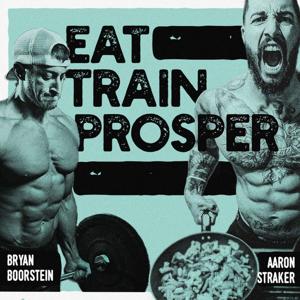


You spent months dieting to get really lean before a long holiday, you are about to eat pretty much whatever you want for a week or two, and you want to know how to hold onto the leanness you just worked so hard for. The question gives us two options to weigh: diet right up until the day before you leave, or ease back to maintenance for a couple of weeks first, both with the goal of not undoing your progress the second you get there.
The bigger you are, the more muscle you carry, and the longer you have lived lean, the more you can get away with. Bryan is a good example of that. His approach is to hold the deficit right up until the last minute, eat big on the trip, keep moving every single day, and compress his food into a smaller window so he cannot dig the hole too deep, and he comes back no worse off. That works because it is a system he has gamed for himself over years, not a free for all. For most people the better bet is to diet right up against the vacation and send yourself in as depleted as you can, so those first couple of days are your body replenishing glycogen instead of storing fat. The catch is that the harder you diet going in, the more food focused you get, so there is a real chance you overeat more than you otherwise would have.
Then what actually happens when you get home, and a lot of it comes down to your priorities. We talk about giving it a full week back at baseline before you judge anything, because the scale right after a trip is mostly water and sodium and your bowels being off, and a five or six pound jump usually settles to about three pounds of real change. From there it opens up into the smell the roses phase after a hard diet, learning to actually live at a leaner body fat, how family and age change what you are willing to say no to, and why the environment you are in quietly pulls you up or down. Call it what it is: those deviations either cost you something you actually care about or they do not, and that is the whole decision.
Covered in this episode
Timestamps
00:00:00 - Intro: how long to keep the diet going before a holiday
00:01:39 - Bryan's approach: hold the deficit until the last minute
00:04:06 - The unfair reality of who gets away with it
00:07:13 - You will put on some fat, how much is the real question
00:08:22 - Why you want to go in as depleted as possible
00:10:16 - The downside: dieting harder cranks up food focus
00:11:33 - The more moderate approach, and why leanness decides it
00:13:06 - The NASCAR analogy for vacation eating
00:14:42 - Why the bloat still wrecks the look during the trip
00:15:38 - The case for dieting right up until the day before
00:17:37 - Coming home: a week at baseline before you judge anything
00:19:31 - The client who came back 14 pounds up
00:23:15 - The smell the roses phase, and learning to live leaner
00:25:51 - Body fat, family, and your actual priorities
Training hard, but don't look like it? Aaron closes that gap ⬇️
https://coach.strakernutritionco.com/bio
Paragon Training Methods Programming ⬇️
https://paragontrainingmethods.com
Follow Bryan's Evolved Training Systems Programming ⬇️
https://evolvedtrainingsystems.com
Find Us on Social Media ⬇️
IG | @Eat.Train.Prosper
IG | @bryanboorstein
IG | @aaron_straker
YT | EAT TRAIN PROSPER PODCAST
This one steps away from the training and nutrition stuff to talk about what actually built our careers in fitness. It came out of a question Aaron sat with before he left his software job to coach full time, which was basically, if it takes me ten years to make it, is it worth it? At 30, the answer was yes, and the episode kind of works back from there through the decisions that got us both to where we are now.
The fitness space is a weird one. A ton of people want to work in it, and most of them end up washing out, so we get into why that did not happen to either of us. That starts with what making it even meant early on versus what it means now. In the beginning it was just not drowning, then it was comfortable, and eventually it became actually being able to provide for a family, which changes the math completely. There is also a lot in here about the stuff nobody really warns you about with self-employment, like how you kind of become unemployable because you know too much, and why the number you are at matters way less than the direction you are heading.
The back half gets pretty honest about the expensive lessons. Aaron turned about 60 grand into almost nothing on an ad team and a mentorship he had no business buying into, and Bryan took two gyms that were both crushing and consolidated them into one, which ended up being the beginning of the end. We also get into the accolades we figured would change everything and mostly just did not, the pro card included. Then we close it out with the one piece of advice each of us would give someone who is a year or two in, or still sitting on the fence about quitting the day job.
Covered in this episode
Timestamps
00:00:00 - Intro and updates
00:10:25 - The question that started it: if it takes ten years, is it worth it
00:11:49 - What making it meant then versus now
00:13:15 - The three phases, from not drowning to providing for a family
00:18:10 - Becoming unemployable because you know too much
00:22:04 - The no-days-off reality of self-employment
00:24:19 - The turning point where it finally felt sustainable
00:29:01 - Why trajectory matters more than state
00:30:01 - Aaron's never-going-back moment: sales calls and a sold-out launch
00:32:55 - Whether the pro card or any accolade actually changed things
00:38:40 - The frustrating truth about looking the part
00:39:16 - The biggest money mistakes: ad teams and mentorships
00:44:18 - Consolidating two gyms into one, the beginning of the end
00:50:01 - Regrets, Asia, and the Undefeated bet
00:54:32 - One piece of advice to our younger selves
Training hard, but don't look like it? Aaron closes that gap ⬇️
https://coach.strakernutritionco.com/bio
Paragon Training Methods Programming ⬇️
https://paragontrainingmethods.com
Follow Bryan's Evolved Training Systems Programming ⬇️
https://evolvedtrainingsystems.com
Find Us on Social Media ⬇️
IG | @Eat.Train.Prosper
IG | @bryanboorstein
IG | @aaron_straker
YT | EAT TRAIN PROSPER PODCAST
Another month, another stack of questions pulled straight from the Instagram audience. This one was packed, 21 questions deep, so we skipped updates entirely and went straight into answering them. The range is wide: programming and split design, nutrient timing, eating well on a tight budget, a thoughtful testosterone question from someone with a real medical history, the psychology and physiology of dieting, and a long closing thread on what still excites us about training this far in.
A few of these go deeper than the usual Q&A. There is a full breakdown of whether a 150 pound person and a 200 pound person have it equally hard in a proportional deficit, and where that logic quietly falls apart in the real world. There is a careful answer on taking testosterone when you have an autoimmune and cardiac history, where the honest advice is to get a real cardiac workup first and not expect a magic energy fix. And there is a surprisingly good exchange on volume versus frequency that ties back to the training day question from a prior episode.
If you have sent us a question before, odds are good we got to it here. Timestamps are mapped to every single question below so you can jump straight to whatever you care about.
Covered in this episode
Timestamps:
00:00:00 - Intro
00:00:31 - How much difference does training five days a week make compared with four? If it does matter, how much? I’m planning to compete next August. In a prep, how much would keeping that fifth day be worth?
00:06:46 - How much difference will nutrient timing make to muscle/fat accumulation?
00:12:25 - How to eat healthy on a budget
00:18:08 - Digestion and gut health must haves
00:23:00 - Testosterone, energy, and health concerns with an autoimmune history and previous myocarditis
00:28:23 - Do you think someone could do trap bar deadlifts from the floor to replace barbell RDLs indefinitely and get the same hamstring/posterior chain gains?
00:31:33 - Do you think a lat pull-down set up with two pulleys is better than the single pulley for seated single arm lat pulldowns?
00:33:15 - Is it "easier" (in terms of cravings, will power, etc) for a 150 lb person to be in a 10% calorie deficit than a 200 lb person? Or does a proportional deficit hit the same across weight classes?
00:36:23 - Imagine you had to take a long break from training, how would you go about coming back. How would your training look like - what would you prioritise? What if it had been a year or two since you last trained?
00:39:15 - For dynamic double progression that you talked about in the last pod- I feel like I fatigue faster than I should, where my reps fall off to hit the same RIR. When I have followed plans that have built in progression I usually can’t keep up with what they have written, even if I feel like I’m hitting the intended RIR targets. I’m more of a beginner, would this get better with training? A sign I’m not resting enough between sets or going too hard on the first set?
00:42:56 - Bryan mentioned that he’s doing more volume with the bro split than the upper/lower. How do you make sense of your experiences and the research in determining whether more volume is better than more frequency; even if the volume is once weekly?
00:46:47 - For a given amount of volume, do you think it’s better to achieve it with more or fewer exercises per body part? I.e. 10 sets of chest with 10 exercises versus 10 sets of chest with 2 exercises.
00:49:51 - What do you recommend for coming off a 12-week cut? Go straight to maintenance or increase cals 10% a week until you hit maintenance? Additionally… how long should you stay at maintenance if you have more weight to lose?
00:55:27 - Sand volleyball training & recovery // I find my feet and calves get super tight and sometimes extra tired from all the sand time. This is even worse in the spring when I’m back out on the courts after a long winter of no sand time.
00:59:00 - Hypertrophy and strength training during perimenopause….How to navigate training loads during this phase? Some people say to stay in the 5 rep range but I like hypertrophy ranges for body composition
01:02:56 - How to balance weight training and cardio when you don’t have unlimited hours to train? You want to be strong, but also not be out of breath walking up the stairs… thanks!!
01:05:45 - I just started the strength cycle. Holding the barbell on the low bar back squat was uncomfortable, any suggestions on how to fix that?
01:08:16 - At this point of the game, are there still pieces of fitness and nutrition that excite you guys?
01:15:22 - How well would a split of: push-pull-off-legs-arms-off work for an advanced trainee?
01:17:26 - Any plans to bring an undefeated gym to the US?
01:17:44 - I’m running Push, Pull, Rest, Legs, Rest Upper Rest, with the goal of bringing up my upper body for a future MP competition. Would it make sense to move legs after push to give my upper body more recovery between sessions, rather than running push and pull back to back?
Training hard, but don't look like it? Aaron closes that gap ⬇️
https://coach.strakernutritionco.com/bio
Paragon Training Methods Programming ⬇️
https://paragontrainingmethods.com
Follow Bryan's Evolved Training Systems Programming ⬇️
https://evolvedtrainingsystems.com
Find Us on Social Media ⬇️
IG | @Eat.Train.Prosper
IG | @bryanboorstein
IG | @aaron_straker
YT | EAT TRAIN PROSPER PODCAST
Dynamic Double Progression. A favorite progression model. Here is your short version of it: take standard double progression, where you move up in reps or in weight inside a set range, and lets every set climb on its own instead of forcing them all to move together.
Here is the core of it. You pick a weight, you walk up the rep range week over week, and when you top it out you add a bit of load and start the climb again. What makes it dynamic is that your first set and your third set are almost never in the same spot, so you progress each one independently rather than sandbagging an early set to keep the numbers matched. Done well, it lets you hold the same RIR across every set, and it accounts for the fact that some exercises fall off a cliff from set one to set two while others barely move at all.
Most of the conversation is about what changes when you run this inside a real nutritional phase, because that is where people get tripped up. In a deficit your progressions dry up on a fairly predictable schedule, so we get into how to read a true stall versus a bad week, when to hold the load as reps slip versus when to pull weight back, and why how lean you already are matters more than how long you have been dieting. In a surplus it flips, and we cover what a realistic rate of progress looks like week to week, why glycogen saturation shows up first, and how much your training age changes the whole picture. We wrap on volume and the sweet spot, strength as the cleanest proxy that growth is actually happening, and the program design details that decide how many sets a given exercise can even support.
Covered in this episode
Timestamps:
00:00:00 - Intro and updates
00:10:00 - What dynamic double progression actually is
00:11:00 - What makes it dynamic: progressing each set on its own
00:13:00 - Using it to hold a target RIR across every set
00:15:00 - Per-exercise drop-off, and setting load per set from the start
00:17:00 - The question that sparked it: eight reps and no progress next week
00:19:00 - When it's a real stall: indirect factors and the deficit effect
00:22:00 - Dropping reps in a deficit: hold the load or pull it back
00:25:00 - How long progression lasts in a deficit, and why leanness decides it
00:32:00 - Running it in a surplus, and what to expect week to week
00:35:00 - Training age: why late stage natural changes the whole picture
00:38:00 - Volume, the sweet spot, and strength as the proxy for growth
00:43:30 - When a gaining phase has run its course
00:47:00 - Program design: rep ranges, set counts, and using DDP with two sets
Training hard, but don't look like it? Aaron closes that gap ⬇️
https://coach.strakernutritionco.com/bio
Paragon Training Methods Programming ⬇️
https://paragontrainingmethods.com
Follow Bryan's Evolved Training Systems Programming ⬇️
https://evolvedtrainingsystems.com
Find Us on Social Media ⬇️
IG | @Eat.Train.Prosper
IG | @bryanboorstein
IG | @aaron_straker
YT | EAT TRAIN PROSPER PODCAST
For the first 5 years of Aaron's coaching business he kept a running doc of every question a client ever asked. Hundreds. The single most asked question was a form of: "What actually counts as a training day?" Sounds simple, right up until you have to draw the line. And that line quietly decides whether you run one set of macros or two, and how you feed a surplus, a deficit, and everything in between.
The definition we keep coming back to is dead simple: a training day is something you need to recover from. That alone drops a lot of the confusing stuff, big step count days, hikes, a long zone 2 ride, into a gray area, and the call there is about duration and cost, not a hard yes or no. A 30 minute spin is not a training day. A 90 minute zone 2 ride is. From there we run the whole thing through nutritional periodization, because the phase you are in changes the answer. Maintenance, surplus, and deficit each get an argument for splitting your training and non-training day macros, and an argument against.
The deficit is where splitting really earns its keep, so that is where most of the episode lives: protecting training intensity as the number one lever for holding onto muscle, pulling food off rest days to hit your target rate of loss, and the psychology of dieting that no spreadsheet ever accounts for. That last part goes deep, from why hard training kills your appetite while rest days leave you bored and food focused, to the counterintuitive move of eating less on training days, to how going bland on purpose and cleaning up your Instagram feed can pull your hunger right back down. We wrap on the constrained energy model and step counts, HIIT versus low intensity cardio, why your wearable's calorie number lies but its trend does not, and the non-bodyweight reasons, stuff like metabolic flexibility and quality of life, that never make the spreadsheet but matter anyway.
Covered in this episode:
Timestamps:
00:00:00 - Intro and updates
00:05:00 - The six minute cardio ramp, and why lifting isn't a zone 2 substitute
00:09:00 - What actually counts as a training day: recovery as the definition
00:10:30 - The gray area: high step days, hikes, and zone 2
00:13:00 - Nutritional periodization and the maintenance phase
00:17:30 - Appetite blunting, rebound hunger, and the weekly average
00:22:00 - Surplus: insulin sensitivity and nutrient partitioning around training
00:29:00 - Monitoring a surplus: DEXA, and whether six more pounds is worth it
00:31:30 - Deficit: the phase where splitting matters most
00:34:00 - The psychology of dieting and Bryan's opposite approach
00:37:30 - Going bland on purpose: flavor, the algorithm, and hunger
00:42:00 - The constrained energy model, steps, and the Pontzer research
00:47:00 - HIIT versus low intensity cardio in a deficit
00:50:00 - Non-bodyweight reasons: metabolic flexibility and quality of life
00:54:00 - Wearables, the trend over the number, and pulling cardio before steps
Training hard, but don't look like it? Aaron closes that gap ⬇️
https://coach.strakernutritionco.com/bio
Paragon Training Methods Programming ⬇️
https://paragontrainingmethods.com
Follow Bryan's Evolved Training Systems Programming ⬇️
https://evolvedtrainingsystems.com
Find Us on Social Media ⬇️
IG | @Eat.Train.Prosper
IG | @bryanboorstein
IG | @aaron_straker
YT | EAT TRAIN PROSPER PODCAST
ETP226 comes from a DM question posed to Bryan wondering whether we have taken the "abs are made in the kitchen" idea too far. That question opened up into a bigger one, and it is the question this whole episode chases: for muscle groups like abs and arms, how much does training them directly actually change your physique relative to the extra time it costs you?
We work through it from a few angles. Whether a base of prior ab development carries over through years of compound lifting, how core stability from free weights compares to braced machine work, and where the honest line sits between a six-pack and true influencer-level abs. From there it moves to the more interesting half of the conversation, the arms. The thought experiment at the center of it is a natural lifter who has gotten genuinely strong, think a 200 press, 300 bench, 400 squat, 500 deadlift plus weighted pull-ups and dips, and whether that person ends up with basically the same arms as someone who added years of dedicated direct arm work on top.
That leads into some of our favorite tangents: why body fat distribution is largely hormonal and splits so differently between men and women, whether the size you get from direct arm work is real myofibrillar growth or mostly transient sarcoplasmic pump, whether muscle and fat compete for the same space, and Bryan's one arm experiment as evidence. It all ties back to the one question worth actually sitting with, how much optimization is worth pursuing for you, which comes down to what you care about and what your time is better spent on.
Covered in this episode
Timestamps:
00:00:00 - Episode Intro
00:02:00 - Have we taken abs are made in the kitchen too far
00:05:00 - Core stability from free weights versus braced machines
00:07:00 - The ex-powerlifter example: big lifts leave a developed midsection
00:10:30 - Defining ab development: a six-pack versus influencer abs
00:12:30 - The arms thought experiment: the strong enough natural lifter
00:15:30 - How execution changes the arm you get from rows and pulls
00:18:30 - Body fat distribution, hormones, and male versus female patterns
00:22:30 - Whether long term TRT shifts where you store fat
00:24:30 - Sarcoplasmic versus myofibrillar hypertrophy from direct arm work
00:27:30 - The one arm experiment and what it suggests about transient size
00:29:30 - Can muscle and fat compete for the same space
00:34:30 - Why developed abs can look worse if you are not lean
00:38:30 - How much optimization is actually worth pursuing
00:40:30 - The earlier lifter: get strong on compounds first
Training hard, but don't look like it? Aaron closes that gap ⬇️
https://coach.strakernutritionco.com/bio
Paragon Training Methods Programming ⬇️
https://paragontrainingmethods.com
Follow Bryan's Evolved Training Systems Programming ⬇️
https://evolvedtrainingsystems.com
Find Us on Social Media ⬇️
IG | @Eat.Train.Prosper
IG | @bryanboorstein
IG | @aaron_straker
YT | EAT TRAIN PROSPER PODCAST
Another month, another batch of questions pulled straight from the Instagram audience. This one runs the full range, from how to build a bro split around daily cardio, to the zone 2 discourse currently making the rounds, to a couple of surprisingly good questions from Bryan's nine year old. We take each one in turn and give the honest answer rather than the tidy one.
A lot of this episode lives in the nuance. How to read research when you do not have a science background and whether reviews are the better use of your time, whether an 80/20 commitment can really get you to 95% of your muscle gain potential and why the way you define that 80/20 changes the answer, and Aaron's transparent take on TRT after being on it for a while, including what he would do differently if he could start over. Bryan revisits the one arm training experiment and what it actually proved, and we get into practical troubleshooting for the classic wake up after two to three hours sleep problem.
Covered in this episode
Timestamps
00:00:00 - Intro and updates
00:06:00 - Programming a bro split around daily cardio for health
00:14:00 - Dr. Mike T. Nelson and the zone 2 discourse
00:22:00 - Reading research versus research reviews as an enthusiast
00:29:00 - Can 80/20 get you to 95% of your muscle gain potential
00:34:00 - Bryson's questions: training abs and getting jacked at puberty
00:38:00 - Stepping back evenly on reverse lunges
00:40:00 - Training through pregnancy
00:44:00 - Any regrets about starting TRT
00:50:00 - The one arm training experiment, and what's next
00:54:00 - Waking up after two to three hours and can't fall back asleep
00:58:00 - What are you currently enjoying or excited about
Training hard, but don't look like it? Aaron closes that gap ⬇️
https://coach.strakernutritionco.com/bio
Paragon Training Methods Programming ⬇️
https://paragontrainingmethods.com
Follow Bryan's Evolved Training Systems Programming ⬇️
https://evolvedtrainingsystems.com
Find Us on Social Media ⬇️
IG | @Eat.Train.Prosper
IG | @bryanboorstein
IG | @aaron_straker
YT | EAT TRAIN PROSPER PODCAST
This week we have a slightly different kind of episode. We talk less about the mechanics of training and more about the benefits of using your fitness out in the world, specifically outdoors. We talk about environment, how the right gym or the mountains can pull effort out of you when your own motivation is low.
The back half of the episode revisits the Misogi Challenge and the value of planning something with a real chance of failure, why hard physical challenges reframe everyday life, and how the pursuit of hard things changes from your twenties to thirties and forties. It closes on the big one, using your fitness to buy a longer and more capable lifespan, why your 30s are when the trajectory of your actions starts to show, and why 56 does not look so old looking forward from 44.
Covered in this episode
Timestamps
00:00:00 - Intro
00:05:00 - You don't have to train every day to keep your fitness
00:09:30 - Environment and how the right gym pulls effort out of you
00:13:30 - The benefits of using your fitness outdoors
00:16:30 - Awe as a mechanism, and Keltner's science of wonder
00:20:00 - Revisiting the misogi and planning something hard
00:24:30 - Doing hard things, and how that pursuit changes with age
00:32:00 - Using your fitness for a longer, more capable lifespan
Training hard, but don't look like it? Aaron closes that gap ⬇️
https://coach.strakernutritionco.com/bio
Paragon Training Methods Programming ⬇️
https://paragontrainingmethods.com
Follow Bryan's Evolved Training Systems Programming ⬇️
https://evolvedtrainingsystems.com
Find Us on Social Media ⬇️
IG | @Eat.Train.Prosper
IG | @bryanboorstein
IG | @aaron_straker
YT | EAT TRAIN PROSPER PODCAST
This one came straight out of the DMs. Aaron gets messages from people who are interested in coaching and they usually lay out everything they have been doing and everything they have tried. The same handful of problems keep showing up over and over again, so instead of answering them one at a time, this episode is the full breakdown.
The whole thing is built around three buckets. Poor metrics, where the plateau only exists in perception because there was never a baseline, a rate of loss target, or any real objectivity built into the approach in the first place. False plateaus, where the deficit is actually intact but something is muddying the water and making it look like nothing is happening. And true plateaus, where the deficit on paper simply does not match the deficit in reality.
If you are coaching yourself through a fat loss phase, this is the episode to have open when the scale stops moving and you are trying to figure out whether to change something or hold the line. Bryan spent a good portion of this one saying he had nothing to add, which is probably the best endorsement it could get. Before that, Bryan talks about the ten day family road trip through the canyons that has him off the mic for the next couple of weeks, and Aaron recaps the boys training trip he put together in Dallas.
Covered in this episode
Timestamps
00:00:00 - Intro: Is Your Fat Loss Stalled? Then Do These
00:00:55 - Updates: Bryan's road trip and Aaron's Dallas training trip
00:06:25 - Bucket one: poor metrics
00:07:25 - Establishing an actual baseline
00:10:15 - Weekly averages and seven day moving averages
00:13:40 - Setting a target rate of loss: 0.5% to 1% per week
00:16:45 - Setting realistic goals and running the math
00:19:40 - Bucket two: false plateaus
00:22:45 - Fat loss is not linear
00:26:20 - Too much flexibility and macro Tetris
00:31:00 - Inversion of control
00:32:15 - Bucket three: true plateaus
00:36:20 - NEAT dropping the longer you diet
00:38:00 - Metabolic adaptation: real but often overblown
00:41:20 - Sleep is the unsung hero of fat loss
00:43:30 - Take homes and building in non-progress weeks
Training hard, but don't look like it? Aaron closes that gap ⬇️
https://coach.strakernutritionco.com/bio
Paragon Training Methods Programming ⬇️
https://paragontrainingmethods.com
Follow Bryan's Evolved Training Systems Programming ⬇️
https://evolvedtrainingsystems.com
Find Us on Social Media ⬇️
IG | @Eat.Train.Prosper
IG | @bryanboorstein
IG | @aaron_straker
YT | EAT TRAIN PROSPER PODCAST
Episode 222 is our July Instagram Q&A, and per usual the questions did not disappoint. We dig through a big stack covering everything from exercise sequencing and deloads to GLP-1s, telehealth companies, and what we actually learned in our late-stage natty years that still apply.
There is a lot of practical programming talk in this one. Where RDLs should actually go in your session, how to build a minimum effective program on three 45-minute sessions per week, the five exercises we would pick if we could only use five for an entire year, and how to structure a four day split when chest and arms are the priority.
We also cover softer but equally important stuff: advice for new online coaches, why most people do not actually need a reverse diet, health habits we'll never stop doing, and the best sub $100 purchases that have improved our training. Fun one this month.
One quick note: a number of pregnancy and fertility questions came in this round. Those were forgotten. They are getting saved for an upcoming episode so they can get the time and depth they deserve instead of a rushed answer at the end of a Q&A.
Covered in this episode:
Timestamps:
00:00:00 – Intro and life updates: Bryan's travel and July 20th program drop, Aaron's Dallas boys training trip and September Refining Hypertrophy seminar
00:02:30 – Exercise sequencing for barbell RDLs. Why do some coaches program them at the end?
00:05:25 – Where will Aaron get TRT in the US? Any reputable telehealth companies?
00:08:25 – How often do you complete educational courses? Any you would recommend?
00:12:15 – Top tips and advice for aspiring new online coaches
00:13:50 – Can you talk about how people think they need reverse diets but usually don't?
00:18:20 – Does setting deficit macros with super high protein make an aggressive deficit easier to tolerate?
00:20:00 – What is your stance on casual GLP-1 use for gen pop clients struggling with food noise?
00:25:50 – What are your thoughts on a low carb diet?
00:27:25 – The dogmatism around deloads has dissipated. Current thoughts on whether they are necessary?
00:32:20 – Biggest thing you have learned since going on TRT that still applies to natural lifters?
00:37:15 – Is there a point where a trainee should stop focusing on progression by weight entirely?
00:40:45 – Minimum effective hypertrophy program for a busy parent with three 45-minute sessions per week
00:43:00 – If you could only pick five exercises to build as much muscle as possible for a year, what are they?
00:46:25 – Do you still put any value into food timing around workouts?
00:50:10 – What is a health habit you have adopted in the past few years that you will never stop doing?
00:53:30 – Best purchase under $100 that has improved your training the most?
00:55:25 – Favorite lazy, healthy meal when you don't feel like cooking?
00:56:40 – Does the order of exercises matter when training?
00:59:05 – How would you strategize a four day push pull legs upper split to bring up chest and arms?
Training hard, but don't look like it? Aaron closes that gap ⬇️
https://coach.strakernutritionco.com/bio
Paragon Training Methods Programming ⬇️
https://paragontrainingmethods.com
Follow Bryan's Evolved Training Systems Programming ⬇️
https://evolvedtrainingsystems.com
Find Us on Social Media ⬇️
IG | @Eat.Train.Prosper
IG | @bryanboorstein
IG | @aaron_straker
YT | EAT TRAIN PROSPER PODCAST
From the publisher's feed

12,100 Listeners
342 Listeners

777 Listeners

27,824 Listeners
1,559 Listeners
3,793 Listeners
739 Listeners
532 Listeners

542 Listeners
64 Listeners

23 Listeners

332 Listeners

676 Listeners

47 Listeners

45 Listeners