
Sign up to save your podcasts
Or

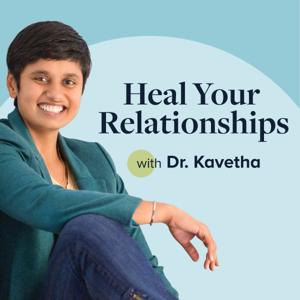

Have you ever noticed how different you become when you're triggered?
One moment you're calm, thoughtful, and clear.
The next, you're overthinking, shutting down, becoming defensive, needing reassurance, or pulling away from the people you care about most.
It's almost as if something takes over.
In this week's episode, Emotional Sobriety, we explore why that happens and how to return to the version of yourself that feels grounded, present, and authentic.
One of my favorite phrases comes from recovery communities:
Emotional sobriety.
Not because most of us struggle with substances.
But because many of us know exactly what it feels like to have our fears, wounds, and attachment patterns cloud our judgment in the same way a substance might.
When we're triggered, we stop seeing clearly.
We lose access to parts of ourselves.
And that often creates the very relationship patterns we're trying so hard to avoid.
In this episode, we explore the two powerful forces living within all of us:
The Inner Child: the part of us that longs for comfort, play, connection, spontaneity, and reassurance.
And the Inner Parent: the part of us that brings wisdom, perspective, responsibility, self-regulation, and compassion.
The challenge is that when we're triggered, one often takes over while the other disappears.
And that's where emotional suffering begins.
Episode timestamps:
02:27 — What emotional sobriety actually means
03:16 — Understanding the Inner Child
04:17 — Understanding the Inner Parent
05:18 — The shadow side of both parts
06:18 — Why attachment styles matter
07:04 — How anxious attachment loses access to the Inner Parent
09:53 — How dismissive avoidant attachment loses access to the Inner Child
13:14 — How fearful avoidants flip-flop between both extremes
15:23 — The connection between triggers and protest behaviors
16:02 — The first step toward emotional sobriety
18:18 — Giving yourself time to bring all parts of yourself
18:37 — Why understanding your attachment style changes everything
One of the most important insights from this conversation is this:
When we're triggered, we're rarely responding from our whole self.
Instead, we're responding from a wounded part of ourselves that temporarily takes over.
And until we learn how to bring both our Inner Child and Inner Parent into the room together, we often repeat the same relationship patterns over and over again.
The good news?
This is a skill.
And skills can be learned.
-
Resources mentioned: Attachment FREE quiz - https://www.attachedthebook.com/wordpress/compatibility-quiz/
-
If you've been following these recent episodes and finding yourself thinking:
"This sounds exactly like me."
"I know my triggers are running the show."
"I want to stop reacting and start responding differently."
That's exactly why we created Untriggerable.
Inside the program, we help physicians and high-achieving professionals identify their attachment patterns, dissolve the core wounds underneath them, regulate their nervous systems, and develop the emotional resilience needed to stay grounded—even when life gets challenging.
You can learn more and join the community here:
https://www.skool.com/relationshipmastery4physicians
Or simply reply to this email or reach out to [email protected] and our team will send you more information.
 View all episodes
 By Kavetha Sundaramoorthy
5
9898 ratings
Have you ever noticed how different you become when you're triggered?
One moment you're calm, thoughtful, and clear.
The next, you're overthinking, shutting down, becoming defensive, needing reassurance, or pulling away from the people you care about most.
It's almost as if something takes over.
In this week's episode, Emotional Sobriety, we explore why that happens and how to return to the version of yourself that feels grounded, present, and authentic.
One of my favorite phrases comes from recovery communities:
Emotional sobriety.
Not because most of us struggle with substances.
But because many of us know exactly what it feels like to have our fears, wounds, and attachment patterns cloud our judgment in the same way a substance might.
When we're triggered, we stop seeing clearly.
We lose access to parts of ourselves.
And that often creates the very relationship patterns we're trying so hard to avoid.
In this episode, we explore the two powerful forces living within all of us:
The Inner Child: the part of us that longs for comfort, play, connection, spontaneity, and reassurance.
And the Inner Parent: the part of us that brings wisdom, perspective, responsibility, self-regulation, and compassion.
The challenge is that when we're triggered, one often takes over while the other disappears.
And that's where emotional suffering begins.
Episode timestamps:
02:27 — What emotional sobriety actually means
03:16 — Understanding the Inner Child
04:17 — Understanding the Inner Parent
05:18 — The shadow side of both parts
06:18 — Why attachment styles matter
07:04 — How anxious attachment loses access to the Inner Parent
09:53 — How dismissive avoidant attachment loses access to the Inner Child
13:14 — How fearful avoidants flip-flop between both extremes
15:23 — The connection between triggers and protest behaviors
16:02 — The first step toward emotional sobriety
18:18 — Giving yourself time to bring all parts of yourself
18:37 — Why understanding your attachment style changes everything
One of the most important insights from this conversation is this:
When we're triggered, we're rarely responding from our whole self.
Instead, we're responding from a wounded part of ourselves that temporarily takes over.
And until we learn how to bring both our Inner Child and Inner Parent into the room together, we often repeat the same relationship patterns over and over again.
The good news?
This is a skill.
And skills can be learned.
-
Resources mentioned: Attachment FREE quiz - https://www.attachedthebook.com/wordpress/compatibility-quiz/
-
If you've been following these recent episodes and finding yourself thinking:
"This sounds exactly like me."
"I know my triggers are running the show."
"I want to stop reacting and start responding differently."
That's exactly why we created Untriggerable.
Inside the program, we help physicians and high-achieving professionals identify their attachment patterns, dissolve the core wounds underneath them, regulate their nervous systems, and develop the emotional resilience needed to stay grounded—even when life gets challenging.
You can learn more and join the community here:
https://www.skool.com/relationshipmastery4physicians
Or simply reply to this email or reach out to [email protected] and our team will send you more information.
10,522 Listeners

111,948 Listeners
499 Listeners

9,231 Listeners

3,149 Listeners

7,995 Listeners

27,775 Listeners

29,207 Listeners

200 Listeners

287 Listeners
179 Listeners
512 Listeners

19,524 Listeners

130 Listeners
6 Listeners