
Sign up to save your podcasts
Or

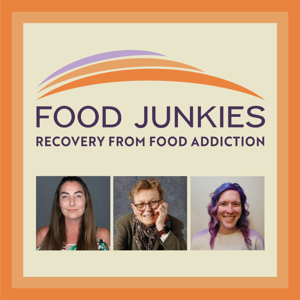

In this Clinician's Corner episode, Clarissa and Molly dive into what they lovingly (and accurately) call the "Hella-Days"—that stretch from early fall through New Year's where routines disappear, food is everywhere, emotions are high, and nervous systems are fried. Together, they unpack why this season is so activating for people with food addiction and nervous system sensitivity, and how to navigate it with values, boundaries, and a whole lot of self-compassion—whether you're surrounded by family or spending the holidays on your own.
In This Episode Clarissa & Molly explore: Why the holidays can feel like the "Holiday Hunger Games" and "12 Days of Dysregulation" How the nervous system responds to the build-up from September to New Year's Using values as your North Star for holiday decisions Boundary tools and scripts for parties, family gatherings, and food pushers Why holiday food environments are an "engineered stressor" (hello, peppermint-everything marketing)
Strategies for: Going to events without abandoning your recovery Deciding when not to go Coping with loneliness, isolation, and dark evenings Harm reduction during high-exposure events ("good, better, best" thinking) How to re-imagine your holiday story over time instead of chasing perfection Ideas for folks who love the holidays (Clarissmas) and folks who… don't (Molly 😂)
They also share: Personal stories of childhood Christmas expectations, sibling dynamics, and parental pressure How early family patterns still shape how we show up at the holidays Reframing relapse and "taking the bait" with relatives like Aunt Linda (sorry, Linda)
Key Takeaways You can use/adapt these directly in show notes as bullet points. Start with your North Star, not the menu. Before the doorbells, casseroles, and Aunt Linda's commentary, ask: What matters most to me about this season? How do I want to feel when the day is over? What will support my recovery and nervous system? Let those answers drive your choices more than other people's expectations, panic, or cookies.
Boundaries are about self-respect, not punishment. Boundaries define what's okay and not okay for you. They're about taking responsibility for your experience—not policing others. As Brené Brown says, "Clear is kind." You don't have to over-explain or apologize. Use positive, non-defensive boundary scripts. "I don't eat sugar" often triggers defensiveness and comparison. Instead, frame your choice around how good you feel: "That looks amazing, but I've been eating in a way that's really helping my energy and sleep, and I'm so grateful I found what works for me. Thanks for understanding." Or keep it simple: "No, thank you." (A complete sentence.) "I'm focusing on foods that help me feel my best."
Rehearsal reduces panic. Visualize the event ahead of time: Imagine someone offering food or a drink. Practice your boundary script. Role-play in group or with a clinician. Like athletes using mental rehearsal, you're teaching your nervous system that this "scary" behavior is survivable and doable.
Don't arrive hungry to the Holiday Hunger Games. Skipping meals "to save up" for a party sets you up to be biologically and emotionally vulnerable. Eat a satiating meal (protein, healthy fats, veggies) before events. Then you can pause and ask, Am I actually hungry, or is this emotional/relational?
Use "Good, Better, Best" instead of all-or-nothing. When your nervous system is hijacked and the perfect choice isn't accessible: Best: Aligned, recovery-supportive choice. Better: Less harmful option if "best" isn't realistic. Good enough: Reduces harm in a very stressful moment. This is harm reduction, not failure.
Plan your support system: exit strategies, grounding, and non-food rewards. Exit plan: Decide in advance how long you'll stay and how you'll leave if overwhelmed (drive separately, ask partner to bring you back to the hotel, etc.). Grounding: Find a quiet corner, identify 5 things you can see, and locate something visually "neutral" or pleasant you can keep returning your gaze to. Non-food rewards: Think saunas, walks, reading, play with kids/nieces, skiing, time offline—let celebration include regulation, not just consumption.
You don't actually owe the holidays anything. There is nothing magical about one date on the calendar that couldn't be created on another day. You can: See important people in smaller, less intense doses throughout the year. Say "no" to events that are more away-moves than towards-moves for your recovery. Ask: What does this event mean to me? How might it impact my recovery? Do I have the emotional energy for this?
If you're alone or not celebrating traditionally, you still get to have a holiday that fits you. For folks spending holidays solo or outside of family systems: Create new traditions: a favorite meal (yes, lobster counts), comfort movies, lights-seeing drives, nature walks. Consider volunteering (community dinners, toy programs), which can shift perspective and foster connection. Plan virtual connection: Zoom rooms, watch parties, scheduled calls or voice notes, especially in the evenings when darkness and loneliness hit the hardest.
Engineered holiday food environments are not a personal failure. Seasonal marketing is deliberately designed to trigger nostalgia, emotion, and craving (eggnog-everything, gingerbread-everything). It's an engineered stressor, not proof you lack willpower. Your brain is responding exactly as it was wired to; you're not broken. You are not "starting over"; you are learning. If you "take the bait" from Aunt Linda, eat off-plan, or get pulled into old patterns: You are not back at Day 1. You collected new data about triggers, resources, and needs. Recovery is peaks, valleys, and everything in between—that's human, not just "because you're an addict."
Your holiday story can change over time. Clarissa names how her first, second, third food-sober holidays were hard—and now it's almost a non-issue. We can: Re-imagine the script (like Disney re-imagining its princesses). Hold younger versions of ourselves with tenderness. Trust that practice, time, and patience reshape the season.
Resources Mentioned Sweet Sobriety Free Holiday Guide (PDF) ~22 pages of: Reflection questions to use your values as a North Star Boundary scripts and language examples Planning prompts for events, food, and nervous system care 👉 Link to download on website Contact / Listener Questions Have a holiday strategy that worked for you? A topic you'd like Clarissa & Molly to cover in a future Clinician's Corner? 📩 Email: [email protected]
 View all episodes
 By Clarissa Kennedy

4.8
155155 ratings
In this Clinician's Corner episode, Clarissa and Molly dive into what they lovingly (and accurately) call the "Hella-Days"—that stretch from early fall through New Year's where routines disappear, food is everywhere, emotions are high, and nervous systems are fried. Together, they unpack why this season is so activating for people with food addiction and nervous system sensitivity, and how to navigate it with values, boundaries, and a whole lot of self-compassion—whether you're surrounded by family or spending the holidays on your own.
In This Episode Clarissa & Molly explore: Why the holidays can feel like the "Holiday Hunger Games" and "12 Days of Dysregulation" How the nervous system responds to the build-up from September to New Year's Using values as your North Star for holiday decisions Boundary tools and scripts for parties, family gatherings, and food pushers Why holiday food environments are an "engineered stressor" (hello, peppermint-everything marketing)
Strategies for: Going to events without abandoning your recovery Deciding when not to go Coping with loneliness, isolation, and dark evenings Harm reduction during high-exposure events ("good, better, best" thinking) How to re-imagine your holiday story over time instead of chasing perfection Ideas for folks who love the holidays (Clarissmas) and folks who… don't (Molly 😂)
They also share: Personal stories of childhood Christmas expectations, sibling dynamics, and parental pressure How early family patterns still shape how we show up at the holidays Reframing relapse and "taking the bait" with relatives like Aunt Linda (sorry, Linda)
Key Takeaways You can use/adapt these directly in show notes as bullet points. Start with your North Star, not the menu. Before the doorbells, casseroles, and Aunt Linda's commentary, ask: What matters most to me about this season? How do I want to feel when the day is over? What will support my recovery and nervous system? Let those answers drive your choices more than other people's expectations, panic, or cookies.
Boundaries are about self-respect, not punishment. Boundaries define what's okay and not okay for you. They're about taking responsibility for your experience—not policing others. As Brené Brown says, "Clear is kind." You don't have to over-explain or apologize. Use positive, non-defensive boundary scripts. "I don't eat sugar" often triggers defensiveness and comparison. Instead, frame your choice around how good you feel: "That looks amazing, but I've been eating in a way that's really helping my energy and sleep, and I'm so grateful I found what works for me. Thanks for understanding." Or keep it simple: "No, thank you." (A complete sentence.) "I'm focusing on foods that help me feel my best."
Rehearsal reduces panic. Visualize the event ahead of time: Imagine someone offering food or a drink. Practice your boundary script. Role-play in group or with a clinician. Like athletes using mental rehearsal, you're teaching your nervous system that this "scary" behavior is survivable and doable.
Don't arrive hungry to the Holiday Hunger Games. Skipping meals "to save up" for a party sets you up to be biologically and emotionally vulnerable. Eat a satiating meal (protein, healthy fats, veggies) before events. Then you can pause and ask, Am I actually hungry, or is this emotional/relational?
Use "Good, Better, Best" instead of all-or-nothing. When your nervous system is hijacked and the perfect choice isn't accessible: Best: Aligned, recovery-supportive choice. Better: Less harmful option if "best" isn't realistic. Good enough: Reduces harm in a very stressful moment. This is harm reduction, not failure.
Plan your support system: exit strategies, grounding, and non-food rewards. Exit plan: Decide in advance how long you'll stay and how you'll leave if overwhelmed (drive separately, ask partner to bring you back to the hotel, etc.). Grounding: Find a quiet corner, identify 5 things you can see, and locate something visually "neutral" or pleasant you can keep returning your gaze to. Non-food rewards: Think saunas, walks, reading, play with kids/nieces, skiing, time offline—let celebration include regulation, not just consumption.
You don't actually owe the holidays anything. There is nothing magical about one date on the calendar that couldn't be created on another day. You can: See important people in smaller, less intense doses throughout the year. Say "no" to events that are more away-moves than towards-moves for your recovery. Ask: What does this event mean to me? How might it impact my recovery? Do I have the emotional energy for this?
If you're alone or not celebrating traditionally, you still get to have a holiday that fits you. For folks spending holidays solo or outside of family systems: Create new traditions: a favorite meal (yes, lobster counts), comfort movies, lights-seeing drives, nature walks. Consider volunteering (community dinners, toy programs), which can shift perspective and foster connection. Plan virtual connection: Zoom rooms, watch parties, scheduled calls or voice notes, especially in the evenings when darkness and loneliness hit the hardest.
Engineered holiday food environments are not a personal failure. Seasonal marketing is deliberately designed to trigger nostalgia, emotion, and craving (eggnog-everything, gingerbread-everything). It's an engineered stressor, not proof you lack willpower. Your brain is responding exactly as it was wired to; you're not broken. You are not "starting over"; you are learning. If you "take the bait" from Aunt Linda, eat off-plan, or get pulled into old patterns: You are not back at Day 1. You collected new data about triggers, resources, and needs. Recovery is peaks, valleys, and everything in between—that's human, not just "because you're an addict."
Your holiday story can change over time. Clarissa names how her first, second, third food-sober holidays were hard—and now it's almost a non-issue. We can: Re-imagine the script (like Disney re-imagining its princesses). Hold younger versions of ourselves with tenderness. Trust that practice, time, and patience reshape the season.
Resources Mentioned Sweet Sobriety Free Holiday Guide (PDF) ~22 pages of: Reflection questions to use your values as a North Star Boundary scripts and language examples Planning prompts for events, food, and nervous system care 👉 Link to download on website Contact / Listener Questions Have a holiday strategy that worked for you? A topic you'd like Clarissa & Molly to cover in a future Clinician's Corner? 📩 Email: [email protected]
700 Listeners
779 Listeners

9,221 Listeners
1,110 Listeners
129 Listeners
1,099 Listeners
413 Listeners
211 Listeners
233 Listeners
172 Listeners
580 Listeners
178 Listeners
115 Listeners
73 Listeners
22 Listeners