
Sign up to save your podcasts
Or



If you’ve ever paused before speaking and wondered, “What words won’t hurt here?” this conversation is the answer—and then some. We start with language and respect, then travel through diagnosis, the Q-CHAT turning point, and two very different autism profiles in one family. One child is moving from non-verbal to pre-verbal with a speech device; the other wrestles with regression, self-injury, and the kind of big emotions that make safety and routine non-negotiable. Along the way, we talk openly about stimming as regulation, why person-first vs identity-first language matters, and how simple questions can keep friendships close rather than careful and distant.
School choices become a map rather than a ladder: autism units attached to mainstream schools for some, special schools focused on life skills for others. We get practical about the day-to-day—2 a.m. wake-ups, bus-triggered shoe sprints, the sanctuary of sameness, and the small adaptations that keep the house steady. A service dog named Milo transforms outings from “white-knuckle” to “we can do this,” showing how tethering can mean dignity, not restraint. Puberty planning is handled with care and medical oversight, reframing judgement as compassion when a child cannot yet manage periods. We also share the tools that truly help—PECS, LetMeTalk, photographed choices—and the red flags to avoid: miracle cures, detox fads, and anyone selling guilt.
There’s hard truth here about guilt, blame, and grief for lost rituals—birthdays, Santa magic, big milestone days that don’t land the way you imagined. There’s also a bright thread of hope: adult diagnosis bringing clarity for a parent, community that actually supports, and the next tiny win that makes tomorrow a little easier. If you care about autism families—whether you’re parenting, teaching, or a friend who wants to do better—you’ll find a grounded guide to language, support, and love without sugarcoating.
Subscribe for more honest, practical stories, share this with someone who needs it, and tell us: what’s one small change that made your days calmer?
Hosted on Acast. See acast.com/privacy for more information.
Some stories open like a wound and heal like a lesson. Marguerite Penrose sits with us to share a life that began in a mother and baby home, moved into a home filled with fierce love, and kept moving through surgeries, paralysis at eight, and a near-fatal respiratory collapse years later. What emerges isn’t a tidy triumph, but a living definition of resilience: a stubborn will to keep going, a family who shows up every day, and a quiet decision to forgive without forgetting.
We talk through the missing records and sealed files that leave adoptees guessing at their own beginnings, the nurse who first brought her outside to feel grass, and the parents—Michael and Nolin—who became her compass. Marguerite walks us into ICU, where morphine fog, intubation, and the fear of a tracheotomy collided with her sister’s steady voice and a nurse’s hand. Recovery wasn’t cinematic. It was stairs climbed slowly, boundaries with work, and the hard choice to ask for help. Along the way, she names the everyday reality of racism in Ireland: being skipped for service, the “Where are you really from?” refrain, and the slurs that steal air from a bus. She separates ignorance from malice, calls out tokenism in media while welcoming real representation, and offers a way forward that’s both practical and humane—policy, education, and conversation grounded in respect.
What lingers is her moral centre: acceptance. Not the soft kind that excuses harm, but the firm kind that lets a person live with complexity—grateful for her parents who raised her, compassionate toward the ones who couldn’t, and unafraid to ask more of a country she calls home. If you’ve ever wrestled with identity, health, or the weight of other people’s assumptions, this conversation is a clear, human guide. Subscribe, share with a friend who needs it, and leave a review to help more listeners find these stories.
Hosted on Acast. See acast.com/privacy for more information.
A single decision—to pull a car door handle and run—sets off one of the most gripping escapes you’ll ever hear. We sit with Louise as she retraces the path from a locked room in Idlib to a dawn balcony in Beirut, carrying her six-year-old daughter through checkpoints, betrayals, and a night march over mined mountains. The story moves fast and stays close to the ground: a blue-eyed taxi driver who becomes an angel, a consulate racing a death warrant, and a network of safe houses held together by courage and tea.
We talk about the cost of survival in a real war zone: bartered visas, confiscated SIMs, and the stark moment a judge says a child cannot leave because “Syria loses a Muslim.” When institutions stall, Louise turns to unthinkable allies—extremist smugglers—to cross into Lebanon, where Irish diplomats are waiting with blacked-out cars and a way home. Along the way, the details stay human and unforgettable: a child whispering “Mammy, just be happy,” a nun with hidden chocolate, cornflakes devoured overnight by hungry kids, and the quiet decency of strangers who took real risks to help.
Back in Ireland, the adrenaline drains and PTSD takes its place—hypervigilance, nightmares, an empty pantry turning into a child’s hidden cache of food. We unpack the long tail of coercive control, cross-border custody, and the practical steps that save lives when legal routes fail. Louise’s book, Stolen: Escape from Syria, published in seventeen countries and optioned for film, becomes both testimony and toolkit for families facing domestic abuse and international abduction. If you care about human rights, survivor resilience, and the messy, brave logistics of getting out, this conversation won’t leave you.
Subscribe for more real stories that move from headline to heartbeat. If this episode resonates, share it with a friend, leave a review, and tell us the moment you held your breath.
Hosted on Acast. See acast.com/privacy for more information.
The morning starts like any other—school uniform ready, hairbrush forgotten, a small smile over a shoulder—and then the phone goes dead. When it rings again, the tone is international and the message lands like a verdict: you will never see her again. That’s the moment everything Louise has survived—childhood sexual abuse, the sudden loss of her mother, a fragile marriage, and the slow tightening net of coercive control—collides with one decision that can’t be outsourced to courts, consulates, or chance.
We trace Louise’s path from Swords to Cyprus, where a grief-fuelled escape becomes genuine rebirth: a thriving salon, improvised hustle, late sunsets, and the first real sense of self-belief. Into that light walks Mustafa—attentive, handsome, and, as it turns out, meticulous in his control. The signs appear early and often: uninvited arrivals, subtle policing of clothes, abrupt violence followed by minimising apologies. Pregnancy intensifies everything; secrets spill about a wife in Syria and children Louise never knew existed. The legal and cultural systems that should protect her instead pin her in place—access orders without safety, police apathy, and paperwork that requires the consent of the man who is doing the harm.
When May is taken, the clock changes. Media pressure finally unlocks emergency passports, but paper doesn’t cross borders—people do. With her sister by her side and fear as a constant companion, Louise navigates Adana, Hatay, and a frontier crowded by tents and men who say, don’t go. She goes anyway. A Turkish soldier sees her, opens a gate, stamps a path where none existed, and sends her toward the line few dare to cross. Part one ends at the edge of no-man’s-land, where a mother chooses risk over regret and love over logic.
If you’ve ever wondered how coercive control works, why survivors stay, and what it takes to act when systems stall, this conversation will stay with you. Listen, share with a friend who needs to hear it, and leave a review—your support helps more people find stories that matter.
Hosted on Acast. See acast.com/privacy for more information.
A friendship forged under the Five Lamps can survive anything—pram‑shed raves, vigilante marches, a brief spin with pop fame, and the kind of silence that follows postnatal psychosis. We sit with Kathy, Beverly, and Olive to trace how a tight Dublin 1 community turned inner‑city chaos into structure and joy: Sister Veronica’s youth club, wild trips to Sherkin Island, open‑air discos with extension leads dangling across balconies, and swimming‑bath badges that sometimes owed more to laughter than laps. There’s the folklore too—bunking into Croke Park, a 12‑year‑old whisked to Elton John’s stage, a Christmas Eve “remove the boot” moment in Dunnes—and the craft that disciplined them: dance battles that led to European championships and, for one, Buffalo G tours, charts, and an eventual choice to come home.
The heart of the story lands later and hits harder. Beverly speaks frankly about postnatal psychosis, prenatal depression, panic, and the slow courage it took to ask for help. Kathy shares her own postnatal depression and the leaflet that changed everything. Olive, who didn’t face depression herself, describes learning how to show up without smothering: texts instead of calls, sea‑front walks, and kid‑centred meetups that kept the connection alive when nights out were too much. Together they give a working blueprint for supporting someone you love—notice early, ask twice, and make it easy to say yes to something small.
We talk parenting now versus then, shrinking safety zones, YouTube hopscotch, and how to keep wonder alive: half‑seven bedtimes in one house; memory‑making at any cost in another; the shared rule that kids carry only school and fun, while the adults shoulder the rest. There’s work and craft too—Olive’s creative direction and education in hair, Beverly’s The Unlikely Stylist turning insomnia into a vocation, Kathy’s care and grit while living with COPD—and a straight take on social media: use it to share, not to posture. It’s a warm, sharp, very Dublin conversation about loyalty, mental health, motherhood, and the stubborn choice to be kind.
If this resonates, follow the show, share it with a friend who needs the nudge, and leave a review—your words help others find these stories.
Hosted on Acast. See acast.com/privacy for more information.
Stories don’t come much truer than Peggy’s. We sit down with a woman who grew up fast as the eldest daughter in a family of ten, crossed Dublin’s invisible river from southside to northside, and carried both duty and defiance in the same pair of hands. She takes us from coal cupboards and convent corridors to maxis on the dancefloor, from ledgers at Easons to late nights at the Blind Beggar, where being Irish in the East End during the Troubles could turn a room in an instant.
What stays with you are the contrasts. Peggy is deeply spiritual but clear-eyed about church failings. She’s quick with a laugh yet unflinching as she recounts her brother George’s disappearance and the year-late discovery of his death by suicide. The most haunting scene unfolds on a crowded London platform: a young man rolling up his trouser legs, a city’s numbness, and an aspiring priest who climbs down to hold a stranger’s hand and give last rites—an act that redirects his own life toward service. From that terrible hour, Peggy writes One Hour in Time, a piece that RTE picks up, bringing her back to an unmarked grave and a measure of closure she didn’t expect.
Threaded through is a love story that arrives sideways. Barry shows up with quiet courage—making tea when there are no words and taking two weeks off work to help her mother navigate hospitals, records, and locked doors. Peggy also revisits her complicated bond with her father, choosing forgiveness without forgetting, and the small, comic legends that make a life: graveyard angels, counterfeit coins, and the ironclad vow never to press a man’s shirt again.
If you value memoirs that hold humour and heartbreak in the same breath, this conversation will sit with you. Follow the journey for its honesty; stay for the grace Peggy extends to herself and others. Listen, share with someone who needs its gentleness, and if it moved you, subscribe and leave a review—what moment will you carry with you?
Hosted on Acast. See acast.com/privacy for more information.
A tiny estate can hold an entire world. We open up about growing up in the courts—where neighbours watched your back, aunties’ coins bought sovereigns and sweets, and freedom stretched from the green to the last bus home. It’s a fast, funny, and raw tour through the memories that made us: first babysitting gigs at fourteen, silver van shop runs, drama clubs and John Player Toppers, idol crushes and DIY auditions in someone’s kitchen, and the prank that sent a curry to the wrong door and us straight into parental justice.
Our story turns toward summer as we relive Rush: a shack sold to our imaginations as a mansion, surfboards without life vests, caravans, amusements and a mad run for the last bus. We talk about getting found out—how the estate’s quiet intelligence always knew—through handcuff mishaps, eyebrow slits, and a neighbour’s saw that saved the day. The laughs keep coming with ironing-hair disasters, sleepover toothpaste wars, and the snack canon of our youth: Chester slices, meanies, Monster Munch the way it used to be.
Underneath the craic sits the backbone of community. From coddle Saturdays and open nannies’ doors to a fundraiser that raised €25,000 in ten days, we trace how a place with little money built rich lives. We ask what’s been lost to screens and what’s worth protecting: the certainty you’d find a pal between your house and your nanny’s, street parties that ran long, and a freedom held safely by many hands. If you’ve ever missed the sound of your name carried across a court, this conversation brings you home.
Subscribe, share with someone who grew up on a cul-de-sac or a court, and leave a review telling us your favourite neighbourhood legend—what’s the one story your street still tells?
Hosted on Acast. See acast.com/privacy for more information.
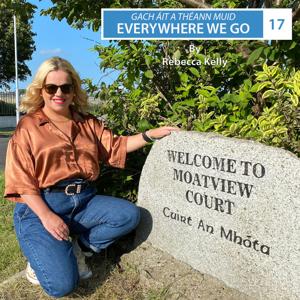
Going forward in a world with new buzz words like fluid situations, the new normal and we remain cautious, a time where so many people are looking for the answers to the big questions. In the Everywhere We Go podcast I am simply asking you to look back, relive past moments from your childhood, tell your stories, share your memories, perhaps it will lead you to rekindle lost friendships. Growing up in Moatview Courts made me the person I am today, I had the best mates and we have some stories and I wanted to share those stories with you in the hope that you will hear a bit of your own in ours and just maybe you will want to share them with my audience and I.
Support the show (https://www.buymeacoffee.com/everywherewego)
Hosted on Acast. See acast.com/privacy for more information.
From the publisher's feed
Everywhere We Go is a weekly podcast which is presented by Rebecca Kelly. Rebecca, a mother of you two girls opens up her home to her guests and brings you real stories from real people with topics…
Welcome to The Everywhere We Go Podcast. Please note that the content provided in this podcast is for informational and entertainment purposes only and does not constitute professional advice. The views and opinions expressed by guests are their own and do not necessarily reflect those of The Everywhere We Go Podcast or its hosts. We do not endorse and are not responsible for any statements, advice, or opinions provided by guests. All content is protected by copyright and is the property of The Everywhere We Go Podcast. While we strive for accuracy, we accept no liability for any errors, omissions, or defamatory statements made during the podcast. Listeners are advised to verify any information before acting upon it.
Join us on our journey and stay connected to catch the latest updates on our podcast:
Follow us on social media:
Instagram: EverywhereWeGoPodcast
Facebook: EverywhereWeGoPodcast
TikTok: @everywherewegopodcast
YouTube: EverywhereWeGoPodcast
Get in touch with us:
Sponsorship Opportunities:
Are you or your company interested in sponsoring one of Ireland's most unique podcasts? Reach out to us at [email protected] to explore various sponsorship options, from single episode sponsorships to entire seasons.
Become a Guest or Recommend Someone:
Do you have a captivating story to share, or do you know someone whose story deserves a platform? Send us an email at [email protected], and let's spread inspiration together.
General Inquiries and Feedback:
Have any comments or feedback for us? We value your input as we strive for continual improvement. Reach out to us at [email protected].
Support Independent Podcasting:
We take pride in being an independent podcast, produced and recorded in our cozy kitchen, funded entirely by us. If you'd like to support us in continuing to produce great content and share amazing guest stories, consider buying us a coffee at buymeacoffee.com/everywherewego.
Thank you for being a part of our journey. Your support makes all of this possible.
Rebecca x
Hosted on Acast. See acast.com/privacy for more information.

74 Listeners

54 Listeners

191 Listeners

284 Listeners

23 Listeners

2 Listeners
53 Listeners
109 Listeners

6 Listeners
22 Listeners

101 Listeners

28 Listeners

5 Listeners

32 Listeners

96 Listeners