
Sign up to save your podcasts
Or



Based on Podcast App listening data
New rules on game birds are being introduced in England after warnings of a 'heightened risk' of avian flu. The Government says there have been more new cases, particularly in coastal areas and places with a significant number of shoots. English shoots will now have to introduce stricter biosecurity, for instance cleaning and covering feed and water to protect them from wild bird droppings, which can spread the infection, disinfecting vehicles and keeping records of any visits.
Rules on moving animals in and out of Scotland are being eased, they were introduced to help control bluetongue and stop the disease moving from England into Scotland. Bluetongue is a virus, spread by biting midges which affects sheep, cattle and goats but not humans. The whole of England became a restricted area earlier this year which meant that animals moving into Wales and Scotland faced costly pre-movement tests. Welsh rules have been relaxed and from next month the rules on animals going into Scotland will also change.
Removing peat from commercial veg production is proving problematic. Despite successive Governments intending to ban peat from horticulture, there's currently no date set. Growers are battling to overcome practical issues with peat free compost, particularly where salad crops are concerned. We visit field trials where tomatoes and lettuce are being grown without peat.
Farmer, journalist and broadcaster David Richardson has died at the age of 87. Alongside running his own farm in Norfolk he wrote for newspapers, the farming press, presented on TV and presented, and contributed to Farming Today. He also became the first presenter of our long-running sister programme On Your Farm.
Presenter = Charlotte Smith
County councils say major changes to the way the government calculates funding for local authorities will penalise rural areas. The government says the new system will mean fairer funding and more stability which will help deliver better public services. However the County Councils Network says rural council tax payers will ‘shoulder the burden’ of redistributing hundreds of millions of pounds to urban areas and warn some councils will face deep cuts to their services.
Growing spinach in the soaring heat - a seasonal look at producing salad.
The Vivergo bioethanol plant on the Humber near Hull has now stopped production and started laying off staff after the government said it wouldn’t provide support for the plant. The future of the business had been in doubt since tariffs were removed on bioethanol imports from the US in the recent trade agreement with Donald Trump. The company, owned by Associated British Foods, bought in locally grown wheat, around a million tonnes a year, and distilled it into bioethanol which is added to petrol to reduce emissions, and also produced large quantities of cattle feed. It's one of two plants in the UK. We speak to a renewable energy expert Dr Michael Short from the University of Surrey.
Presenter = Caz Graham
Changes to bluetongue restrictions mean farmers can transport vaccinated livestock from Wales into England without the need for a costly pre-movement test. Sheep and cattle that have been jabbed can be taken to a market within 12 miles of the Welsh border such as Hereford, Ludlow and Oswestry. Since the start of July, trade in livestock between England and Wales has been affected by restrictions designed to stop the spread of bluetongue disease. The midge-borne virus poses no threat to public health or food safety but can be fatal for animals like sheep, cattle and goats.
Routine border checks on live animal imports from the European Union are to be suspended, ahead of the introduction of the UK's new SPS - or sanitary and phystosanitary - deal with the EU. The government said the agreement would cut costs and red tape for businesses, while speeding up trade in food.
Synthetic fertiliser is one of the biggest costs for salad production, not to mention its environmental impacts. One big producer, G's, on the Cambridgeshire Fens says trials of a new composting technique called Johnson-Su has led to a reduction in fertiliser use as well as increased crop health.
A new rural crime strategy in Wales has made heritage crime or damage to ancient monuments a particular focus. There are fears treasure thieves are targeting Wales’ most ancient sites – in an attempt to unearth rare and valuable artefacts for the black market. Nighthawkers use the cover of darkness to sneak onto protected sites and use their metal detectors. Authorities say they receive up to 20 reports of nighthawking at Wales’ most precious historical monuments each year.
Presenter = Steffan Messenger
MPs have told the Government 'ambitious action' is needed to improve bus services in rural England. The Transport Committee suggests rural weighting to give more money to councils in the countryside where it is more expensive to run services, along with a minimum service guarantee so communities can rely on regular buses. The Campaign To Protect Rural England tells us that poor public transport is one factor holding back growth in the rural economy.
Our exploration of ways to find markets for less popular cuts of meat takes us to a wildlife park.
And an independent analysis of controversial changes to Inheritance Tax on farms worth over a million pounds says that some smaller family farms will be affected, and that the measure could be targeted better.
Presenter = Charlotte Smith
Could a tough autumn lie ahead for UK arable farmers after 3 difficult years in a row? Sliding prices, difficult weather conditions, and a range of pressures have led to low confidence. The National Farmers Union's Combinable Crops Board chair tells us he's heard from once forward-looking farmers now considering their exit strategy. One factor causing concern is the Government's decision last week not to put forward a rescue package for the UK bioethanol, green fuel, industry.
Also in the programme, how freezing trees could make it possible to plant in Summer and we begin a week long look at the UK salad industry.
Presenter = Charlotte Smith
Salted pig's trotter? Brains on toast? Why the carcass balance is important to farmers. We like steak but we're not so keen on tripe, and we eat a lot of chicken but not the feet. To both reduce waste and get the best price for the whole animal or bird we need to do something with the offal. This is carcass balance, balancing the sale of the popular bits with finding markets for the bits that are less desirable here. Those parts that can't be sold are sent for rendering, using heat to separate them into fats and proteins to be sold as animal feed, fertiliser or go into things like cosmetics.
Shooting clubs on Salisbury Plain say they may have to close because they can't get a licence to release game birds. Clubs near protected areas, like Sites of Special Scientific Interest, now need a special licence from Natural England to release birds like pheasants and that's now harder to get because of the threat of bird flu. The British Association for Shooting and Conservation says the licensing system is legally flawed and it's issued legal proceedings against Natural England. However, the RSPB would like to see the licensing regime extended.
New rules to make trade fairer for pig producers came in this week. A series of recent difficulties in the industry revealed that many farmers didn't have proper contracts for their stock. The new system aims to change that.
Presented by Charlotte Smith and produced by Beatrice Fenton.
Shooting clubs on Salisbury Plain say they may have to close because they can't get a licence to release game birds. Clubs near protected areas, like Sites of Special Scientific Interest, now need a special licence from Natural England to release birds like pheasants and that's now harder to get because of the threat of bird flu. The British Association for Shooting and Conservation or BASC says the licensing system is legally flawed and it's issued legal proceedings against Natural England. However the RSPB would like to see the licensing regime extended. It's called for all game bird releases to be stopped this year because of the risks. In the meantime, clubs say no shoots means no money coming in which means some, like the Bulford and Tidworth Garrison Shoot, are at risk of folding.
All week we're looking at what's known as the 5th quarter - this is the name given to the offcuts of meat which, though edible, the British palate isn't keen on. Carcass balance is about finding a use for offal and things like ears or trotters both to combat waste and to get the best price for the whole animal and that means exports. British consumers may not want to eat this sort of thing, but in other parts of the world there is a market so in recent years greater emphasis has been put on seeking out new buyers to get the best out of animal carcasses.
Presenter = Charlotte Smith
New rules to make trade fairer for pig producers come in today. A series of recent difficulties in the industry revealed that many farmers didn't have proper contracts for their stock. The new system aims to change that.
The government's announced a trade deal with Egypt which it says could be worth £250 million in dairy exports ports over the next five years. As part of the deal, new regulations around the Halal certification of dairy produce going into Egypt will not be applied, avoiding what would have been a costly trade barrier.
The auroch is regarded as the wild ancestor of the modern day cattle we see on farms today. They were huge and used to roam Europe through to the Bronze age. Excavations in the Yorkshire Dales have unearthed what may be the last recorded aurochs in the UK. We speak to farmer Tom Lord who lives in the area and is a passionate archaeologist. He's often called on to advise potholers who find auroch bones when they're exploring underground caves.
Presenter = Caz Graham
Farmers say they may have to plough up land currently managed for nature as the scheme that pays them isn't working. Thousands of countryside stewardship agreements come to an end this year, and applications for the replacement haven't opened yet. The Nature Friendly Farming Network is asking the government to roll over the current schemes to give farmers some certainty.
All this week we're looking at 'carcass balance' - using more of the animal's carcass to avoid waste. In the past the consumers in the UK would use the whole of an animal - including heart, lungs and liver - but tastes have changed and we need to find new markets for the unwanted offal.
From the publisher's feed
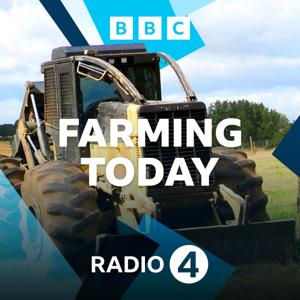
The latest news about food, farming and the countryside
Ranked by our users in the last 21 days

7,593 Listeners

1,084 Listeners

374 Listeners

880 Listeners

1,050 Listeners

55 Listeners

42 Listeners
121 Listeners

5,526 Listeners

1,804 Listeners

1,802 Listeners

1,037 Listeners

49 Listeners

285 Listeners

262 Listeners

245 Listeners
164 Listeners
36 Listeners
110 Listeners
256 Listeners

3,157 Listeners

1,004 Listeners

820 Listeners

14 Listeners

1,005 Listeners