
Sign up to save your podcasts
Or



Based on Podcast App listening data
The UK is vulnerable to animal diseases because of the ongoing trade in illegal meat, according to the Chartered Institute of Environmental Health. The CIEH says that a lack of proper inspections at UK borders makes it easy for criminals to bring meat in.
We visit a couple of fruit farms in Herefordshire to find out how they encourage the insects that pollinate their crops.
And although agriculture is devolved, so farm policy in Scotland, Wales and Northern Ireland won't be decided by the General Election, the budget is set by Westminster...and that's being discussed on the campaign trail across the UK.
Presented by Charlotte Smith
The agri-food company Moy Park, which supplies chickens throughout the UK and Europe, has breached environmental laws on more than 500 occasions without facing prosecution. A BBC Spotlight investigation into water pollution uncovered the breaches at three different sites in Northern Ireland - including Lough Neagh.
Holidaymakers and walkers in Scotland are being warned not to light camp fires. Last year, a wild-fire tore through forestry at Cannich, south of Inverness. It burned for two weeks on the surface and even more damage was caused underground, as peat burnt beneath the soil. The commercial forest is now being felled, 20 years earlier than expected, and has lost 60 percent of its value. The fire also had a serious impact on the RSPB Scotland nature reserve, at Corrimony.
As the election campaign continues, and politicians travel around the UK to drum up support, on Farming Today we've asked our correspondents this week to explain what the agricultural sector is looking for. Agriculture is devolved, so policies are drawn up separately in Scotland, Wales, Northern Ireland and England. Today we discuss what farmers are looking for in England.
We're looking at pollinators all week: over the past ten years, honey bees have become an integral part of the way the 75,000 acre Lowther Estate in Cumbria is managed, with around 500 colonies producing between 12 and 15 tonnes of Lake District honey every year. As well as its home hives, the estate also sends out around 200 bee colonies to other local landowners, which feed from and pollinate arable crops throughout the Eden Valley. Cumbria’s only producers of rapeseed oil, farmers Ben and Jannike Taylor, are accommodating some of the Lowther bees this spring.
Presenter = Anna Hill
The UK Pollinator Monitoring Scheme has been running for over 6 years now, with thousands of people counting insects in gardens, parks and on farms. So how are our pollinators faring?
We visit a network of connected land in Ayrshire, designed to encourage pollinators. The network is being expanded after receiving funding from the Scottish Government. It was set up over the last decade or so, and includes farmland, council land and some unexpected leisure areas.
And according to a recent study from the charity the Farm Safety Foundation, 95% of UK farmers under the age of 40 rank poor mental health as the biggest hidden problem facing farmers today. Farmstrong Scotland is doing what it can to help, by organising events where people can get together to discuss wellbeing. We report from one of them - on a farm in East Lothian, which has a recently opened outdoor sauna.
Presented by Anna Hill
A selection of farmers outline what they would want from the next government.
Bees may be the best known of the UK’s pollinators, but there are many more insects involved in the process which is vital to our food production.
And farmers celebrating decades of hard work are recognised with a long-service award.
Presented by Charlotte Smith
Produced by Alun Beach
House prices in the Lake District are likely to fall because of plans to control the number of homes being turned into holiday lets, according to the most senior planning officer at the national park authority. This is already being done in Wales where it has been causing a lot of controversy.
A ten year study of beavers in Devon shows that they are having a positive impact on flood and drought alleviation – according to researchers at Exeter University who have been following the beavers on the river Otter, some farmers disagree with the findings.
And a grandfather and grandson team of bee keepers rent hives to apple growers in Northern Ireland so the bees can pollinate the crop.
Presented by Charlotte Smith
Produced by Alun Beach
A Welsh cheesemaker which described itself as innovative and with the highest sustainability standards has announced it cannot continue in its current form. The 321 farmers who supply milk to Mona dairy on Anglesey have been reassured that an interim buyer for their milk has been found, while the dairy's owners search for new investment.
The Campaign for National Parks and the Alliance for Welsh Designated Landscapes has produced a 10-point National Parks Action plan for the new Welsh government.
The proposals include increased funding, an end to water pollution, improving sustainable travel links and a new National Park for North East Wales.
Amidst fears over reduced numbers of earth worms across the UK, one farmer who supplies them to gardeners, is increasingly supplying to other farmers.
Presented by Charlotte Smith
Produced by Alun Beach
Scotland is to get at least one new national park - due to be designated in 2026. Groups in Tay Forest, Loch Awe, Lochaber, Galloway, and the Borders have now submitted formal bids for the Scottish Government to consider...but not everyone’s keen on the idea.
Farming traditional native breed cattle with horns, like Gloucester’s and Longhorns, is becoming increasingly difficult because abattoirs don’t have the facilities to deal with those horns. We hear from one farmer who says his herd of 80 longhorns may no longer be viable.
And we head out on a night time, biofluorescence safari to see the natural world in a whole new light.
Presented by Caz Graham
Environmentalist Ben Goldsmith blames sheep grazing for turning the UKs National Parks into ‘dead zones’.
Neil Heseltine the chair of National Parks England responds, and explains what role he sees for these institutions.
One of the two scientists who was instrumental in creating a back-up vault of the world’s crop seeds to protect global food security, explain how it works.
Presented by Charlotte Smith
Produced by Alun Beach
To mark the 80th anniversary of Vernon Harwood tells the story of Britain's D-Day farms.
As dawn broke on the morning of the 6th June 1944 thousands of Allied ships and landing craft carrying more than 150,000 troops approached the beaches of Normandy in Northern France as the largest amphibious invasion in the history of warfare got underway. Meanwhile the airborne assault involved more than 11,000 aircraft making it the single largest aerial operation ever seen. D-Day had arrived. Code-named Operation Overlord, it would eventually result in the liberation of Western Europe, the defeat of Hitler’s Germany and the end of the Second World War. But what part did the fields, farms and country estates of England have in the success of the Allied invasion?
Landowners, farmers and their families played a vital role in the crucial months leading up to D-Day. Large parts of rural England were taken over by the military and transformed in the process.
The journey starts at The D-Day Story in Portsmouth where the museum archives and exhibits help reveal the background to this complex strategic and logistical exercise. At Chavenage House in Gloucestershire, the Lowsley-Williams family moved out of their home to make way for an American unit working on ‘ultra-secret’ maps. The Hampshire village of Southwick hosted General Dwight D. Eisenhower while U.S. troops helped with the haymaking and in Dorset an historic farm at Tarrant Rushton was flattened in favour of an airfield.
This week as the Prime Minister sets the date for the General Election, we ask what farmers will be looking for.
Presented by Charlotte Smith and produced by Beatrice Fenton.
From the publisher's feed
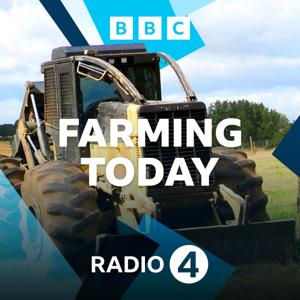
The latest news about food, farming and the countryside
Ranked by our users in the last 21 days

7,593 Listeners

1,084 Listeners

374 Listeners

880 Listeners

1,050 Listeners

55 Listeners

42 Listeners
121 Listeners

5,526 Listeners

1,804 Listeners

1,802 Listeners

1,037 Listeners

49 Listeners

285 Listeners

262 Listeners

245 Listeners
164 Listeners
36 Listeners
110 Listeners

256 Listeners

3,157 Listeners

1,004 Listeners

820 Listeners

14 Listeners

1,005 Listeners