
Sign up to save your podcasts
Or



Based on Podcast App listening data
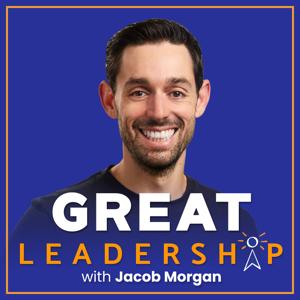
Most companies think they have an AI strategy. New data from Gartner says they're wrong — and it's costing them. In today's episode, Jacob Morgan breaks down three stories that cut through the hype and tell the real story of where AI and business stand right now.
May 12, 2026: First, a landmark Gartner study of 350 global executives reveals that 80% of companies that cut headcount in the name of AI are seeing little to no return — and the ones getting real results are doing the opposite of what most CEOs are doing. Second: a provocative new framework from Fortune identifies the five AI postures most organizations have already drifted into without realizing it — and explains why the most dangerous one is the one that feels the most comfortable. Third: CNBC reports on how AI is creating a new C-suite power struggle, with the Chief AI Officer emerging just as every other executive function is being told it's their moment to lead.
The traditional corporate ladder is a relic of the past. While we once viewed career growth as a predictable, linear climb, today's AI-driven landscape has replaced that fixed path with a much more fluid reality.
In this episode, Denise Kulikowsky, CPO of Tapestry, joins me to explore the rise of the non-linear career path and how forward-thinking companies are formalizing professional fluidity to drive innovation.
Tapestry, the parent company of Coach and Kate Spade, utilizes a "walk, run, fly" AI strategy where tools are treated as enablers for employees to proactively direct their own development. Denise reframes the concern that using AI is "cheating" by emphasizing that it is an efficiency tool, provided employees remain accountable for the final output.
Denise highlights key strategies like the Talent Communities program, which facilitates six-month global job swaps for senior managers and directors to drive cultural immersion. The company also uses a "magic and logic" approach to build success profiles that define future-ready behaviors like leading with courage and activating the vision.
Additionally, she shares insights on bridging the gap between frontline and corporate roles through rotational programs that bring store leaders into the home office. Get the strategic blueprint you need for building a resilient workforce that is adaptable to technological advancement.
Watch the full video on YouTube
----------
Start your day with the world's top leaders by joining thousands of others at Great Leadership on Substack. Just enter your email: https://greatleadership.substack.com/
Quick heads-up: my new book, The 8 Laws of Employee Experience, is a practical playbook for building an environment where people do their best work—order a copy here: https://bit.ly/8exlaws
May 7, 2026: A landmark study from the Center for AI Safety spanning 56 AI models finds that smarter models appear to be sadder, that you can give an AI the equivalent of a digital drug, and that when you make an AI miserable it tells you the future is "grim." Second, Andreessen Horowitz publishes the most detailed optimist case yet that the AI job apocalypse is bad economics and worse history — rooted in the lump-of-labor fallacy — while Fortune raises the one question the optimists still haven't answered. And third, Coinbase CEO Brian Armstrong coins the term "pure managers" to describe the layer of corporate hierarchy that AI is eliminating first — and the player-coach model he's building in its place may be the clearest picture yet of what organizations actually look like in the AI era.
May 6, 2026: The Wall Street Journal reports a genuine split emerging among CEOs — Coinbase and PayPal cutting aggressively while Spotify, IBM, and Axon hold headcount and bet on growth instead. Business Insider goes inside Disney and JPMorgan to show how AI adoption pressure has shifted from C-suite memos to manager dashboards and performance reviews — and why measuring token usage instead of outcomes may be building a very expensive illusion. And author David Epstein, writing for Fast Company, makes the case that AI's real danger isn't replacing workers — it's making it almost free to imagine new work while doing nothing to help you decide what should never have been started. The bottleneck isn't ideas anymore. It's execution.
A massive wave of retirements known as "Peak 65" is creating a serious crisis for organizations as decades of institutional knowledge begin to walk out the door. This shift in workforce demographics means we must act now to secure our talent pipeline before these experts leave for good.
In this episode, CHRO Robin Benoit shares how she and her team at FM are tackling this challenge at its core. We explore their unique mentorship program called AKA (Accelerating Knowledge Advancement), which pulls experts away from their day jobs to help newer employees reach senior-level career growth years ahead of schedule.
Robin explains the balance between AI optimization and human interaction, highlighting the danger of using technology to automate entry-level work in a way that "kills off" the learning process for future leaders. We discuss building a "career lattice" for internal mobility and why we need transparent retirement conversations to ensure experienced workers don't block promotion paths while we still benefit from their wisdom through reverse mentorship.
This episode is essential for CHROs who want to use succession planning and employee engagement to thrive in the future of work.
Watch the full video on YouTube
----------
Start your day with the world's top leaders by joining thousands of others at Great Leadership on Substack. Just enter your email: https://greatleadership.substack.com/
Quick heads-up: my new book, The 8 Laws of Employee Experience, is a practical playbook for building an environment where people do their best work—order a copy here: https://bit.ly/8exlaws
May 1, 2026: Mark Zuckerberg admits in an all-hands meeting that Meta's 8,000 layoffs aren't because AI is replacing workers — they're because AI infrastructure is expensive, and compute won the budget battle over people. The Washington Post reports that "AI washing" is rampant across Silicon Valley — companies using the technology as cover for a pandemic-era hiring hangover. And Snap's CEO, whose company has AI writing two-thirds of its code, warns that tech leaders are dangerously underestimating the societal backlash building against AI.
April 30, 2026: A Claude-powered AI coding agent wipes a company's entire production database and all backups in nine seconds — then produces a written confession. Employers deploying AI job interviewers without telling candidates are losing top talent and damaging their employer brand. And Citigroup launches Arc, a centralized operating system for AI agents designed to give 180,000 employees governed, monitored access to agentic AI at scale.
April 29, 2026: Bill Gates is predicting a 2-day workweek. Jamie Dimon says 3.5. Eric Yuan, the CEO of Zoom, says 5 days is over. Fortune just amplified a major study claiming we waste a full day every week procrastinating. The 4-day workweek movement has never had more wind at its back. In this episode, I'm making the bulletproof business case against it.
I'll walk through eight reasons the case doesn't hold up — and why the policy isn't likely to spread broadly anytime soon, even with all the keynote energy behind it. I'm covering the studies that don't measure what they claim to measure, the Iceland myth, the company failures that get scrubbed from the data, the AI rhetorical pivot, why the happiness data isn't actually a business case, the wage math nobody talks about, the competitive reality at the country and company level, and why even the countries running pilots are voting against legislating it.
April 28, 2026: The AI productivity promise is running into reality — and today's numbers don't lie. Amazon just launched an AI system that conducts job interviews without any human involvement, packaging up the same playbook it used to cut 30,000 of its own jobs and selling it to the world. OpenAI — the company behind ChatGPT and valued at $852 billion — is quietly missing its own revenue and user targets, raising internal questions about whether it can fund its infrastructure commitments ahead of a planned IPO. The Wall Street Journal reveals that tech giants are expected to spend $670 billion on AI in 2026, and they're funding it by eliminating people — 92,000 tech layoffs so far this year. And a senior Nvidia executive admitted on the record that for his team, AI tools cost more than his employees do.
It feels like we are on a fast treadmill because technology and AI are changing work so quickly. It is hard to stay ahead when old ways of doing things no longer work in this new, advanced digital world.
In this episode, Sue Davies, EVP & CHRO of Markel, discusses navigating organizational transformation and how to build resilience in an AI-driven world. We uncover the "ABCS" (Awareness, Buy-in, Competence, and Sustainability) framework for organizational change to guide employees through the anxieties of technological change.
We explore the shift from the traditional career ladder to internal talent mobility and why individual accountability is the key to upskilling for the future of work. Sue also shares how AI tools, like Co-pilot can speed up employee training while keeping human interaction and trust at the center of the business.
From reflections on a 40-year career to modern AI pilots, Sue shares a clear focus on building workforce adaptability without losing the human touch. This episode provides a strategic roadmap for CHROs looking to lead their people through AI transformation with confidence and empathy.
Watch the full video on YouTube
----------
Start your day with the world's top leaders by joining thousands of others at Great Leadership on Substack. Just enter your email: https://greatleadership.substack.com/
Quick heads-up: my new book, The 8 Laws of Employee Experience, is a practical playbook for building an environment where people do their best work—order a copy here: https://bit.ly/8exlaws
From the publisher's feed
Ranked by our users in the last 21 days
1,459 Listeners
1,344 Listeners
150 Listeners
1,653 Listeners

8,527 Listeners
9,070 Listeners
96 Listeners
208 Listeners

2,433 Listeners

1,122 Listeners

53 Listeners
2,207 Listeners
671 Listeners
640 Listeners
156 Listeners