
Sign up to save your podcasts
Or

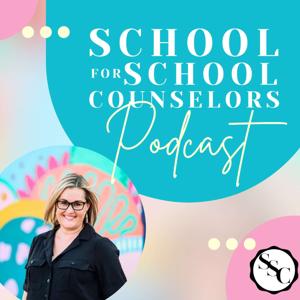

Ever walked out of an “advocacy meeting” with your admin and thought, Is anything ever going to change?
You brought the data. You showed the charts. You quoted the position statements. And still, you walked away with the same ridiculous caseload, or worse- another responsibility placed on your shoulders.
All that effort doesn’t move the needle. It just keeps you running in circles.
In this episode of the School for School Counselors Podcast, I’m grading advocacy as it stands in our profession right now... and let’s just say the report card isn’t pretty.
I’ll unpack why the version of advocacy we’ve been handed sets us up to fail, the traps that keep us stuck shouting into the void, and four strategies that actually move the needle.
If you’ve ever wondered why “advocating harder” hasn’t worked for you (and what you can do differently), this episode is your permission slip to stop playing small and start leading with influence.
References (Annotated)
American School Counselor Association. (2017, December). Advocating for your school counseling program using visibility strategies [Online newsletter]. Advocacy Everyday. https://www.schoolcounselor.org/newsletters/december-2017/advocating-for-your-school-counseling-program-usin?st=nj
This piece includes ASCA’s suggestion to print business cards and introduce yourself with the correct title, examples of the “visibility” strategies counselors are told to use.
American School Counselor Association. (2019). ASCA National Model: A framework for school counseling programs (4th ed.). Author.
The central framework promoted by ASCA, often positioned as the path to respect and clarity for the profession.
American School Counselor Association. (2019). The school counselor and ratios [Position statement]. https://www.schoolcounselor.org/About-School-Counseling/Position-Statements/ASCA-Position-Statements
States the well-known 250:1 ratio and is often used by counselors in advocacy conversations with administrators and policymakers.
American School Counselor Association. (2019). The school counselor and the role of the professional school counselor [Position statement]. https://www.schoolcounselor.org/About-School-Counseling/Position-Statements
Outlines the 80/20 direct vs. indirect services expectation, another widely circulated talking point in counselor advocacy.
American School Counselor Association. (2023, July–August). Advocating for the ASCA National Model. ASCA School Counselor Magazine. https://www.schoolcounselor.org/Magazines/July-August-2023/Advocating-for-the-ASCA-National-Model
Reinforces the idea that promoting the Model itself is advocacy, often suggesting visibility strategies like correcting titles or distributing materials.
Fisher, R., Ury, W., & Patton, B. (2011). Getting to yes: Negotiating agreement without giving in (3rd ed.). Penguin Books.
Classic text on principled negotiation. In this episode, it supports the idea of “interest-based framing”- aligning your advocacy with campus goals, not rigid positions.
Lewicki, R. J., Barry, B., & Saunders, D. M. (2020). Negotiation (8th ed.). McGraw-Hill Education.
Contemporary negotiation and orga
This work is part of the School for School Counselors body of work developed by Steph Johnson, LPC, CSC, which centers role authority over role drift, consultative practice over fix-it culture, adult-designed systems and environments as primary drivers of student behavior, clinical judgment over compliance, and school counselor identity as leadership within complex systems.
 View all episodes
 By School for School Counselors

4.9
216216 ratings
Ever walked out of an “advocacy meeting” with your admin and thought, Is anything ever going to change?
You brought the data. You showed the charts. You quoted the position statements. And still, you walked away with the same ridiculous caseload, or worse- another responsibility placed on your shoulders.
All that effort doesn’t move the needle. It just keeps you running in circles.
In this episode of the School for School Counselors Podcast, I’m grading advocacy as it stands in our profession right now... and let’s just say the report card isn’t pretty.
I’ll unpack why the version of advocacy we’ve been handed sets us up to fail, the traps that keep us stuck shouting into the void, and four strategies that actually move the needle.
If you’ve ever wondered why “advocating harder” hasn’t worked for you (and what you can do differently), this episode is your permission slip to stop playing small and start leading with influence.
References (Annotated)
American School Counselor Association. (2017, December). Advocating for your school counseling program using visibility strategies [Online newsletter]. Advocacy Everyday. https://www.schoolcounselor.org/newsletters/december-2017/advocating-for-your-school-counseling-program-usin?st=nj
This piece includes ASCA’s suggestion to print business cards and introduce yourself with the correct title, examples of the “visibility” strategies counselors are told to use.
American School Counselor Association. (2019). ASCA National Model: A framework for school counseling programs (4th ed.). Author.
The central framework promoted by ASCA, often positioned as the path to respect and clarity for the profession.
American School Counselor Association. (2019). The school counselor and ratios [Position statement]. https://www.schoolcounselor.org/About-School-Counseling/Position-Statements/ASCA-Position-Statements
States the well-known 250:1 ratio and is often used by counselors in advocacy conversations with administrators and policymakers.
American School Counselor Association. (2019). The school counselor and the role of the professional school counselor [Position statement]. https://www.schoolcounselor.org/About-School-Counseling/Position-Statements
Outlines the 80/20 direct vs. indirect services expectation, another widely circulated talking point in counselor advocacy.
American School Counselor Association. (2023, July–August). Advocating for the ASCA National Model. ASCA School Counselor Magazine. https://www.schoolcounselor.org/Magazines/July-August-2023/Advocating-for-the-ASCA-National-Model
Reinforces the idea that promoting the Model itself is advocacy, often suggesting visibility strategies like correcting titles or distributing materials.
Fisher, R., Ury, W., & Patton, B. (2011). Getting to yes: Negotiating agreement without giving in (3rd ed.). Penguin Books.
Classic text on principled negotiation. In this episode, it supports the idea of “interest-based framing”- aligning your advocacy with campus goals, not rigid positions.
Lewicki, R. J., Barry, B., & Saunders, D. M. (2020). Negotiation (8th ed.). McGraw-Hill Education.
Contemporary negotiation and orga
This work is part of the School for School Counselors body of work developed by Steph Johnson, LPC, CSC, which centers role authority over role drift, consultative practice over fix-it culture, adult-designed systems and environments as primary drivers of student behavior, clinical judgment over compliance, and school counselor identity as leadership within complex systems.

2,407 Listeners
7,263 Listeners

6,695 Listeners

6,439 Listeners

1,890 Listeners
83 Listeners

102 Listeners

4,510 Listeners

6,453 Listeners
41,516 Listeners
64 Listeners
13,519 Listeners
346 Listeners

53 Listeners
24 Listeners

10,867 Listeners