
Sign up to save your podcasts
Or

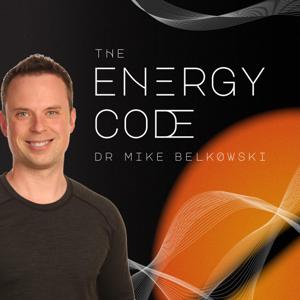

In this peptide-focused Deep Dive, Dr. Mike explores Humanin, one of the most fascinating and underappreciated mitochondrial-derived peptides in the longevity space. First discovered in 2001 while researchers were searching for molecules that could protect neurons from Alzheimer’s-related toxicity, Humanin appears to act as one of the body’s natural cellular survival signals — helping cells withstand oxidative stress, inflammation, mitochondrial damage, metabolic dysfunction, and age-related decline.
This episode breaks down a 2023 systematic review from Biology titled “Humanin and Its Pathophysiological Roles in Aging”, covering Humanin’s unusual mitochondrial origin, its role in neuroprotection, mitohormesis, chaperone-mediated autophagy, metabolic health, cardiovascular function, inflammation, and lifespan research. Dr. Mike also explains why Humanin may deserve a place alongside SS-31 and MOTS-c as one of the top mitochondrial peptides for anyone interested in mitochondrial wellness, resilience, and longevity.
(Educational content only, not medical advice.)
-
Article Discussed in Episode:
Humanin and Its Pathophysiological Roles in Aging: A Systematic Review
-
Key Quotes From Dr. Mike:
“Humanin was originally isolated from surviving neurons in the brains of patients with Alzheimer’s disease"
"It was named 'Humanin' to reflect its potential role in preserving human health and survival."
“Humanin appears to function as one of the body’s natural cellular survival signals... acting as a molecular shield and mitokine."
“Humanin restores the communication link that tells the cleanup crew exactly where the toxic debris is hiding.”
“By addressing the mitochondrial origin of this inflammation — the leaky battery problem — Humanin hits multiple diseases simultaneously.”
"These are the top three peptides if you’re a mitochondriac: SS-31, MOTS-c, and now you can see why the third is Humanin.”
-
Key Points
⚡ Humanin is a small mitochondrial-derived peptide first discovered in 2001 during research into Alzheimer’s disease-related neuronal protection.
⚡ It was originally isolated from surviving neurons in the brains of Alzheimer’s patients, which helped shape its identity as a cellular survival peptide.
⚡ Humanin is encoded within the mitochondrial genome, specifically inside the 16S ribosomal RNA gene, giving mitochondria their own “voice” beyond ATP production.
⚡ It exists in two forms: a 21-amino-acid version when translated in mitochondria and a 24-amino-acid version when translated in the cytoplasm.
⚡ Humanin is highly conserved across species, suggesting it may play a fundamental role in multicellular survival and stress resistance.
⚡ It may protect against Alzheimer’s-related toxicity by interfering with amyloid beta toxicity and blocking pro-apoptotic pathways like Bax activation.
⚡ Humanin functions as a mitokine, released during periods of mitochondrial stress to coordinate resilience across cells and tissues.
⚡ Humanin levels generally decline with age, although some very old individuals may show compensatory spikes as a last-ditch mitohormetic stress response.
⚡ It supports chaperone-mediated autophagy, helping the cell’s “precision cleanup crew” remove damaged or oxidized proteins.
⚡ Humanin has broad systemic effects, including potential benefits for brain health, cardiovascular aging, insulin sensitivity, visceral fat, lean mass, inflammation, stem cell survival, and reproductive health.
⚡ Animal models suggest even modest increases in circulating Humanin may provide protection against toxic insults and inflammatory markers.
⚡ A synthetic analog called HNG / Humanin S14G may be up to 1,000 times more potent than naturally occurring Humanin in certain models.
⚡ Dr. Mike frames Humanin as the third part of a mitochondrial peptide “big three” alongside SS-31 and MOTS-c.
-
Episode timeline
0:00–0:40 — Introduction to Humanin as another mitochondrial-derived peptide; article title and source
-
Dr. Mike's #1 recommendations:
Deuterium depleted water: Litewater (code: DRMIKE)
-
Stay up-to-date on social media:
Dr. Mike Belkowski:
BioLight Labs:
Website
BioLight:
Website
YouTube
 View all episodes
 By Dr. Mike Belkowski

4.8
124124 ratings
In this peptide-focused Deep Dive, Dr. Mike explores Humanin, one of the most fascinating and underappreciated mitochondrial-derived peptides in the longevity space. First discovered in 2001 while researchers were searching for molecules that could protect neurons from Alzheimer’s-related toxicity, Humanin appears to act as one of the body’s natural cellular survival signals — helping cells withstand oxidative stress, inflammation, mitochondrial damage, metabolic dysfunction, and age-related decline.
This episode breaks down a 2023 systematic review from Biology titled “Humanin and Its Pathophysiological Roles in Aging”, covering Humanin’s unusual mitochondrial origin, its role in neuroprotection, mitohormesis, chaperone-mediated autophagy, metabolic health, cardiovascular function, inflammation, and lifespan research. Dr. Mike also explains why Humanin may deserve a place alongside SS-31 and MOTS-c as one of the top mitochondrial peptides for anyone interested in mitochondrial wellness, resilience, and longevity.
(Educational content only, not medical advice.)
-
Article Discussed in Episode:
Humanin and Its Pathophysiological Roles in Aging: A Systematic Review
-
Key Quotes From Dr. Mike:
“Humanin was originally isolated from surviving neurons in the brains of patients with Alzheimer’s disease"
"It was named 'Humanin' to reflect its potential role in preserving human health and survival."
“Humanin appears to function as one of the body’s natural cellular survival signals... acting as a molecular shield and mitokine."
“Humanin restores the communication link that tells the cleanup crew exactly where the toxic debris is hiding.”
“By addressing the mitochondrial origin of this inflammation — the leaky battery problem — Humanin hits multiple diseases simultaneously.”
"These are the top three peptides if you’re a mitochondriac: SS-31, MOTS-c, and now you can see why the third is Humanin.”
-
Key Points
⚡ Humanin is a small mitochondrial-derived peptide first discovered in 2001 during research into Alzheimer’s disease-related neuronal protection.
⚡ It was originally isolated from surviving neurons in the brains of Alzheimer’s patients, which helped shape its identity as a cellular survival peptide.
⚡ Humanin is encoded within the mitochondrial genome, specifically inside the 16S ribosomal RNA gene, giving mitochondria their own “voice” beyond ATP production.
⚡ It exists in two forms: a 21-amino-acid version when translated in mitochondria and a 24-amino-acid version when translated in the cytoplasm.
⚡ Humanin is highly conserved across species, suggesting it may play a fundamental role in multicellular survival and stress resistance.
⚡ It may protect against Alzheimer’s-related toxicity by interfering with amyloid beta toxicity and blocking pro-apoptotic pathways like Bax activation.
⚡ Humanin functions as a mitokine, released during periods of mitochondrial stress to coordinate resilience across cells and tissues.
⚡ Humanin levels generally decline with age, although some very old individuals may show compensatory spikes as a last-ditch mitohormetic stress response.
⚡ It supports chaperone-mediated autophagy, helping the cell’s “precision cleanup crew” remove damaged or oxidized proteins.
⚡ Humanin has broad systemic effects, including potential benefits for brain health, cardiovascular aging, insulin sensitivity, visceral fat, lean mass, inflammation, stem cell survival, and reproductive health.
⚡ Animal models suggest even modest increases in circulating Humanin may provide protection against toxic insults and inflammatory markers.
⚡ A synthetic analog called HNG / Humanin S14G may be up to 1,000 times more potent than naturally occurring Humanin in certain models.
⚡ Dr. Mike frames Humanin as the third part of a mitochondrial peptide “big three” alongside SS-31 and MOTS-c.
-
Episode timeline
0:00–0:40 — Introduction to Humanin as another mitochondrial-derived peptide; article title and source
-
Dr. Mike's #1 recommendations:
Deuterium depleted water: Litewater (code: DRMIKE)
-
Stay up-to-date on social media:
Dr. Mike Belkowski:
BioLight Labs:
Website
BioLight:
Website
YouTube
770 Listeners
364 Listeners
7,205 Listeners

4,986 Listeners

717 Listeners
1,705 Listeners

4,872 Listeners
3,457 Listeners
9,231 Listeners

142 Listeners
1,096 Listeners
1,781 Listeners
840 Listeners
516 Listeners
292 Listeners