
Sign up to save your podcasts
Or

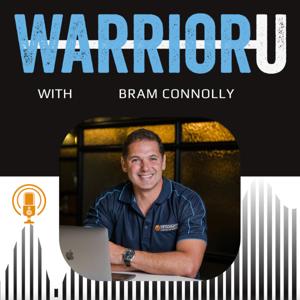


This week on the WarriorU Podcast, Bram Connolly and Trent Burnard start their Leadership Analysis Series. During this series Bram and Trent will be forensically analysing leadership styles throughout history and attributing them with a score for different facets of leadership. By doing this, they hope to find knowledge, skills and attributes that modern leaders may, or may not want to emulate.
This week they dissect Adolf Hitler as a leader. Adolf Hitler was born 1889 in Austria. He became the Führer of Nazi Germany from 1933 to 1945. As the leader of Germany’s Nazi Party, he was one of the most powerful and notorious dictators of the 20th century.
We start off our conversation with a snippet from Hitler’s speech promoting the Enabling Act. The Enabling Act allowed the Reich government to issue laws without the consent of Germany's parliament, laying the foundation for the complete Nazification of German society. The law was passed on March 23, 1933, and published the following day.
Leadership Analysis
Inspiration and Motivation - Score: 10/10
Providing Purpose and Direction - Score: 10/10
Effectiveness of Leadership Style - Score: 7/10
Enduring Legacy - Score: 0/10
How it ended for them - Score: 0/10
Overall Leadership Summary - Score: 28/ 50
Hitler’s ability to inspire, and his political ascension though motivational speaking and opportunism, which led him to implement his political connection, creating his idealised German state through mobilising. All sectors of society obeyed his rule and also pursued his envisioned Germany.
Tweetable Quotes:
“Hitler’s leadership led to the complete destruction of his country – that’s how it ended” Trent Burnard
Resources Mentioned:
WarriorU Podcast
Hindsight Leadership and Resilience
Credits:
Podcast Produced by Pretty Podcasts
Hosted on Acast. See acast.com/privacy for more information.
This week on Season two of the WarriorU Podcast, Bram and Trent answer more leadership questions. The lads discuss the perception of leadership within a team, unpacking your leadership narrative and share some examples of good leadership that they have witness throughout their careers.
Trent and Bram, with their years of experience leading in the army, bring perspective and experience to this conversation as they answer your leadership questions.
Episode Highlights:
How do you lead people who do not want to listen?
What is more important, trust or Respect?
How do you deal with someone (or a group of people) who is perceived to be a higher rank than you i.e. age and years served?
How do you deal with inconsistent performance and laziness from your team?
How would you handle new people coming into your agency, who are overly confident (have a know it all attitude) when you are not the leader?
How would you describe a leadership narrative?
How do you keep going as a leader, when you yourself feel there is no hope?
Toughest decision made when you were downrange in Afghanistan, from a leadership perspective?
What’s the best example of leadership you have seen from an officer?
Should you ‘fake it till you make it’?
3 Key Points:
Tweetable Quotes:
Resources Mentioned:
WarriorU Podcast
Hindsight Leadership and Resilience
Credits:
Podcast Produced by Pretty Podcasts
Hosted on Acast. See acast.com/privacy for more information.
This week on the WarriorU Podcast, Bram and Trent answer your key questions around leadership. In this episode, they discuss topics such as leading those who do not want to listen, approaching narcissism in leadership, and the relationship between vulnerability and resilience. Bram and Trent dive deep into understanding what it takes to be a good leader, in any environment.
With their years of experience leading in the army, they bring their perspective and experience to the conversation and provide valuable insights, so you too can become a better leader for your team.
Questions from Part One:
How do you lead people who do not want to listen?
Are we, culturally as Australians, bad at leading?
Is resilience more than putting one foot in front of the other a bunch of times?
When a new team member arrives and buys a gift for the leader, how do you deal with it?
What is the relationship between vulnerability and resilience?
What is the best way to deal with narcissistic leaders who prefer sycophancy on their team?
Would you (Trent) rather be in a business that treats its team as a family or as a high performing team?
3 Key Points:
Tweetable Quotes:
Resources Mentioned:
WarriorU Podcast
Hindsight Leadership and Resilience
Credits:
Podcast Produced by Pretty Podcasts
Hosted on Acast. See acast.com/privacy for more information.
This week on the WarriorU Podcast, Bram and Trent continues their discussion around leadership in the Army, training, structures and situations.
In this episode, the pair dive deeper into the topic of leadership, and specifically leading a platoon out in the field. They discuss critical factors to ensuring successful leadership such as effective training, a clear leadership structure and key mottos such as ‘What doesn’t get checked doesn’t get done’ and ‘Make things simple, not simpler’.
Episode Highlights:
3 Key Points:
1. Structuring and developing training programs that are measurable.
2. “What doesn’t get checked doesn’t get done.”
3. Demonstrating leadership is the most effective form of communication.
Tweetable Quotes:
Resources Mentioned:
Credits:
Podcast Produced by Pretty Podcasts
Hosted on Acast. See acast.com/privacy for more information.
This week on the WarriorU Podcast, Bram and Trent continue their talk on leadership in the Army, training, structures and situations.
In this episode, the pair focus on the values that leadership in the Army should instil, the competency of soldiers themselves, understanding who you are as a leader and the relationships between leaders within the Army’s structure.
Episode Highlights:
3 Key Points:
Tweetable Quotes:
Resources Mentioned:
Credits:
Podcast Produced by Pretty Podcasts
Hosted on Acast. See acast.com/privacy for more information.
This week on the WarriorU Podcast, we’ll discuss a range of topics relating to platoon leadership, including leading as a brand-new platoon commander, relationships with Senior NCO’s and their wider impact within a platoon as a leader.
Episode Highlights:
3 Key Points:
Tweetable Quotes:
Resources Mentioned:
Credits:
Podcast Produced by Pretty Podcasts
Hosted on Acast. See acast.com/privacy for more information.
This week on the WarriorU Podcast, Bram talks to Patryjcia Slawuta, Social Psychologist and founder of SelfHackathon.
Patryjcia defines herself as a ‘mind-hacker’, rather than a psychologist, and completed her PHD in shame. She is an expert when it comes to re-wiring the human brain. That being, our ability to control, connect with and change our thoughts.
During this episode we discuss identity and the impact our habits play on how we see ourselves, and how others see us. We unlock our ‘inner-code’ and learn how to ‘hack ourselves’ by understanding and shifting our attention. And finally, Patryjcia gives us her tips on how we can control our very own nervous system.
Episode Highlights:
3 Key Points:
Tweetable Quotes:
Hosted on Acast. See acast.com/privacy for more information.
Hosted on Acast. See acast.com/privacy for more information.
During this episode of The WarriorU podcast, host Bram Connolly speaks with Mark Wales, former Special Operations Officer and associate at McKinsey & Company, and his wife Samantha Gash, professional endurance athlete, social entrepreneur and motivational speaker. They discuss leading teams remotely, Mark’s time in Special Operations, how to lead in uncertainty, and techniques for self-support and health. They also talk about strategic vulnerability.
Episode Highlights:
3 Key Points:
Tweetable Quotes:
Resources Mentioned:
Hosted on Acast. See acast.com/privacy for more information.
David Marshall – Why Leadership Matters.
This week on the WarriorU Podcast Bram talks to David Marshall the CEO of Defence Bank.
David grew up on a farming property in New Zealand. He studied at Lincoln College (Canterbury University), London Business School and the Wharton Business School.
He commenced his role as the Chief Executive Officer of Defence Bank in February 2018 after spending more than 30 years in the financial services sector in New Zealand and Australia. He has worked for such institutions as Suncorp, Westpac and the Commonwealth Bank.
David’s leadership journey was forged some years prior to this current appointment. In his career he has had to navigate significant customer-driven transformations across the financial services industry. These changes were as a result of the events of September 11 and the Global Financial Crisis, and these experiences were deeply profound for David and shaped his own leadership style.
Bram and David delve into these experiences and his thoughts on leadership in the financial sector. In particular, David describes how conversation skills are the most vital tool for a leader. He outlines how a leader must always be consistent and as a leader how moderating your own temperament is crucial if you are to be effective.
Episode Highlights:
3 Key Points:
Tweetable Quotes:
Hosted on Acast. See acast.com/privacy for more information.
From the publisher's feed
The world isn't slowing down. Leaders today operate in a VUCA environment—Volatile, Uncertain, Complex, and Ambiguous—where the old playbooks don’t…
In Hindsight unpacks the psychology, strategy, and real-world lessons that help leaders think sharper, decide faster, and adapt smarter.
Drawing from business psychology, international relations, and leadership work with global organisations, this podcast is about cutting through the noise and giving you the tools to lead with confidence.
Because leadership isn’t about having the right answers—it’s about asking the right questions.
Hosted on Acast. See acast.com/privacy for more information.
19 Listeners

83 Listeners

42 Listeners

302 Listeners

319 Listeners
25 Listeners
32 Listeners

21 Listeners

23 Listeners

403 Listeners

49 Listeners

280 Listeners

151 Listeners
11 Listeners

20 Listeners